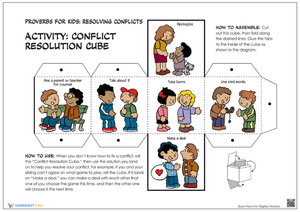
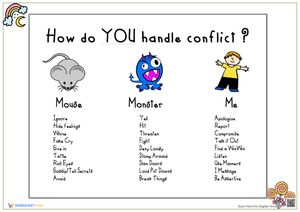
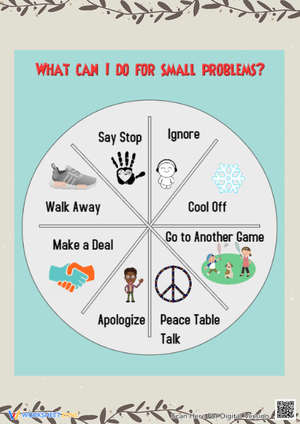
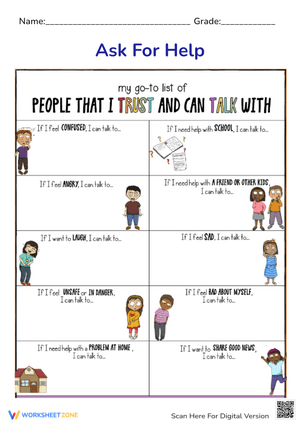
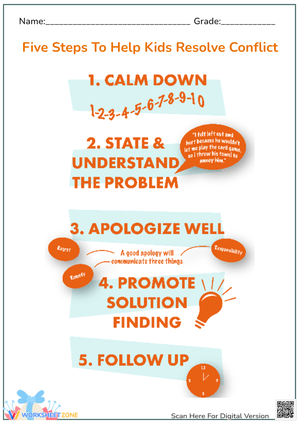
Watching your little one come home upset after a playground squabble or struggle to share a favorite toy with a sibling can pull at any parent's heart. You want to help, but teaching a five or six year old how to handle big feelings often feels like uncharted territory. Thoughtfully designed conflict resolution worksheets for kindergarten give you a calm, structured way to walk through these moments together, turning a tough day into a teachable one.
Young children learn best when ideas are broken into small, gentle steps they can practice over and over. Worksheetzone resources guide your child through naming a feeling, listening to a friend, taking deep breaths, and choosing a kind response. Each page builds confidence by celebrating small wins, so your kindergartener slowly believes they can solve a tricky moment on their own. That sense of capability carries into school, the park, and family time at home.
Kindergarteners thrive on color, characters, and simple stories, which is why these printable activities feel more like play than instruction. Children might color a calm-down corner, match facial expressions to feelings, or draw what a peaceful classroom looks like to them. Pairing creative tasks with helpful early childhood social skills ideas turns a quiet afternoon into a meaningful learning experience that strengthens your bond.
These pages also open a window into what your child is exploring with their teacher each week. When your kindergartener brings home a worksheet about taking turns or apologizing, you can ask gentle questions and share your own stories about getting along with others. Families looking for the next step can explore conflict resolution practice for elementary grades as your child grows in age and emotional understanding through the years.
Sit beside your child, take your time, and treat each printable as a quiet conversation rather than a test. Celebrate kind words, brave apologies, and the courage to talk about hard feelings out loud together. With patience and steady practice, conflict resolution worksheets for kindergarten become a trusted partner in raising a thoughtful, caring, and emotionally confident child at home and in the classroom.
Frequently Asked Questions
Question 1: How do I introduce conflict resolution worksheets to my kindergartener?
Begin during a calm moment, not in the middle of a meltdown, so your child feels safe and curious. Sit close, read the prompts aloud, and invite your kindergartener to point at pictures or color along with you. Keep sessions short, around ten to fifteen minutes, and praise effort rather than perfect answers. Treating each page as a shared story rather than a quiz helps your child stay engaged and willing to try the strategies later.
Question 2: What skills will my child build through these activities?
Your kindergartener will practice naming emotions, listening to others, taking deep breaths, using kind words, and brainstorming peaceful solutions. They will also learn to recognize body cues like tight fists or wobbly voices that signal big feelings rising up inside. Over time, these small habits grow into stronger empathy, patience, and friendship skills. Many parents notice fewer tantrums and more thoughtful problem solving at home, on playdates, and during everyday sibling moments together.
Question 3: Can teachers use these worksheets in a kindergarten classroom?
Absolutely. Educators often weave these printables into morning meetings, calm-down corners, small group counseling time, or social-emotional learning blocks. Pages with role-play prompts work beautifully for partner activities, while coloring sheets give wiggly learners a quiet way to reflect. Teachers can also send completed pages home so families continue the conversation. Pairing classroom practice with parent support creates a strong, consistent message that kindness and problem solving matter everywhere a child goes.
Question 4: How often should we practice conflict resolution at home?
Aim for short, gentle practice two or three times each week rather than long, occasional sessions. Consistency helps young children remember the steps when a real disagreement pops up at the dinner table or during play. Try linking worksheet time to a cozy routine, like after snack or before bedtime stories, so it feels predictable and calming. Even five mindful minutes a day can build lasting habits, and your steady presence makes every lesson feel meaningful.












 Interactive Worksheet Maker
 Quiz Maker
 Word Search Maker
 Crossword Puzzle Maker
 Word Scramble Generator
 Sentence Scramble Generator
 Handwriting Worksheet Generator
 Name Tracing Generator
 Fill In The Blank Generator