Drawing and painting worksheets printable for 9th grade solve a specific classroom problem: students need structured technical practice before they touch expensive materials on a graded project, but open sketchbook prompts rarely develop a skill systematically enough to matter. This set gives Art I teachers a sequenced group of technical exercises — value scales, contour drawing, grid-method proportion, color mixing, and brushwork — that work as warm-ups, formative check-ins, or low-stakes preparation before major studio assignments.
Skills These Worksheets Build
These worksheets address five technical areas that most Art I teachers cover in the first semester, in roughly the order students are ready to take them on.
- Value scales and shading — Students create gradated scales from white to black, then apply hatching, cross-hatching, stippling, and blending to rendered geometric forms. The sphere, cone, and cylinder exercises ask students to identify and place the highlight, mid-tone, core shadow, and reflected light before they encounter organic or portrait subjects.
- Contour and gesture drawing — Each worksheet gives students a timed structure for both blind contour and gesture practice. The time constraint is the point: it builds hand-eye coordination faster than open-ended drawing time does.
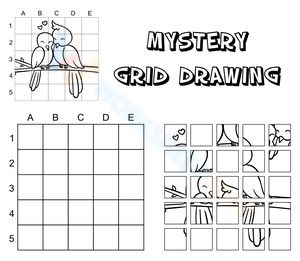
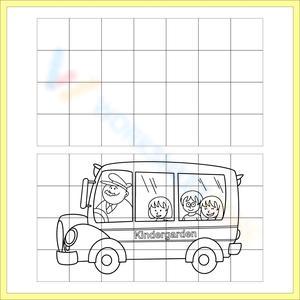
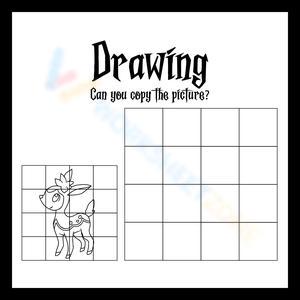
- Grid-method proportion — Pre-printed grids remove the setup work and let students focus entirely on translating one square at a time, which is where the observational thinking actually happens.
- Color theory fundamentals — Blank color wheels, primary-to-tertiary mixing charts, and intensity scales walk students through complementary, analogous, and monochromatic color relationships as hands-on exercises rather than diagrams to copy from the board.
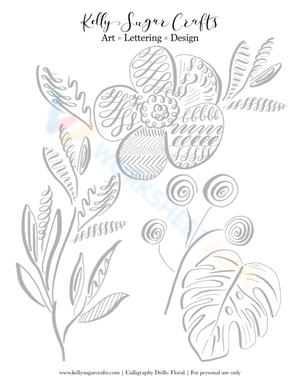
- Brushwork and paint application — Swatch worksheets for flat washes, graded washes, and dry brush technique give students a practice surface before they're asked to use good watercolor paper or canvas on a graded piece.
Mistakes Students Make That These Worksheets Help You Catch
The value scale is where most 9th graders reveal how they actually see tone — and it's rarely what teachers expect. The consistent error: students keep the first five or six boxes nearly identical (all light gray), then jump abruptly to near-black in the last two. They understand the concept of gradation; they just can't perceive the subtle mid-range transitions. Holding the completed worksheet next to a printed grayscale reference and comparing box by box catches it faster than re-teaching the concept from scratch.
On the grid-method worksheets, the problem isn't inaccuracy — it's hyper-accuracy without perspective. Students can render every individual square correctly and still end up with a portrait where the eyes sit too close together, because they never step back to read the whole composition at once. A standing rule — three feet back after every five squares — fixes this faster than any explanation of the method does.
In the painting exercises, the water-to-pigment ratio is the consistent stumbling block. Cautious students over-dilute, producing washes that dry pale and patchy. Confident students under-dilute, getting thick, streaky color that won't blend. Both errors show up on the swatch worksheets at low cost — which is exactly when they should show up, before students are working on anything they've spent 30 minutes drawing first.
How to Work These Worksheets Into Your Lesson Plans
The most reliable use in a 50-minute class is as a structured warm-up during the first 8 to 10 minutes. A value-scale challenge at the start of a shading unit keeps students calibrated throughout the week and creates a running record of daily practice that drops straight into a portfolio without extra prep. The short time constraint also removes the overthinking that freezes students when they have too much open time at the beginning of class.
Before a major canvas or watercolor assignment, use the brushwork and color-mixing worksheets as a clearance step rather than optional practice. If a student's graded-wash swatch is blotchy and uneven, that student needs another pass before working on materials that cost actual money. Framing the worksheet as a requirement for moving forward changes how seriously students treat it — and it functions as a natural formative assessment without building a separate quiz into the unit.
Peer critique works with the completed value scales and grid drawings if you keep the rubric to three criteria and require students to mark specific spots on the work rather than offer general impressions. Teaching students to say "the core shadow on the cylinder blends into the mid-tone too quickly here" rather than "it looks pretty good" builds technical vocabulary that pays off when they start evaluating their own studio pieces.
Adjusting These Worksheets for a Range of Learners
Students who arrive with genuine middle school studio experience will move through the contour and value worksheets quickly. The adjustment is in the source material, not the worksheet itself: give them a reference photo they've chosen rather than a provided line drawing, or drop the gesture-drawing time limit from two minutes to 45 seconds. The structure stays the same; the challenge scales through the difficulty of the subject and the time pressure.
Students with no prior art experience often freeze at the value scale because they have no physical sense of how hard to press with a pencil. A brief demo — pressing progressively harder across a scrap sheet while narrating the pressure change out loud — gives them a reference they can replicate before starting the actual worksheet. For the painting section, running through the swatch exercises twice before the color wheel assignment reduces the anxiety that comes from mixing colors students can't yet name.
For students with IEPs that include fine motor considerations, the stippling and cross-hatching techniques are the most demanding elements in the set. The flat-wash and blending exercises cover the same tonal objectives without requiring the small, repetitive mark-making that causes fatigue, and they're strong enough as standalone practice to stand in for the more demanding shading exercises without shortchanging the learning goal.
Standard Alignment
These drawing and painting worksheets printable for 9th grade align with the National Core Arts Standards (NCAS) for Visual Arts at the high school proficiency level. The value and shading exercises address the Creating strand, Anchor Standard 2 — organizing and developing artistic ideas through deliberate technical practice. The color theory worksheets address Anchor Standard 1 by asking students to generate solutions through systematic color mixing rather than guesswork or approximation.
The peer-critique component built into the grid and value work maps onto the Responding strand, Anchor Standard 7, which asks students to apply established criteria when evaluating artistic work. Most state visual arts standards are aligned to NCAS at the high school level, so these connections hold across districts without requiring changes to the worksheets themselves.
Frequently Asked Questions
Can these worksheets be used in a course that covers both drawing and painting in the same semester?
Yes. The sequence moves naturally from observational drawing into color theory and paint application, which mirrors how most Art I courses are structured. Teachers can assign the drawing and painting worksheets printable for 9th grade in the order provided, or pull individual worksheets to match wherever they are in an existing unit plan. Students who've done value work with pencil catch on to tonal mixing with paint more quickly — the drawing exercises genuinely support what comes later in the painting section.
How long does each worksheet typically take to complete?
Value scales and contour exercises run 8 to 15 minutes, which makes them usable as warm-ups or class closers. The grid-method and color-wheel worksheets need a full class period — sometimes two, depending on how much direct instruction precedes the independent work. Brushwork swatch worksheets typically take 20 to 30 minutes.
Do these work for students who have never held a paintbrush before?
The drawing and painting worksheets printable for 9th grade in this set assume no prior technical training. The swatch exercises and color-mixing charts are built specifically for students who last painted in elementary school and need a controlled reset before Art I assignments. Experienced students will move through these exercises faster, which is a feature rather than a problem — it creates natural time for additional challenge or peer mentorship during studio days.
Are these appropriate for a combined 9th/10th grade Art I section?
Art I is frequently taught as a mixed-grade section, and the technical content fits both grade levels entering at the foundational level. For 10th graders who arrive with prior studio experience, increasing the complexity of the reference images for the grid worksheets or tightening the time limits on gesture drawing keeps the work appropriately demanding without requiring separate materials for a second group.