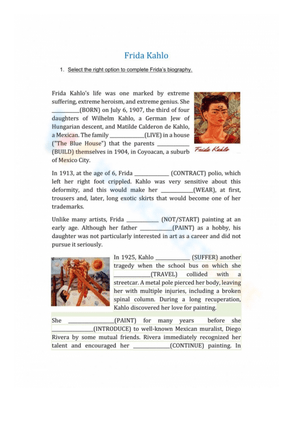
These 9th grade art worksheets pdf resources give high school art teachers printable, targeted exercises across four foundational domains of freshman visual art — drawing, medium exploration, design principles, and formal analysis — with each worksheet built around a single, measurable skill outcome rather than broad studio time with no defined endpoint.
The Specific Skills These Worksheets Build
The set moves through four areas that anchor most 9th grade curricula. Design principles come first: students create thumbnail studies demonstrating symmetrical and asymmetrical balance, annotate printed reproductions to identify where an artist used emphasis or movement, and construct value-contrast pairs using pencil — not just circle answers on a definition list. Drawing fundamentals make up the second group, covering value scales built in graphite, step-by-step rendering of geometric solids, contour line exercises, and perspective work with pre-set horizon lines but open vanishing-point placement.
Medium exploration is the third area. Each technique worksheet pairs a material with its most fundamental handling skills:
- Watercolor: wet-on-wet, wet-on-dry, and dry brush practiced in designated squares
- Charcoal: blending, lifting highlights with a kneaded eraser, and building varied line weight
- Pen and ink: cross-hatching, stippling, and pure contour gradations
- Acrylics: opaque layering, scumbling, and smooth gradient transitions
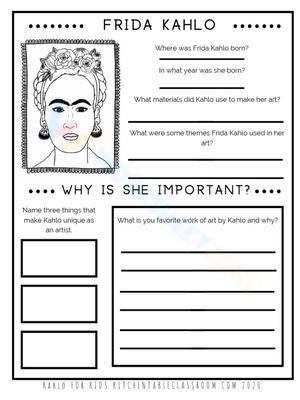
The fourth domain — the one that distinguishes a strong 9th grade art worksheets pdf collection from a generic skills packet — is formal analysis. These worksheets move students through a defined sequence: describe what you observe, analyze how specific elements are functioning, then interpret the compositional effect. That sequence is the backbone of most high school responding standards and positions students to write about art the same way they discuss it in critique.
Frequent Student Errors Worth Watching For
Perspective work reveals understanding clearly and quickly. Students correctly place a vanishing point on the horizon line, draw the receding edges of a structure with reasonable accuracy, and then angle their verticals — walls that should stay plumb start leaning toward the vanishing point. They know the rule; they haven't internalized the visual habit. Enough low-stakes repetition in a structured format lets students catch that drift in their own work before it costs them hours on a major architectural or interior project.
Value scales generate a second predictable error: the staircase of five or six distinct gray bands instead of a continuous gradient. The problem isn't dexterity — it's pressure register. Students press hard at the dark end, lift completely at the light end, and never develop the intermediate grip range that a true gradient requires. Catching these patterns early is exactly why teachers reach for a 9th grade art worksheets pdf before major project launches — the feedback loop is short, the stakes are low, and the correction happens before students invest time in a finished piece. In formal analysis, the persistent error is inserting vocabulary terms into opinion statements: "The contrast makes it really powerful" instead of "The high value contrast between figure and ground pushes the figure toward the viewer." Teaching students to anchor a claim to visual evidence is iterative, and seeing it in worksheet responses tells you which students need another pass before independent critique.
How to Build These Worksheets Into Your Lesson Plans
The most reliable slot is the bridge between demonstration and studio time. After modeling scumbling or wet-on-dry watercolor technique, send students to a technique worksheet for eight to ten minutes before they touch their actual project materials. That window surfaces the students who watched the demo but haven't processed the difference between the techniques yet. Their completed worksheet tells you whether to re-demonstrate to the full class or pull two students aside for a quick individual correction.
Bell ringers work well with the design-principle worksheets: students annotate a printed image in the first five minutes of class, marking the compositional path, circling dominant value areas, labeling where contrast peaks. No materials to unpack, no setup time. One technique with lasting payoff — have students trim their completed value scales, texture samples, and color-mixing charts and paste them into their visual journals. Those clipped exercises become a running reference students actually consult during independent studio work, far more durable than a verbal reminder at the start of a project.
Sub plans are the underrated use case. A set of medium-exploration worksheets — one per student, with instructions embedded — keeps productive work happening during an absence without asking a substitute to explain technique. The printed format handles that job.
Standard Alignment
The technique and design worksheets align with NCAS VA:Cr2.1 (Creating: Organize and develop artistic ideas and work) at the high school proficient level, which calls for students to demonstrate skill acquisition through experimentation with materials and processes. In classroom terms, that standard lives in the instructional space between demonstration and finished product — exactly where these worksheets belong in a unit sequence. The formal analysis worksheets address NCAS VA:Re7.1 (Responding: Perceive and analyze artistic work), which at the high school level requires students to move past personal preference and connect compositional choices to observable visual effect.
Adjusting the Worksheets for a Range of Learners
Students arriving with no prior formal art instruction — common in open-enrollment 9th grade rosters — benefit from the perspective worksheets that include pre-drawn horizon lines and labeled vanishing points. Those built-in supports reduce navigational confusion without reducing the skill demand; students still have to understand how receding lines behave and apply that understanding in the drawing space. Students who enter with solid spatial reasoning should work from a blank field, constructing the horizon and vanishing points themselves before drawing.
In formal analysis, the vocabulary bank is the primary adjustment point. Students who struggle with academic writing need it to access the task at all; stronger writers should draft their analysis without it and compare their language choices against the term list afterward. One modification that works consistently for advanced students in medium exploration: after completing the standard technique worksheet, repeat the same exercises with a constraint added — one brush, one pen nib, or a monochromatic palette. Limitation generates the kind of problem-solving that open-ended repetition rarely does.
Frequently Asked Questions
Can students with no middle school art background use these worksheets successfully?
Yes, and in mixed rosters they're particularly useful for establishing a shared starting point. A 9th grade art worksheets pdf focused on foundational technique — basic shading, color-mixing steps, contour observation — gives beginners a structured entry into studio vocabulary before the pressure of a major project. The defined format reduces blank-canvas anxiety by giving students a clear task with visible boundaries. Students who arrive with prior experience will move through the foundational worksheets quickly, and that pace difference is itself useful diagnostic information about who can be pushed further and who needs to slow down.
How do the formal analysis worksheets connect to studio projects?
The most direct connection is sequencing: place a formal analysis worksheet immediately before a studio project referencing the same movement or compositional approach. A worksheet analyzing value distribution in a Rembrandt self-portrait, for example, gives students a visual framework before they attempt their own chiaroscuro drawing. The act of identifying how Rembrandt darkened the background to separate it from the lit figure transfers into intentional decision-making when students face that same spatial problem in their own work.
What is the most efficient way to use completed worksheets for formative assessment without marking each one individually?
A two-minute visual scan during the last few minutes of a work session is enough for most technique worksheets. Walk the room, look at completed value scales or perspective exercises, and note the patterns — smooth gradients versus banding, accurate verticals versus converging ones. Share two or three observations aloud without naming students ("I'm seeing verticals that want to drift toward the vanishing point — that's what we need to address before tomorrow"). That verbal note serves the full class and reserves individual written feedback for the worksheets where a documented gap matters before a larger project begins.