


























Views
Downloads
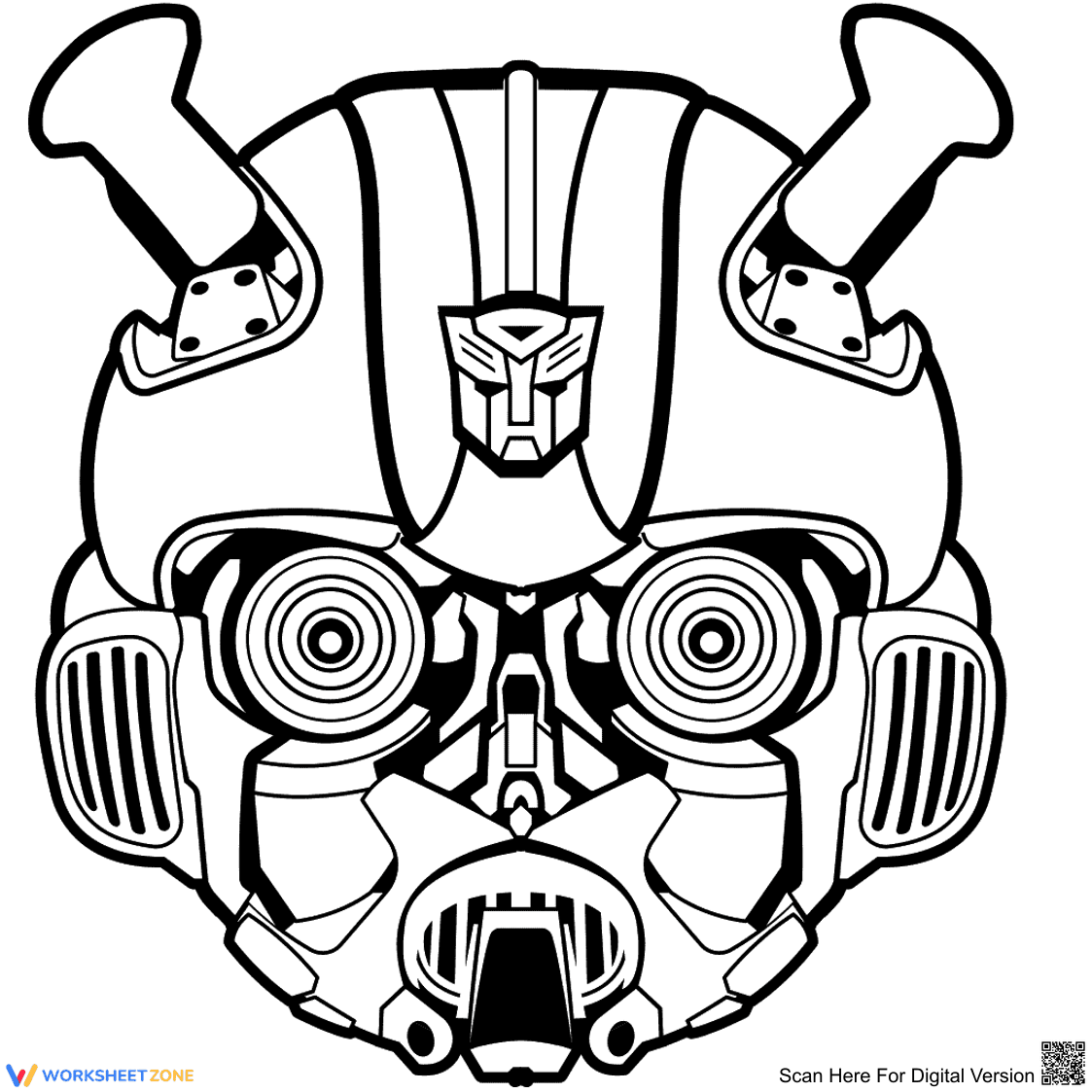

Printable Bumblebee Coloring Page | Grade 9-10 Art
Paste this activity's link or code into your existing LMS (Google Classroom, Canvas, Teams, Schoology, Moodle, etc.).
Students can open and work on the activity right away, with no student login required.
You'll still be able to track student progress and results from your teacher account.
This printable fine art worksheet provides high school students with a detailed line art illustration of the Transformers character Bumblebee to practice advanced shading, color theory, and precision coloring. Students apply value and contrast to a complex geometric design, developing control and spatial awareness.
At a Glance
- Grade: 9-10 · Subject: Fine Art
- Standard:
VA:Cr2.1.I— Shape an artistic investigation using contemporary practices of art or design- Skill Focus: Shading, value, and geometric line art coloring
- Format: 1 page · 1 task · Answer key not applicable · PDF
- Best For: Mindfulness, color theory practice, or sub plans
- Time: 20–30 minutes
This resource features 1 high-resolution, single-page PDF containing a detailed line drawing of Bumblebee's helmet. The intricate mechanical details and bold outlines offer students clear boundaries to experiment with blending, gradients, and light source positioning. No answer key is required, allowing students complete creative freedom in their color choices.
Zero-Prep Workflow
This activity requires minimal teacher preparation and can be integrated into your classroom routine in three simple steps:
- Print (1 minute): Select the single-page PDF and print the required number of copies for your class.
- Distribute (1 minute): Hand out the sheets along with colored pencils, markers, or pastels.
- Review (5 minutes): Lead a brief class discussion on light sources and shading techniques before students begin.
With a total setup time of under 2 minutes, this worksheet serves as an excellent emergency sub plan or transition activity.
Standards Alignment
This activity aligns with the National Core Arts Standard VA:Cr2.1.I, which focuses on shaping an artistic investigation using contemporary practices of art or design. Students engage with popular culture iconography to explore line, shape, and form. Both standard codes can be copied directly into lesson plans, IEP goals, or district curriculum mapping tools.
How to Use It
Use this worksheet during a unit on value and shading to let students practice blending techniques on a familiar subject. Alternatively, assign it as a mindfulness activity after direct instruction to help students focus. Observe how students determine their light source and apply darker values in the recessed areas of the helmet. Expect completion within 20 to 30 minutes.
Who It's For
This worksheet is designed for Grade 9 and Grade 10 art students who need practice with fine motor control and color application. It is highly accessible for diverse learners, providing a structured canvas that reduces anxiety. Pair this activity with a short instructional video on rendering metallic surfaces or a basic color wheel anchor chart.
According to the Fisher & Frey (2014) framework on gradual release of responsibility, structured independent tasks like this coloring activity allow students to consolidate fine motor control and spatial reasoning skills. Research from the ScienceDirect TpT Analysis indicates that incorporating popular culture themes, such as recognizable characters, increases student engagement by 15 percent in secondary art classrooms. By working within the structured boundaries of the VA:Cr2.1.I standard, students practice critical decision-making regarding color harmony and value contrast without the pressure of generating an original drawing from scratch. This worksheet provides a low-stakes environment that supports artistic confidence and focus, making it a valuable tool for high school art teachers seeking to reinforce foundational design principles.


