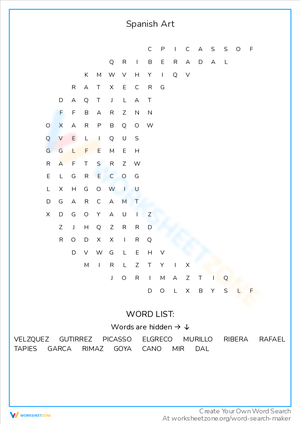
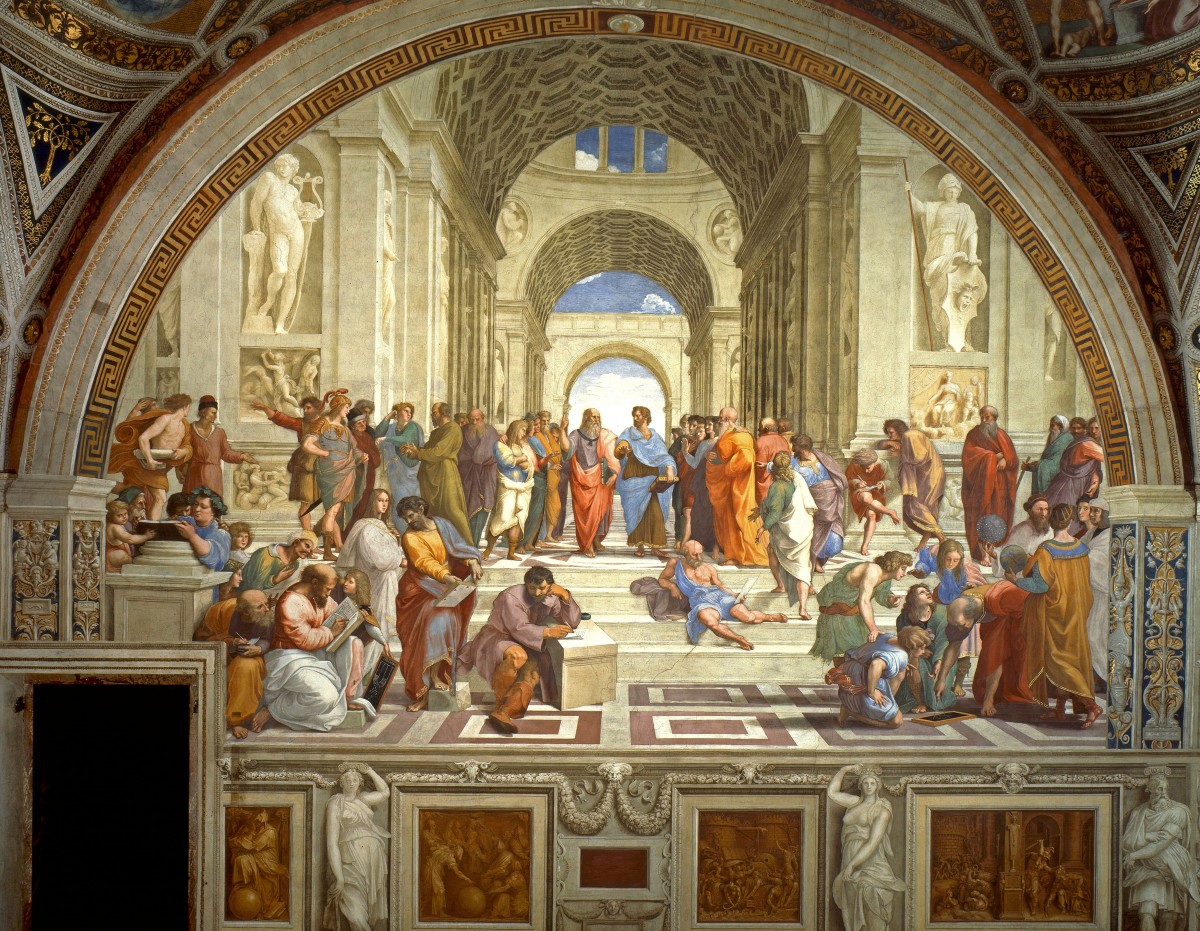
9th Grade Art History Worksheets Printable
These 9th grade art history worksheets printable give visual arts teachers a set of task-focused tools that move student attention from passive admiration to active analysis — each worksheet puts students in the position of reading an image the way a historian reads a primary source, gathering evidence before drawing conclusions. Each worksheet in the set targets a specific analytical skill or historical period, so teachers can pull exactly what the class needs rather than working through material that doesn't fit the current unit.
Concepts in Each Worksheet
The set of 9th grade art history worksheets printable moves through four distinct content areas, and the variety keeps the analytical work from feeling repetitive across a semester. The first is formal visual analysis: worksheets direct students to examine the elements of art and principles of design within specific compositions. These are not open-ended "what do you see?" prompts. They ask students to identify where the lightest value sits in the frame, mark the dominant directional lines, or trace the path the eye travels through a composition. That level of specificity pulls students out of vague impressions and into genuine looking.
The second content area covers historical and cultural context. Era-specific worksheets walk students through the social and political conditions that shaped a given period — the patronage system of the Italian Renaissance, the Salon's gatekeeping role in 19th-century Paris, or the way the Industrial Revolution pushed artists toward subjects machines couldn't replicate. Students read short analytical passages and then locate specific visual evidence in reproduced works that supports the historical claim. The third strand is artist biography: reading passages paired with questions that ask not for birth years but for traceable connections between an artist's circumstances and their formal decisions. Fourth, comparative analysis worksheets place two works — from different periods, traditions, or mediums — side by side and ask students to mark specific formal differences and articulate what those differences reveal about each work's historical moment.
A final group of worksheets builds art critical vocabulary, presenting terms like chiaroscuro, impasto, foreshortening, and tenebrism in context alongside the artwork they describe. Students who practice this vocabulary in context write considerably stronger formal analyses than students who encountered the same terms in isolation on a definition list.
Mistakes Students Make That These Worksheets Help You Catch
The most persistent pattern in 9th grade art history is students describing emotional reaction rather than the work itself. "This painting looks depressing" arrives on the page where "the artist clusters the darkest values in the lower two-thirds of the composition and limits the palette to grays and muted ochres" should be. The worksheets address this directly by sequencing the prompts: describe what you observe before offering any interpretation at all. Students resist the sequence at first — it feels slower than just saying what they think — but after three or four worksheets, the habit starts to hold.
A second recurring error is conflating an individual artist with an entire movement. After an Impressionism unit, many students treat Monet as synonymous with the style itself, which makes it harder for them to see Degas or Berthe Morisot as distinct practitioners making meaningfully different choices within a shared set of assumptions about light and surface. Comparative worksheets that place multiple artists from the same movement side by side make those distinctions unavoidable — students have to account for the differences in front of them.
There is also a recognition problem that catches teachers off guard. A student who can analyze the Mona Lisa with reasonable precision will sometimes freeze when handed an unfamiliar Florentine Renaissance portrait, even though the same formal vocabulary applies. Usually this happens because the student was borrowing from prior cultural exposure rather than actually deploying analytical tools. Comparative worksheets that pair a canonical work with a lesser-known piece from the same period interrupt this tendency, because students cannot rely on what they already know about the famous work to answer questions about the unfamiliar one.
How to Build These Worksheets Into Your Lesson Plans
The most consistent use is the bell ringer. One image, four or five targeted prompts, 8–10 minutes at the start of class — it settles the room, activates prior knowledge, and gives the teacher a quick read on where students actually are with the vocabulary before the lesson moves forward. 9th grade art history worksheets printable centered on a single image work especially well here because students can get directly into observation without any reading-in required.
Era-specific and biographical worksheets translate cleanly into sub plans. A reading passage with analytical questions is self-running — no projector required, no explanation of prior context, no studio materials. An absent teacher can leave a clear sequence: read the passage, complete questions one through six independently, then work with a partner on the comparison prompt. Learning continues, and it connects to the actual course content rather than functioning as filler.
In units where students carry a studio project alongside art history content, using one of the vocabulary or visual analysis worksheets as a Friday review reinforces the conceptual framework without adding new cognitive load before the weekend. Spaced retrieval — returning to material across multiple low-stakes touchpoints — moves content from working memory into long-term retention more reliably than a single concentrated lesson, and these worksheets make that distributed practice easy to build into a week without pulling studio time away from project work.
Standard Alignment
These worksheets align most directly with the National Visual Arts Standards anchor standards for Responding — specifically VA:Re7 (perceiving and analyzing artistic work) and VA:Re8 (interpreting intent and meaning in artistic work). Both standards appear in the 9th–10th grade proficiency band and are assessed through exactly the kind of evidence-grounded visual analysis the worksheets practice. Art departments using standards-based grading will find the guided analysis prompts map onto those performance indicators without requiring much translation work.
The biographical and contextual worksheets also support VA:Re9, which asks students to evaluate and justify personal aesthetic and empathetic responses using appropriate evidence. A student who has practiced distinguishing between what they observe and what they infer is measurably better prepared to write the kind of evidence-grounded evaluation that standard describes.
Adjusting the Worksheets for a Range of Learners
For students who don't yet have the academic language to respond in full sentences, the visual analysis worksheets function well as labeling activities — students mark directly on the reproduced image, drawing arrows to the focal point, tracing compositional lines, or circling areas of high contrast. This gives them a route into the analysis without requiring them to hold formal vocabulary and sentence construction in working memory simultaneously. The analytical thinking still happens; the written output demand is reduced.
Advanced students often move through the guided prompts quickly and benefit more from having those prompts removed entirely. Handing the same image without the guided question sequence and asking for an independent written analysis using a set number of formal terms presents a genuinely different cognitive challenge — and it helps students recognize what the prompts were doing for them, which turns out to be a useful metacognitive moment. Students reading well below grade level work better with a partner for the biographical and contextual passages, completing the discussion questions verbally before writing individually.
Teachers working with English language learners often post a classroom reference sheet with art vocabulary terms paired with brief visual examples during worksheet time. The 9th grade art history worksheets printable in this set introduce new terminology in context — the word appears alongside the artwork it describes — which gives ELL students a better chance of connecting each term to an actual visual referent rather than abstracting it from a definition list.
Frequently Asked Questions
Do students need prior art history background to complete these worksheets?
No prior background is required. The contextual and biographical worksheets include enough historical information in their reading passages that a student encountering the Renaissance or Impressionism for the first time can still respond meaningfully to the analytical questions. The visual analysis worksheets depend entirely on careful observation, not on existing knowledge of the artist or period.
Can these worksheets function as formal assessments rather than practice activities?
Several in the set work directly as formative assessment tools — particularly the comparative analysis and open-ended visual analysis worksheets, which require students to apply formal vocabulary and build an evidence-based argument. Whether a teacher treats the same worksheet as practice or assessment often depends on where it falls in the unit. Used early, it guides students through the analytical process. Used at the end of a unit, after the class has built shared vocabulary and seen multiple examples, the same worksheet becomes a reliable check on what students have actually retained.
Are these worksheets usable in classrooms with limited technology access?
Each worksheet is self-contained. Images are printed directly on the worksheet so students can annotate, label, and mark without anything projected on a screen. This makes the set workable in classrooms with minimal technology and reliable for sub plans, where equipment setup is never guaranteed.
Clear All