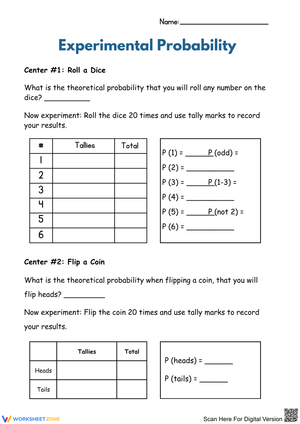
These probability worksheets for 8th grade address the exact inflection point that stumps most middle schoolers: moving from single-event fraction problems to the organized reasoning required for compound events and experimental data. Each worksheet covers a distinct concept — simple probability, complementary events, two-stage compound events, or theoretical versus experimental comparisons — and arrives as a print-ready PDF with a matching answer key. Teachers get a set they can pull apart by skill and reassemble for any lesson block without retyping a single problem.
What's in the Set
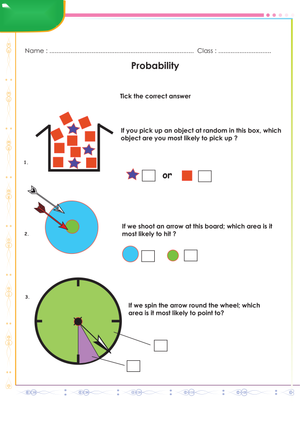
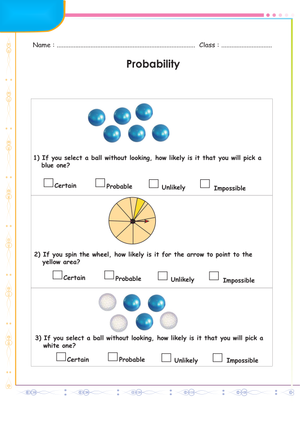
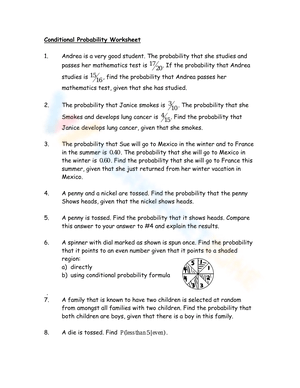
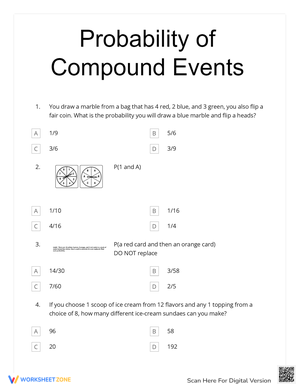
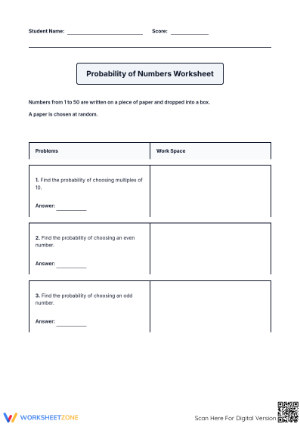
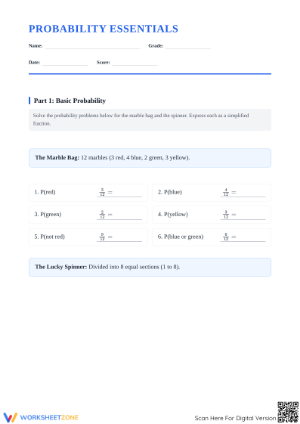
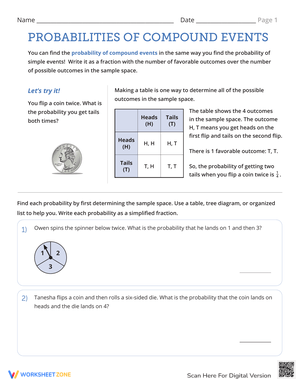
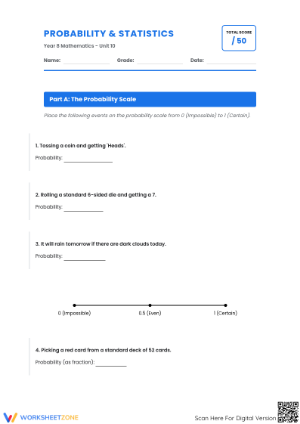
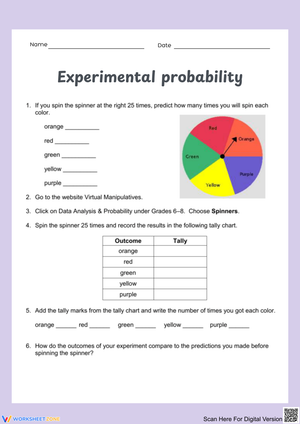
Simple probability worksheets anchor the collection. They use spinners, colored marble bags, and standard die models to build the habit of identifying favorable outcomes against total outcomes before writing any fraction. These look like review at first glance, but at 8th grade they catch students who are still guessing at denominators rather than counting systematically.
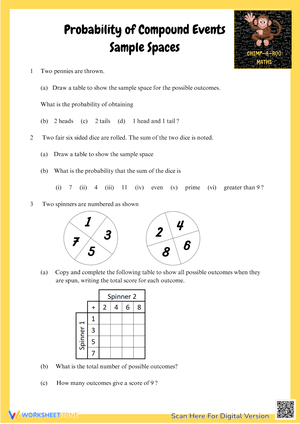
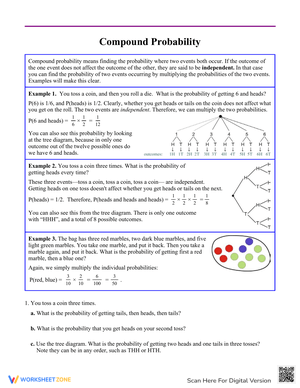
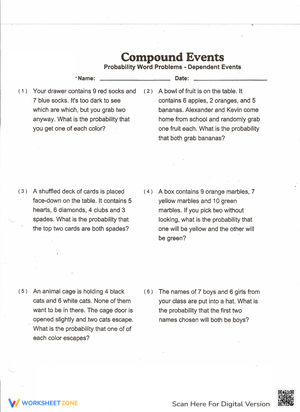
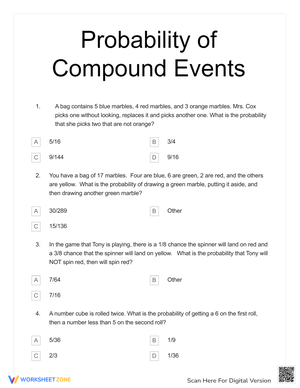
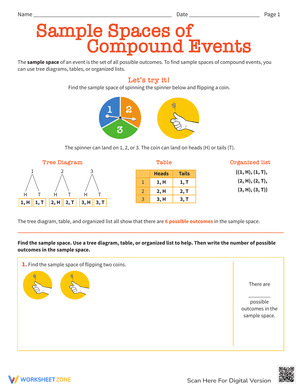
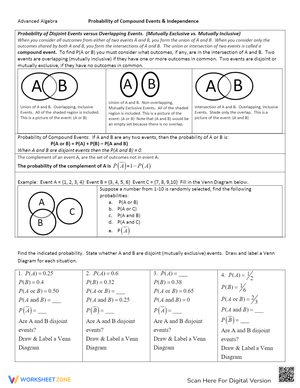
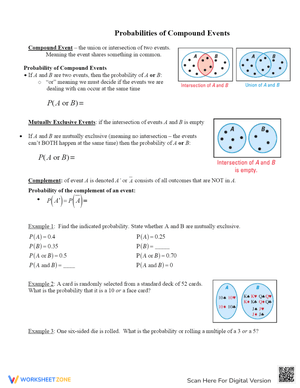
Compound event worksheets ask students to construct organized lists or two-way tables for two-stage situations — two dice rolled simultaneously, one spin followed by one card draw, or two draws from the same bag. The table format is particularly important here because it makes the total outcome count visible and countable rather than something students estimate in their head.
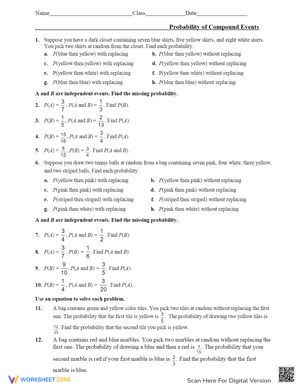
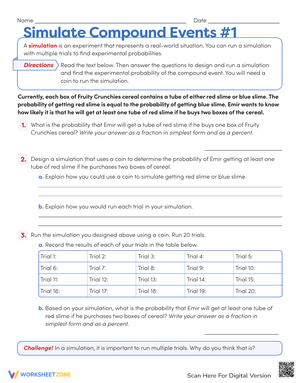
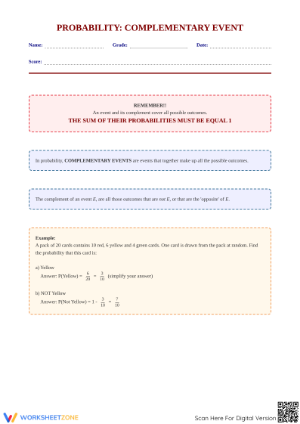
Complementary event worksheets introduce the arithmetic relationship between P(A) and P(not A), then ask students to use that relationship strategically — computing the harder probability by working through the easier one first. The set closes with theoretical versus experimental comparison worksheets built around trial data that students analyze, compare to predicted values, and explain in writing.
Mistakes Students Make That These Worksheets Help Surface
The most persistent error in compound event problems is not a conceptual misunderstanding about probability — it's a sample space failure. Students who correctly write P(rolling a 5) = 1/6 will move to a two-dice problem, identify favorable outcome pairs accurately, and then write 12 as the denominator instead of 36. They never built the full table, so they guessed the total rather than counting it. These worksheets address that directly by requiring students to complete the sample space before writing any fraction.
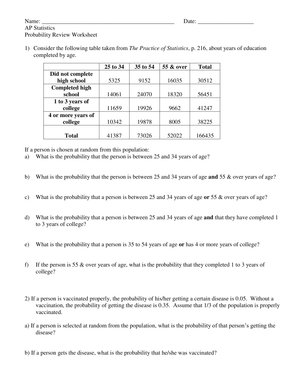
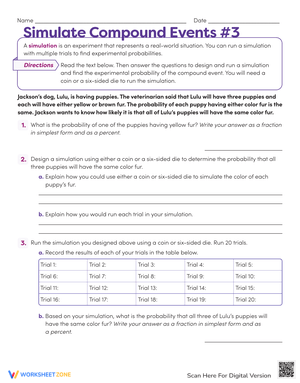
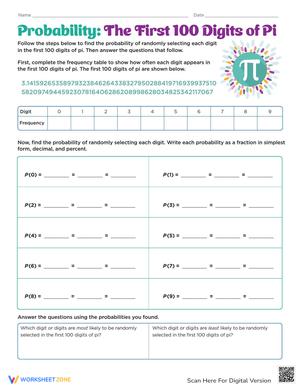
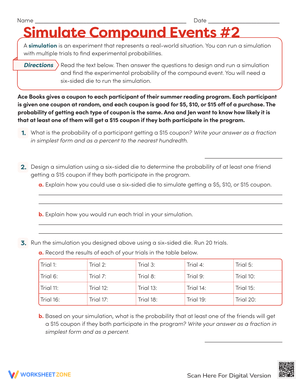
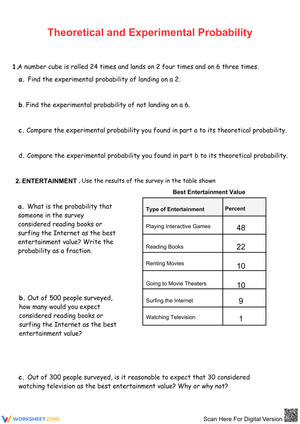
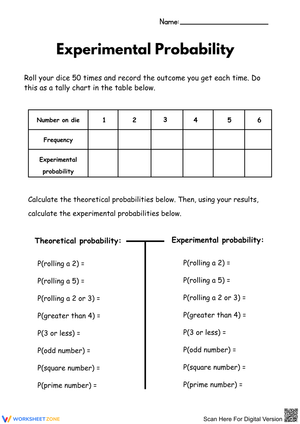
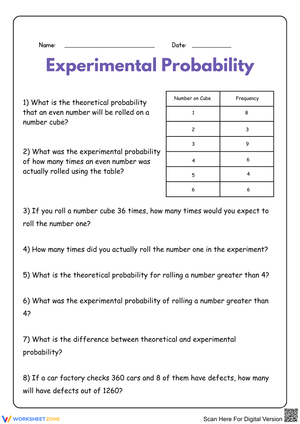
Experimental probability generates a different pattern of mistakes. When students run 20 coin flips and land on heads 13 times, a significant share will conclude the coin is biased — they treat one short experiment as conclusive evidence. The comparison worksheets ask students to articulate why short-run results vary from expected values, which forces them to reason about sample size rather than simply report numbers.
A smaller but reliable error involves complementary probability. Students who list unfavorable outcomes individually get the right answer when the sample space is small, but stall on problems where the outcome space is large. Worksheets that include larger sample spaces push students toward the 1 minus P(A) arithmetic approach, which also happens to be faster under timed conditions.
Making These Worksheets Work Across Your Lesson Plans
A clean three-day structure for a short probability unit: use a simple probability worksheet on day one as whole-group guided practice, projecting it while modeling the outcome-counting process aloud, then releasing students to the remaining items independently. Day two moves to compound events — partner work here is worth the noise, because the disagreements that emerge when two students build different tables are often more instructionally productive than the written answers. Day three runs as stations, with probability worksheets for 8th grade sorted by context: one station for spinner and die tasks, one for card-and-bag word problems, one for experimental data tables. Because the worksheets are standalone PDFs, each station requires no extra setup and no device access.
These worksheets also fit the eight minutes before the bell or the tail end of a math workshop block. A focused complementary events task or a single experimental data comparison gives students meaningful work without requiring a full lesson launch. The answer keys make quick review realistic — students mark their own work during the last two minutes while the teacher circulates for final questions.
Adjusting the Set for Different Learners
For students whose fraction fluency is still unsteady, the most effective adjustment is narrowing the sample space before asking them to write any probability. Assign worksheets where the total outcome count stays at six or fewer, and ask students to write the full list of outcomes before moving to any fraction. Separating the listing step from the calculation step reduces the demand on working memory without watering down the conceptual expectation. These students often stall on compound events not because they misunderstand probability, but because tracking 36 outcomes while simultaneously writing fractions overwhelms them.
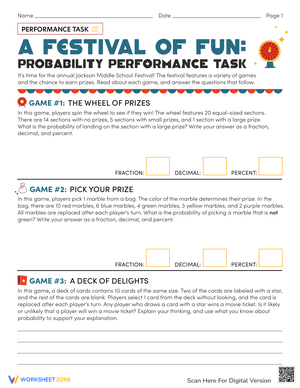
Students ready to move ahead benefit from probability worksheets for 8th grade that ask them to compare two probability situations rather than solve one in isolation. A worksheet that presents two carnival games — one with a 2 in 6 chance of winning, another with a 3 in 10 chance — and asks students to explain which is fairer and by how much pushes them toward proportional reasoning and written justification simultaneously. A few students in most 8th grade classes are also ready to explain, in writing, why experimental results from 50 trials are likely to be closer to the theoretical value than results from 10 trials — and that explanation, when students can produce it fluently, is a meaningful extension target.
Standard Alignment
These worksheets align to the CCSS Statistics and Probability standards within the 7.SP.C cluster — specifically 7.SP.C.5 (understanding probability as a number between 0 and 1), 7.SP.C.6 (approximating probability through repeated experiments), 7.SP.C.7 (developing probability models and comparing theoretical and experimental results), and 7.SP.C.8 (finding probabilities of compound events using organized lists, tables, and tree diagrams). In CCSS-aligned districts these standards sit in Grade 7, but the set serves 8th grade teachers whose pacing guides place probability instruction or structured review in the fall semester, or who are closing gaps from the prior year. Teachers in Texas will find direct overlap with TEKS 8.11, which places sample space construction, theoretical and experimental probability comparison, and prediction tasks explicitly at Grade 8.
Frequently Asked Questions
Do the worksheets include answer keys?
Every worksheet in the set includes an answer key. Keys support same-day feedback during independent work, make peer-checking at stations practical, and cut grading time when running multiple class periods on the same assignment.
What probability topics does the set cover?
The set covers simple probability, complementary events, compound events using organized lists and two-way tables, and theoretical versus experimental probability. Several worksheets mix more than one concept in a single assignment so students encounter varied problem types rather than repeating one procedure.
Can these worksheets work for intervention groups?
Yes. Because each worksheet targets a specific concept, teachers can assign simple probability and complementary events worksheets to students who need foundational work while the rest of the class tackles compound events. The standalone format means no cutting or modifying — each worksheet functions independently without reference to the others.
Are these useful before a unit test?
Mixed-skill worksheets from the set work well as pre-assessment review. Probability worksheets for 8th grade that combine sample space construction, complementary reasoning, and experimental data comparison in one assignment give students a representative look at the range of question types they will likely see on a unit test — and they give teachers one more data point on which skills still need reinforcement before the final class period.













 Interactive Worksheet Maker
 Quiz Maker
 Word Search Maker
 Crossword Puzzle Maker
 Word Scramble Generator
 Sentence Scramble Generator
 Handwriting Worksheet Generator
 Name Tracing Generator
 Fill In The Blank Generator