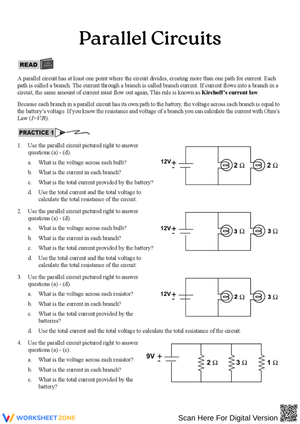
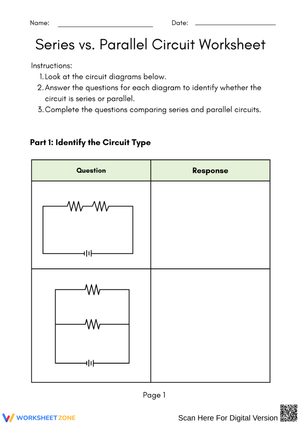
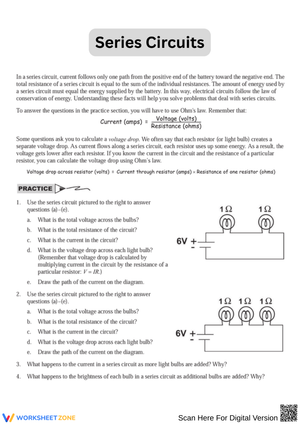
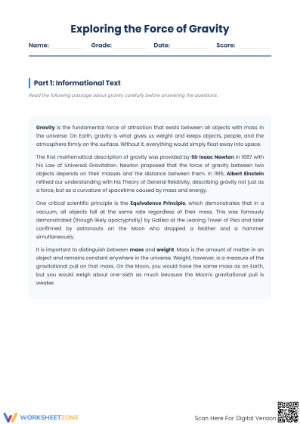
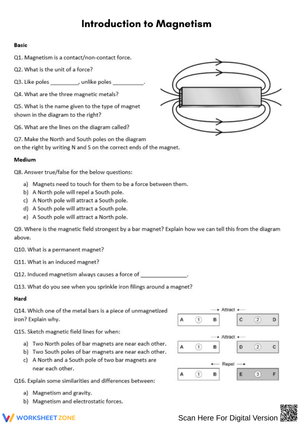
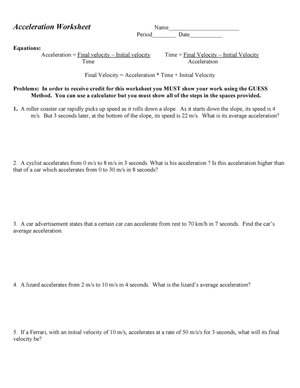
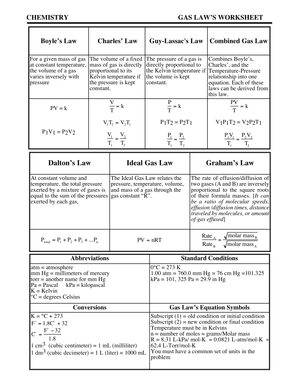
These 7th grade physics printable worksheets give middle school teachers focused practice on the physical science concepts that run through a standard Grade 7 curriculum — motion, forces, energy, waves, and simple machines — with each worksheet targeting one skill so students can work independently after brief teacher modeling. The diagrams are legible at standard print size, and the calculation prompts stay within reach for students who are meeting formulas for the first time. Teachers use this set for warm-ups, guided practice, station work, homework, and pre-exam review.
What Each Worksheet Targets
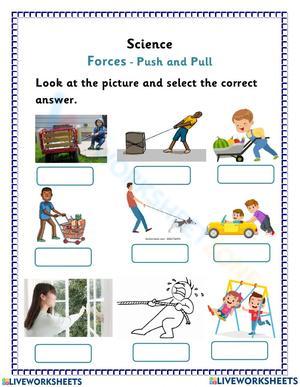
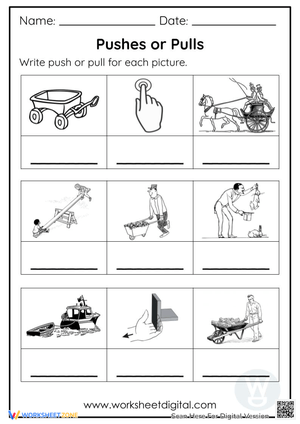
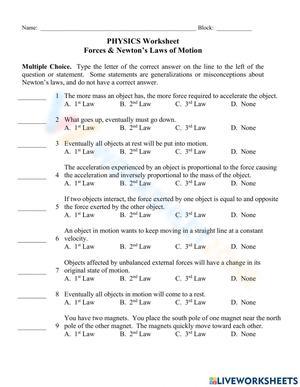
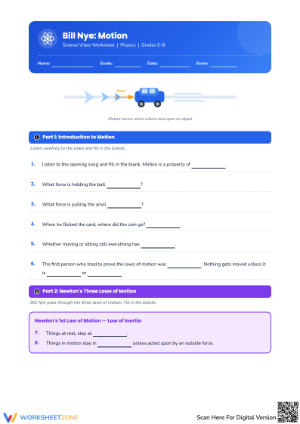
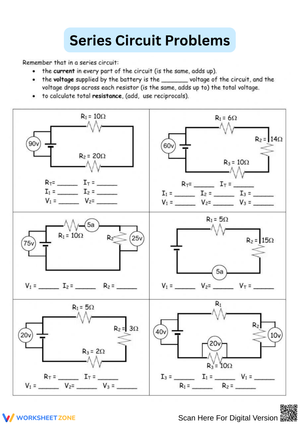
The set moves through physical science in the order most Grade 7 teachers recognize from their curriculum maps. Motion worksheets ask students to calculate speed from distance-time tables, identify whether an object is accelerating or holding constant velocity by reading a graph, and write comparisons between two moving objects using data rather than guesses. Force worksheets have students classify scenarios as balanced or unbalanced, draw force arrows to scale, and predict how a change in mass or net force would alter an object's path.
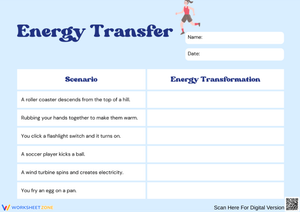
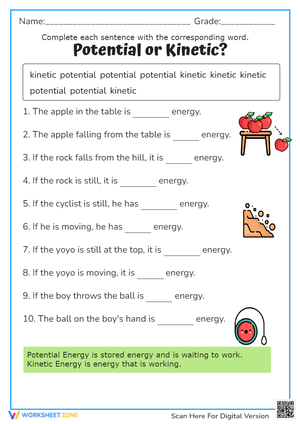
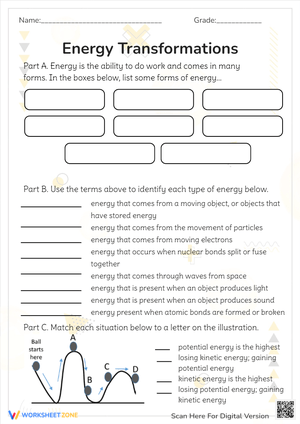
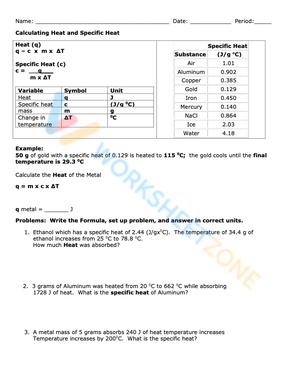
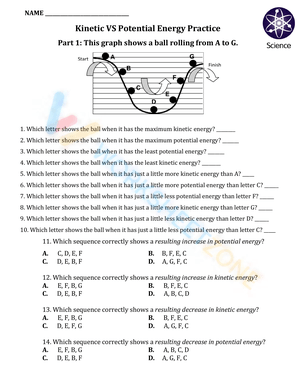
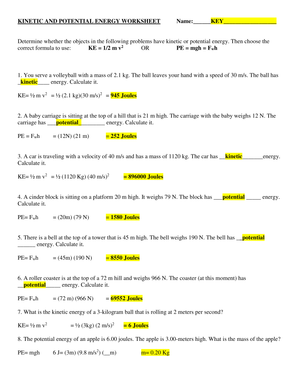
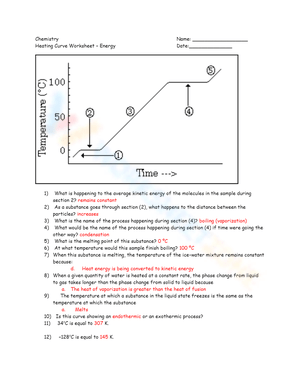
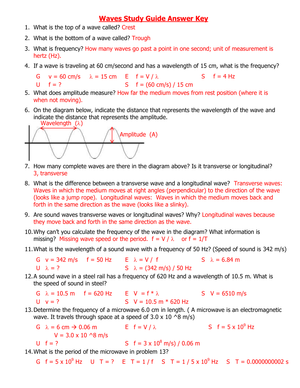
Energy worksheets cover kinetic and potential energy, energy transformation chains, and real-world examples such as a pendulum mid-swing or a ball released from a tabletop. Wave worksheets ask students to label amplitude, wavelength, crest, and trough; compare wave behavior in different media; and explain in writing how sound and light differ in what they need to travel. Simple machine worksheets have students name machine type, calculate mechanical advantage, and identify whether the machine multiplies force or distance. Across all five topic areas, these 7th grade physics printable worksheets are organized so teachers can pull by unit rather than working through the full set in sequence.
Errors That Show Up Constantly in Grade 7 Physics
The most persistent misconception at this grade is Aristotelian: students believe a moving object requires a continuous force to keep moving, and that when the force "runs out," the object stops. A student who correctly labels a diagram of a cart on a ramp will still write, in the open-response section, that the cart slows down on a flat surface "because there's no more push." The force scenario tasks in this set surface that reasoning early, when it can still be corrected rather than carried through the rest of the unit.
Distance-time graph misreading is nearly as common. Students interpret a steeper slope as "the object went farther" rather than "the object went faster." This error goes unnoticed when worksheets only ask students to plot points — it shows up clearly in student writing when the task requires comparing two lines on the same graph and explaining what each one means. The graph interpretation tasks here consistently demand that comparison, which is why they function as formative checks rather than simple drill repetitions.
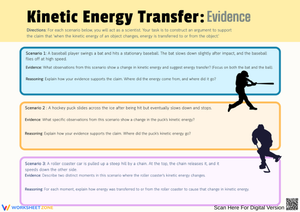
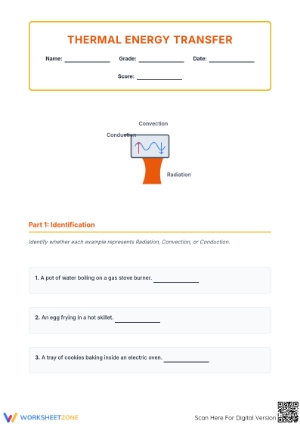
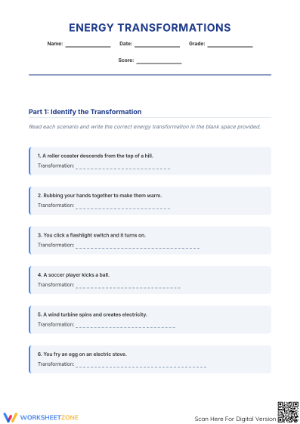
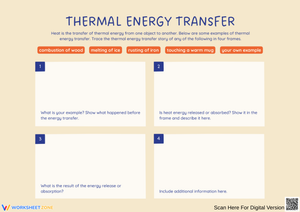
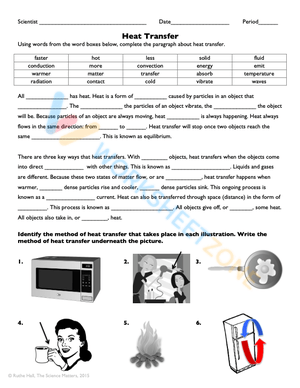
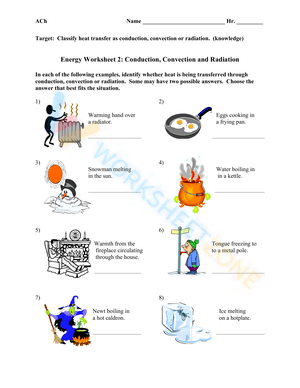
On energy, students frequently write that energy is consumed or destroyed rather than transformed. They'll describe a lightbulb "using up" its electrical energy without identifying heat and light as output forms. The energy transfer worksheets in this set ask students to trace each transformation explicitly — input, conversion step, output — which forces the issue before it becomes a problem on an exam. Balanced forces generate a similar misconception: students often assume balanced forces mean the object is stopped, even when the scenario describes something moving at constant speed.
Building These Worksheets Into Your Lesson Sequence
These 7th grade physics printable worksheets fit most reliably into the final 12 to 15 minutes of an introduction lesson, after direct instruction and at least one teacher-modeled example. By that point students have enough context to attempt a worksheet independently, and teachers can circulate to catch errors while there's still time to address them before dismissal. Assigning the same worksheet for homework that evening often means the misconception goes undetected until the following day, when there's less instructional time to fix it.
For station work, pair a force or wave worksheet with a short physical demonstration — a balloon on a string, a tuning fork held near a water surface — so one group engages with a hands-on experience while another completes the corresponding worksheet. The worksheet then functions as a record of reasoning, not just a task to finish. For reteach groups, pull a single worksheet from the relevant topic section, work through the first two items alongside the group, then release them to finish independently. The annotation space on each worksheet gives students who are struggling room to show their thinking without crowding the answer line.
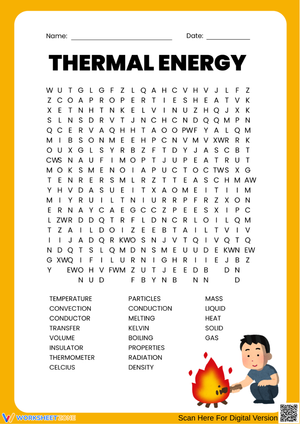
Monday warm-ups work best with the vocabulary and labeling worksheets — students returning from a weekend benefit from a low-stakes recognition task before being asked to calculate or explain. The Friday review block, especially the last 20 minutes before the weekend, works better with the mixed-topic review worksheets, where students shift between motion, forces, and energy questions rather than working one problem type on repeat.
Adjusting These Worksheets for Different Learners
The most efficient differentiation approach for this set is keeping the same core diagram or data table for all students and varying only what each group does with it. A distance-time graph, for example, can prompt one group to identify which object is moving faster, ask a second group to calculate each object's speed and explain the difference in a sentence, and challenge a third group to write a claim-evidence-reasoning response using the graph as evidence. All three groups work from the same visual — the depth of the task shifts, not the topic.
- For students who need more support: add a reference box at the top of the worksheet with the relevant formula and a completed example, or pre-fill the first row of any calculation table so students can see the format before completing the rest on their own.
- For on-level students: use the worksheets as written, with standard prompts and full calculation tasks intact.
- For students ready for extension: include a short written prompt at the bottom — "What would change in the speed calculation if the time doubled but the distance stayed the same? Use the formula to explain." — rather than adding more of the same problem type.
Grade 7 is also the first year many students encounter formal physics vocabulary in written prompts. Terms like net force, kinetic energy, and mechanical advantage appear throughout this set. For English learners or students with reading difficulties, attaching a brief glossary — even three or four terms with plain-language definitions — reduces the language barrier without modifying the physics task itself.
Standard Alignment
These worksheets align to the NGSS middle school Physical Science performance expectations. The force and motion worksheets connect most directly to MS-PS2-1, which asks students to apply Newton's Third Law to motion scenarios involving colliding objects, and MS-PS2-2, which has students interpret how net force and mass together determine changes in an object's motion. In most curriculum sequences, both standards appear mid-year after students have developed number sense around speed and distance — so the force worksheets work best placed after the motion sequence, not alongside it.
The energy worksheets align to MS-PS3-1 and MS-PS3-2, which address the relationship between kinetic energy and an object's mass or speed, and the storage of potential energy in systems when object arrangements change. These standards typically land in the second semester, making the energy worksheets useful for unit introduction or formative pre-assessment in the spring. Wave worksheets connect to MS-PS4-1, which asks students to use mathematical representations to describe wave properties including how amplitude relates to energy. Teachers in states that follow a modified version of NGSS should verify grade-level placement against their state's specific course framework, since some reorganize the physical science scope across grades 6 through 8.
Frequently Asked Questions
Do these worksheets include answer keys?
Yes. Each worksheet comes with a corresponding answer key that covers calculation answers, labeled diagram solutions, and sample written responses for open-ended items. The sample responses are brief enough to support student self-checking at the end of class without providing fully developed model answers.
How long do these worksheets typically take to complete?
Most worksheets run between 10 and 20 minutes for on-level students. Calculation-heavy worksheets — speed, mechanical advantage — tend to take longer than labeling or vocabulary tasks. Teachers who want a 5-minute warm-up rather than a full practice block can assign only the first section and save the rest for a review day later in the week.
Are these suitable for both unit practice and test review?
Both uses work well. For practice within a unit, individual worksheets work as guided or independent tasks immediately after instruction. For pre-exam preparation, teachers commonly pull two or three worksheets from across the physics sequence and combine them into a review packet spanning motion, forces, and energy. The mixed-topic worksheets in this set of 7th grade physics printable worksheets cover the highest-priority concepts from the full year's physical science sequence, making them especially useful in the two or three class periods before an end-of-unit exam.
Can these resources be used digitally as well as printed?
The resources are formatted for print, and the diagram-based worksheets are most legible at full print size. Written response items work reasonably well as typed answers in a PDF annotation tool when teachers distribute files digitally. The calculation tasks and graph-reading worksheets are generally easier to complete on paper because students need to mark directly on diagrams or write out sequential steps.












 Interactive Worksheet Maker
 Quiz Maker
 Word Search Maker
 Crossword Puzzle Maker
 Word Scramble Generator
 Sentence Scramble Generator
 Handwriting Worksheet Generator
 Name Tracing Generator
 Fill In The Blank Generator