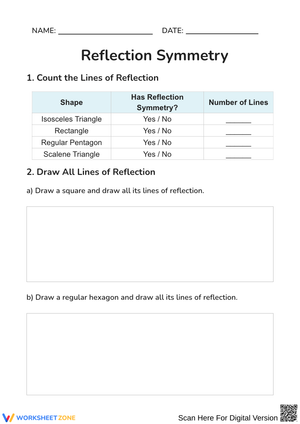
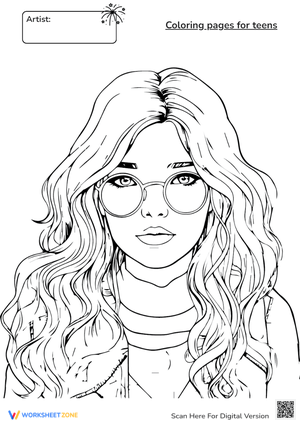
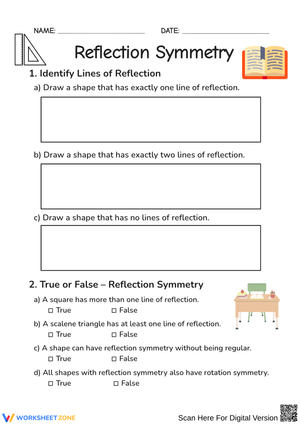
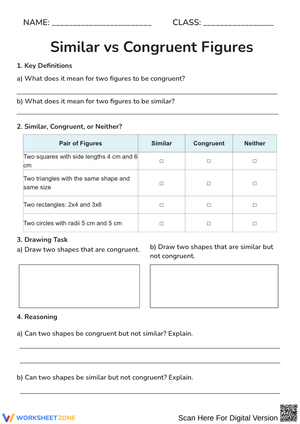
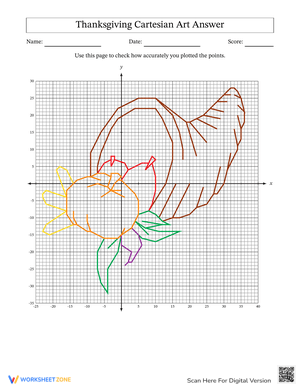
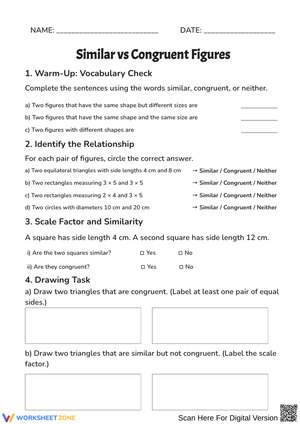
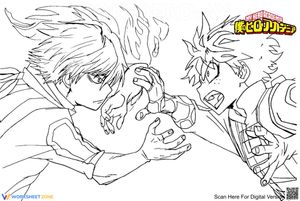
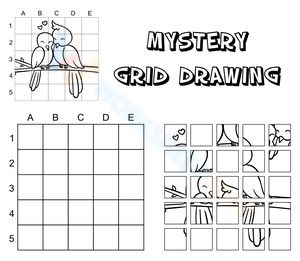
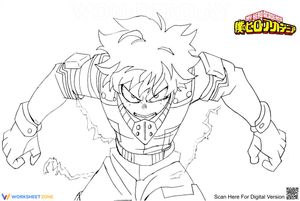
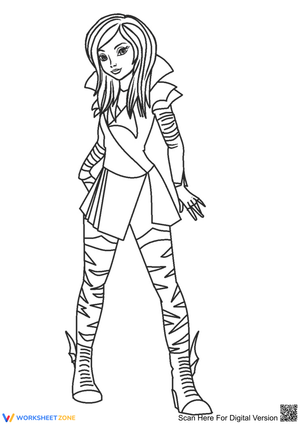
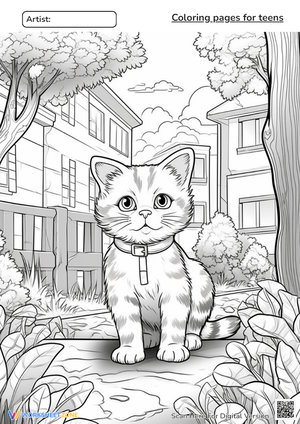
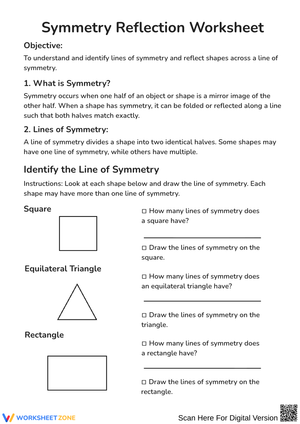
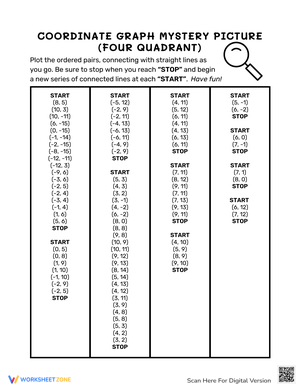
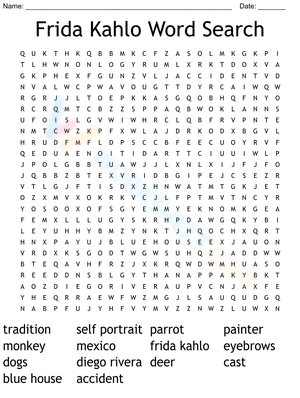
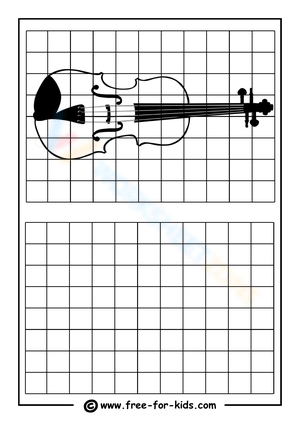
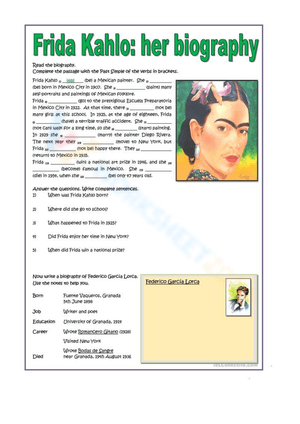
These art worksheets printable for 7th grade give teachers a focused, low-prep option for the parts of class that often go underserved — the five minutes at the start of period, the day a studio lesson finishes early, the sub plan that needs to work without classroom materials. Each worksheet targets one specific skill, keeps directions tight, and leaves room for students to either sketch or write a substantive response.
The Specific Skills Each Worksheet Targets
The resources span both making and reading art, which reflects how middle school visual arts programs actually run. Students do not just create — they analyze, plan, describe, and revise. The set is built around those habits:
- Elements of art: Students identify, compare, or apply line, shape, form, value, texture, color, and space in images and in their own work. The stronger worksheets ask students to mark directly on a reproduced artwork or produce a quick sample rather than simply circle an answer.
- Principles of design: Balance, contrast, emphasis, movement, pattern, rhythm, and unity appear as vocabulary tasks and composition-analysis prompts. Seventh graders are ready to explain why a principle is visible, not just name it.
- Color theory: Analogous relationships, complementary pairings, tint and shade scales, and warm-cool contrast appear across several worksheets. Some ask students to predict the emotional effect of a color choice before viewing the full artwork.
- Critique and reflection: Short written frames guide students from description through analysis toward a supported opinion. These are deliberately brief — a worksheet filled entirely with open-ended critique prompts shuts most seventh graders down immediately.
- Planning and process: Thumbnail sketch boxes, composition checklists, and material planning sections give students a structured place to think before a larger studio piece begins.
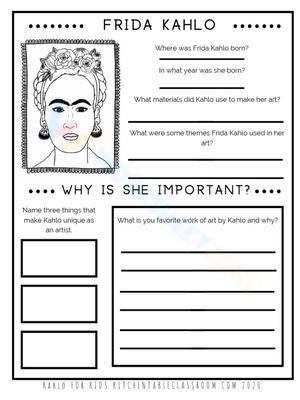
- Art history and cultural connections: Image-study and reading-response prompts introduce artists and movements without requiring a full research project, making them useful when a teacher wants historical context without giving up studio time.
Mistakes Students Make That These Worksheets Help Surface
Color theory produces the most consistent errors, and the pattern is predictable: students who can define "analogous colors" on a vocabulary quiz still reach for complementary pairs — orange and blue, red and green — when asked to build an analogous palette from scratch. They are not being careless. They are defaulting to colors that feel visually exciting, which is a good instinct going slightly wrong. A worksheet that asks them to pick three adjacent hues from a color wheel and then justify why that palette creates a unified mood corrects the error more reliably than a whole-class reminder does.
Critique writing has its own predictable gap. Students resist applying vocabulary even when the terms are printed directly on the worksheet in front of them. A seventh grader will write "it looks balanced because both sides are the same" without realizing that describes symmetry specifically, and without connecting what they see to any compositional or emotional effect. Sentence frames that require one named principle plus one piece of visual evidence — "I can see _____ in this composition because _____" — close that gap faster than open prompts do.
Building These Resources Into a Consistent Weekly Plan
The most practical use is a recurring slot rather than scattered deployment. A Monday–Wednesday–Friday rhythm works well at this level: a visual vocabulary or observation warm-up at the start of Monday's period, a planning or process check midweek, and a critique or reflection response on Friday. Students start to understand what each format expects from them, which means fewer minutes spent explaining directions and more time actually discussing what they see.
Sub plans are another high-value use. Each worksheet functions independently — students need a pencil, possibly colored pencils, and the printed sheet. No demo, no specialized materials, no setup requiring someone familiar with the course. A worksheet covering vocabulary review or image analysis keeps the class productive even when you are not there.
For project-integrated use, the planning worksheets and critique forms do the most work. A thumbnail sketch worksheet assigned the class period before students begin a painting slows down the "just start" impulse that reliably produces weak compositions. A reflection worksheet completed immediately after a critique discussion captures thinking that would otherwise disappear before the next meeting.
Standard Alignment
These worksheets align directly with the National Visual Arts Standards for Creating (VA:Cr), Responding (VA:Re), and Connecting (VA:Cn). At the seventh-grade level, VA:Re7.1.7a — analyzing how images influence specific audiences — and VA:Re8.1.7a — interpreting how subject matter, form, media, and structure shape meaning — are the standards most visibly addressed through the critique and image-analysis worksheets. The planning and process resources support VA:Cr1.1.7a, which asks students to apply strategies for generating and refining creative ideas. These are not peripheral standards: responding to and interpreting art is assessed in district-level rubrics and appears in middle school portfolio requirements across most state frameworks. Art worksheets printable for 7th grade that focus on critique and visual analysis give teachers documentable, standards-aligned evidence of student understanding without turning every lesson into a formal assessment event.
Adjusting Each Worksheet for Mixed-Readiness Classes
The core content stays consistent across levels, but the demand is easy to shift. For students who need more support, a word bank alongside the critique prompts reduces vocabulary recall pressure so attention stays on observation. Sentence starters — "In this artwork, I notice..." or "The artist used _____ to create..." — give students an entry point without doing the thinking for them.
For students who move quickly, removing the sentence starters, asking for a second principle, or adding a design challenge at the bottom of the worksheet moves the task into harder territory without requiring a separate resource. A student who finishes the analogous color activity in four minutes can be asked to create a second palette that produces the opposite emotional effect and explain the difference in writing. Same worksheet, genuinely harder task.
One honest limitation worth naming: students who are strong sketchers often rush through written critique worksheets because writing feels like an obstacle rather than a thinking tool. For those students, pairing the written response with a brief verbal explanation — even just to a partner — tends to produce better reflection than the writing alone.
Frequently Asked Questions
Do these worksheets work for bell ringers, or are they better suited for longer class blocks?
Both. The observation and vocabulary worksheets move fast enough for a 7- to 10-minute warm-up. Planning worksheets and critique forms need closer to 15 to 20 minutes and fit better inside a full class period or as a structured homework assignment. Looking at each worksheet before planning the timing is worth the 30 seconds it takes.
Can these be used without a textbook or specific curriculum sequence?
Yes. Each worksheet is self-contained, and students work from printed images or prompts on the worksheet itself — no required text, slide deck, or course sequence. Teachers using a purchased curriculum, a district-developed unit, or a self-built sequence all find places where art worksheets printable for 7th grade fill gaps without requiring adaptation.
How do these work in a classroom with very different ability levels?
The format supports tiered use because the visual prompt is shared while the written demand is adjustable. You can distribute the same worksheet to the whole class and vary only the response requirement — a single labeled observation for some students, a full paragraph using three art terms for others. The class works on the same image and concept while different students have different entry points.
Are any of these suitable for informal assessment?
The critique and analysis worksheets produce clear, collectible evidence of understanding. A color-theory worksheet asking students to build and label a specific palette tells you quickly whether a student can apply the concept or only recognize it in a multiple-choice context. Many teachers use art worksheets printable for 7th grade as formative checks rather than summative grades, but the responses are specific enough to document standards-aligned progress when that documentation is needed.