


























Views
Downloads
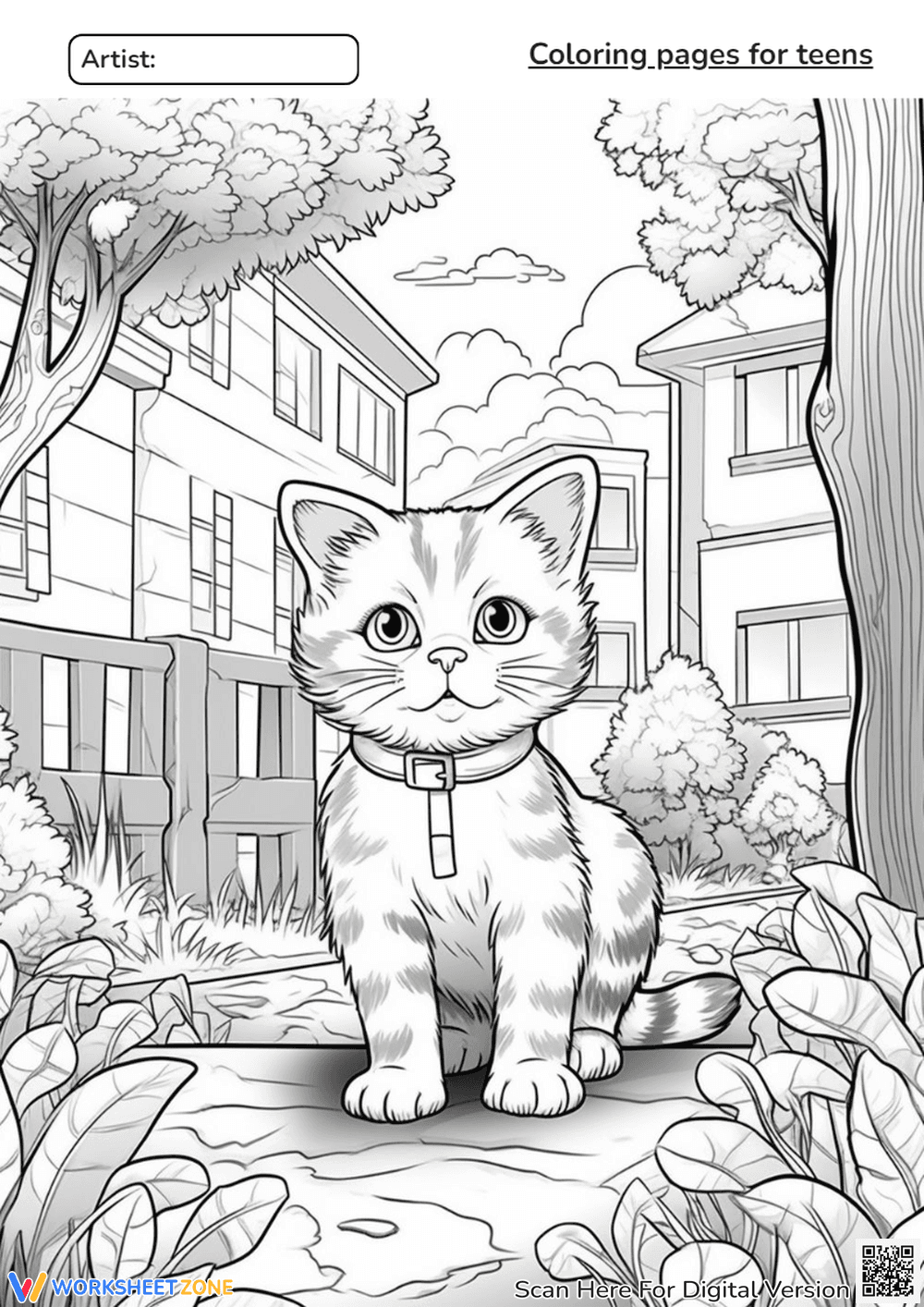

Grade 7 Cat Coloring — Printable No-Prep Worksheet
Paste this activity's link or code into your existing LMS (Google Classroom, Canvas, Teams, Schoology, Moodle, etc.).
Students can open and work on the activity right away, with no student login required.
You'll still be able to track student progress and results from your teacher account.
This printable fine art worksheet provides middle school students with a structured creative outlet to practice color theory and fine motor control. Students apply shading, contrast, and color harmony to a detailed illustration of a cat in an urban setting. This activity builds spatial awareness and artistic focus.
At a Glance
- Grade: Grade 7 · Subject: Fine Art
- Standard:
VA:Cr1.1.7— Apply methods to overcome creative blocks and generate innovative artistic ideas- Skill Focus: Color harmony and shading
- Format: 1 page · 1 task · No answer key · PDF
- Best For: Middle school art class warm-up or mindfulness break
- Time: 20–30 minutes
This resource features a single-page, high-resolution coloring sheet depicting a detailed kitten sitting outdoors with houses and foliage in the background. The clean, black-and-white line art provides clear boundaries for coloring. There are no complex instructions or word banks, allowing students to focus entirely on selecting color palettes, experimenting with shading techniques, and practicing precision.
This zero-prep worksheet streamlines classroom management with a simple three-step workflow. First, print the single-page PDF document, which takes less than 1 minute. Second, distribute the sheet to students along with coloring materials like colored pencils or markers, requiring about 30 seconds. Third, review student progress during the activity or display the finished pieces. The total teacher preparation time is under 2 minutes, making this resource an excellent option for emergency sub plans, early finisher activities, or transition periods.
This activity aligns directly with the National Core Arts Standard `VA:Cr1.1.7`, which focuses on applying methods to overcome creative blocks and generate innovative ideas. By selecting color schemes and planning their visual approach, students engage in active artistic decision-making. Additionally, it supports `VA:Cr2.1.7` by demonstrating persistence and craft in art-making. Both standard codes can be copied directly into lesson plans, IEP goals, or district curriculum mapping tools.
Use this worksheet during the introductory phase of a color theory lesson to let students experiment with warm and cool colors. Alternatively, assign it as a calming post-assessment activity to help students transition between high-stakes testing and regular instruction. Teachers can conduct formative assessment by observing how students manage spatial boundaries and choose contrasting colors. Expect students to complete the coloring task within 20 to 30 minutes.
This worksheet is designed for seventh and eighth-grade students who need to develop fine motor control or explore visual arts concepts. It serves as an accessible entry point for students requiring modified art tasks, as well as an extension for advanced students practicing advanced blending. Pair this worksheet with a short instructional video on color wheels or a basic shading anchor chart.
This fine art worksheet supports student engagement and focus through structured creative tasks. By aligning with standard VA:Cr1.1.7, the activity encourages students to apply color theory and spatial reasoning to generate unique artistic outcomes. Research from Fisher & Frey (2014) highlights the value of structured visual tasks in promoting cognitive recovery and reducing academic anxiety during transitions. Engaging with detailed line art helps middle school students build persistence and fine motor control while reinforcing visual concepts. The single-page format ensures that teachers can implement the activity immediately without extensive preparation, maximizing instructional time. This resource serves as a practical tool for integrating visual arts standards into daily classroom routines, supporting both artistic development and student well-being.


