


























Views
Downloads
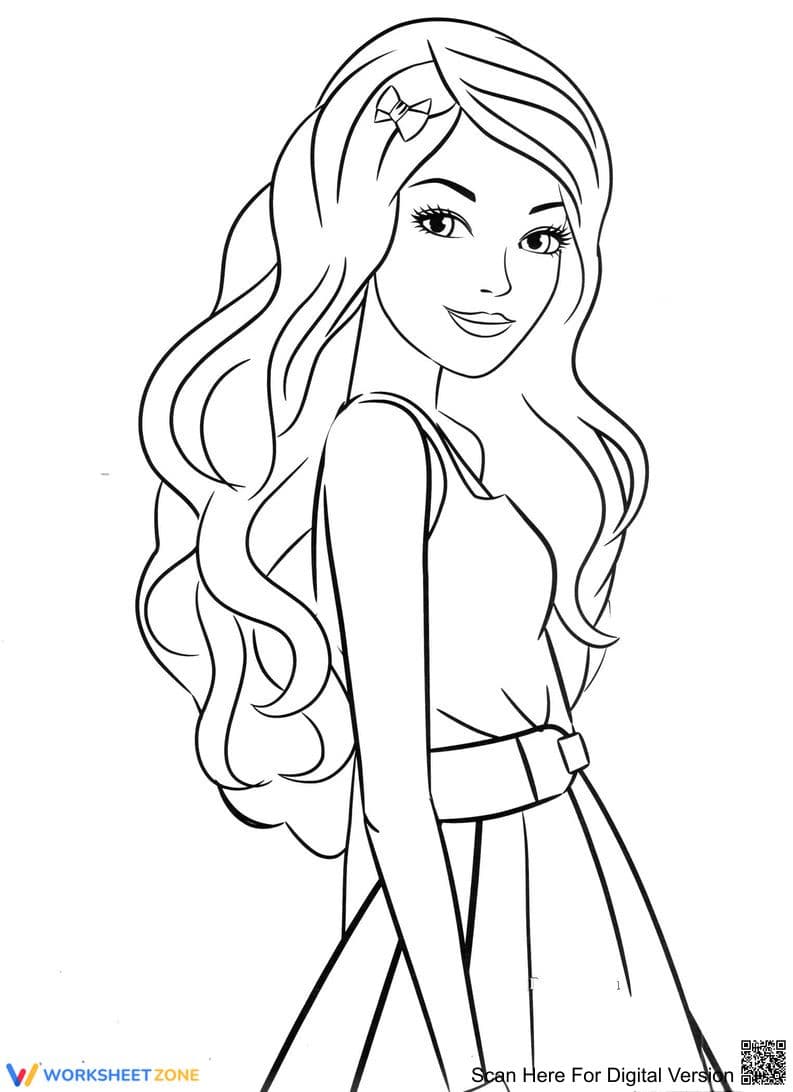

Free Printable Fashion Coloring Page for Teens
Paste this activity's link or code into your existing LMS (Google Classroom, Canvas, Teams, Schoology, Moodle, etc.).
Students can open and work on the activity right away, with no student login required.
You'll still be able to track student progress and results from your teacher account.
This printable fashion coloring page provides middle school students with a creative outlet to develop fine motor control and explore color theory. Students apply shading, blending, and color coordination to a stylish portrait of a young woman. This activity encourages artistic expression and focus during transition times or art classes.
At a Glance
- Grade: Grade 6 · Subject: Fine Art
- Standard:
VA:Cr1.1.6a— Combine concepts to generate an innovative idea for art-making- Skill Focus: Color theory and fine motor control
- Format: 1 page · 1 task · Answer key not applicable · PDF
- Best For: Early finishers and art class warm-ups
- Time: 15–30 minutes
This resource features a single-page, high-resolution line art illustration of a teenage girl with long, wavy hair and a bow accessory. The clean black-and-white lines provide a structured canvas for students to experiment with different mediums, including colored pencils, markers, or pastels. The design balances detailed areas, like the hair waves, with broader spaces on the dress, allowing for varied shading techniques.
The zero-prep workflow makes this resource exceptionally easy to integrate into a busy school day. First, print the single-page PDF, which takes less than 1 minute. Second, distribute the sheets to students along with coloring utensils, requiring about 1 minute of transition time. Finally, review student work by displaying the completed portraits on a classroom gallery wall, taking about 5 minutes. This entire process requires under 2 minutes of active teacher preparation, making it an ideal sub plan or transition activity.
Standards Alignment
This activity aligns directly with the National Core Arts Standard VA:Cr1.1.6a, which focuses on combining concepts to generate innovative ideas for art-making. By selecting color schemes and applying unique shading patterns, students transform a basic outline into a personalized piece of visual art. Both standard codes can be copied directly into lesson plans, IEP goals, or district curriculum mapping tools.
How to Use It
Use this worksheet as a quiet transition activity after high-stakes testing or during homeroom periods. Alternatively, introduce it during a formal art lesson on color harmony, instructing students to use only complementary or analogous colors. During the activity, observe how students approach complex patterns in the hair to assess their fine motor control and spatial awareness. Students typically complete the coloring page within 20 to 30 minutes.
Who It's For
This worksheet is designed for students in Grade 6 and Grade 7 who benefit from creative expression and mindfulness exercises. It serves as an excellent accommodation for students requiring sensory breaks or fine motor practice. Pair this coloring page with a introductory lesson on portraiture or a short reading passage about fashion history to create a multidisciplinary art unit.
According to the RAND AIRS 2024 report, integrating visual arts and creative coloring activities into middle school curricula supports cognitive decompression and improves student engagement during academic transitions. The study highlights that structured artistic tasks, such as coloring detailed line drawings, help students refine fine motor skills and spatial reasoning. By aligning this activity with the VA:Cr1.1.6a standard, educators ensure that creative expression remains grounded in developmental milestones. The research indicates that even brief periods of focused artistic creation can reduce academic anxiety and improve subsequent task performance in core subjects like English Language Arts. This worksheet provides a practical, evidence-based tool for teachers seeking to incorporate these benefits into their daily classroom routines without increasing prep time.


