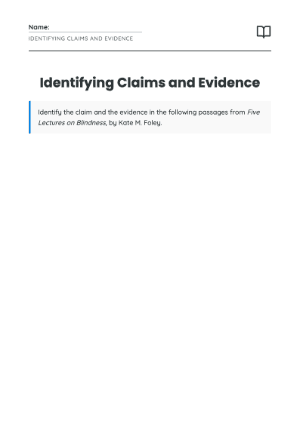
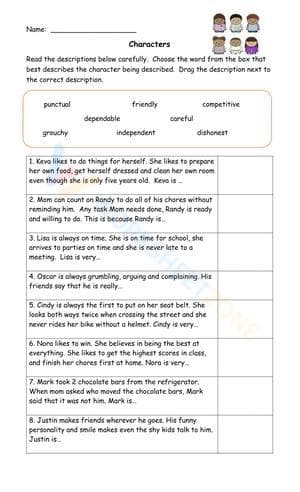
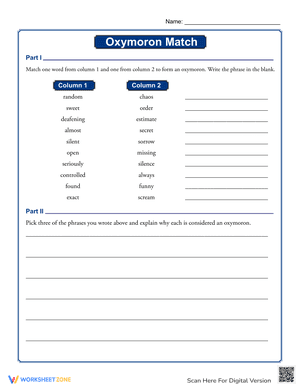
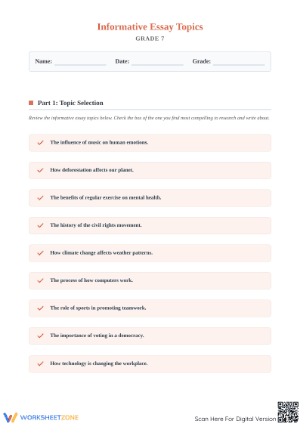
These 7th grade organization and structure worksheets resources give teachers passage-based practice at the level CCSS.ELA-LITERACY.RI.7.5 and RL.7.5 actually demand — not vocabulary sorting, but close reading with a written explanation component that shows whether a student understands how an author's organizational choices shape the development of ideas. Each worksheet pairs a short informational or literary passage with structured questions that move from identification to evidence citation to analysis. That format holds up across whole-class lessons, intervention groups, literacy stations, and homework without requiring any prep beyond printing.
Skills Each Worksheet Builds
The five patterns seventh graders encounter most often — chronological order, compare and contrast, cause and effect, problem and solution, and descriptive organization — appear across the set, always embedded in authentic passages rather than isolated sentence examples. Section-level analysis tasks are included as well, asking students to explain how a specific paragraph, scene, or stanza contributes to the development of the whole text. The specific practice tasks built into each worksheet include:
- Underlining signal words and annotating how they connect to the author's organizational choices
- Completing structure-specific graphic organizers before composing a written response
- Citing sentences or details from the passage that confirm the identified pattern
- Writing one to three sentences explaining how the structure serves the author's purpose
- Comparing passages organized around different patterns in review and enrichment tasks
At their best, 7th grade organization and structure worksheets resources push past labeling into close-reading work that makes structure feel like a genuine comprehension tool. Identifying that a text uses problem-solution is the beginning of the analysis, not the end of it. Students need to follow that identification with an explanation of how the author builds the problem across sections and why that arrangement serves the purpose better than a narrative sequence would.
Mistakes Students Make That These Worksheets Help You Catch
The most persistent error at this grade level is circular identification. A student marks a passage as "cause and effect" and then writes: this passage uses cause and effect because it has causes and effects. The structure name reappears in the explanation without any real analysis of the relationship between ideas. These worksheets surface that gap because the written response prompt cannot be answered with a restatement of the pattern name — students have to explain the causal relationship and connect it to what the author is trying to establish.
Problem-solution and cause-effect confusion shows up frequently, especially in science and social-issues texts where both "because" relationships and proposed remedies appear in the same passage. Students mislabel texts that describe a problem and its origins as cause-effect when the organizing logic is built around a resolution. Reading both the structure label a student selects and the explanation they write reveals that confusion faster than a class discussion does — and makes it straightforward to pull a small group for a targeted re-teach.
A third pattern appears in annotation work. Students who mark signal words accurately still produce written responses that describe what happened in the text rather than what the structure accomplishes for the reader. Prompts that ask "how does this structure help the author develop the central idea?" — rather than "what structure does this passage use?" — draw out that distinction and make the thinking gap visible on the page.
How to Work These Worksheets Into Your Lesson Plans
A short weekly cycle keeps the skill active without crowding the rest of the unit. Day one: model a single structure with a brief whole-class passage, narrating the thinking aloud. Day two: students annotate a passage with a partner and sort evidence into a graphic organizer before discussing. Day three: independent worksheet — identification, evidence citation, written response. Day four: a quick exit ticket or constructed response checks whether students transfer the skill to an unfamiliar text. That sequence generates multiple data points from the same instructional focus without turning every lesson into a text structure lecture.
For literacy stations, these worksheets move into a rotation cleanly. One station handles passage annotation, another works with structure-specific graphic organizers, and a third focuses on writing the analysis sentence. Because the worksheet format stays consistent across the set, students work independently during the rotation while the teacher pulls a small group — which matters during the 12 minutes between a transition and the bell.
Sorting the worksheets by the type of thinking they require — rather than by structure name alone — also speeds up planning. Some students are stuck at identification; others identify correctly but cannot explain the effect on meaning or the author's purpose. Keeping those two categories in separate folders makes it faster to assign targeted follow-up practice without building new materials.
Standard Alignment
CCSS.ELA-LITERACY.RI.7.5 asks students to analyze the structure an author uses to organize a text, including how major sections contribute to the development and elaboration of ideas. CCSS.ELA-LITERACY.RL.7.5 extends that expectation to literary texts, asking seventh graders to analyze how a drama's or poem's form or structure contributes to meaning. Both standards push past recognition into analysis, which is why the evidence citation and written response tasks carry as much instructional weight as the identification questions on each worksheet.
Teachers who integrate these 7th grade organization and structure worksheets resources as a comprehension tool — rather than treating structure as a standalone vocabulary unit — see stronger transfer when students encounter unfamiliar passages on spring benchmark assessments. In most Grade 7 sequences, both standards receive direct attention during fall close-reading units and again in the weeks before standardized testing.
Adjusting the Worksheets for a Range of Learners
Students who are still building foundational reading fluency do better starting with worksheets that use single-paragraph passages and offer a graphic organizer as an intermediate step before the written response. Filling in the organizer first — identifying the relationship, noting the signal words, then composing one explanation sentence — reduces the distance between recognizing the pattern and articulating it in writing. Students who freeze in front of a blank response line usually need that middle step, not more instruction on cause-and-effect vocabulary.
On-level students work with multi-paragraph passages and a mix of selected-response and open-ended questions. The selected-response items give a quick accuracy check; the open-ended items reveal depth of understanding. For students close to mastery, comparing two worksheets built around different structures — analyzing why one passage is organized chronologically and another comparatively, and how each choice serves its author differently — mirrors the kind of extended analysis that appears on state ELA assessments at this grade. That comparison task also has natural overlap with synthesis writing, often the next skill in a Grade 7 reading sequence.
Frequently Asked Questions
What text structures do the worksheets cover?
Chronological order, cause and effect, compare and contrast, problem and solution, and descriptive organization are all represented across the set. Several worksheets also include section-level analysis tasks — students explain how a specific paragraph, scene, or stanza contributes to the development of the whole text, aligning directly with both RI.7.5 and RL.7.5.
How long does each worksheet take to complete in class?
Most students finish the reading and questions in 10 to 15 minutes, depending on passage length and whether the worksheet includes a written response. That timing works for a bell ringer, a closing activity, or a focused practice segment inside a longer lesson block.
Can these be used with literary texts as well as informational passages?
Yes. Several worksheets use literary excerpts — short story passages, poem stanzas, or dramatic scenes — and ask students to analyze how form and structure contribute to meaning. That directly supports RL.7.5 alongside the informational reading practice.
Do these work for test prep?
Text structure analysis appears on state ELA assessments at the seventh-grade level in both selected-response and extended-response formats. These 7th grade organization and structure worksheets resources train students to read a passage, name the structure, cite text evidence, and explain its effect — the same sequence most standardized prompts require — and doing that repeatedly across the year builds both fluency and confidence with the skill.















 Interactive Worksheet Maker
 Quiz Maker
 Word Search Maker
 Crossword Puzzle Maker
 Word Scramble Generator
 Sentence Scramble Generator
 Handwriting Worksheet Generator
 Name Tracing Generator
 Fill In The Blank Generator