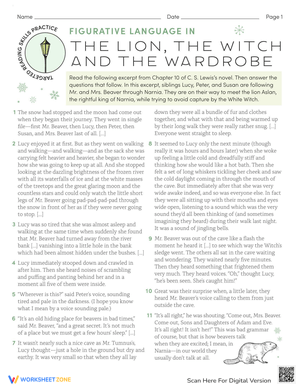
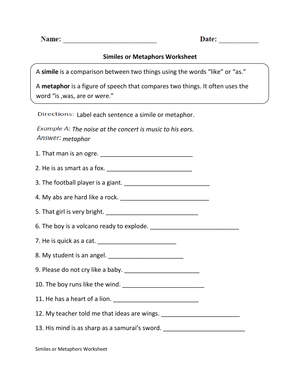
These metaphors printable worksheets for 7th grade close the gap between recognition and real interpretation — the point where middle school ELA instruction often stalls. Spotting "her voice was silk" takes seconds; explaining what that comparison does to the reader's understanding of a character requires something more deliberate. The worksheets give teachers focused, flexible tools for building that thinking across both reading and writing work.
The Specific Skills Targeted
By seventh grade, students have already encountered similes and basic metaphor definitions in earlier grades. The instructional shift at this level is toward analysis: not just naming the device but unpacking what the comparison means and why a writer might choose it. Teachers selecting metaphors printable worksheets for 7th grade will find the strongest tasks are those that push past identification into that explanatory territory.
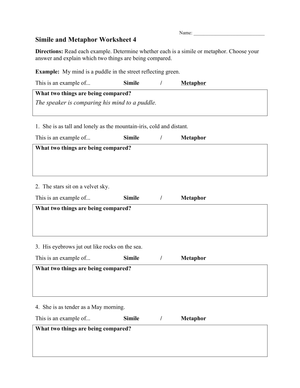
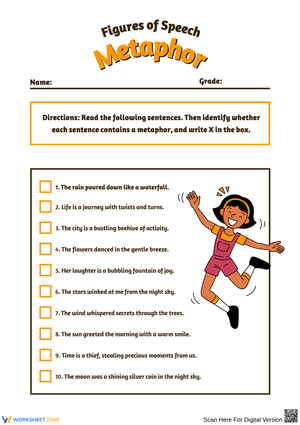
- Identification: Students underline or mark the metaphor in a sentence or short passage.
- Sorting: Students distinguish between metaphor, simile, and literal language — a category distinction that still trips up many 7th graders who rely too heavily on the "like or as" rule alone.
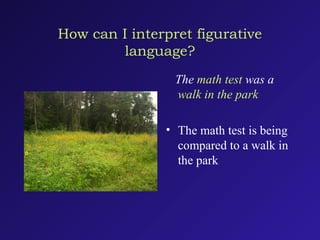
- Literal restatement: Students rewrite the metaphor's meaning in plain language (e.g., "The classroom was a zoo" becomes: the room was loud and difficult to manage).
- Analytical response: Students explain how the metaphor shapes mood, tone, or the reader's understanding of a character or setting.
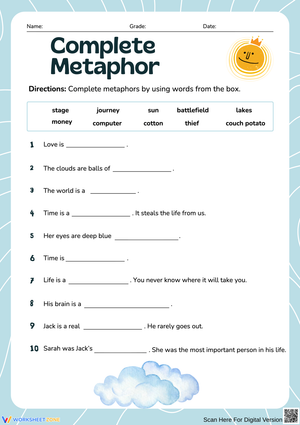
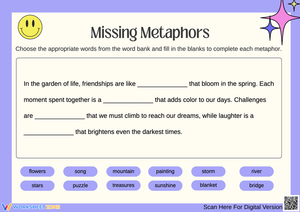
- Writing application: Students craft original metaphors connected to a character, emotion, or setting from current class reading.
This progression — from recognizing to restating to analyzing to creating — mirrors how literary analysis develops through the middle school years. Students who can move through all four steps have a transferable skill, not just a test item checked off.
Where Students Consistently Go Wrong With Metaphors
The most persistent error isn't misidentification — it's surface-level explanation. When asked to explain a metaphor, students describe the image rather than unpack the comparison. A student reading "grief is a stone in the chest" will write "the person feels like there is a stone in their chest" — which restates the metaphor as though it were a simile — instead of explaining that grief feels heavy, immovable, physically pressing down. That distinction between re-describing and genuinely interpreting is where the analytical work lives, and it's what these worksheets press students to practice explicitly.
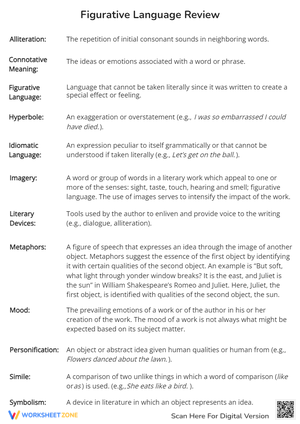
A second consistent pattern: students who learned "like or as = simile" apply that rule backward and assume any comparative language without those signal words must be a metaphor. That logic causes them to mark idioms, personification, and hyperbole as metaphors. Sentence sort tasks that mix all these types surface this confusion quickly and give teachers concrete formative information about where specific students are still fuzzy.
Fitting These Worksheets Into the Rhythm of the Week
A reliable sequence for a 40-minute ELA block: open with three or four examples where students label aloud or on mini whiteboards (metaphor, simile, or literal). Follow that with a brief direct instruction segment where you model the two-part explanation — "This metaphor means… The author uses it to show…" — then release students to work through an interpretation worksheet independently. The last eight minutes before transition work well for partner comparison, where pairs flag any explanations that describe the image rather than the meaning.
Station rotations also run cleanly with this material. An identification worksheet at one station, a short passage analysis worksheet at another, and a writing prompt at a third creates three distinct levels of cognitive demand without requiring three separate lesson plans. On days when a substitute is managing the room, the worksheets that open with a worked example and use short, numbered directions are the ones students actually complete — and those same features make independent practice run more smoothly during regular instruction, too.
Making the Set Work Across Different Ability Levels
Students who need more support do better when the metaphor is already underlined on the worksheet. That removes the visual search task and lets them concentrate entirely on interpretation. A brief word bank — terms like heavy, chaotic, cold, still, bright — gives students entry points for explaining figurative meaning without staring at a blank response line. These adjustments preserve the analytical expectation while reducing the surface-level obstacles that cause some students to disengage before they start.
For students who move quickly past basic interpretation, the stronger challenge is evaluation. Provide two metaphors that describe the same subject — anxiety as "a hum in the wires" versus anxiety as "a stone in the pocket" — and ask them to argue in writing which one lands harder and why. That kind of comparative evaluation pushes well past the recognition level and into genuinely literary thinking. These metaphors printable worksheets for 7th grade can be extended this way without adding new materials; it's a matter of attaching a written prompt to an existing worksheet.
Grouping structures also open up support options. In a pair, one student identifies the metaphor while the other restates its meaning in plain language; both then agree on the effect. This division of labor reduces the cognitive load during initial practice while keeping the interpretive standard high.
Standard Alignment
The tasks in this set connect directly to two Common Core standards for seventh grade. CCSS.ELA-LITERACY.RL.7.4 requires students to determine the meaning of figurative language in a text and analyze the impact of those language choices — which is exactly what the interpretation and effect tasks here require. CCSS.ELA-LITERACY.L.7.5 addresses figurative language understanding more broadly, including distinguishing between types of comparison. In classroom terms, this means metaphor instruction doesn't live in a single isolated unit. It threads through reading workshop, literary analysis, and writing instruction across the year, which is why teachers tend to return to each worksheet multiple times rather than using it once and setting it aside.
Frequently Asked Questions
What's the difference between metaphor instruction in 6th grade versus 7th grade?
Sixth grade instruction typically focuses on identification and definition. By seventh grade, the expectation shifts — students should explain what a metaphor means in context, describe its effect on tone or mood, and write original examples that fit a specific text situation. The analytical layer is what makes 7th grade figurative language instruction more demanding, and it's why these worksheets emphasize interpretation over recognition.
How do I stop students from re-describing a metaphor instead of explaining it?
Require a two-sentence answer structure rather than one open line. The first sentence begins "This metaphor means…" and restates the comparison in literal terms. The second begins "The author uses it to show…" and connects the figurative language to meaning, character, or tone. That frame trains students to make the analytical move rather than replaying the image in slightly different words — and once students internalize it, they apply it independently in reading response and literary analysis.
How do these worksheets function as formative assessment?
When the tasks require written explanation rather than just circling or labeling, they work effectively as formative tools. Interpretation responses — where students restate a metaphor and then explain its effect on the reader — give teachers concrete evidence of whether students understand figurative meaning or are only pattern-matching on surface features. Working through metaphors printable worksheets for 7th grade across a unit creates a clear record of where each student's understanding actually developed.
Do I need to use every worksheet in the set in sequence?
No. Each worksheet stands alone, so teachers can select based on what a specific lesson or student group needs that day. An identification worksheet is a natural fit for introducing the skill; interpretation and passage analysis worksheets work better after some initial instruction. The writing application worksheets are strongest when students have already had guided practice restating and explaining figurative meaning — not as a first encounter with the concept.












 Interactive Worksheet Maker
 Quiz Maker
 Word Search Maker
 Crossword Puzzle Maker
 Word Scramble Generator
 Sentence Scramble Generator
 Handwriting Worksheet Generator
 Name Tracing Generator
 Fill In The Blank Generator