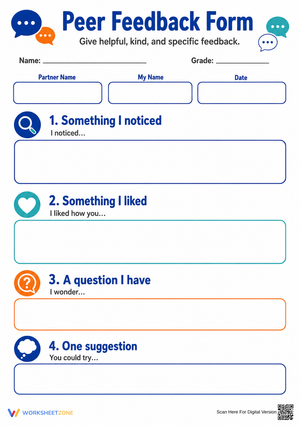
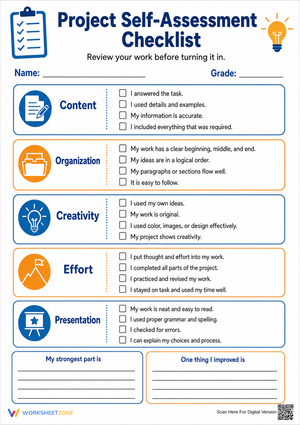
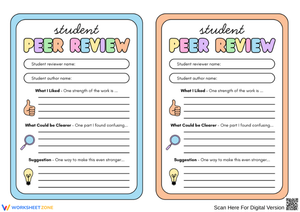
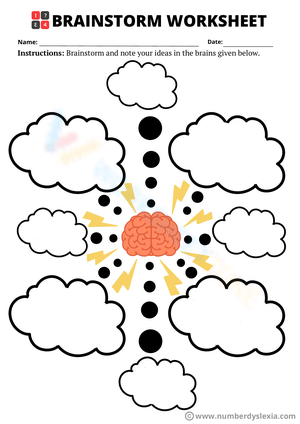
These writing process pdf worksheets for 6th grade give teachers a structured way to address each stage of the writing cycle — prewriting through publishing — as a discrete, teachable task rather than one undifferentiated "go write" assignment. At the middle school level, writing expectations make a real jump: students need to develop ideas across multiple paragraphs, adjust their approach for different genres, and strengthen a draft before calling it finished. These worksheets distribute that work so students build the actual habit of moving through each stage instead of treating a rough draft as done.
What's Inside the Set
Each worksheet zeroes in on one stage of the writing process and makes the purpose of that stage explicit in student-facing language. Sixth graders often understand that they are "supposed to" revise, but they don't know what revision actually asks them to do differently than a first draft. Naming it on the worksheet itself changes that.
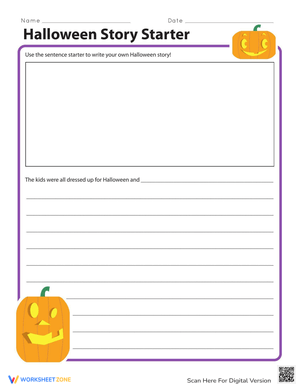
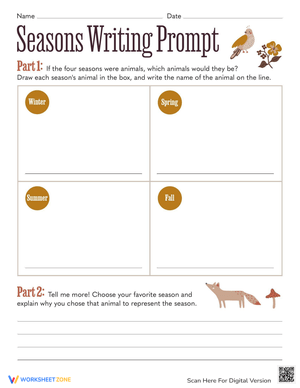
- Prewriting worksheets prompt topic generation, audience identification, and purpose setting before a sentence gets drafted. Students narrow ideas down rather than arriving at the drafting stage with a vague subject and no direction.
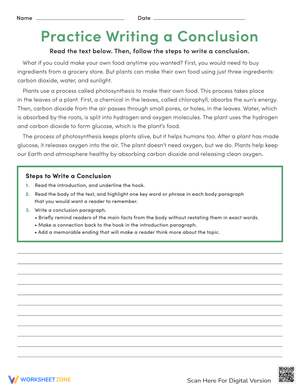
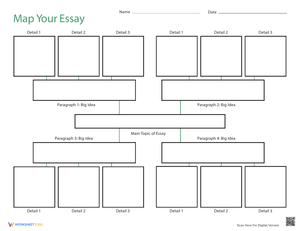
- Drafting organizers translate prewriting notes into paragraph structure — introduction, body paragraphs with evidence or detail, and a conclusion — for opinion, informative, and narrative pieces.
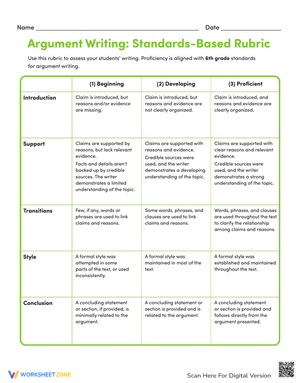
- Revision worksheets target ideas, organization, voice, and clarity. Questions like "Does each paragraph stay focused on one main idea?" push students to evaluate content before they touch a single convention.
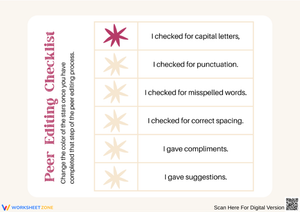
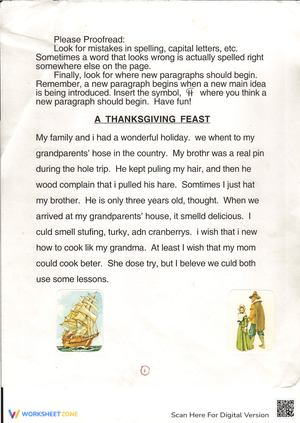
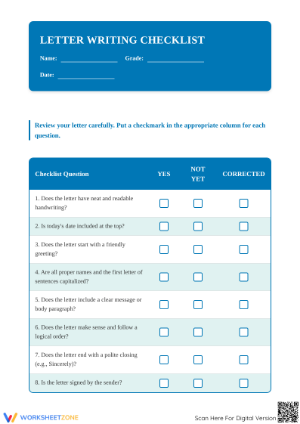
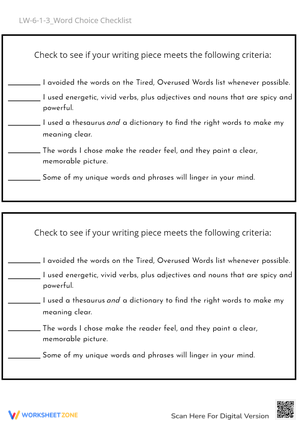
- Editing checklists address grammar, punctuation, capitalization, and usage only after the ideas are strong. That sequencing is intentional, not accidental.
- Publishing checklists help students assess readability and completeness before turning in a final piece or presenting it to an audience.
The set adapts to all three genres sixth graders write across the year. Prewriting worksheets shift their questions depending on the task — staking a claim and listing reasons for opinion, sorting facts into categories for informative, mapping a conflict arc before drafting for narrative. The core structure stays consistent, which helps students transfer the process to new assignments without relearning it from the beginning every time.
Common Misconceptions to Watch For and Correct
The most persistent problem in 6th grade writing process instruction isn't a grammar issue — it's students treating revising and editing as the same task. Tell a class to "fix their drafts" and most will correct a few spelling errors, swap a word or two, and return the paper with exactly the same weak paragraph structure it had before. They will fix recieve and leave a body paragraph with three loosely related sentences and no clear connection to the central claim. Worksheets that separate revision and editing into distinct checklists — with different criteria printed on each — make that distinction concrete in a way that classroom discussion alone rarely does.
A second common problem surfaces during prewriting: students write one-word bullet points — "freedom," "sports," "fairness" — and then stall mid-draft because those notes don't contain enough to write from. A prewriting worksheet that requires sentence-level thinking ("What do I actually want to say about this topic?") catches thin planning before it becomes a classroom traffic jam at the drafting stage. The difference between "climate" and "factories are damaging the climate and local governments aren't doing enough about it" is the difference between a student with a topic and a student with something to say.
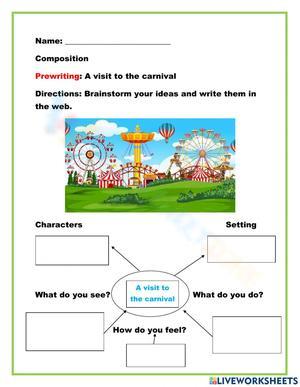
For narrative writing specifically, students tend to load up the opening with setting and character description, then run out of direction because they never planned a conflict. A narrative planning worksheet that asks for both the problem and the resolution before drafting means the story has somewhere to go. Students who skip that step usually realize around paragraph three that they have written themselves into a corner.
Lesson-Planning Ideas to Get the Most From These Worksheets
The most reliable pattern is a brief whole-class model, then a few prompts worked through together, then independent completion — gradual release applied directly to writing process instruction. Sixth graders often follow a task during the demonstration and lose that understanding the moment they look at their own paper. Walking through the first two prompts as a class closes that gap and cuts down on questions during work time.
For small-group instruction, these worksheets run without modification. Pull a group of students who need help organizing an opinion paragraph, use one revision worksheet to drive the conversation, have each student mark their own draft, and then debrief what they found. That is a more efficient use of a 10-minute pull window than reteaching from scratch with a whiteboard.
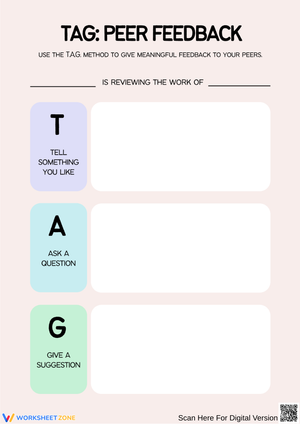
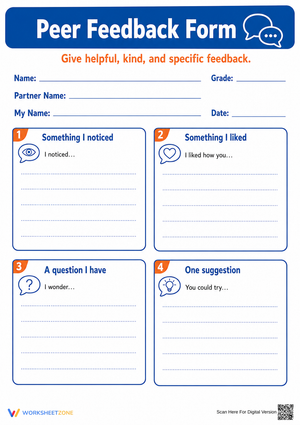
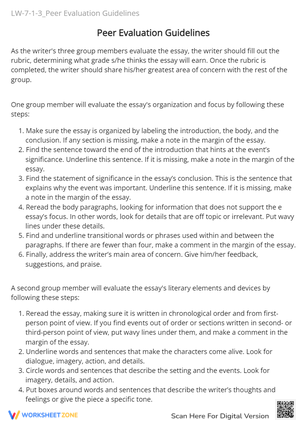
Writing centers work well with one targeted worksheet per station: a self-editing checklist at one table, a peer review worksheet at another, a revision guide focused on transitions at a third. Color-coding the worksheets by process stage helps students self-sort — after a few weeks, a student who knows she is still revising can locate the right worksheet without asking. That kind of independence matters especially in the last stretch of a writing block, when momentum drops and redirection eats time.
Standard Alignment
The writing process pdf worksheets for 6th grade directly support CCSS W.6.5, which asks students to "develop and strengthen writing as needed by planning, revising, editing, rewriting, or trying a new approach." That standard is easy to post on a wall and hard to operationalize in daily instruction. The worksheets turn W.6.5 into concrete classroom action: prewriting organizers address planning, revision checklists address revising, and editing sheets address conventions. The structured prompts on each worksheet allow students to work toward greater independence over time, which is precisely the progression the "with some guidance and support" language in W.6.5 aims to build.
The set also connects to W.6.4, which asks students to produce writing appropriate to task, purpose, and audience. Prewriting worksheets that prompt students to name their audience and purpose before drafting make W.6.4 an active step at the start of the process — not a retroactive label applied after the piece is already written.
Adapting the Set for Mixed-Ability Classrooms
One of the practical advantages of using writing process pdf worksheets for 6th grade across a full unit is that differentiation becomes about adjusting expectations on a familiar format rather than building parallel materials from scratch. For students who struggle with idea generation, sentence starters in the prewriting worksheets provide a low-floor entry point: a student who cannot articulate a claim from nothing can often complete "I believe ___ because ___" and arrive at a working thesis. For revision, students who feel overwhelmed by open-ended feedback can use the checklist as a read-aloud protocol, marking one criterion at a time before moving on.
For students who are further along, the same worksheets hold up when expectations are raised at the conversation level. "Is your evidence clear?" becomes "Have you written out the explicit connection between your evidence and your claim?" The worksheet is a floor, not a ceiling, and advanced writers can be directed to use a revision worksheet as a self-assessment before a first peer conference rather than only after a draft is nominally complete.
Multilingual learners benefit from the explicit task structure these worksheets provide. An open-ended prompt — "write about something important to you" — carries heavy cognitive weight for students managing two languages at once. A worksheet that breaks that same task into specific, sequential steps lets students focus on ideas and language rather than on figuring out what they are being asked to produce. That reduction in task ambiguity helps at every level, not only in intervention settings.
Frequently Asked Questions
Do these worksheets work for opinion, informative, and narrative writing?
Yes. The writing process stays the same across genres, so the same types of worksheets apply to each. What changes is the language of the prompts. A prewriting worksheet for opinion writing asks students to state a claim and list supporting reasons; the same worksheet adapted for informative writing asks students to identify a topic and organize key facts or subtopics. Teachers can use genre-specific versions or adjust the guiding questions verbally during instruction without reprinting anything.
How do I help sixth graders understand the difference between revising and editing?
Assign them on separate days. After students complete a revision worksheet and make changes to their draft, collect the drafts and return them the next session alongside an editing checklist. That physical and temporal separation — different day, different worksheet — reinforces that these are different jobs with different goals. Telling students "revision is about ideas; editing is about conventions" helps, but having them hold a revision checklist one day and an editing worksheet the next makes the distinction stick in a way that verbal explanations alone often don't.
Can these be used for homework or sub plans?
Writing process pdf worksheets for 6th grade work well in both contexts. For homework, short checklists — five revision questions or a ten-item editing checklist — give students one manageable task without requiring a full rewrite at home. For sub plans, these worksheets stand on their own because the instructions are written at student level. A prewriting organizer or a self-editing checklist runs without teacher modeling, which makes each worksheet a reliable choice for coverage days.
How many worksheets does a student typically need for one full writing assignment?
A complete cycle through the process for a single assignment generally draws on five to seven worksheets — one or two for prewriting, one for drafting, one for revision, one for editing, and a publishing checklist. That said, teachers rarely use every worksheet every time. For a shorter on-demand piece, only the drafting organizer and editing checklist may be needed. The set is structured so teachers can pull the stages that match the assignment and the time available without running through the entire resource every cycle.












 Interactive Worksheet Maker
 Quiz Maker
 Word Search Maker
 Crossword Puzzle Maker
 Word Scramble Generator
 Sentence Scramble Generator
 Handwriting Worksheet Generator
 Name Tracing Generator
 Fill In The Blank Generator