Brainstorming worksheets for 6th Grade
These brainstorming worksheets for 6th grade address one of the most overlooked moments in writing instruction: the few minutes before a student puts the first sentence on a real draft. Sixth grade is when writing tasks grow substantially longer and more text-dependent, and students who skip prewriting produce essays that sprawl or collapse midway through. Each worksheet gives students a concrete place to sort ideas before drafting starts, turning a blank-page problem into a manageable thinking task.
What the Set Covers
Five distinct formats make up the set, each matched to a different prewriting need. Teachers can pull from these across opinion, informative, and narrative writing units without rebuilding the routine each time.
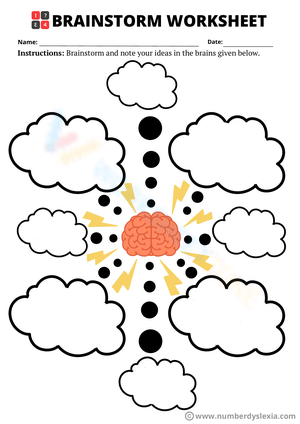
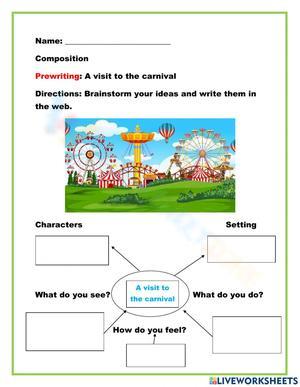
- Mind maps and webs: A central topic branches outward into subtopics and supporting details. Most useful at the start of informative or narrative assignments when students are still figuring out what they know before committing to a direction.
- Rapid-list brainstorming: A timed, low-stakes idea dump with space for ten or more responses. Works well for reluctant writers because it removes the pressure to organize immediately — students generate first, then evaluate.
- Boxes-and-bullets planners: One box holds a claim or main idea; bullet rows hold reasons, facts, or evidence. Students can see, before drafting begins, whether their support is thin or actually sufficient.
- Question-stem expanders: Who, what, when, where, why, and how prompts push students to add layers they would otherwise skip — particularly effective for narrative planning and text-based responses where surface-level retelling is the dominant error.
- Topic-focus sorters: Students generate a loose range of possibilities, narrow to a single focus, and organize supporting details into categories. This is the worksheet students need when they can brainstorm freely but then try to include every idea in one draft.
Each worksheet asks students to make at least one active decision — star the idea they are developing, cross out details that do not belong, or choose between two possible focuses — because sorting is where real prewriting happens, not just collecting.
Where These Worksheets Fit in Your Writing Block
The most natural entry point is the first five to seven minutes of any writing workshop session, before independent drafting begins. That transition from whole-class instruction to independent work is where students stall out most predictably. A student who has filled in a topic-focus sorter or a boxes-and-bullets planner sits down to draft with a direction already chosen, which keeps the room moving.
These worksheets also hold up as sub-plan tools. Substitute teachers can distribute a worksheet alongside a writing prompt with minimal explanation, because the format itself walks students through the thinking. The set works equally well in intervention small groups, where you can guide students through one section at a time rather than releasing the whole worksheet at once.
One practical step worth building into your routine: after students finish brainstorming, have them read back the completed worksheet and circle the one detail they feel most confident developing. That thirty-second move prevents the common mid-draft collapse — students beginning strong, running out of ideas, and abandoning the piece entirely.
Mistakes Students Make That These Worksheets Help You Catch
The most persistent 6th grade prewriting error is treating the brainstorm as the draft. A student writing three full sentences inside a web bubble has not brainstormed — they have started drafting in a smaller box and will run out of steam before the real draft begins. Redirect students to phrases, fragments, and short notes during this phase, and name explicitly that complete sentences come later. The worksheet creates the opportunity to catch this in real time rather than during a writing conference.
A second error shows up consistently on the boxes-and-bullets planner: students write a claim, then list "reasons" that are just restatements of the same idea. A student arguing that schools should extend lunch periods might write as a supporting reason that students need more time to eat — which is the claim again, not support for it. Walking through one worked example of a genuine claim-versus-reason contrast before students begin prevents most of this. Without that model, the error transfers directly into the draft.
On the question-stem expander, students fill in who, what, and when readily but leave why and how blank. Those empty rows are not an accident — they map precisely to the analysis gap that will appear in the final writing. A student who cannot explain why something happened during prewriting will not explain it in three paragraphs either. Addressing the blank rows during the brainstorm phase is far more efficient than conferencing after the draft is written.
Standard Alignment
These worksheets align to CCSS.ELA-LITERACY.W.6.5, which requires students to develop and strengthen writing through planning, and to CCSS.ELA-LITERACY.W.6.4, which addresses producing writing appropriate to task, purpose, and audience. W.6.5 is the more direct fit: it places prewriting as a required instructional component, not an optional step. The different worksheet formats also connect to W.6.1 (opinion), W.6.2 (informative/explanatory), and W.6.3 (narrative) by linking each prewriting format to a specific writing type — which helps students understand that how they organize their thinking shifts depending on their purpose, a concept that takes repeated practice across 6th grade to stick.
Adjusting the Set for Mixed-Ability Classrooms
For students who freeze in front of open-ended formats, the rapid-list worksheet is the lowest-barrier starting point. Reducing the expected number of responses — five ideas instead of ten — removes performance anxiety without eliminating the task. A word bank of topic-related vocabulary added to the bottom of the worksheet gives students who struggle with retrieval a starting point without doing the thinking for them.
English learners benefit from the question-stem expander because its structured prompts work on vocabulary and idea generation at the same time. A student who is not yet writing fluently in English can still respond to "What happened first?" or "Why did the character make this choice?" in short phrases or mixed language, and those responses are workable material for a draft. The format meets students at the level of language they have rather than demanding fluency before thinking can happen.
Advanced writers who move through the basic formats quickly get more out of the set when asked to do comparative work — brainstorming two different possible topics or two different positions on the same issue, then writing one sentence explaining which they chose and why. That metacognitive step reflects the decision-making habits stronger writers use routinely. The brainstorming worksheets for 6th grade stretch further than they first appear when that comparison layer is added, and it slows down the students who would otherwise rush into drafting before they have actually weighed their options.
Frequently Asked Questions
How many times should students use the same worksheet format before switching?
Three to four uses of any format is enough for most 6th graders to internalize the structure. After that, rotating to a different format — or letting students choose between two — keeps the prewriting routine from feeling mechanical. Familiarity is the goal, not dependency on a single organizer.
Do these worksheets work for text-based writing prompts, not just open-ended ones?
After a reading assignment, students can use the boxes-and-bullets planner to record a claim, text evidence, and explanation before drafting a response. The brainstorming worksheets for 6th grade work for text-dependent analysis as well as independent writing because the formats are organized around writing purpose, not around where the ideas come from.
What if a student finishes the brainstorm but ignores it when drafting?
This is a transition-to-drafting problem, not a prewriting problem. Build in a one-minute checkpoint at the start of drafting where students read back their completed worksheet and underline the single detail they are starting with. Making the connection between the brainstorm and the first sentence explicit — and doing it as a repeatable class habit — reduces the gap between planning and producing far more reliably than reminding individual students.
Can students complete these worksheets independently at home?
The rapid-list and topic-focus sorter formats work well as homework because they do not require prior modeling to begin. The boxes-and-bullets planner travels home successfully only after it has been walked through in class several times. The brainstorming worksheets for 6th grade require no materials beyond a pencil, which makes home use and print-and-go classroom distribution both straightforward.
Clear All