6th Grade Editing worksheets for Middle School ELA Practice
These 6th grade editing worksheets resources give ELA teachers a practical, print-ready stack of convention practice — the kind that lands in a bell-ringer folder Monday morning and earns its place again in a Friday mixed-review block. Each worksheet stands alone, so teachers can pull one for a sub plan, cycle through the set across a unit, or drop individual worksheets into reteaching sessions without needing a particular sequence.
The Specific Skills Each Worksheet Targets
Sixth graders face a meaningful shift in what editing actually demands. In earlier grades, correction work often isolates one rule per sentence. By sixth grade, students are expected to track errors across connected text while also attending to meaning, flow, and sentence variety. These worksheets address that shift directly across seven skill areas:
- Punctuation in compound and complex sentences — commas before coordinating conjunctions, semicolons between independent clauses, and end punctuation after complex structures
- Pronoun-antecedent agreement — including indefinite pronoun constructions that trip up even careful writers
- Verb tense consistency — tracking shifts across a multi-sentence passage, not just flagging a single isolated error
- Capitalization — proper nouns, titles of works, academic terms, and days and months when required
- Apostrophes and possessives — including the persistent its/it's confusion and plural possessives
- Sentence boundary errors — fragments, comma splices, and fused sentences
- Word choice and sentence clarity — editing so a sentence communicates well, not just so it passes a surface grammar check
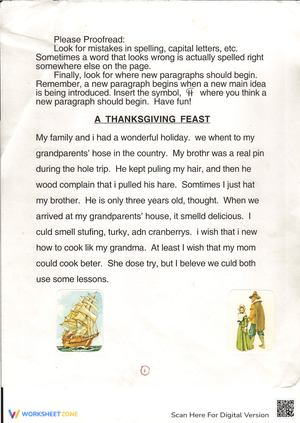
Passage-based editing worksheets raise the challenge in a genuinely useful way. Students who reliably catch a comma splice in an isolated sentence often miss the same error when they are also tracking meaning across five or six sentences. The set includes both sentence-level correction work and short passage editing to close that gap.
Common Misconceptions to Watch For and Correct
The errors built into these worksheets reflect what sixth graders actually produce — not a controlled list of easy-to-illustrate rule violations. The most stubborn pattern in passage editing is what might be called tense-shift blindness: a student finds and fixes the first tense error in a paragraph and stops scanning. The shift from past to present that appears two sentences later goes untouched, and when the teacher reviews the worksheet, it looks like partial understanding — which is exactly what it is. A practical fix is to have students complete the worksheet in one ink color, then re-scan in a second color. The switch signals a different mode of attention, and students catch far more on the second pass.
Pronoun agreement errors follow a predictable arc at this grade. Students write "Everyone forgot their assignment" because it sounds right — and in many spoken registers, it is. When they learn that "everyone" takes a singular pronoun, they sometimes overcorrect to stiff constructions that land with an unnatural thud. The worksheets provide enough surrounding context for students to practice genuine, readable solutions rather than swapping one awkward form for another. A similar thing happens with its and it's: most sixth graders can recite the rule on demand, but they slip when writing quickly, and only repeated exposure across different passage types makes the distinction automatic.
One more pattern that shows up consistently: after a lesson on compound sentences, students who internalize "put a comma before but" will comma-splice sentences that contain no coordinating conjunction at all. They extend the rule further than it reaches. Short sentence-level worksheets that contrast correct and incorrect examples — rather than presenting errors in isolation — help students see where the rule actually stops.
How to Build These Worksheets Into Your Lesson Plans
The most reliable routine is five to eight minutes of daily editing at the start of class — short enough not to compete with the main lesson, consistent enough to produce visible improvement over several weeks. Monday works well for a sentence-correction worksheet focused on one skill: a low-stakes reentry after the weekend. Wednesday is a natural point to introduce a paragraph-level editing task, once students have had two days of refreshed practice. Friday carries a mixed-skill review that draws on the week's targets without signaling which error type appears next. That structure keeps the work from feeling predictable while still giving students a clear weekly arc.
For small-group intervention, narrowing each session to one or two target skills prevents cognitive overload and gives the teacher a cleaner read on where the gap actually lives. For sub plans, any worksheet in the set works without introduction — the directions are direct, the task is self-contained, and leaving the answer key with sub notes means the review step runs itself. Teachers who have been searching for 6th grade editing worksheets resources specifically for this week-in, week-out versatility will find that rotating formats — sentence correction, paragraph editing, mixed review — sustains engagement longer than repeating the same type.
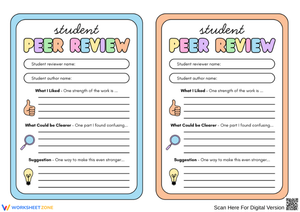
One move that consistently produces better results is connecting each worksheet to student writing. After a paragraph-editing session, ask students to spend three minutes looking for the same error type in their current draft. No new materials, no separate lesson — just a transfer prompt. That step is what turns convention practice into a writing behavior rather than a standalone worksheet routine.
Adjusting These Worksheets for a Range of Sixth-Grade Learners
For students who become overwhelmed by passage-level editing, the adjustment is not to find a simpler worksheet — it is to modify how the existing one is used. Pre-marking two or three errors before handing the worksheet to a student keeps them inside the editing process without reducing the cognitive demand to zero. They still read for meaning, still make decisions, still produce corrections. Once they handle that version reliably, the pre-marking disappears in small steps. That approach protects both rigor and confidence in a way that simply switching to easier material does not.
Advanced students move through sentence-correction worksheets quickly and need a more demanding next step. The most productive extension is margin annotation: ask them to write the rule behind each correction in their own words rather than simply marking the error. That addition shifts the task from identification to explanation, which asks considerably more. A second option is to send them to their writing folder after completing the worksheet — same transfer prompt as for the whole class, but with the expectation that they name not just the error but why it slipped through their first draft. For multilingual learners, previewing two or three unfamiliar words before a passage-editing task keeps attention on the conventions work rather than on decoding the meaning of the text itself.
Standard Alignment
These worksheets align to three Common Core Language standards for grade 6: CCSS.ELA-LITERACY.L.6.1 (conventions of standard English grammar and usage), L.6.2 (conventions of capitalization, punctuation, and spelling in writing), and L.6.3 (using knowledge of language and its conventions when writing, speaking, reading, or listening). In classroom terms, L.6.2 drives the majority of what appears across the set — comma rules, apostrophes, end punctuation, capitalization. L.6.1 governs the grammar work: pronoun forms, verb tense, sentence structure. L.6.3 is the standard most relevant when teachers connect worksheet practice to actual student drafts. All three appear in district writing assessments, which is precisely why 6th grade editing worksheets resources hold their instructional value across the full school year rather than serving only a single grammar unit.
Frequently Asked Questions
What editing skills should sixth-grade practice materials cover?
The core skills are punctuation, capitalization, verb tense, pronoun-antecedent agreement, apostrophe use, and sentence structure. Effective editing practice at this level also includes clarity editing — asking whether a sentence communicates its meaning well, not just whether it passes a grammar check. Both conventions and clarity matter for the writing assessments sixth graders encounter, and stronger worksheet sets address both.
Are sentence-level correction tasks or passage editing tasks more valuable?
They serve different instructional purposes. Sentence-level correction is the right format when introducing a rule or reteaching a skill that has not landed — students can focus on one thing without managing connected text. Passage editing is better for application because students must read for meaning and catch multiple error types simultaneously, which more closely reflects the editing they do in actual writing. The set includes both formats for this reason.
Do these worksheets work for multilingual learners or students receiving intervention support?
Yes, with practical preparation. For multilingual learners, previewing unfamiliar vocabulary in the passage before the editing task keeps focus on conventions rather than on decoding. For students with language-based learning needs, narrowing each session to one target skill and reviewing corrections aloud together provides the processing support they need without changing what the task asks. These 6th grade editing worksheets resources are clear enough in format that most accommodations are about how the session runs, not about replacing the materials entirely.
Can these worksheets serve as formative assessment data?
Effectively, yes. When students complete the correction work independently before any class discussion, the worksheet becomes a readable data point: which errors were caught, which were missed, and which were "corrected" in ways that introduced a new error. That pattern is more informative than a multiple-choice grammar quiz because it shows what students do when making real editorial decisions. Having students mark their initial corrections in one color and then note post-discussion changes in a second color makes the formative data visible at a glance — and turns the answer review into part of the learning rather than just a grading step.
Clear All