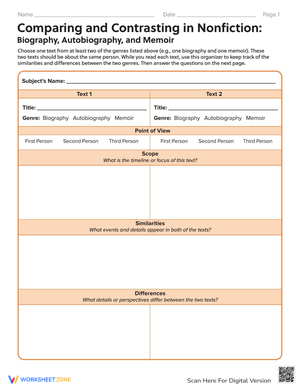
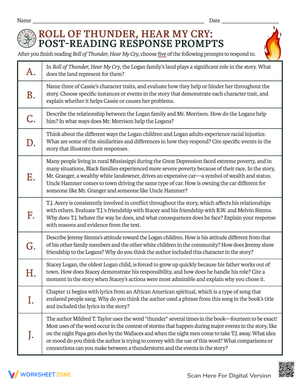
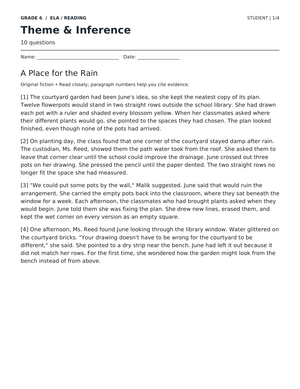
These 6th grade reading comprehension strategies printable worksheets give teachers a direct line to the skills sixth graders struggle with most: pulling evidence that actually answers the question, separating theme from topic, and writing a summary that doesn't just retell every plot point. Each worksheet targets one strategy at a time — inference, central idea, text structure, vocabulary in context, point of view, or citing evidence — so the practice stays purposeful rather than scattered.
The Specific Skills Each Worksheet Targets
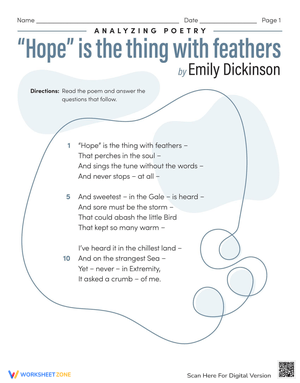
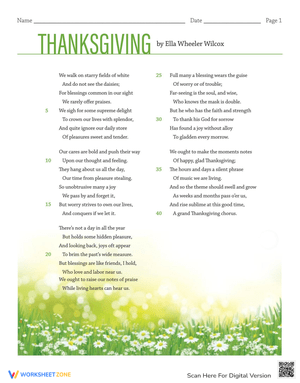
Sixth grade is the year reading instruction shifts from "what happened" to "how do you know." Students who sailed through 5th grade recall questions suddenly find themselves stuck when asked to make an inference or distinguish a text's central idea from its topic. Each worksheet in the set addresses one of these higher-order moves:
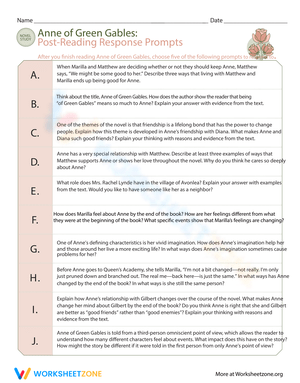
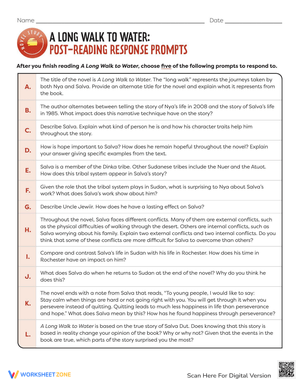
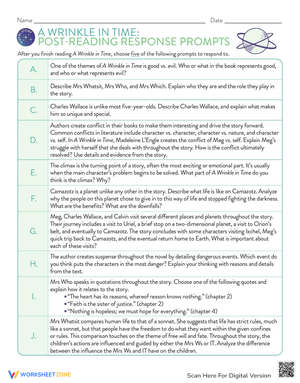
- Citing textual evidence: Students answer text-dependent questions and mark the exact line or phrase that supports their answer — not just the paragraph they felt comfortable with.
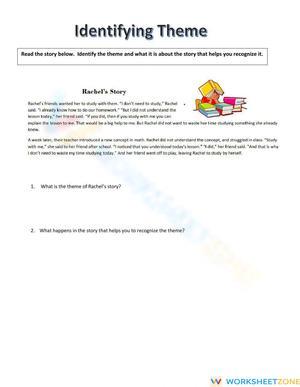
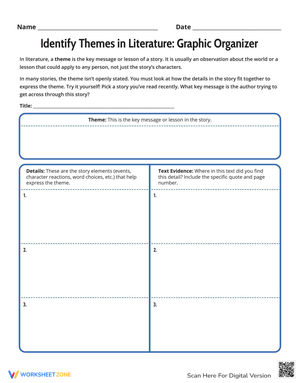
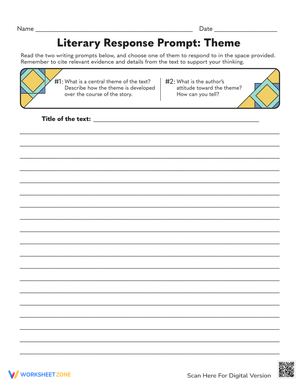
- Theme vs. central idea: The set treats literary theme and informational central idea as separate skills, because conflating them is exactly what leads to persistent confusion later in the year.
- Inference: Students combine what the text states with what it implies to reach conclusions the author left unstated.
- Summarizing: Students restate the most important ideas in their own words without narrating every scene or restating the passage line by line.
- Vocabulary in context: Students use surrounding sentences to determine word meaning, working from the paragraph itself before anything else.
- Point of view and text structure: Students identify how narrator perspective and organizational pattern shape meaning in both fiction and nonfiction.
Both literary and informational passages appear across the set. That balance matters because 6th grade ELA teachers need students to apply the same analytical thinking to a short story and to an expository article — and the transfer between those text types doesn't happen automatically.
Mistakes Students Make That These Worksheets Help You Catch
The most consistent error in 6th grade comprehension work is confusing theme with topic. Asked to identify the theme of a story, a student will write "courage" — a topic. The theme is the claim the text makes about courage: something like "real courage means acting despite fear, not in the absence of it." Worksheets that require students to write theme as a complete sentence, then match it to a specific detail from the passage, interrupt that one-word habit before it carries into 7th grade.
Evidence selection is the second reliable problem. When asked to cite support for an inference, many students quote the longest available sentence — not because it's most relevant, but because length feels authoritative. A worksheet that asks students to underline just the phrase (not the full sentence) and explain the connection in their own words exposes this quickly. And even among students who select accurate evidence, you'll notice that explaining why it answers the question is where the writing breaks down. That "because" step is where a lot of 6th grade reading instruction actually lives.
Lesson-Planning Ideas to Get the Most From These Worksheets
The most effective use pattern runs about 15 minutes: name the strategy, do one think-aloud with a class passage, then send students to a worksheet independently. That cycle keeps the resource connected to live instruction rather than functioning as isolated seatwork. For bell ringers, a short passage with two or three questions fills the first 8 minutes of class — long enough for genuine reading, short enough to review answers before the lesson opens.
For small-group reteaching, pull two or three worksheets targeting the same skill and work through them orally first. Have students talk through their evidence choices before writing anything down. That conversation surfaces the reasoning gaps that written responses can paper over. Friday review blocks also work well: one literary passage and one informational passage on the same skill, back-to-back, tests whether students can transfer strategy use across text types — which is exactly what end-of-year assessments will require.
Standard Alignment
These worksheets address the reading standards tested most consistently at grade 6. CCSS RL.6.1 and RI.6.1 require students to cite textual evidence to support analysis — the foundation of most written response questions in this set. RL.6.2 asks students to determine theme and trace its development through the text; RI.6.2 covers central idea and summary. RI.6.4 and RL.6.4 focus on vocabulary in context, including figurative and connotative language. RL.6.6 and RI.6.6 address point of view and author's purpose. Teachers working under state standards that parallel the Common Core will find the skill coverage maps closely.
One note worth keeping in mind: these standards appear in sequence on most 6th grade scope-and-sequence documents, but students don't master them in that sequence. A student who cites evidence accurately in September may still write one-word theme responses in March. Using these worksheets as formative checks across the full school year — rather than only during a dedicated unit — gives a clearer picture of where each standard actually lands for each student.
Adjusting the Worksheets for a Range of Learners
When selecting 6th grade reading comprehension strategies printable worksheets for a mixed-ability classroom, the skill target should stay constant while the level of support varies. The most straightforward adjustment for students reading below grade level is to add sentence starters to the written response lines. A prompt like "The theme of this story is ___ because the author shows ___" doesn't reduce the cognitive work — students still have to determine the theme — but it removes the added burden of constructing a response format from scratch. Preteaching two or three academic vocabulary words before reading also narrows the places students can get stuck on something unrelated to the target skill.
For students who finish quickly and accurately, the most productive extension is a paired-passage comparison. Take two worksheets on the same skill — one literary, one informational — and ask those students to write a paragraph comparing how each author develops the central idea or supports the theme. That task requires genuine synthesis, and it reveals whether a student has actually internalized the strategy or simply learned to produce the right-looking answer on a single familiar text type.
Frequently Asked Questions
How long does a typical worksheet take to complete?
Most students finish a short-passage worksheet in 10–15 minutes. Longer passages with additional written response questions may run 20 minutes. That range works for bell ringers at the shorter end and for a full independent practice block at the longer end.
Can these be used for standardized test preparation?
They transfer directly. Most 6th grade state reading assessments ask students to cite evidence, determine theme or central idea, and analyze vocabulary in context — exactly what 6th grade reading comprehension strategies printable worksheets practice. The text-dependent question format mirrors the task structure students encounter on assessments, so regular use builds that familiarity without requiring separate test-prep materials.
What should I do when students copy evidence without explaining it?
Build the explanation step into the response prompt itself. When a question explicitly asks "What does this evidence show?" or "Explain why this detail supports your answer," students can't skip the reasoning. If a worksheet doesn't include that follow-up, add it as a verbal requirement during review: students read their evidence aloud and tell a partner what it proves. That oral step often closes the gap faster than additional written practice does.
Do the worksheets include both fiction and nonfiction passages?
High-quality sets at this level include both. Literary texts give students practice with theme, character inference, and narrative point of view. Informational texts build central idea, text structure, and author's purpose. Using 6th grade reading comprehension strategies printable worksheets across both text types throughout the year is what builds real transfer — the ability to apply a strategy to an unfamiliar passage on a test, not just on a text the teacher selected for a specific lesson.












 Interactive Worksheet Maker
 Quiz Maker
 Word Search Maker
 Crossword Puzzle Maker
 Word Scramble Generator
 Sentence Scramble Generator
 Handwriting Worksheet Generator
 Name Tracing Generator
 Fill In The Blank Generator