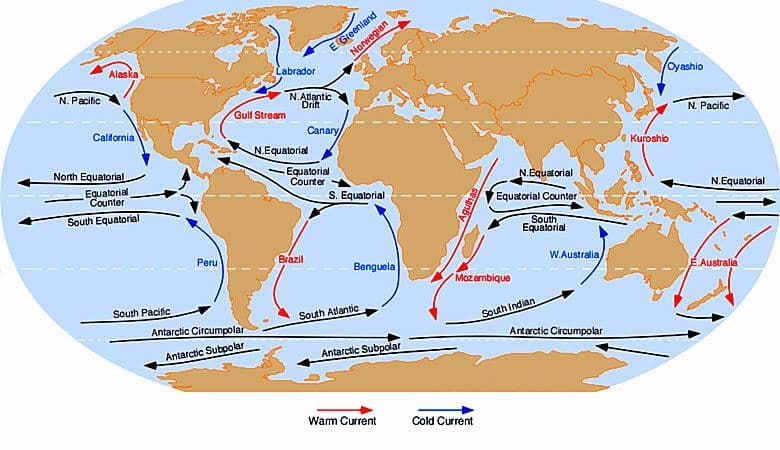
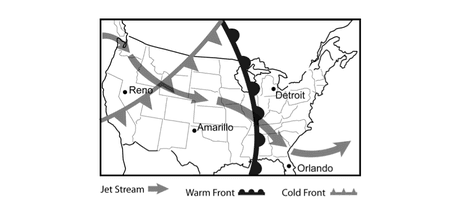
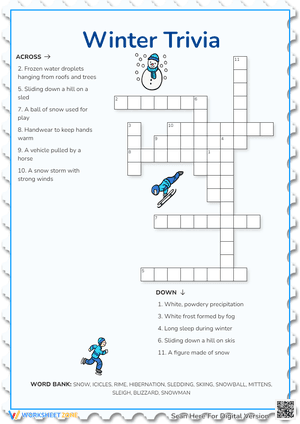
These 5th grade weather and climate worksheets resources give teachers print-ready practice across the core concepts students need before entering middle school Earth science — weather versus climate, temperature data, storm vocabulary, seasonal patterns, and water cycle connections. Each worksheet delivers focused directions and consistent science vocabulary without requiring teacher mediation at every step. Teachers can slot them into morning warm-ups, science center rotations, reteach small groups, or sub folders without rebuilding anything from scratch.
The Specific Skills Each Worksheet Targets
The set covers five topic areas that appear repeatedly in Grade 5 Earth science instruction, and each worksheet stays focused on one of them rather than blending multiple concepts into a single broad passage.
- Weather versus climate: Students sort examples, rewrite descriptions, and explain the difference between a day's conditions and a region's long-term pattern. The distinction sounds obvious until students put it in writing — then the confusion surfaces immediately.
- Temperature and thermometer reading: Students read scales, compare measurements from different locations or dates, and draw conclusions about changing conditions. Several worksheets present temperature data in simple tables students must interpret rather than just transcribe.
- Storms and severe weather: Students match vocabulary to descriptions, identify characteristics of hurricanes, tornadoes, and thunderstorms, and explain what makes certain conditions dangerous. The emphasis stays on observation and classification rather than abstract atmospheric physics.
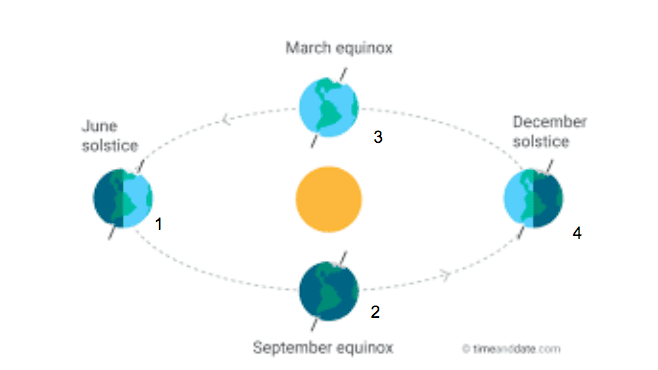
- Seasonal patterns: Students connect changes in daylight, temperature, and precipitation to seasonal cycles, explaining patterns across a calendar year rather than describing a single season in isolation.
- Water cycle links: Students trace how evaporation, condensation, and precipitation connect to day-to-day weather — making the water cycle relevant instead of treating it as a separate memorization unit.
Teachers building instruction around a 5th grade weather and climate worksheets set benefit from this focused structure — one topic per worksheet — because students handle comparison, sorting, and short-response explanation well when each task has a clear entry point. When a worksheet asks students to identify vocabulary, read data, and write an explanation all in the same task, weaker writers often shut down before they reach the actual thinking. Keeping each worksheet focused on one skill cluster prevents that.
Student Mistakes Worth Catching Early
The weather versus climate distinction produces the most persistent errors in this unit. Students who genuinely understand the concept will still slip into weather language when describing climate — writing "It gets really hot in Phoenix" instead of noting that Phoenix averages fewer than eight inches of annual rainfall and records temperatures above 100°F for more than a third of the year. The error is not purely vocabulary. Students have to shift from anecdote to pattern, and that takes repeated practice with specific examples, not a single definition written in a notebook and never revisited.
Thermometer questions reveal a second reliable problem: when a diagram shows both Fahrenheit and Celsius scales, students frequently read from the wrong side without noticing. A student who correctly identifies 72°F on a standard thermometer may record 22 when Celsius appears on the left and becomes the first number the eye lands on. It is worth scanning that item specifically before assuming the error reflects a content gap rather than a visual habit.
On water cycle worksheets, students list evaporation, condensation, and precipitation in correct sequence but struggle when asked which stage produces actual rainfall. They know the cycle as a loop but have not yet connected precipitation as the mechanism that delivers weather conditions. That gap appears clearly on short-response prompts — which is why these worksheets pair explanation tasks with labeling exercises rather than stopping at identification alone.
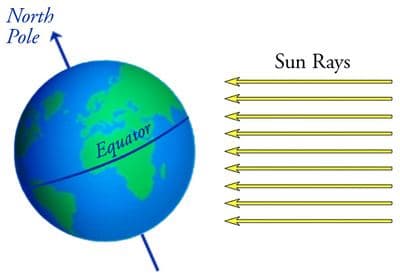
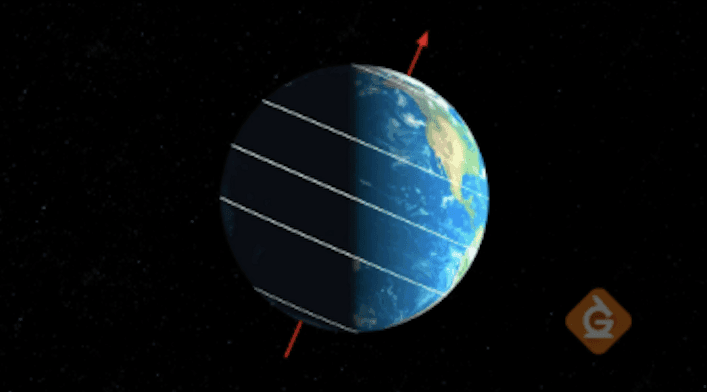
Seasonal pattern errors cluster around cause. Students regularly attribute seasons to Earth's distance from the sun rather than to axial tilt and the resulting angle of incoming sunlight. This is a well-documented conceptual error at the Grade 5 level, and it does not resolve with a single correction. Students need to re-examine evidence — most usefully by comparing Northern and Southern Hemisphere seasons for the same month, which breaks the distance explanation immediately.
Getting These Worksheets Into Your Weekly Routine
The most efficient use of this set happens when worksheets plug into routines that already exist rather than becoming their own standalone event. In a 45-minute science block, opening with a brief photograph or short data display, running a 10-minute mini-lesson on the day's concept, and then assigning one worksheet for independent practice turns the resource into the evidence leg of direct instruction — not a filler activity tacked on after the real lesson ends.
For centers, placing one worksheet at a science station midweek works well once students know the rotation. Students can sort weather-versus-climate examples, read a temperature table, or annotate a water cycle diagram without requiring teacher supervision once the routine is established. Asking partners to justify a single answer using a science term — before they move to the next station — raises the thinking level without adding prep time.
Sub plan use is where PDF formatting earns its keep. A worksheet with clear directions and a printed answer key gives a substitute something to hand out, collect, and leave for the classroom teacher to review — no login, no technology troubleshooting, no setup. Leaving two worksheets works well: one for the main activity and a second for students who finish well before the block ends.
Standard Alignment
The anchor standard for this content at Grade 5 is NGSS 5-ESS2-1, which asks students to represent data in graphical displays to reveal patterns of Earth's surface conditions. Worksheets that ask students to read temperature tables, compare precipitation data across seasons, or identify storm patterns across regions work directly within that standard. The NGSS crosscutting concept of patterns — observing regularities and explaining what drives them — runs through every topic in this set, from water cycle connections to seasonal change comparisons.
Many districts also revisit 3-ESS2-2 (obtaining and combining information to describe climates in different regions) with greater analytical demand at Grade 5, particularly when students are expected to write explanations rather than complete simple recognition tasks. If your school uses a spiraling Earth science sequence, these worksheets support that revisit well. The short-response items give students repeated practice with the evidence-based explanation moves that NGSS performance expectations require as students approach middle school Earth science.
Making the Same Worksheet Work for Different Learners
Most differentiation in this set happens through task adjustment, not by creating separate materials. For students who need more support, the most practical moves are pairing them with a partner on explanation tasks, providing a brief word bank on an index card, or pre-highlighting clue words in each question before distributing the worksheet. None of those adjustments require printing a different version.
For students ready for more challenge, the extension usually lives inside the worksheet already. Ask them to write a second sentence naming the evidence behind their answer, or to compare two examples from different regions rather than describing one. A student who correctly labels weather versus climate in a sorting task should be pushed to write one sentence explaining why a five-day weather forecast tells you nothing reliable about a city's climate — that move shifts the task from recognition to reasoned argument without requiring a new resource.
One honest limitation worth naming: the structured format that benefits most students — short prompts, clear labels, predictable task types — sometimes frustrates high-performing readers who work better with open-ended writing. For those students, pairing each worksheet with a brief written prompt after completion maintains rigor without adding planning time. The 5th grade weather and climate worksheets set covers enough topic variety that teachers can mix and match across a unit without repeating the same task format back to back.
Frequently Asked Questions
How are the worksheets organized, and can teachers assign them in any order?
Each worksheet addresses one of five topic areas: weather versus climate, temperature and thermometer reading, storms and severe weather, seasonal patterns, and water cycle connections. They are not dependent on a fixed sequence, so teachers can assign individual worksheets based on where their class is in a unit — pulling a storms worksheet after a mini-lesson on severe weather, for example, without working through the full set from beginning to end.
Are these worksheets useful for reviewing before a test?
The focused, one-topic-per-worksheet format makes them well-suited for targeted pre-test review. Students can revisit one concept at a time rather than re-reading an entire chapter. Assigning a weather versus climate worksheet the morning of a quiz gives students direct practice on the distinction that generates the most errors on assessments in this unit.
How do these work for students who are reading below grade level?
The science vocabulary appears in context throughout each worksheet, which reduces the burden of encountering unfamiliar terms in isolation. Students working below grade level in reading often benefit from having directions read aloud or from completing the first item alongside a partner before continuing independently. The task types — sorting, labeling, short-response — do not require sustained extended reading, so most students can access the content even when reading fluency is still developing.
Where does this topic fit in a typical Grade 5 Earth science sequence?
Most Grade 5 Earth science sequences introduce weather and climate early in the year as a concrete, observable entry point before moving into more abstract Earth systems content like landform processes or resource distribution. Teachers who use 5th grade weather and climate worksheets resources at that point in the sequence find that students develop the vocabulary and pattern-recognition skills they need before encountering the more demanding data analysis tasks that appear later in NGSS-aligned units.















 Interactive Worksheet Maker
 Quiz Maker
 Word Search Maker
 Crossword Puzzle Maker
 Word Scramble Generator
 Sentence Scramble Generator
 Handwriting Worksheet Generator
 Name Tracing Generator
 Fill In The Blank Generator