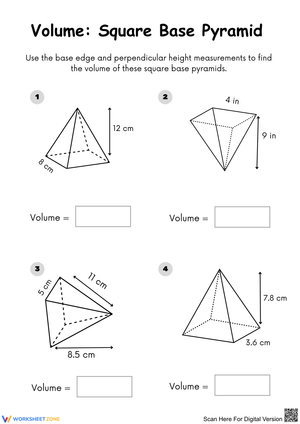
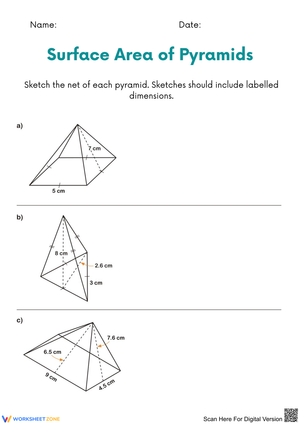
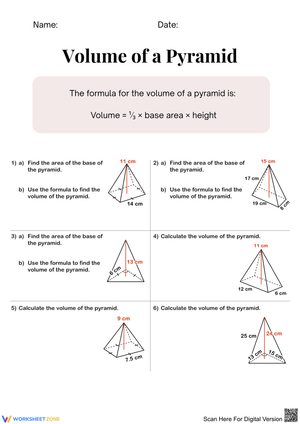
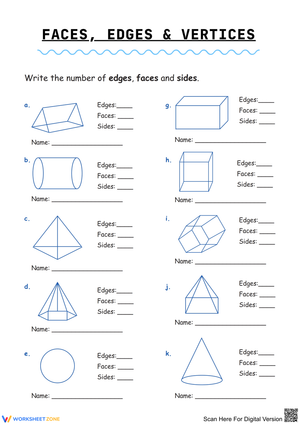
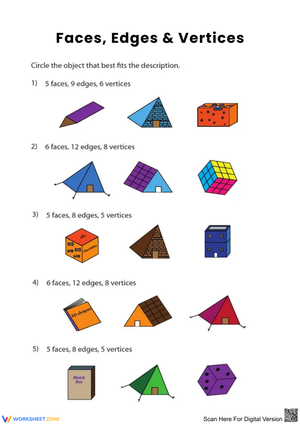
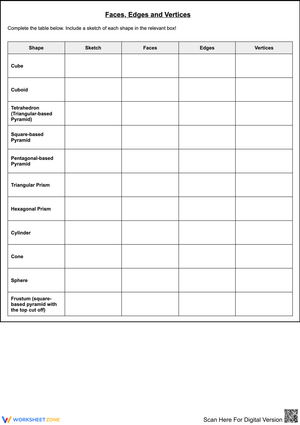
These 3d shapes printable worksheets for 5th grade cover solid geometry from the ground up — identifying figures, counting faces, edges, and vertices, interpreting nets, and calculating volume of rectangular prisms. Teachers get a set of standalone, printable resources that move students from naming shapes to applying formulas without requiring any prep beyond printing.
What the Set Covers
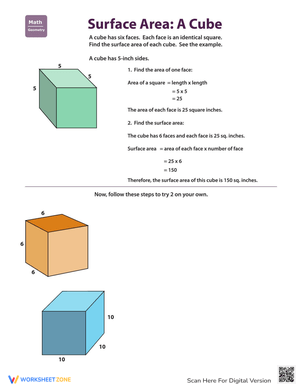
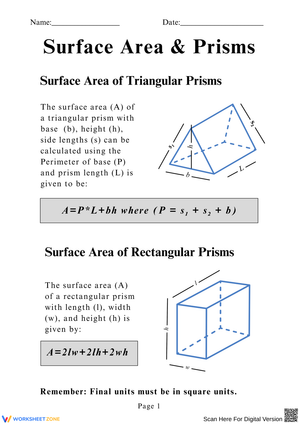
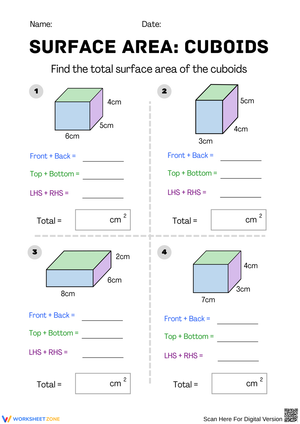
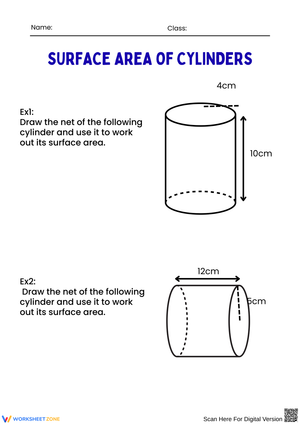
Grade 5 is the first year the Common Core formally requires students to understand volume as a measurable attribute of solid figures, which makes this unit particularly high-stakes. The skills in this set reflect that priority. Students work with rectangular prisms, triangular prisms, square and triangular pyramids, cones, cylinders, and spheres — the full roster of solids that appear on state assessments and in later geometry courses.
Each worksheet targets one of five skill areas:
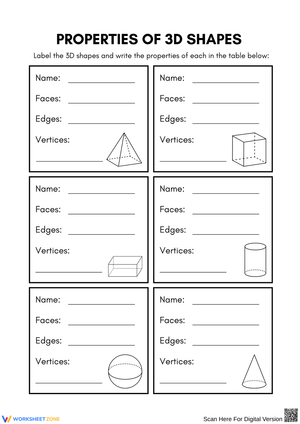
- Attribute tables: Students record faces, edges, and vertices for each solid, building the precise vocabulary needed for geometry discussion and comparison.
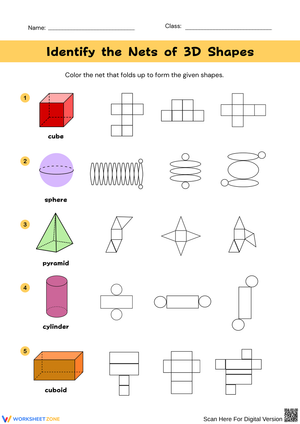
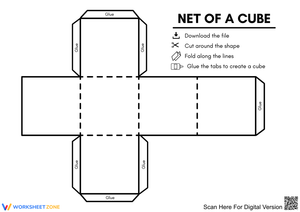
- Net identification and matching: Learners connect a flat 2D unfolding to its 3D solid — a task that demands genuine spatial reasoning, not pattern memorization.
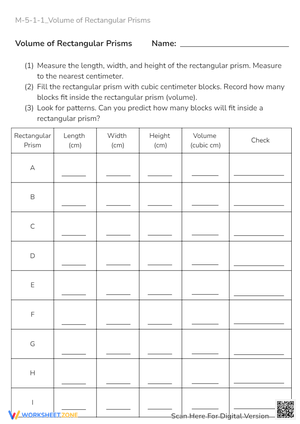
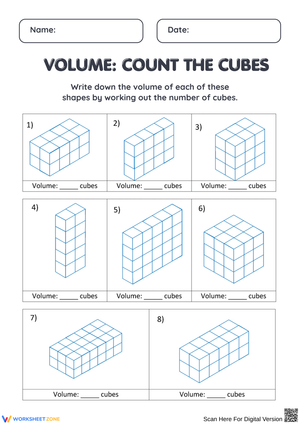
- Unit cube volume: Students count packed cubes in pictorial models to understand what volume actually measures before any formula is introduced.
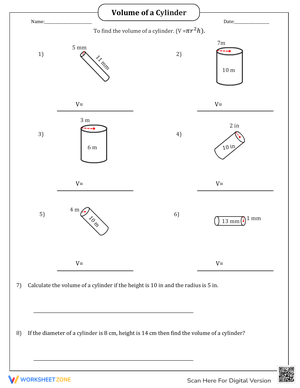
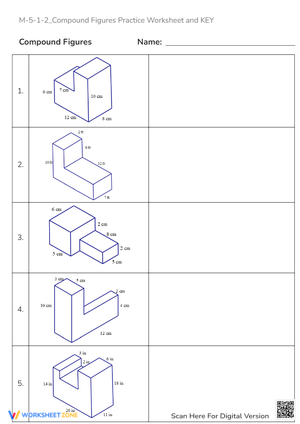
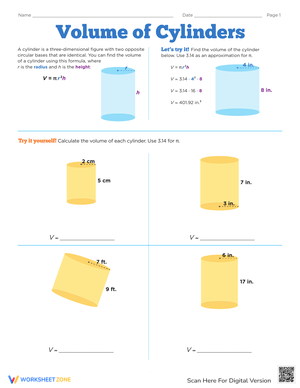
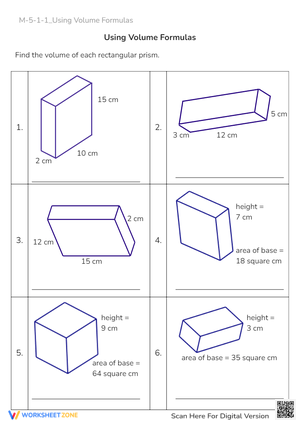
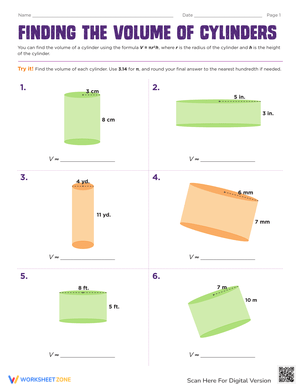
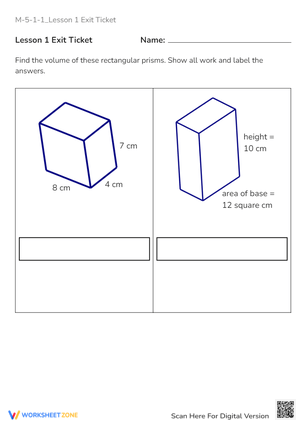
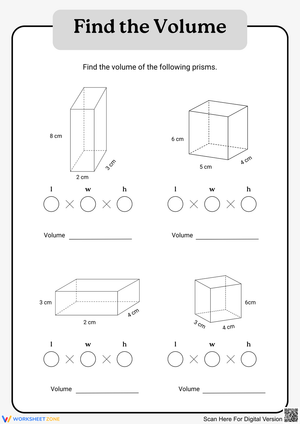
- Formula-based volume problems: Problems apply V = l × w × h and V = B × h to rectangular prisms with given dimensions, including composite figures.
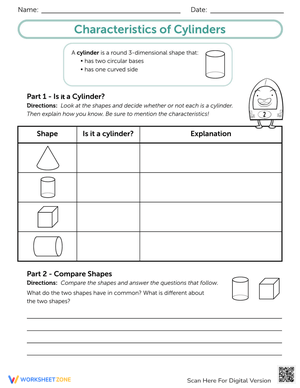
- Real-world shape classification: Students identify the geometric solid behind everyday objects — a soup can, a party hat, a cereal box — and justify the match using properties.
Frequent Student Errors Worth Watching For
The most persistent problem with attribute work isn't confusing prisms with pyramids — students sort those out quickly once they handle a physical model. The real trouble is edges. A student who correctly identifies five faces on a triangular prism will still write six edges because they count only the parallel base edges and miss the three lateral edges that connect them. A brief class demonstration where students trace every edge with a finger on an actual solid, before the attribute worksheet goes out, dramatically reduces this error. It takes about two minutes and is worth every second.
Volume is where errors get more expensive. When students move from unit-cube pictures to abstract formulas, many pull the wrong numbers from a labeled diagram — they'll multiply length by width correctly but then use the count of visible cube layers rather than the given height dimension. This happens because their eyes are still on the picture when they write the formula. Asking students to write out all three dimensions as a labeled list before doing any multiplication breaks that visual dependency. The formula-based worksheets in this set prompt that step explicitly.
Net tasks produce a third kind of confusion: students fold a net mentally, decide it works, and mark it correct — even when the net doesn't actually close into a solid. Requiring students to label one specific face on the net before selecting their answer forces them to trace the full fold rather than guess from the shape's silhouette.
Building These Into Your Geometry Unit
Open the unit with the attribute identification worksheet and have students work in pairs with physical models in hand — commercial geometric solids if you have them, or taped-cardboard constructions if you don't. The goal at this stage is vocabulary precision, not speed. Students who can't reliably distinguish a face from an edge will struggle with net tasks later in the week, and no volume practice corrects that gap.
The net-matching worksheet works best as a bridge between attribute work and volume practice. Once students have matched nets to solids, move immediately to the unit-cube counting worksheet — ideally the same class period. When students calculate volume right after assembling or matching a prism net, they carry a mental image of the enclosed space into the formula work. Teachers who sequence these two tasks back-to-back consistently see stronger retention of the distinction between a solid's surface and its interior.
For warm-up practice during the geometry unit, the 3d shapes printable worksheets for 5th grade include volume tasks that work well in short five-problem sets at the start of the math block. Mix unit-cube problems with formula problems in a single warm-up — that interleaving is more effective than running all cube problems first and all formula problems second. The real-world classification worksheet works well as an exit ticket or homework assignment to extend learning without introducing new procedures.
Standard Alignment
These worksheets align to CCSS.MATH.CONTENT.5.MD.C.3, which requires students to recognize volume as an attribute of solid figures and understand it through unit cube measurement. Companion standards 5.MD.C.4 and 5.MD.C.5 extend that foundation to measuring volumes and applying the formulas V = l × w × h and V = B × h — including the additive volume property (5.MD.C.5b) that underlies composite prism problems. Attribute and classification work connects to the 5.G domain, where students are expected to analyze properties of geometric figures. The 3d shapes printable worksheets for 5th grade in this set follow the conceptual sequence these standards describe: concrete unit-cube models before abstract formulas, attribute identification before volume calculation.
Adjusting These Worksheets Across Learner Levels
Students who struggle with spatial tasks — particularly the net-matching worksheet — benefit from having a physical model available as a reference while they work. Allowing them to hold a rectangular prism during a matching task isn't reducing the rigor; it provides the concrete anchor their working memory needs to process the abstract 2D representation. The attribute tables and volume formula tasks don't depend on spatial visualization the same way, and most below-grade-level learners can access those without additional support.
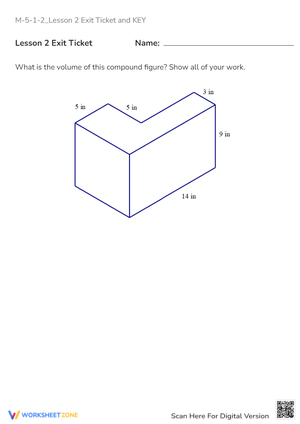
For students who move through volume problems quickly and accurately, the composite prism tasks — where two rectangular prisms are joined and students find total volume by decomposing and adding — extend the work without jumping to new concepts. The 3d shapes printable worksheets for 5th grade in this set include those problems specifically for that purpose. They're harder than they look: students who have the single-prism formula down cold often stumble when they need to decide where to decompose a composite figure, which makes the task genuinely challenging rather than just longer.
Frequently Asked Questions
What 3D shapes does Grade 5 focus on most heavily?
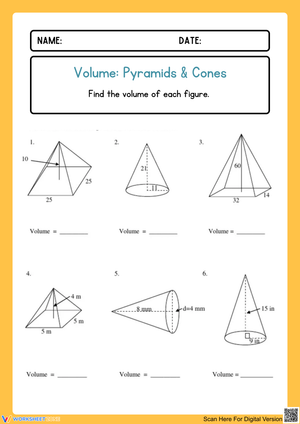
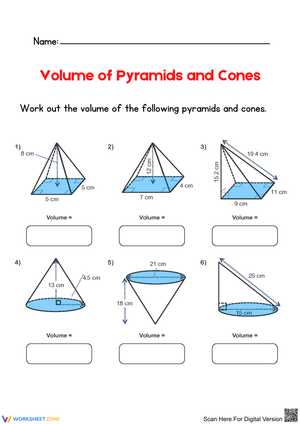
Rectangular prisms receive the most instructional time because volume calculation — the central Grade 5 measurement standard — is built around them. Students also identify and describe triangular prisms, square and triangular pyramids, cylinders, cones, and spheres, but those shapes appear mainly in attribute and classification work rather than in calculation tasks at this grade level.
Do students need physical manipulatives to use these worksheets effectively?
Not strictly, but access to physical solids during attribute and net tasks reduces errors significantly. If your classroom set of geometric solids is limited, even a few shared models at a table group are enough. Students working on volume formulas don't need manipulatives — the unit-cube pictures on the worksheet serve the same grounding function that physical cubes would.
How are the two volume formulas V = l × w × h and V = B × h different, and which should students learn first?
Both formulas produce the same result for rectangular prisms. V = l × w × h is the more intuitive starting point because the three dimensions correspond directly to what students measure or read from a diagram. V = B × h matters because it generalizes to prisms with non-rectangular bases — a concept students will need in sixth grade. Most teachers introduce both side by side once unit-cube counting is secure, with the expectation that students recognize and apply either form on an assessment.
Can these worksheets serve as assessment tools rather than practice?
The attribute identification worksheet and the formula-based volume worksheet both work as formative assessments with no modification — the tasks are specific enough that errors point directly to the gap. The net-matching worksheet and the real-world classification worksheet are better suited to instruction and consolidation, since they measure reasoning rather than procedural accuracy. For end-of-unit summative review, combining the volume formula worksheet with the real-world classification tasks covers the range of question formats most state assessments use at this grade.














 Interactive Worksheet Maker
 Quiz Maker
 Word Search Maker
 Crossword Puzzle Maker
 Word Scramble Generator
 Sentence Scramble Generator
 Handwriting Worksheet Generator
 Name Tracing Generator
 Fill In The Blank Generator




 BACK TOSCHOOL