Why matching worksheets fit 5th grade reading practice
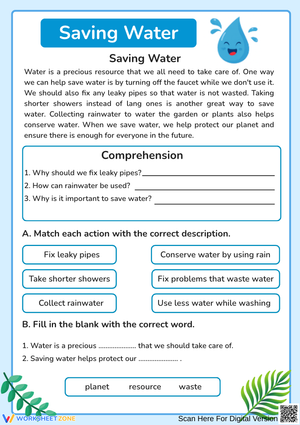
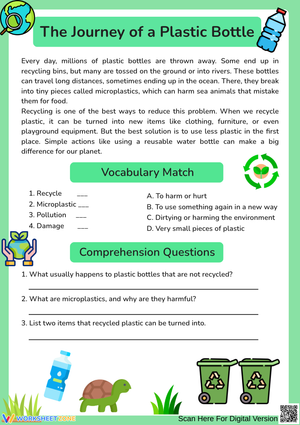
Teachers looking for 5th grade reading matching worksheets printable usually need something they can hand out fast and use in more than one part of the day. In Grade 5, students are expected to read literature and informational text with more independence, explain what the text says, and support ideas with evidence. A matching format works well here because it keeps the cognitive demand on the reading skill instead of on lengthy written production. Students can connect vocabulary to meaning, claims to evidence, headings to text features, or passages to theme statements without spending most of the block on copying sentences.
That makes matching pages a practical format for morning work, literacy centers, homework, sub plans, and short reteach groups. The Worksheetzone Grade 5 Reading Worksheets collection and the Worksheetzone Grade 5 ELA Matching Worksheets pages are especially relevant because they let teachers pair a reading target with a format that is easy to print, sort, and review. When the goal is quick practice with visible errors, matching tasks make it easy to see whether students can identify relationships inside a text.
Which reading skills work best in a matching format
Not every reading task belongs on a matching worksheet, but many Grade 5 priorities do. The strongest printable sets focus on identifying a precise relationship between two ideas, two terms, or a statement and its support. That is why matching pages are often a good fit for upper-elementary comprehension review.
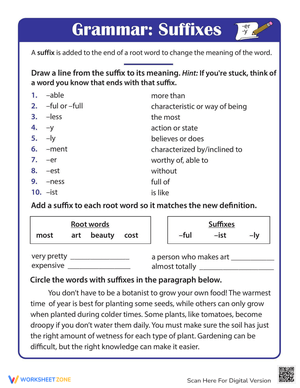
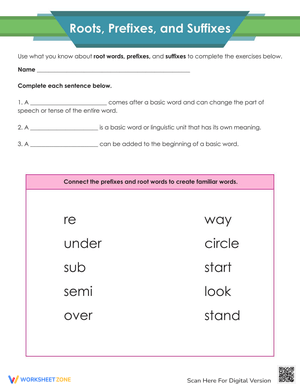
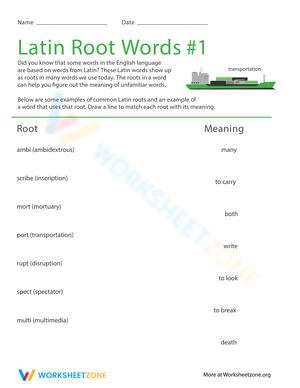
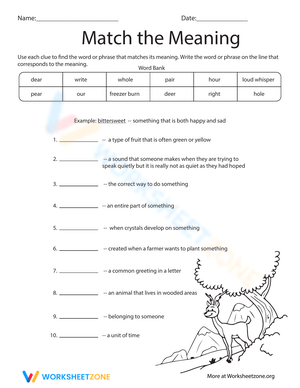
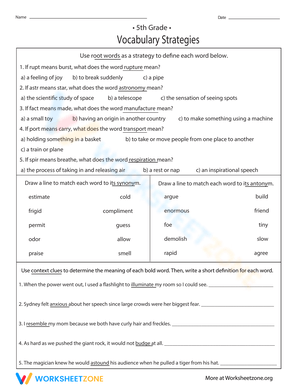
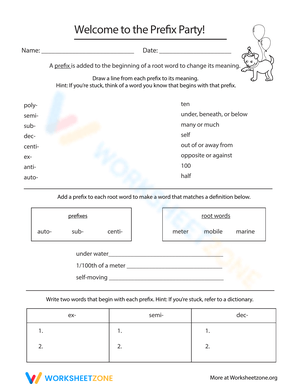
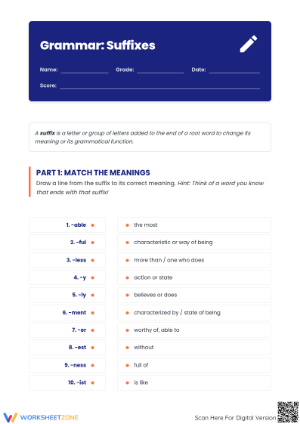
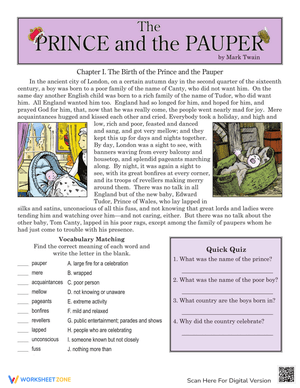
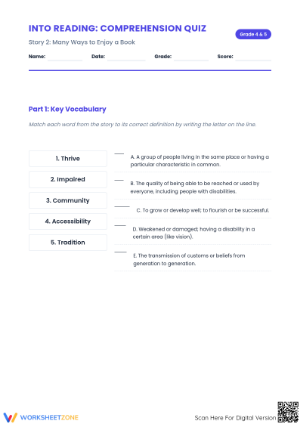
- Vocabulary and context clues: students match words to definitions, synonyms, or clues from a sentence.
- Main idea and details: students connect a central idea to supporting details from short passages.
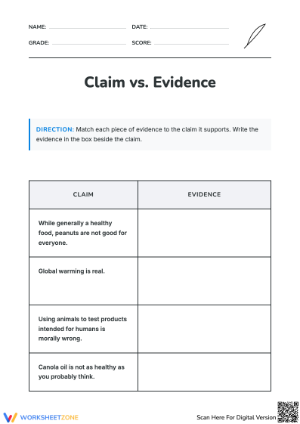
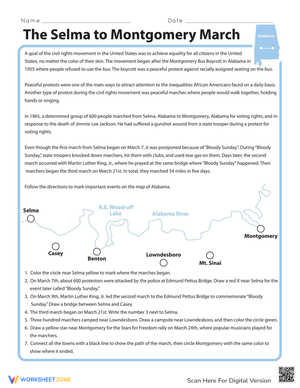
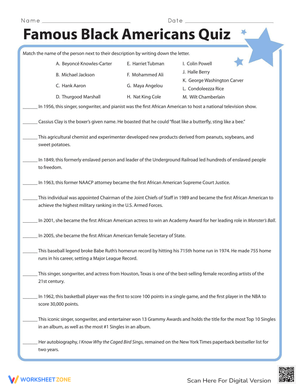
- Text evidence: students pair an answer or claim with the sentence that best supports it.
- Text structure: students match passages to structures such as compare and contrast, cause and effect, or sequence.
- Inference: students connect a clue from the text to a logical conclusion.
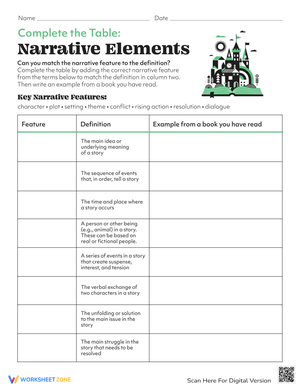
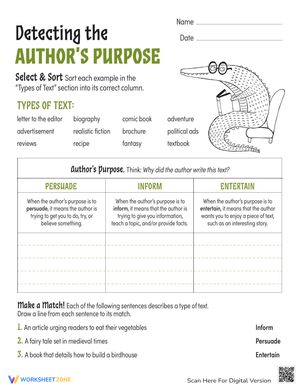
- Genre and text features: students match characteristics to fiction, poetry, drama, biography, article, or other forms.
For Grade 5, this matters because students are moving past surface recall. A well-designed matching page asks them to discriminate between close choices, not just find an obvious answer. If two evidence statements both seem reasonable, students have to reread and decide which one answers the question most directly. That kind of short, focused decision-making helps teachers see whether a student needs decoding support, vocabulary support, or more work with comprehension habits.
Fiction and informational text should both show up
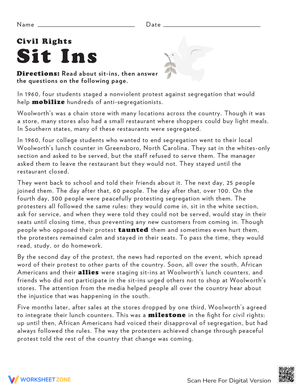
One common mistake is using matching worksheets only with stories. Grade 5 reading instruction needs a balance of literature and informational text, so the best printable options should reflect both. Fiction-based pages can target theme, character response, point of view, and how events connect across a plot. Informational text pages can target headings, domain-specific vocabulary, central idea, details, text structure, and evidence from a short article or excerpt.
That balance helps teachers avoid overgeneralizing a student’s reading performance. A class that does well matching character traits to actions may still struggle when matching cause-and-effect relationships in science or social studies reading. Using both text types during the week gives a clearer picture of transfer. It also makes the worksheets more useful in cross-curricular planning, especially when teachers want short reading practice that can fit into content-area review.
Florida Center for Reading Research's Fourth and Fifth Grade Student Center Activities point to a useful upper-elementary pattern: short, repeatable practice routines can target multiple reading skills across 2 grade levels. That matters for matching work because the format can be reused while the thinking shifts from vocabulary to inference, text structure, or evidence.
Classroom Implementation
Printable matching worksheets are most effective when teachers decide in advance whether the page is for first exposure, guided practice, review, or intervention. In whole-group instruction, a matching page can work as a five-minute check after a read-aloud or shared reading lesson. In centers, it can become an independent task where students complete the page and then justify one or two choices orally with a partner. In intervention, the format keeps the page visually manageable while the teacher listens for the reasoning behind each match.
There are several low-prep ways to use them across the week:
- Bell work: assign 4 to 6 matches tied to yesterday’s passage.
- Small group rotation: use one page to compare how students identify evidence or text structure.
- Homework: send a short printable page that reviews one reading skill without requiring a long written response.
- Assessment warm-up: use a matching set before a quiz to surface misconceptions quickly.
- Sub plans: choose a self-contained worksheet with clear directions and a short passage.
The main implementation tip is to keep the follow-up tight. Ask students to explain one difficult match, circle the clue that helped, or revise one answer after discussion. That extra step prevents the work from becoming a guessing activity and turns a simple printable into a real reading check.
How these worksheets align with Grade 5 expectations
Teachers often want printable pages that feel convenient without drifting away from grade-level expectations. The Common Core State Standards: English Language Arts Standards provide a useful frame here because Grade 5 readers are expected to quote accurately, determine themes and main ideas, explain relationships, compare texts, and interpret words and phrases in context. Matching worksheets can support those outcomes when the prompts stay text-based and require careful reading rather than background knowledge alone.
A strong page does not ask students to match isolated trivia. Instead, it asks them to connect a statement to the best evidence, a section to its central idea, or a word to the meaning that fits the passage. Those are all compact ways to rehearse standard-aligned thinking. Matching should not replace discussion, close reading, or extended response, but it can make practice more efficient between larger reading tasks.
What to look for in a printable set before you assign it
Not all printable worksheets are equally useful. Before assigning a page, it helps to check whether the matches are actually diagnostic. If every answer is obvious from a single keyword, the worksheet may look neat but reveal very little about comprehension. Better pages include plausible choices, short but readable text, and prompts that stay close to one skill target.
- Clear skill focus: the page should emphasize one primary reading objective.
- Readable layout: students should be able to scan options without losing track of lines or letters.
- Balanced difficulty: choices should be distinct enough to avoid confusion but close enough to require thought.
- Text-based answers: students should need the passage, not just prior knowledge.
- Efficient grading: teachers should be able to spot patterns of error quickly.
It also helps to think about whether the worksheet belongs before or after a fuller reading task. Matching can preview vocabulary before a passage, reinforce a lesson after guided reading, or provide a quick exit task at the end of a mini-unit. When teachers place it intentionally, the format saves time without flattening the learning goal.
Building a stronger weekly reading routine with matching pages
The most effective use of 5th grade reading matching worksheets printable is usually as one part of a varied routine rather than the whole routine. Students still need discussion, annotation, independent reading, and written response. Matching pages earn their place when they sharpen one move at a time: identifying evidence, classifying text structure, sorting details, or clarifying vocabulary. Because the format is compact, teachers can use it to create extra repetitions for students who need them without redesigning an entire lesson.
For curriculum planning, the advantage is efficiency. Teachers can pull from a reading collection when they want broader practice, then switch to matching pages when they need focused review before a benchmark, after a unit test, or during intervention cycles. Used that way, Worksheetzone serves as a practical source for printable reading practice that respects both classroom time and Grade 5 expectations.
Frequently Asked Questions
1. What reading skills do 5th grade matching worksheets usually cover?
They commonly target vocabulary, context clues, main idea and details, text evidence, inference, genre features, and informational text structure. The best pages focus on one main skill so teachers can see exactly where students are secure and where they still need support.
2. How can teachers use printable matching worksheets in literacy centers?
They work well as short independent or partner tasks. Students can complete the matching, then explain one answer aloud, highlight a clue in the passage, or correct one item after discussion. That keeps the center focused on reading thinking instead of only answer recording.
3. Are these worksheets better for review, intervention, or assessment?
They are strongest for review and targeted intervention, but they can also support quick formative assessment. Because the format is brief, teachers can identify patterns fast and decide whether a class needs more work with evidence, vocabulary, or informational text comprehension.
4. How do I choose matching worksheets for fiction versus informational text?
Choose fiction pages when your lesson targets theme, character actions, or plot relationships. Choose informational text pages when your class is working on central idea, headings, domain vocabulary, or text structure. Across a full week, using both gives a more balanced view of Grade 5 reading performance.