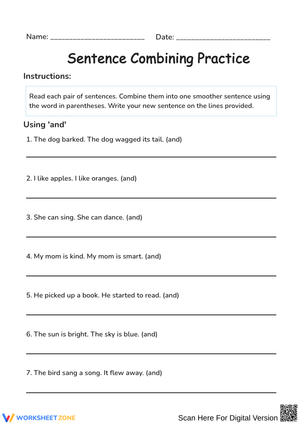
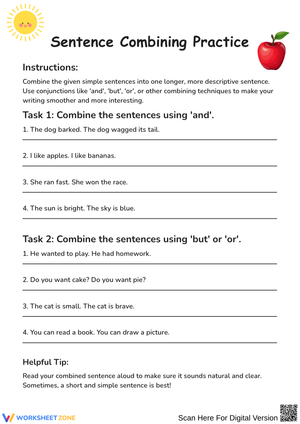
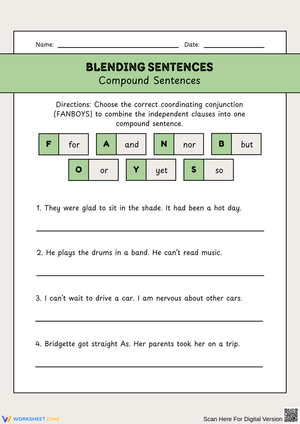
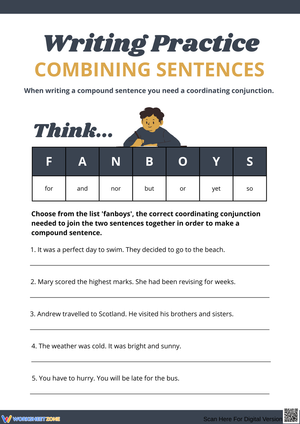
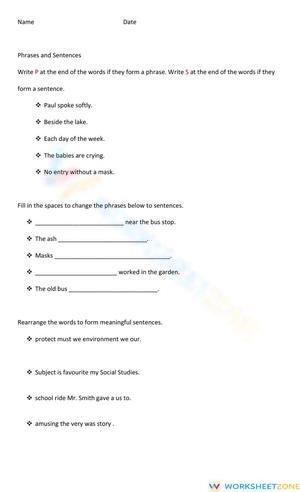
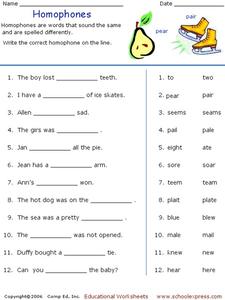
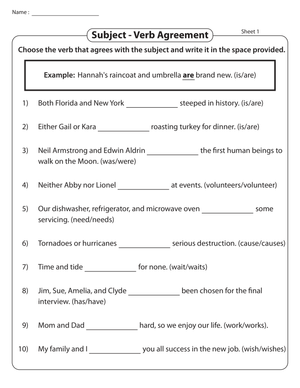
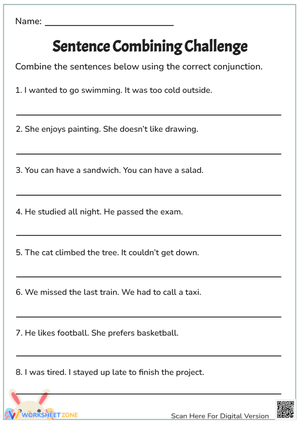
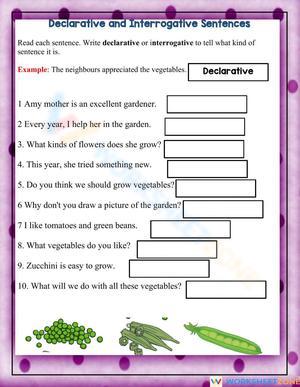
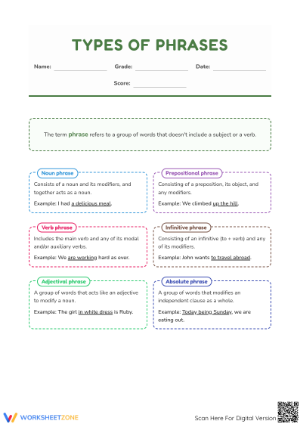
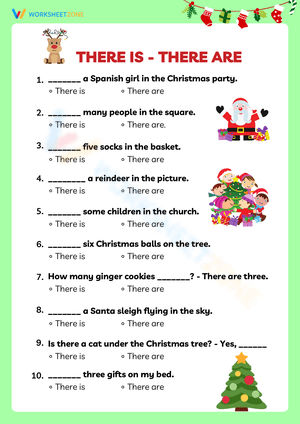
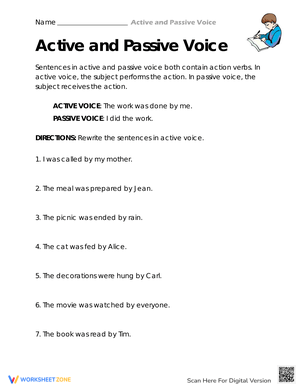
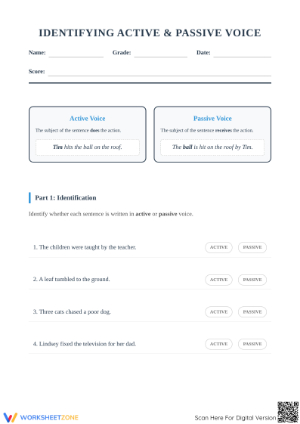
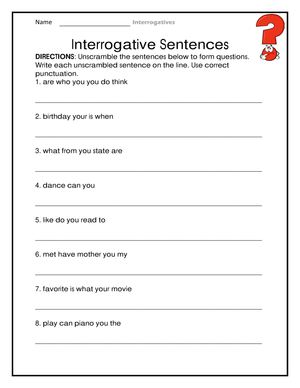
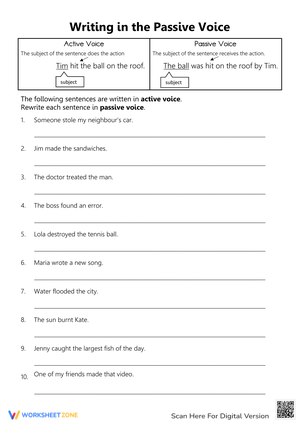
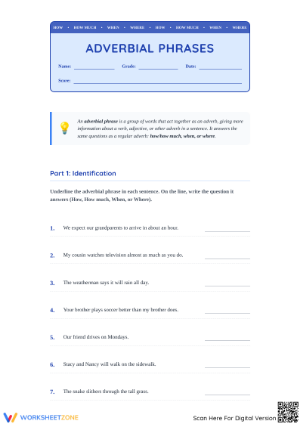
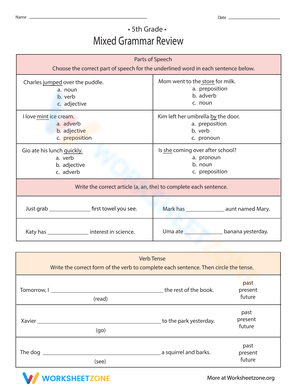
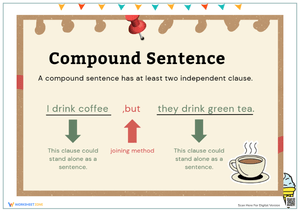
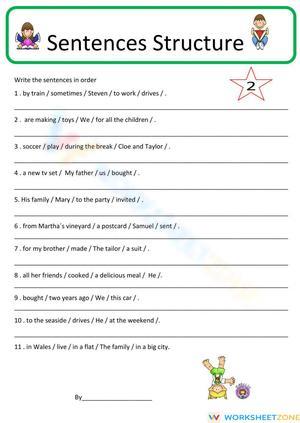
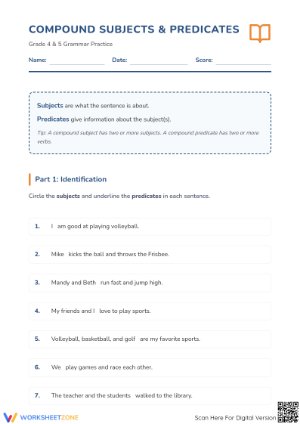
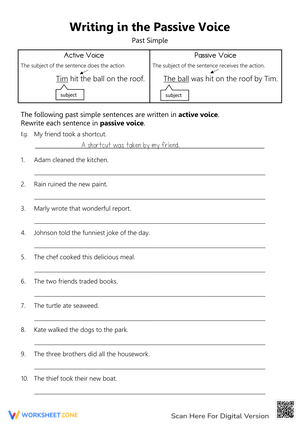
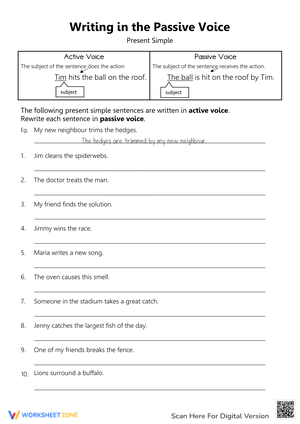
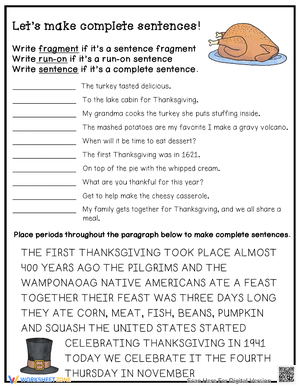
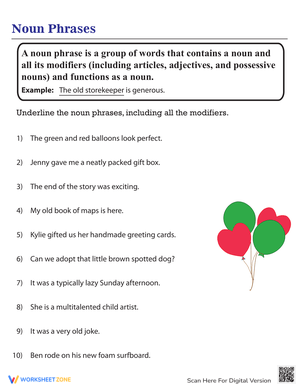
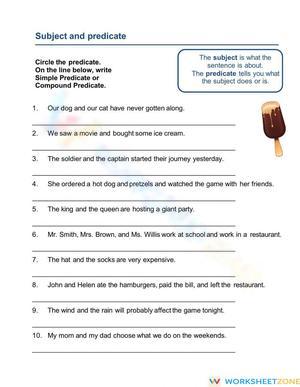
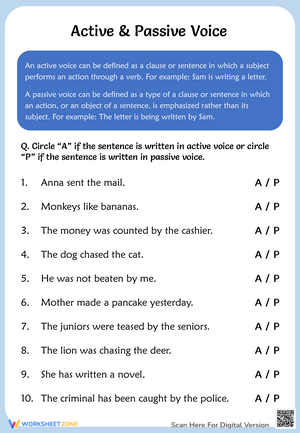
These 5th grade sentence structure printable worksheets address what teachers actually encounter when reviewing student writing notebooks mid-unit: the same run-on appearing in a third of the class, or a fragment a student confidently marked correct on a grammar exercise last week. The set gives teachers ready-to-print practice that moves beyond labeling sentence types and pushes students toward the harder work of revising weak examples. Each worksheet pairs identification with revision — a format that shows whether students can actually repair a sentence, not just recognize that something is wrong.
The Specific Skills Targeted
Grade 5 is where sentence-level instruction has to do two jobs at once: reinforce grammar accuracy and support the more complex writing students are expected to produce across subjects. The worksheets cover skills that show up in both grammar lessons and student drafts.
- Recognizing complete and incomplete thoughts, including fragments that begin with a capital letter and look like sentences
- Distinguishing run-ons from compound sentences — a distinction students miss because both constructions contain two ideas
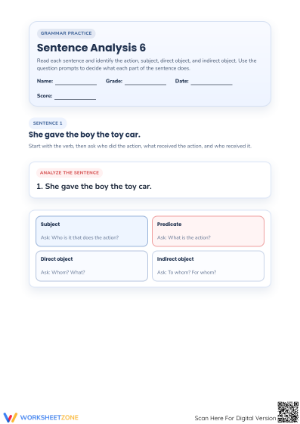
- Identifying subjects and predicates in sentences where prepositional phrases or dependent clauses appear
- Building and revising simple, compound, and complex sentences from weak or faulty models
- Applying punctuation — including commas after introductory elements — to clarify meaning rather than follow a rule mechanically
Tasks increase in demand across the set. Early worksheets ask students to sort or label; later ones require rewriting. That progression matters at grade 5 because students can often identify an error they would still produce in their own writing — the revision step is where the real learning happens.
Mistakes Students Make That These Worksheets Help You Catch
The most persistent error at this level is not the classic run-on — two independent clauses with no punctuation — but the comma splice. Students who have been told that commas connect related ideas will write "We finished the experiment, our data made sense" and believe that comma is doing real work. They are not wrong to want a connector; they are wrong about what kind. These worksheets include several comma splice items requiring students to choose between a period, a coordinating conjunction, or a semicolon — a decision that exposes whether students understand sentence boundaries or are reacting to a rule they only half remember.
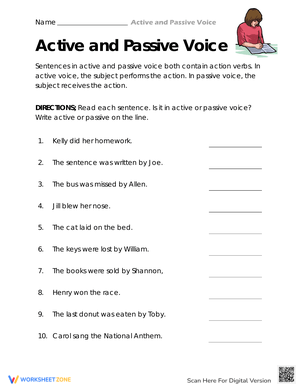
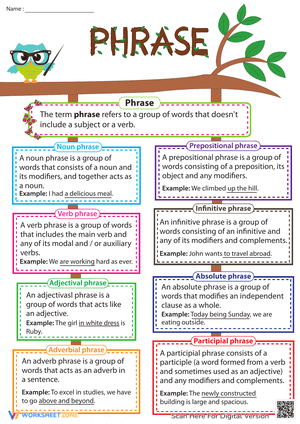
A second recurring pattern is the participial-phrase fragment. "Running toward the bus stop." reads as a complete sentence to many fifth graders because it contains a verb form and describes action. Students who correctly identify "The dog ran." as a sentence will mark that fragment correct, because the subject is implied but never stated. Revision tasks on each worksheet ask students to add what is missing rather than simply circle the error, which surfaces this confusion quickly during independent practice.
How to Build These Worksheets Into Your Lesson Plans
Short grammar work fits better at the start of a writing block than at the end. A short worksheet used as a bell ringer — three to five items, reviewed together in about eight minutes — creates a daily routine that accumulates over a unit without displacing writing time. Teachers who hold grammar practice for the final minutes of class find it competing with transitions, cleanup, and the mental fatigue that follows a full writing workshop.
The 5th grade sentence structure printable worksheets in this set also fit small-group reteaching. One group corrects comma splices at the table with the teacher while another group independently completes a sentence-combining worksheet. The task focus is narrow enough that a small-group session can stay on one recurring error without drifting into general grammar review. After small-group work, a strong follow-up move is to have students return to their own drafts and find one place where the error they just practiced still appears.
For writing workshop specifically, use a short worksheet before drafting or revision, then require students to apply the same move in their own writing. After correcting three model run-ons, students reread one paragraph of their draft and revise any run-on they find. That bridge between correction exercise and authentic revision closes the gap that makes grammar instruction feel disconnected from writing — which is often the actual problem in grade 5 ELA.
Standard Alignment
The Common Core State Standards for English Language Arts, Grade 5 Language Standards connect directly to the skills these worksheets practice. L.5.2 addresses punctuation conventions including commas after introductory elements, commas in tag questions, and punctuation for direct address — all of which require students to understand sentence structure, not just comma placement rules. L.5.3 asks students to expand, combine, and reduce sentences for meaning, reader interest, and style, which is why the revision tasks here ask students to make construction choices rather than apply a formula. That standard frames sentence structure as a writing craft decision, and the worksheet tasks reflect that framing.
Teachers working in states that have adopted ELA standards aligned to Common Core or its derivatives will find the worksheets fit naturally into a grade 5 language unit. The tasks that ask students to revise rather than label address L.5.3 most directly, because they require students to produce a correct, purposeful sentence — not just identify whether one exists.
Adjusting These Worksheets for a Range of Learners
For students still working on sentence completeness, reduce the number of items and narrow the error type. A worksheet that mixes four different error types at once produces frustration for a student who is still sorting out what makes a sentence complete. Pull items that focus on subjects and predicates, work through two or three together, and assign the rest independently once the pattern is clear.
The 5th grade sentence structure printable worksheets that include sentence-combining and sentence-expansion tasks are the right ones to pull for students who already write complete sentences reliably. Have them combine three short sentences into one complex sentence with a subordinating conjunction, or rewrite a paragraph to vary sentence length and rhythm. Asking those students to work through basic identification exercises they have already mastered does not move their writing forward — it adds time-on-task for a skill they already own.
For English language learners, the revision tasks are often more productive than identification tasks because they produce a written product the teacher can examine. A student who is uncertain about grammar labels but operates in the language at a functional level can often correct a sentence by ear. Letting students read their revision aloud before writing it draws on oral language strength rather than bypassing grammar instruction entirely — it is a genuine support move, not a workaround.
Frequently Asked Questions
What sentence skills should fifth graders be working on?
Grade 5 students should practice sentence completeness, identifying subjects and predicates, recognizing and repairing fragments and run-ons, distinguishing comma splices from correctly punctuated compound sentences, and working with simple, compound, and complex sentences. Revision practice — not just identification — is where most of the real growth happens at this level.
How many items per worksheet work for a bell ringer or exit ticket?
Three to five items fits a ten-minute opening block; more than that pushes the task past what the time allows. Each worksheet is usable in parts — pull four items for a warm-up, then return to the same worksheet later for independent practice or homework. There is no requirement to complete an entire worksheet in one sitting.
Can these worksheets support students working below grade level?
Yes. For below-grade students, limit the task to one error type per session and keep directions straightforward. The revision format — showing a flawed sentence and requiring students to rewrite it — gives teachers more information than a circling or labeling task, because it shows whether a student can produce a correct sentence rather than just recognize one.
Do these worksheets connect to writing instruction or only to grammar?
Teachers who pair worksheet practice with a short drafting follow-up — "now find one place in your own writing where you can apply this" — see stronger transfer than those who use grammar practice in isolation. The 5th grade sentence structure printable worksheets work best when they are treated as writing preparation, not a separate subject with its own instructional block.












 Interactive Worksheet Maker
 Quiz Maker
 Word Search Maker
 Crossword Puzzle Maker
 Word Scramble Generator
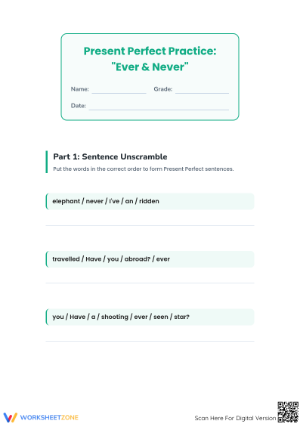
 Sentence Scramble Generator
 Handwriting Worksheet Generator
 Name Tracing Generator
 Fill In The Blank Generator