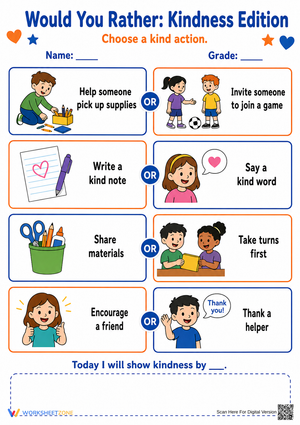
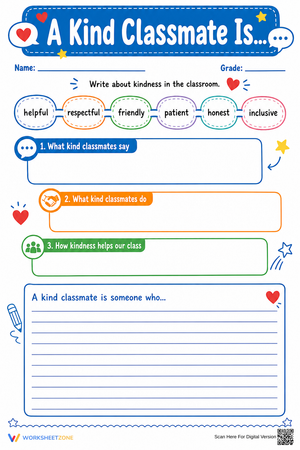
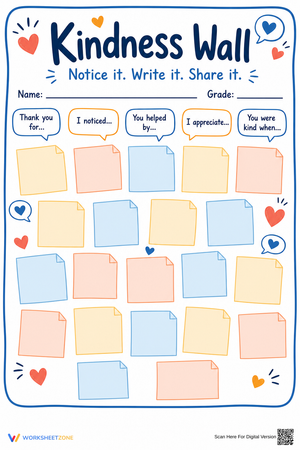
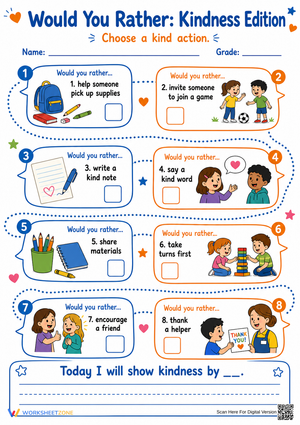
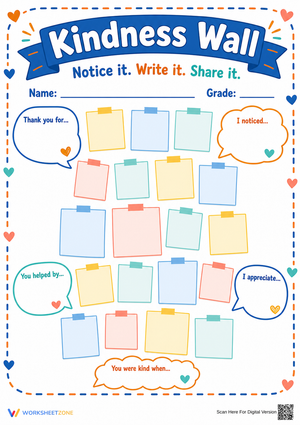
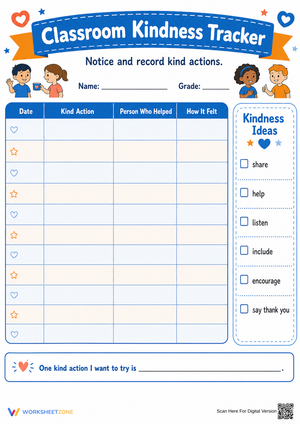
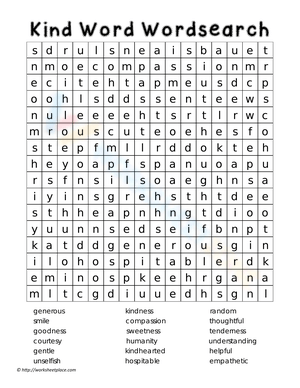
CASEL's Fundamentals of SEL identifies 5 core competency areas, which helps explain why kindness worksheets can serve more than one purpose in grade 5. When students reflect, discuss, and choose next steps, the activity supports relationships and decision-making, not just rule reminders.
By grade 5, students are old enough to notice tone, fairness, and peer dynamics quickly. That means kindness lessons need to feel respectful of their age, not overly simple or designed for early elementary classrooms. The best 5th grade kindness worksheets pdf options give students space to think, write, and talk about choices that happen in real school settings like group work, recess disagreements, online comments, and classroom responsibilities.
Teachers often need these pages for practical reasons too. A printable kindness activity can anchor morning work, support an SEL mini-lesson, or give a substitute a structured way to keep the day focused on community expectations. When the worksheet goes beyond slogans and asks students to reflect on actions, empathy, and consequences, it becomes much more useful for upper elementary instruction.
What Good 5th Grade Kindness Worksheets Should Include
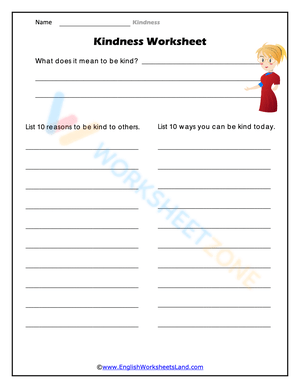
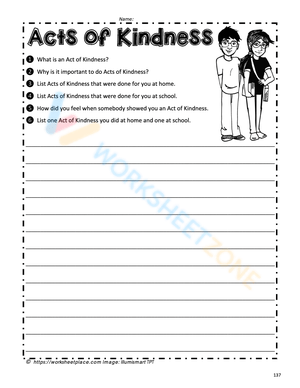
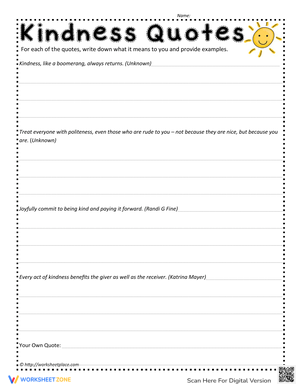
The worth-downloading kindness worksheets for grade 5 usually balance reflection with action. Students this age can identify kind behaviors, but they also benefit from prompts that ask why a choice mattered, how another person may have felt, and what a better response would look like the next time. That extra layer makes the work more than a coloring or matching activity.
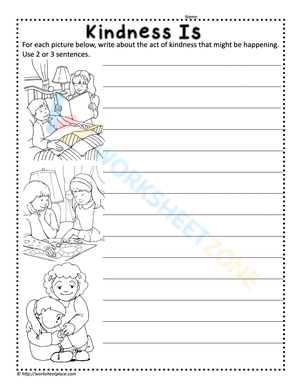
- Realistic school scenarios involving peers, teamwork, or problem solving
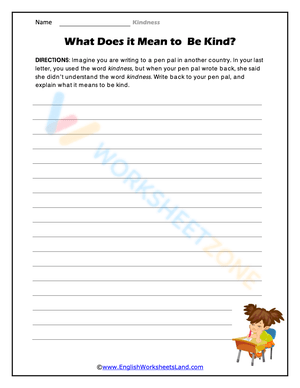
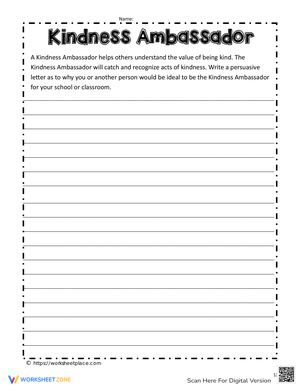
- Short written reflection that asks students to explain their thinking
- Opportunities to compare kind, unkind, and neutral choices
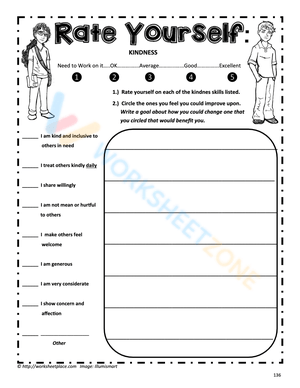
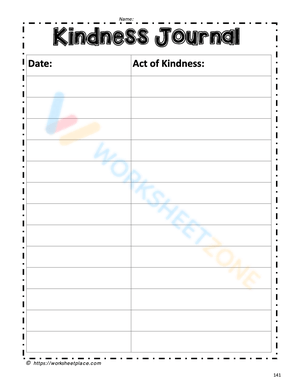
- Space for goal setting such as one action to try that day or week
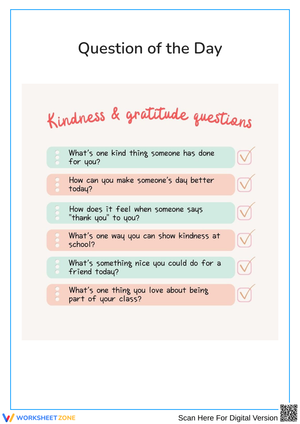
- Discussion prompts that can move easily into partner talk or whole-group sharing
For teachers, that structure matters because it lets one printable serve several purposes. The same page can open a class meeting, provide evidence of student thinking, and support behavior conversations without requiring a new prep cycle.
How Kindness Worksheets Support SEL and Classroom Behavior
Kindness work fits naturally into social and emotional learning because students are practicing perspective taking, relationship skills, and responsible choices in context. In an upper elementary classroom, those skills show up in very visible ways: how students respond when a partner makes a mistake, how they include classmates, and how they repair harm after conflict.
A useful shift for grade 5 is to treat kindness as a decision-making skill rather than a personality trait. When students analyze a hallway conflict, a group project disagreement, or a moment of exclusion, they can see that kindness is often a series of small choices under pressure. That framing gives teachers more leverage than simply telling students to be nice, because it connects behavior to specific, teachable moments.
CASEL's Fundamentals of SEL describes five broad areas of competency, and that 5-part structure helps explain why kindness worksheets can do more than address behavior in the moment. They can also strengthen self-awareness, relationship skills, and responsible decision-making when prompts ask students to reflect before acting.
Classroom Implementation
Teachers usually get the best results when kindness PDFs are tied to a predictable routine. In morning meeting, a short prompt can help students settle in and think about how they want the day to go. During an SEL block, the same type of worksheet can be expanded with partner discussion, role-play, or a written exit response. In small groups, it can give counselors and support staff a concrete starting point for students who need practice with peer interactions.
- Use one worksheet as a Monday launch for a weekly community goal
- Pair a scenario page with turn-and-talk before students write independently
- Revisit the same prompt after recess or group work to connect ideas to lived behavior
- Keep a few printable pages ready for substitute plans or reset days after conflict
- Let students set one measurable kindness target and reflect on it at week's end
This kind of implementation keeps the worksheet from feeling isolated. Students see that kindness is part of how the class operates, not just a one-time character lesson pulled out during a difficult week.
Ways to Extend One Worksheet Into a Full Lesson
A single kindness page can cover more instructional ground than it appears to at first glance. If the prompt includes a realistic social situation, teachers can use it as the core text for speaking, listening, writing, and behavior reflection. That makes the resource more efficient and more worthwhile during a packed week.
- Start with a silent quick write so every student forms an initial response
- Move into partner discussion where students compare possible actions
- Ask students to revise their answers after hearing another perspective
- Close with a class norm or action step the group wants to carry forward
Here is the practical payoff: one worksheet can move from independent work to collaborative reasoning without additional materials. That is often what teachers need when they are balancing academics, community building, and behavior support in the same block.
FAQ
1. What should a 5th grade kindness worksheet include?
It should include realistic peer situations, short written reflection, and prompts that ask students to explain why a response is kind, respectful, or more helpful. Grade 5 students usually need scenario-based work that feels connected to real classroom interactions.
2. How can teachers use kindness PDFs during morning meeting or SEL time?
They work well as a quiet entry task, a discussion starter, or an exit reflection. Many teachers use one page to begin with independent thinking, then shift into partner talk or a brief whole-class conversation about respectful choices.
3. Are kindness worksheets appropriate for whole class and small groups?
Yes. In whole class, they help establish shared expectations and language. In small groups, they give counselors, intervention teachers, and classroom staff a structured way to discuss empathy, conflict, and repair without putting students on the spot immediately.
4. How do kindness activities connect to empathy and behavior?
They help students slow down, consider another person's perspective, and connect actions to outcomes. Over time, that reflection can improve peer interactions because students have practiced what respectful, responsible choices look like before the next conflict happens.