


























Views
Downloads

Printable Kindness Journal | Grade 3-5 SEL
Paste this activity's link or code into your existing LMS (Google Classroom, Canvas, Teams, Schoology, Moodle, etc.).
Students can open and work on the activity right away, with no student login required.
You'll still be able to track student progress and results from your teacher account.
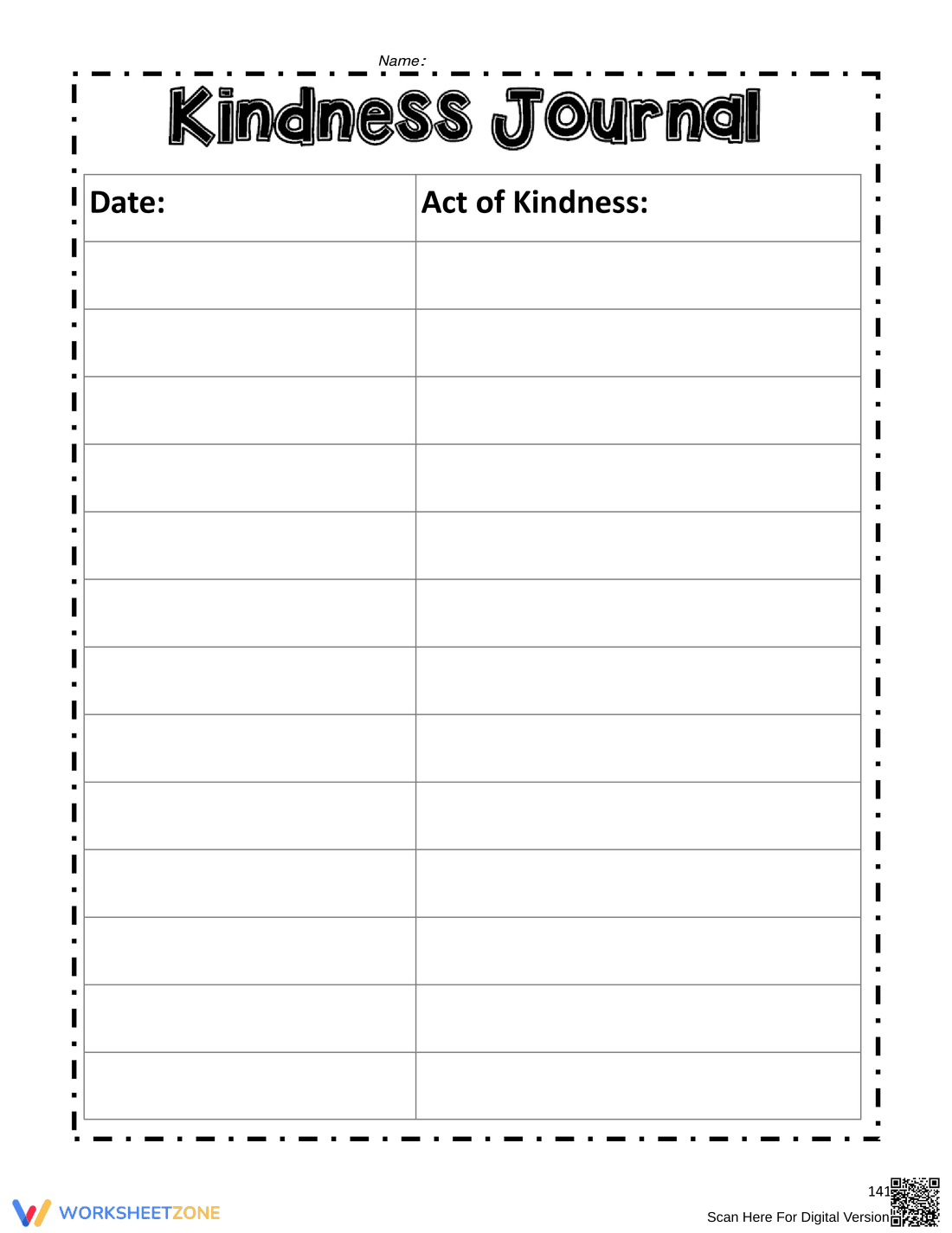
This printable kindness journal helps students build positive classroom habits by tracking their daily acts of goodwill. By recording dates and specific actions, learners practice routine writing while developing social-emotional awareness. The simple two-column format encourages consistent reflection and reinforces a supportive school environment.
At a Glance
- Grade: 3-5 · Subject: English
- Standard:
CCSS.ELA-LITERACY.W.3.10— Write routinely for various tasks and purposes- Skill Focus: Routine writing and SEL reflection
- Format: 1 page · 10 entries · No answer key · PDF
- Best For: Morning work or SEL blocks
- Time: 5–10 minutes
This single-page resource features a straightforward tracking table with ten blank rows. Students are provided with two clear columns: one for the date and one to describe their specific act of kindness. The open-ended design allows for flexible use, whether students are writing brief sentences or detailed paragraphs about their positive interactions. Because it is a personal reflection tool, no answer key is required.
Zero-Prep Workflow
This journal is designed for immediate classroom implementation with minimal teacher setup:
- Print (1 minute): Generate copies for your class or print a master for a classroom binder.
- Distribute (1 minute): Hand out the logs during morning meeting, advisory periods, or at the start of an SEL block.
- Review (3 minutes): Briefly model how to fill out an entry using a real-world example from the classroom.
With under two minutes of total teacher prep time, this worksheet is an excellent addition to substitute plans or daily routine folders.
Standards Alignment
This activity aligns with CCSS.ELA-LITERACY.W.3.10: Write routinely over extended time frames (time for research, reflection, and revision) and shorter time frames (a single sitting or a day or two) for a range of discipline-specific tasks, purposes, and audiences. It also supports SEL frameworks by promoting self-awareness. Both standard codes can be copied directly into lesson plans, IEP goals, or district curriculum mapping tools.
How to Use It
Integrate this log into daily routines. During morning work, students can spend five minutes reflecting on a kind act from the previous day. Alternatively, use it as a closing activity where students document something positive before dismissal. For formative assessment, observe the descriptive language students use in their entries to gauge their expressive writing progress. Expect each entry to take just a few minutes to complete.
Who It's For
This resource is ideal for upper elementary students in grades three through five. The open format naturally differentiates for various writing abilities; struggling writers can list simple actions, while advanced learners can draft complex sentences detailing the impact of their behavior. It pairs perfectly with character education lessons, read-alouds focused on empathy, or classroom behavior management systems.
Integrating routine writing with social-emotional learning yields significant benefits for student development. By utilizing this journal aligned to CCSS.ELA-LITERACY.W.3.10, educators prompt students to write routinely for various tasks and purposes. According to a recent RAND AIRS 2024 report, classrooms that embed brief, structured reflection activities into their daily schedules see a marked improvement in both expressive writing fluency and peer-to-peer relationships. The physical act of documenting positive behaviors reinforces the cognitive pathways associated with empathy and self-regulation. This simple tracking method transforms abstract concepts of goodwill into concrete, observable data points that students can review over time. By maintaining this log, learners not only practice essential literacy skills but also actively contribute to a more supportive and cohesive school climate, demonstrating the dual value of cross-curricular instruction.


