


























Views
Downloads

Printable Kindness Worksheet | Grade 4-5 SEL
Paste this activity's link or code into your existing LMS (Google Classroom, Canvas, Teams, Schoology, Moodle, etc.).
Students can open and work on the activity right away, with no student login required.
You'll still be able to track student progress and results from your teacher account.
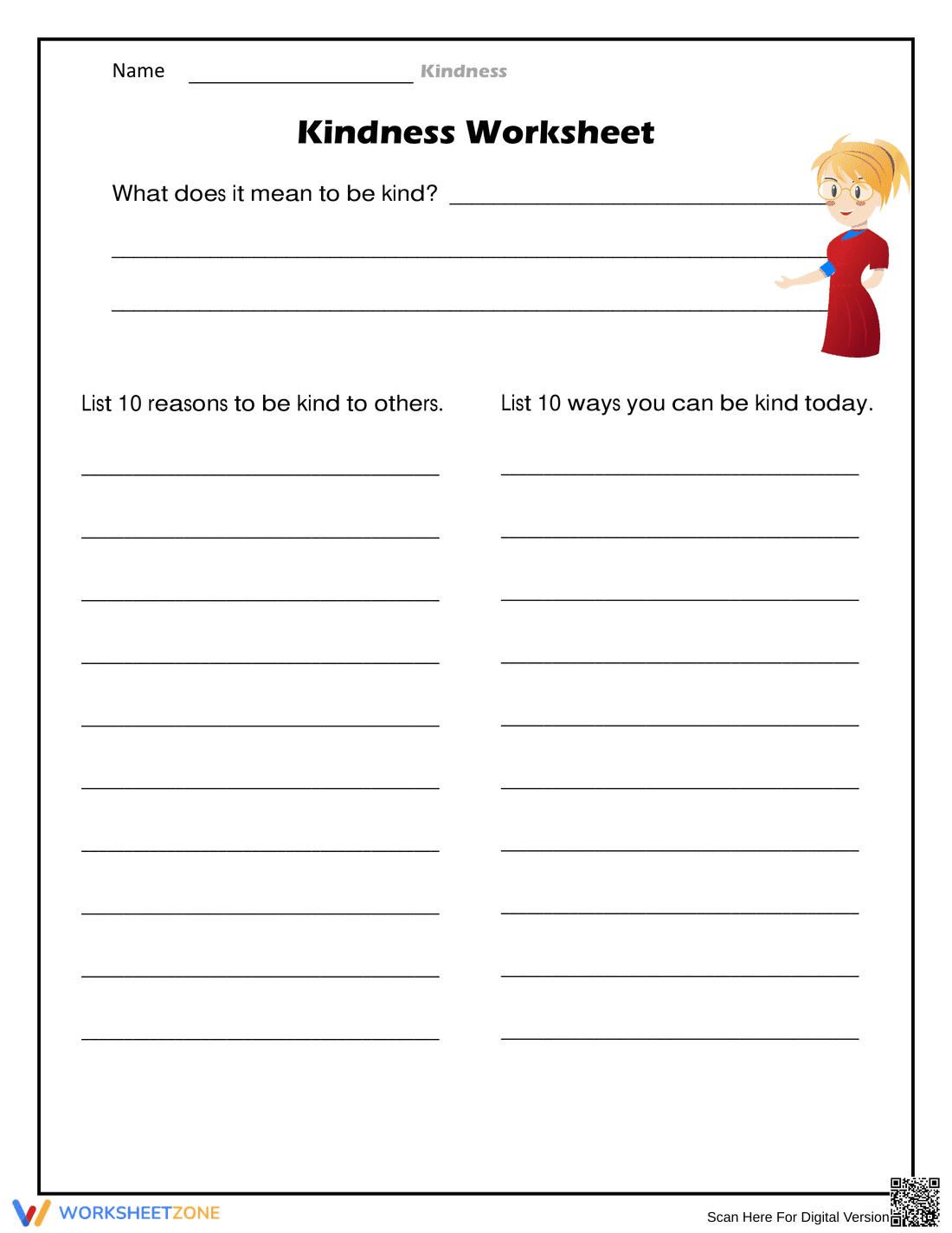
This Grade 4 and 5 social-emotional learning worksheet prompts students to define kindness and generate actionable examples of positive behavior. By completing these structured writing tasks, learners reflect on their personal values, build empathy, and practice clear, coherent explanatory writing in a single focused activity.
At a Glance
- Grade: 4–5 · Subject: English / SEL
- Standard:
CCSS.ELA-LITERACY.W.4.4— Produce clear and coherent writing appropriate to task.- Skill Focus: Explanatory writing and social-emotional reflection
- Format: 1 page · 3 tasks · No answer key needed · PDF
- Best For: Morning work or advisory periods
- Time: 15–20 minutes
This single-page resource features three writing prompts designed to foster empathy. First, students write a personal definition of kindness. Next, they complete a list of ten reasons to show kindness. Finally, they brainstorm ten practical ways to demonstrate kindness daily. The open-ended format encourages authentic student voice and requires no answer key.
Zero-Prep Workflow
Designed for immediate implementation:
- Print (1 minute): Simply download the PDF and print a class set. The clean, black-and-white design ensures quick and efficient copying.
- Distribute (1 minute): Hand out the worksheet during morning meetings, advisory periods, or as a meaningful early-finisher activity.
- Review (3 minutes): Briefly discuss kindness before independent work. Total prep time is under two minutes.
Because the instructions are entirely self-explanatory, this activity is also an excellent addition to any emergency sub plan.
Standards Alignment
This activity aligns with CCSS.ELA-LITERACY.W.4.4, requiring students to produce clear and coherent writing in which the development and organization are appropriate to task, purpose, and audience. By articulating definitions and listing specific examples, students practice organizing their thoughts logically. Both standard codes can be copied directly into lesson plans, IEP goals, or district curriculum mapping tools.
How to Use It
Teachers can utilize this worksheet as a calming morning work assignment to set a positive tone for the day. Alternatively, it serves as an effective reflection tool after a classroom conflict or during a dedicated social-emotional learning block. As a formative assessment observation tip, educators can circulate while students write to identify which learners struggle to generate concrete examples of positive behavior, indicating a need for further SEL instruction. Most students will complete the three sections within 15 to 20 minutes.
Who It's For
This worksheet is primarily designed for fourth and fifth-grade students developing their social-emotional competencies and explanatory writing skills. For differentiation, teachers can allow students who struggle with writing to dictate their lists or work with a peer partner to brainstorm ideas. This resource pairs naturally with a read-aloud book about empathy or a classroom anchor chart detailing positive character traits.
Integrating social-emotional learning tasks like this kindness worksheet directly supports both behavioral and academic outcomes. According to a comprehensive EdReports 2024 analysis, embedding SEL prompts into standard literacy blocks significantly improves student engagement and classroom climate. When students practice CCSS.ELA-LITERACY.W.4.4 to produce clear and coherent writing appropriate to task, they are not just building foundational English skills; they are actively processing complex social concepts. Writing out definitions and concrete examples of positive behavior helps internalize these values, making them more likely to be demonstrated in peer interactions. This dual-purpose approach ensures that instructional time is maximized, blending essential writing practice with critical character development. By requiring students to articulate ten specific reasons and methods for showing kindness, educators foster a more empathetic classroom environment while simultaneously reinforcing structured writing habits.


