In a grade 4 science block, teachers usually need a printable page that helps students observe change over time, name the major stages of plant growth, and connect each stage to visible plant structures.
This topic fits upper-elementary science because students are ready to move past a generic plant diagram and look at how a tree changes from seed to seed-producing adult. They can notice that germination starts growth, that seedlings depend on roots and leaves, and that mature trees create the next generation through seeds. Those ideas support classroom conversations about growth, reproduction, and how plant parts help a living thing survive.
For teachers, the value is practical. A printable PDF can slide into centers, morning work, homework, science notebooks, sub plans, or a quick formative check. Instead of building a lesson from scratch, you can use one resource to review vocabulary, reinforce sequencing, and give students a concrete model for discussing a tree life cycle in age-appropriate language.
The Tree Life Cycle Stages Students Should Sequence
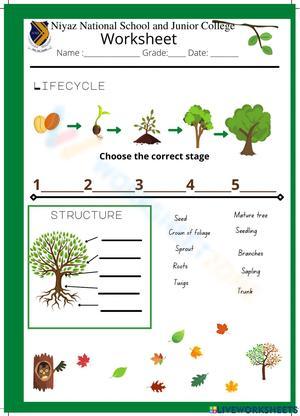
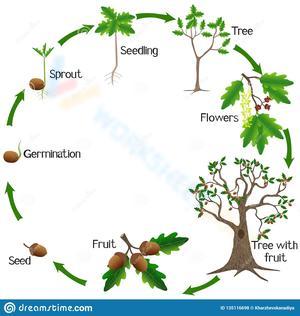
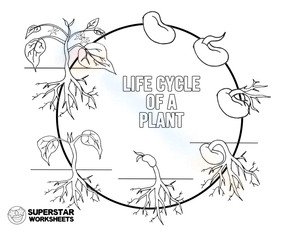
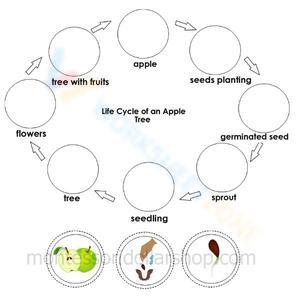
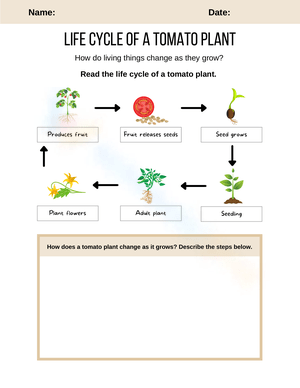
Most 4th grade tree life cycle pages should show six visible stages that students can follow in order. Keeping the sequence consistent helps children focus on the science idea instead of getting lost in too many exceptions. For classroom use, the clearest sequence is seed, germination, seedling, young tree, mature tree, and seed production.
- Seed: the starting point that contains the embryo and stored food for early growth.
- Germination: the stage when the seed begins to sprout under the right conditions.
- Seedling: a small new plant with early roots, stem growth, and first leaves.
- Young tree: a stronger plant that continues to grow taller and develop more branches and leaves.
- Mature tree: a fully developed tree with the structures needed for reproduction.
- Seed production: the point when flowers or cones help create seeds for the next generation.
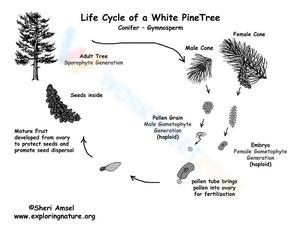
That sequence keeps instruction concrete, but it still leaves room for teacher explanation. Some trees produce flowers and fruits, while others produce cones. A worksheet does not need to turn grade 4 science into a botany seminar. It needs to help students understand that trees reproduce through seeds and that visible stages can be ordered, described, and compared with a general plant life cycle.
Classroom Implementation
According to NGSS 4-LS1, fourth graders use evidence to explain how plant structures support survival, growth, behavior, and reproduction. That grade-level target makes a tree life cycle worksheet more than sequencing practice; it checks whether students can connect each stage to the structures and processes that keep a tree alive.
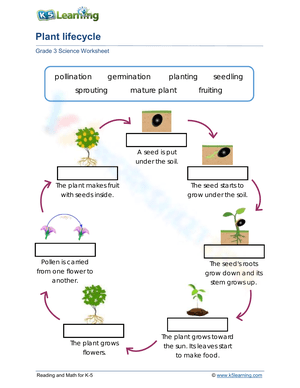
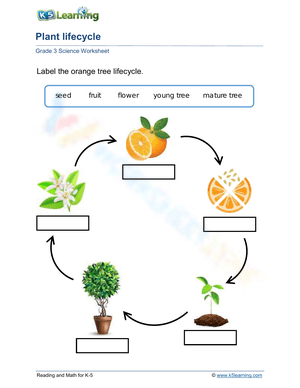
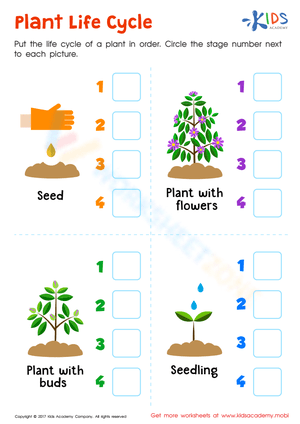
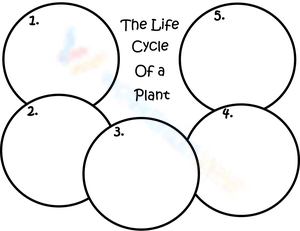
Teachers can use tree life cycle PDFs in several parts of the week without changing the basic format. In a science center, students can cut, sort, and glue the six stages in order, then add one sentence about what changes from one stage to the next. During whole-group review, the same page can be projected while students defend their sequence choices aloud. For homework, the worksheet becomes a low-prep way to check whether students can explain the cycle independently.
- Use the worksheet before a hands-on plant unit to see what students already know about seeds and growth.
- Use it during instruction as a notebook insert that pairs with diagram labeling.
- Use it after instruction as a short formative assessment with a written explanation.
- Use it in small groups to compare a tree life cycle with a general flowering plant cycle.
Students who need support can work with a picture bank and a shorter vocabulary list. Students who are ready for more can write a paragraph comparing seedling and young tree stages or explain why seed production belongs at the end of the cycle. Because the layout is printable and predictable, it works well for sub plans and for classes that need a quiet, structured review task.
Frequently Asked Questions
1. What stages should a 4th grade tree life cycle worksheet include?
For most grade 4 classrooms, six stages are clear and manageable: seed, germination, seedling, young tree, mature tree, and seed production. That sequence gives students enough detail to understand change over time without overwhelming them with advanced plant biology terms.
2. How can teachers use tree life cycle PDFs in science centers or review lessons?
They work well as cut-and-paste sequencing tasks, diagram labeling pages, notebook inserts, homework, or short checks for understanding. In centers, students can sort the stages and explain each one. In review lessons, teachers can use the same PDF to revisit vocabulary and quickly spot misconceptions.
3. How is a tree life cycle different from a general flowering plant life cycle?
The big idea is the same: plants grow, develop structures, and reproduce through seeds. The difference is that tree examples may emphasize long-term growth and may involve flowers or cones depending on the kind of tree. A good worksheet helps students see both the shared pattern and the specific tree example.
4. Are tree life cycle worksheets aligned with 4th grade plant science standards?
They can be when they ask students to connect plant structures to survival, growth, and reproduction instead of only memorizing pictures. That is why worksheets that combine sequencing with labeling and short explanations are often more useful than pages that focus on vocabulary alone.












 Interactive Worksheet Maker
 Quiz Maker
 Word Search Maker
 Crossword Puzzle Maker
 Word Scramble Generator
 Sentence Scramble Generator
 Handwriting Worksheet Generator
 Name Tracing Generator
 Fill In The Blank Generator