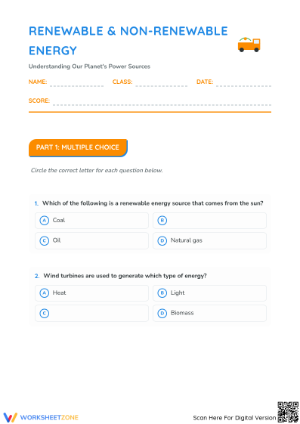
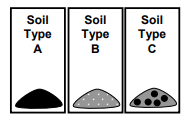
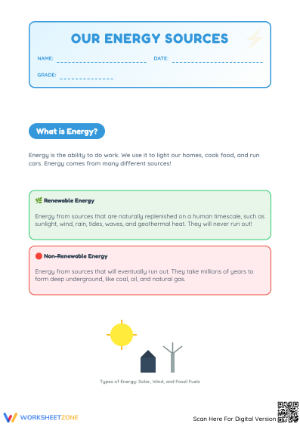
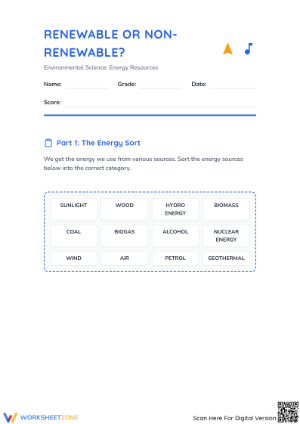
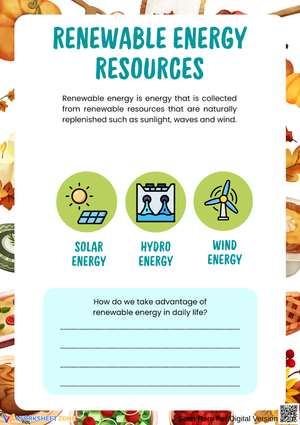
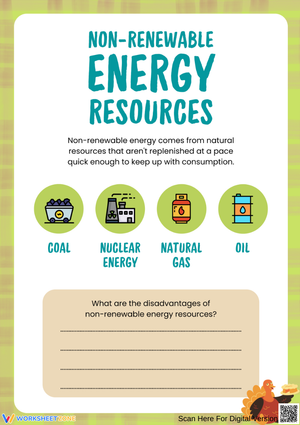
Learning about natural resources helps second graders understand where everyday things come from and why the Earth matters. With 2nd grade natural resources worksheets, students can explore simple but important ideas such as water, soil, air, sunlight, plants, rocks, and minerals. These activities turn broad earth science concepts into clear learning moments through sorting, matching, labeling, picture-based questions, and short explanations that are easy for young learners to follow.
At this grade level, students learn best when science connects to real life. A pencil can lead to a discussion about trees. A glass of water can introduce the idea of resources people need every day. A classroom plant can help students understand soil, sunlight, and air. Worksheets give students a structured way to observe these examples and classify them as natural resources. You can find related practice in the natural resources worksheets collection at Worksheetzone.
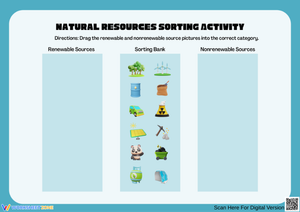
Simple routines can make natural resources lessons more effective. Teachers might begin with a picture sorting activity, then ask students to explain why each item is useful. For example, students can group water, trees, rocks, and sunlight based on how people, animals, or plants use them. These tasks help students move beyond naming resources and begin thinking about their purpose. They also support vocabulary development, observation skills, and early cause-and-effect reasoning.
Natural resources lessons also open the door to environmental responsibility. Once students understand that people use Earth’s resources every day, they can begin discussing ways to care for them. Topics such as saving water, reusing materials, planting trees, and reducing waste can be introduced in a simple and age-appropriate way. For more ideas that connect science learning with environmental awareness, the earth day activities for kids guide offers helpful activities that pair naturally with a natural resources unit.
2nd grade natural resources worksheets are useful for classroom lessons, homeschool science, review activities, and small-group practice. They help students recognize common resources, understand how people use them, and begin thinking about conservation. With clear visuals, familiar examples, and guided questions, these worksheets give young learners a strong foundation in earth science while encouraging them to notice and respect the world around them.
Frequently Asked Questions
Question 1: What topics do 2nd grade natural resources worksheets cover?
These worksheets usually cover common natural resources such as water, air, soil, sunlight, plants, rocks, minerals, and trees. Students may learn how people use these resources for drinking, growing food, building, making paper, creating energy, and supporting daily life. Activities often include sorting, matching, labeling, picture analysis, and short-answer questions that help second graders understand each resource in a simple and meaningful way.
Question 2: How can teachers use natural resources worksheets in a classroom routine?
Teachers can use these worksheets as lesson starters, science center activities, small-group tasks, review practice, or quick checks for understanding. For example, students might begin by sorting pictures of natural resources, then discuss how each one is used. The activities can also be paired with classroom objects, outdoor observations, or environmental discussions to make the lesson more interactive and easier for students to remember.
Question 3: How can students learn the difference between renewable and nonrenewable resources?
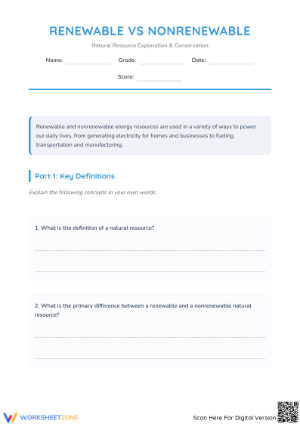
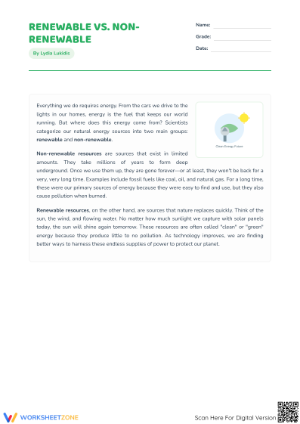
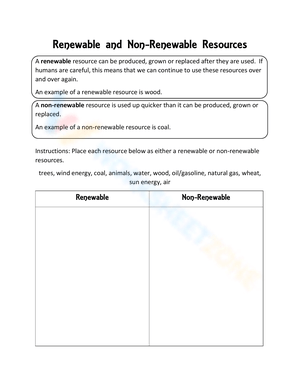
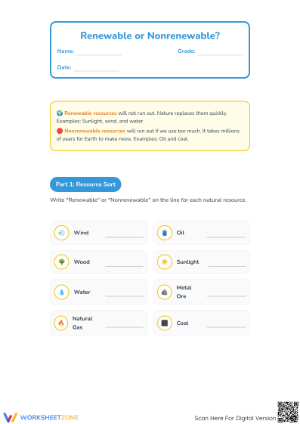
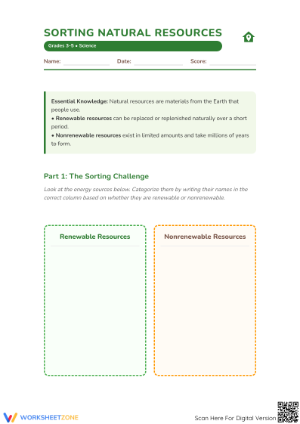
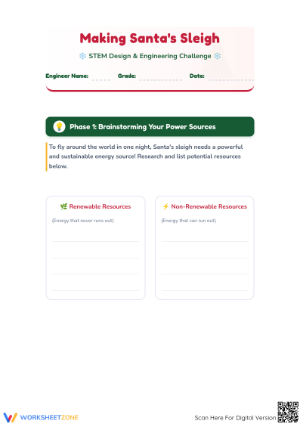
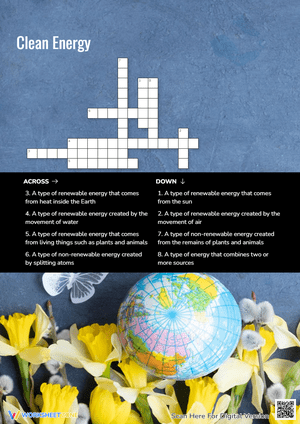
Second graders can begin learning this difference through simple examples. Renewable resources, such as sunlight, wind, water, and trees, can be replaced naturally over time when they are used responsibly. Nonrenewable resources, such as coal, oil, and natural gas, take a very long time to form and cannot be quickly replaced. Worksheets can help students compare these examples, sort them into groups, and discuss why using resources wisely is important for people and the environment.
Question 4: What resource examples do the worksheets include for students to classify?
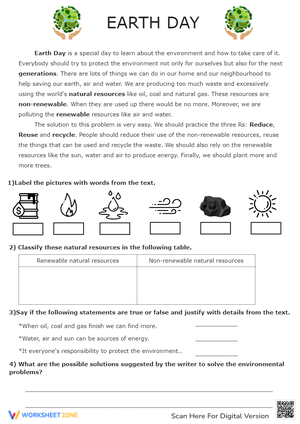
Worksheets may include examples such as water, wind, sunlight, trees, soil, rocks, coal, oil, and natural gas. Students practice identifying which resources come from nature and how they are used in daily life. This classification practice builds early critical thinking skills and helps students understand that natural resources support homes, schools, food, energy, and many things people use every day.












 Interactive Worksheet Maker
 Quiz Maker
 Word Search Maker
 Crossword Puzzle Maker
 Word Scramble Generator
 Sentence Scramble Generator
 Handwriting Worksheet Generator
 Name Tracing Generator
 Fill In The Blank Generator