Why 4th Grade Multiplication Strategies Worksheets Matter
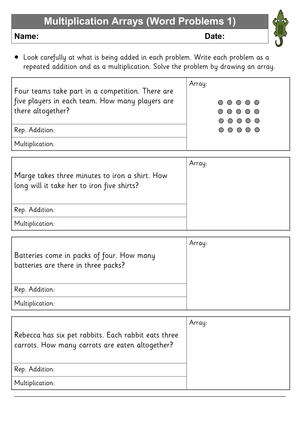
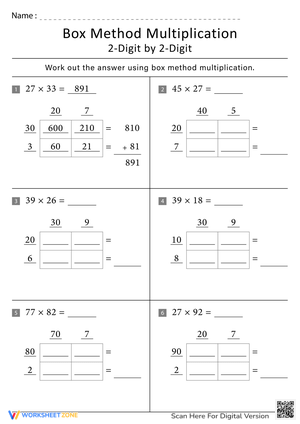
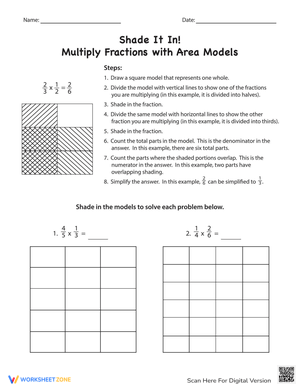
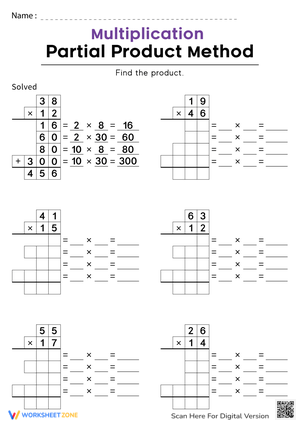
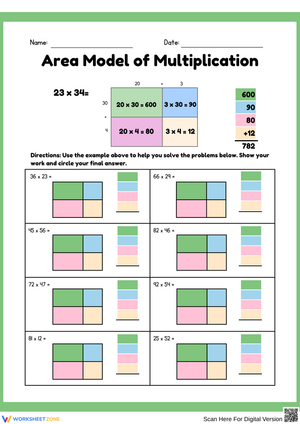
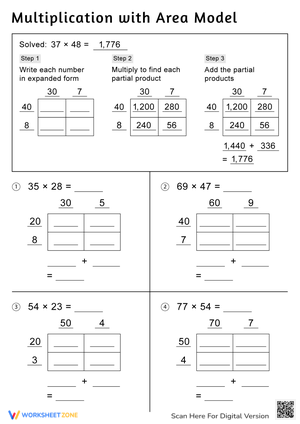
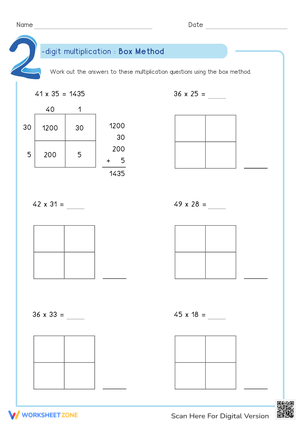
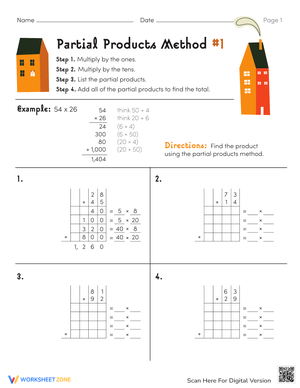
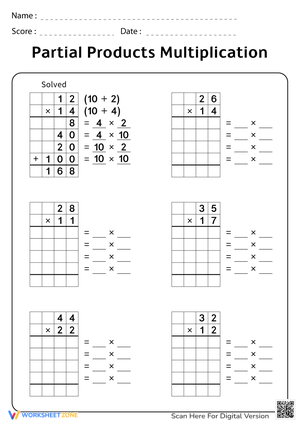
4th grade students need a toolkit of place-value based strategies for multiplying larger numbers, and worksheets built around that toolkit give teachers a clear window into how a student is actually thinking about a problem. A worksheet that only asks for a final answer hides the reasoning. A worksheet built around area models, partial products, and the distributive property makes that reasoning visible, which is exactly what CCSS.Math.Content.4.NBT.B.5 asks for.
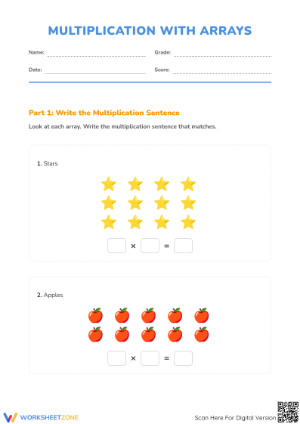
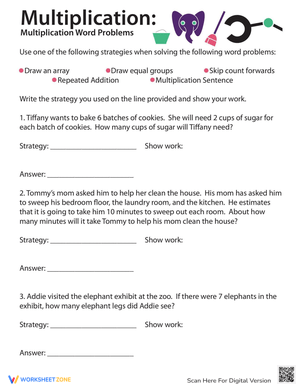
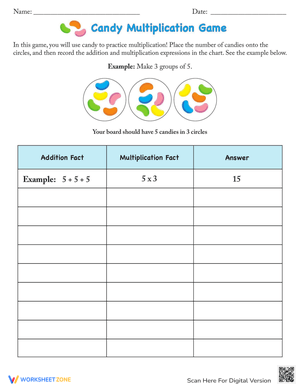
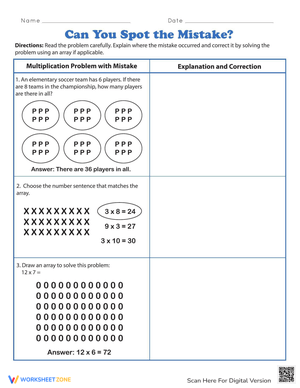
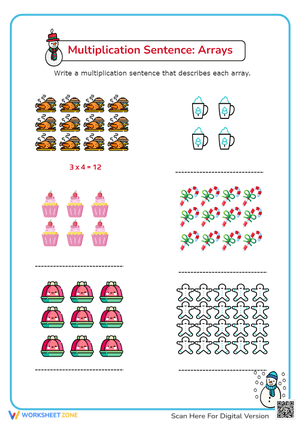
That standard requires 4th graders to multiply a whole number of up to four digits by a one-digit number, and to multiply two two-digit numbers, using strategies grounded in place value and the properties of operations. It also expects students to illustrate and explain their calculations using equations, rectangular arrays, or area models. Worksheets designed with this standard in mind should always ask students to show the strategy, not just circle the product.
Distributive Property Practice For Breaking Apart Problems
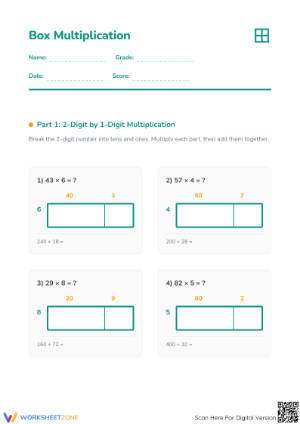
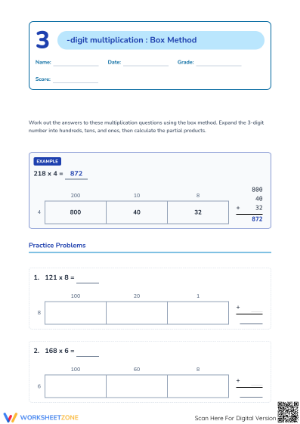
The distributive property is the mathematical rule underneath both area models and partial products, and naming it explicitly helps students see the connections between strategies rather than treating each one as an unrelated procedure. Distributive property worksheets typically show a problem like 6 times 47 rewritten as 6 times (40 + 7), then ask students to solve each part and combine the results.
Common Core State Standards Initiative frames this expectation directly: fourth grade multiplication and division work is meant to draw on strategies based on place value and the properties of operations, illustrated through equations, arrays, and area models, before students are required to master a single fixed algorithm. That framing supports building flexible strategy use across a full unit rather than rushing to one procedure.
Sequencing Multiplication Strategies Worksheets Difficulty Across The Unit
A well-sequenced set of multiplication strategy worksheets moves in a predictable order: one-digit by two-digit problems first, then one-digit by three- and four-digit problems, then two-digit by two-digit problems last, since that combination has the most partial products to track. Teachers planning a two- to three-week unit can map each worksheet to one step in that sequence rather than mixing difficulty levels within a single practice page.
- Week one: one-digit by two-digit area models and arrays
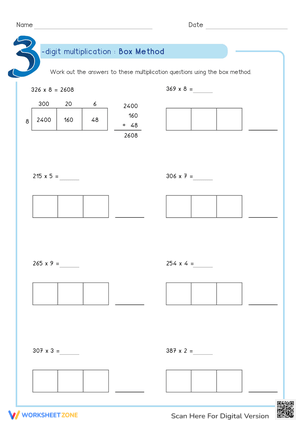
- Week two: one-digit by three- and four-digit partial products
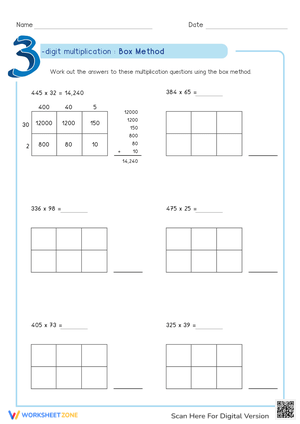
- Week three: two-digit by two-digit distributive property and mixed strategy review
Classroom Implementation
Start each new multiplication strategy with a worked example on the board before handing out the worksheet, and keep the first few problems on any new worksheet closely tied to that example. Ask students to circle or label the place value of each partial product as they work, since this small habit is what makes their strategy visible and gradeable at a glance.
Pair worksheets with a short exit ticket that asks students to solve one new problem using the strategy from that day's page. This gives a quick, low-stakes check on whether the strategy transferred, and it flags which students need the worksheet revisited in a small group the next day rather than waiting for a unit test to surface the gap.
Frequently Asked Questions
1. Which multiplication strategies should 4th graders master by CCSS 4.NBT.B.5?
Students should be able to multiply a whole number of up to four digits by a one-digit number and multiply two two-digit numbers, using place-value based strategies such as area models, arrays, partial products, and the distributive property, and explaining their work with equations or drawings.
2. How do area model worksheets differ from standard algorithm worksheets for this grade?
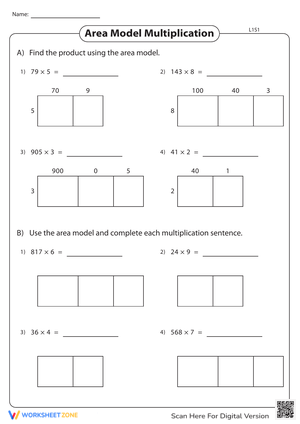
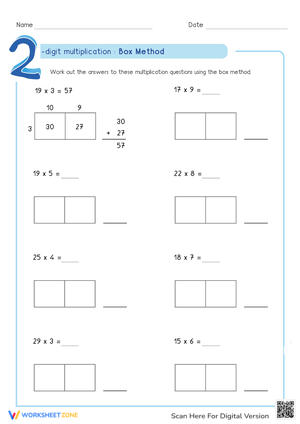
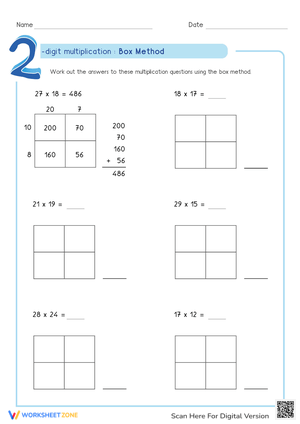
Area model worksheets ask students to decompose each factor by place value inside a grid and add the resulting parts, which makes the reasoning visible. Standard algorithm worksheets ask for a compact vertical procedure, which is efficient but hides the place-value thinking unless paired with explanation prompts.
3. How can teachers use these worksheets for small-group intervention or reteaching?
Use a worksheet's strategy explanation section to diagnose whether an error is a fact fluency gap, a place-value misunderstanding, or a regrouping mistake, then group students by that specific error and reteach with a worksheet matched to the strategy they need most.
4. How many multiplication strategy worksheets should a 4th grader practice per week?
Two to three worksheets per week, sequenced from one-digit by multi-digit problems toward two-digit by two-digit problems, is generally enough to build fluency across a two- to three-week unit without overwhelming students with repetitive practice.













 Interactive Worksheet Maker
 Quiz Maker
 Word Search Maker
 Crossword Puzzle Maker
 Word Scramble Generator
 Sentence Scramble Generator
 Handwriting Worksheet Generator
 Name Tracing Generator
 Fill In The Blank Generator