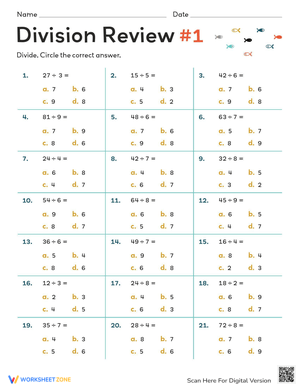
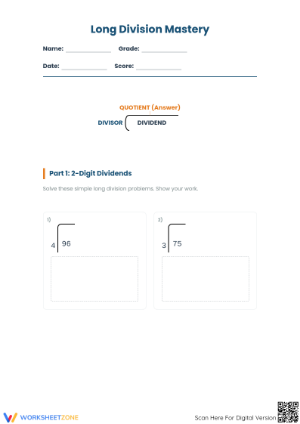
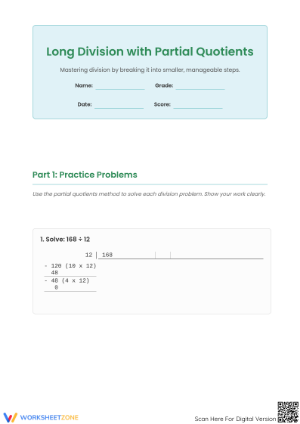
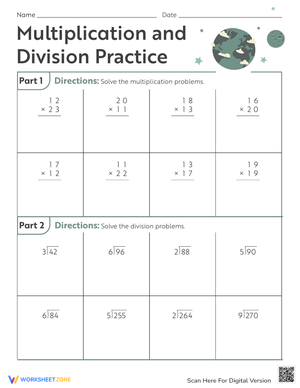
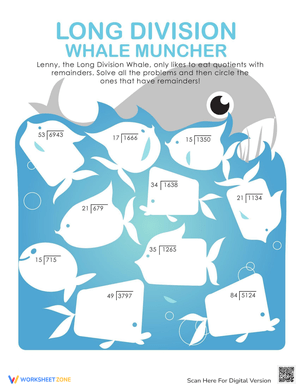
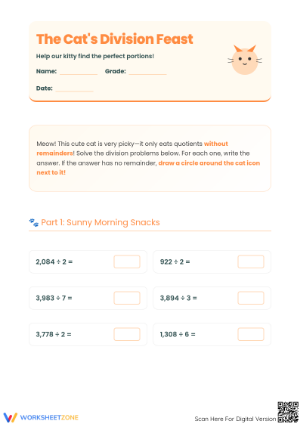
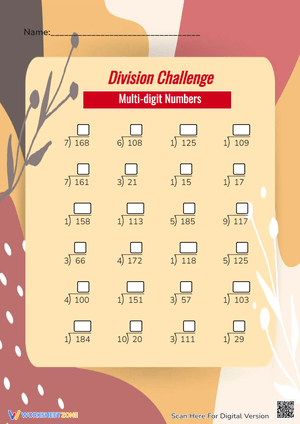
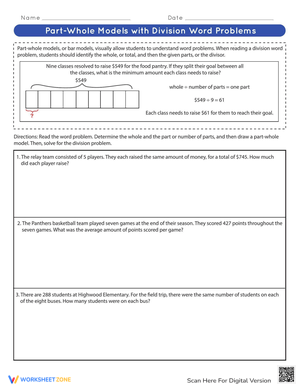
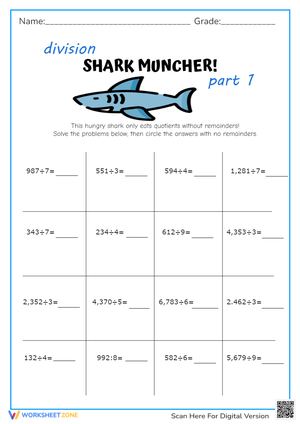
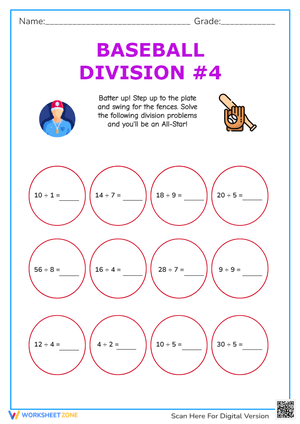
Division without remainders worksheets for 4th grade give teachers a precise entry point into the long division algorithm — the moment in the year when students are expected to hold four sequential steps in working memory while keeping their place-value alignment straight. These resources remove the complication of leftover amounts entirely, so the DMSB sequence gets the full instructional focus it deserves before remainders are introduced. The zero that appears at the end of a correctly worked problem also functions as built-in confirmation: students know they've finished without needing to cross-reference an answer key.
The DMSB Steps and What Each One Actually Demands
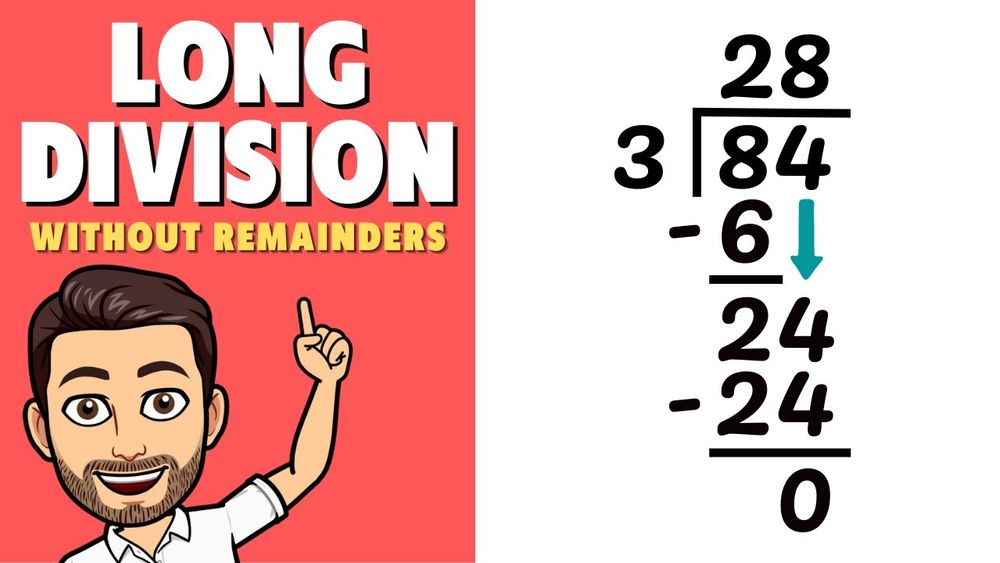
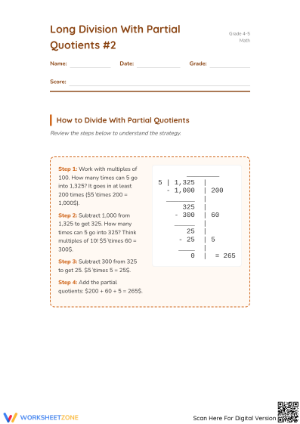
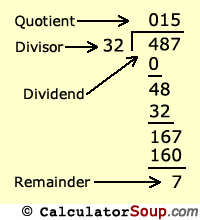
The long division algorithm runs through four repeating stages — Divide, Multiply, Subtract, Bring Down — and many teachers introduce the mnemonic "Does McDonald's Sell Burgers?" so students have a retrieval hook when they lose their place mid-problem. Each stage places distinct demands on a 4th grader, and knowing those demands tells you exactly where to watch for breakdown.
- Divide: Students apply multiplication knowledge in reverse — looking at the first digit or two of the dividend and deciding how many times the divisor fits without overshooting. Students still shaky on their 6s and 7s stall here most often.
- Multiply: The chosen partial quotient digit gets multiplied by the divisor and written beneath the working portion of the dividend. Fact-fluency gaps become visible at this stage in ways they don't during simpler computation tasks.
- Subtract: Column drift causes the most damage here. If digits have shifted even slightly, the subtraction goes wrong, and the error carries through every step that follows.
- Bring Down: Students move the next dividend digit into the working space. The most consistent slip is skipping this step entirely when that digit is a zero — because "zero doesn't do anything" is logic that feels intuitive to 10-year-olds but produces a quotient that is off by an order of magnitude.
Because each worksheet in the set targets problems with no remainder, the final Subtract step ends at zero. That clean stopping point matters: students new to the algorithm often don't know when to stop, and the zero resolves that uncertainty without teacher intervention.
Where These Worksheets Fit in the Math Block
The natural home for division without remainders worksheets for 4th grade is the guided small-group table during the opening week of the long division unit. With four or five students present, a teacher can narrate each DMSB stage aloud while students work through a problem on the same worksheet, then send them into the next problem independently while scanning for alignment errors and subtraction slips. That loop — teacher model, immediate independent attempt, fast error scan — is tight and efficient, and it's harder to maintain with tasks that require extended setup or explanation.
These worksheets also earn their place as Monday warm-ups after a weekend gap. The retrieval practice effect is real: asking students to run through two or three clean long division problems before instruction begins reactivates the procedural sequence faster than any verbal review of the steps. One classroom move worth trying is having students write the DMSB labels (D, M, S, B) in the margin beside each corresponding calculation. It slows them down at first, but it surfaces exactly where in the cycle a student loses the thread — diagnostic information you'd otherwise have to infer from the wrong answer alone.
Errors These Worksheets Help You Catch Early
The most predictable error in early long division isn't a math-fact mistake — it's a spatial one. Students write the partial product slightly off-center, the subtraction goes wrong, and every step downstream compounds the error. Graph paper is the most direct fix: doing scratch work on a grid keeps every digit in its own cell without requiring a reminder for every problem. Some teachers pre-draw vertical column lines on the worksheet before copying, which achieves the same containment within the worksheet itself.
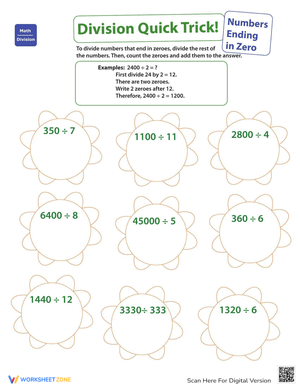
A second error pattern shows up specifically around zeros in the dividend. In a problem like 630 divided by 6, many students bring down the 3, find the partial quotient correctly, and then skip the zero because it seems like a non-event. The quotient they write is 10 instead of 105. This mistake is nearly invisible when students are moving quickly, but the three- and four-digit dividend problems in this set surface it reliably — which is exactly the right moment to address it, before it becomes an entrenched habit.
The multiplication check — multiplying the quotient by the divisor to confirm the original dividend — appears in most textbook sequences but gets dropped in practice. Building it into the worksheet expectation ("you're not finished until you've written the check") turns a self-monitoring strategy into a procedural habit rather than an optional extra step.
Standard Alignment
Standard 4.NBT.B.6 requires students to find whole-number quotients and remainders with dividends up to four digits and single-digit divisors, using strategies based on place value and properties of operations. These worksheets address the foundational layer of that standard — the case where the remainder is zero — giving students a stable, uncluttered experience with the algorithm before interpreting a non-zero remainder is added to the work. State standards that follow the same developmental trajectory, including Texas TEKS 4.4F, require the standard algorithm by end of grade. The practice these worksheets build is directly tied to what students are assessed on.
Meeting Different Readiness Levels with the Same Set
Students who are still solidifying multiplication facts benefit from keeping a reference chart beside them during an initial pass through these worksheets. The goal is to keep cognitive attention on the four algorithm steps rather than splitting it between the steps and fact retrieval. Once the DMSB sequence is automatic, the reference chart becomes unnecessary on its own.
For students whose algorithm steps are solid but whose work gets spatially disorganized, the graph-paper approach addresses the problem directly. For students who move through two- and three-digit dividend problems without difficulty, division without remainders worksheets for 4th grade that include four-digit dividends function as a fluency extension — same four steps, more cycles per problem, no new conceptual territory. Having those students write the inverse multiplication check for every answer adds meaningful practice time without simply repeating problem types they've already mastered.
Frequently Asked Questions
Should area models come before or after introducing these worksheets?
Introducing area models first is the stronger sequence. When students have seen division as a rectangle problem — finding a missing side by breaking a large area into place-value chunks — the Multiply and Subtract steps of the algorithm feel less arbitrary. A student who divides 484 by 4 using an area model first (decomposing 484 into 400, 80, and 4, then finding 100, 20, and 1) comes to the standard algorithm with a mental picture of what each step is actually computing. Students who meet the algorithm cold tend to execute steps without any framework for self-correcting when something drifts.
How many problems make a productive session?
For students first learning the algorithm, three to four problems is the right amount. Each problem involves multiple cycles through all four DMSB steps, so the cognitive load is higher than it appears. Three carefully checked problems — with the multiplication verification written out — are more instructional than rushing through ten.
What does it mean when a student consistently gets the first partial quotient wrong?
That student is almost always guessing rather than checking. They're estimating how many times the divisor fits without confirming by multiplying. The fix is to make trial multiplication explicit: write the guess, multiply it out, compare the product to the working portion of the dividend, and adjust up or down. Most algorithm instruction implies this step — it benefits from being made visible and required until the student's estimates become reliable.
Can these worksheets serve as a formative assessment?
Using division without remainders worksheets for 4th grade as an exit task — two or three problems at the end of a lesson — gives a clear read on which students are ready to move into remainder problems and which need more cycles with a clean zero result. The multiplication check written in the student's work also tells you whether they're monitoring their own computation or simply recording the first answer they land on.













 Interactive Worksheet Maker
 Quiz Maker
 Word Search Maker
 Crossword Puzzle Maker
 Word Scramble Generator
 Sentence Scramble Generator
 Handwriting Worksheet Generator
 Name Tracing Generator
 Fill In The Blank Generator