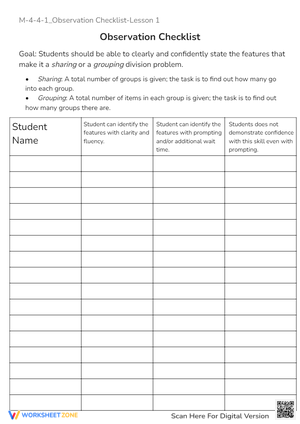
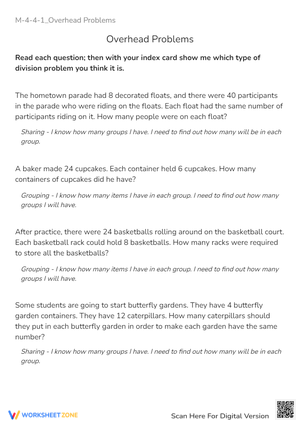
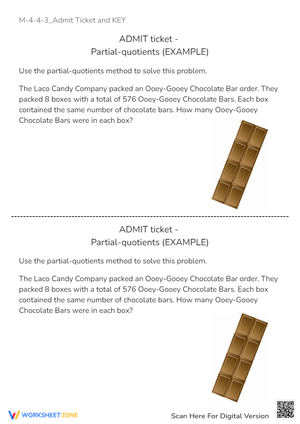
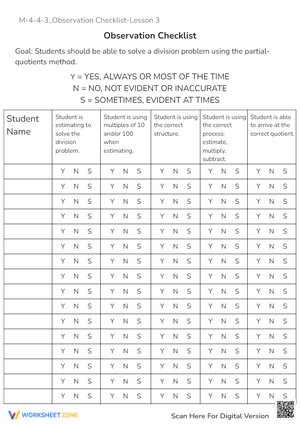
These division strategies printable worksheets for 4th grade target the specific transition point when students move from recalling basic facts to working with three- and four-digit dividends — and that shift is harder than it looks. The set covers the area model, partial quotients, and the multiplication-division relationship, with each worksheet focused on one strategy at a time so students build real fluency before comparing methods.
What Each Worksheet Targets
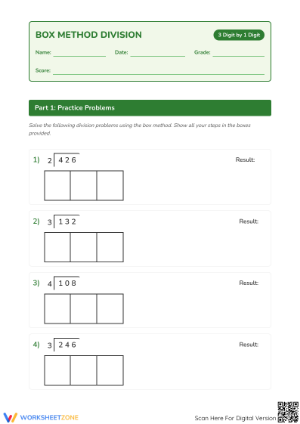
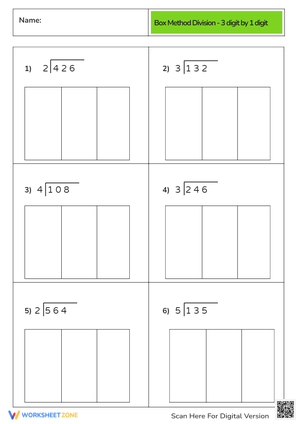
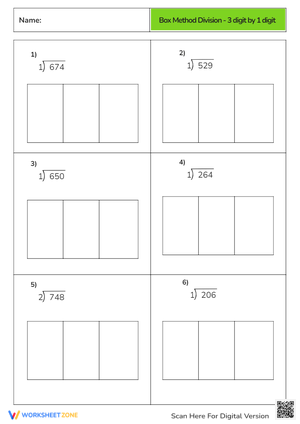
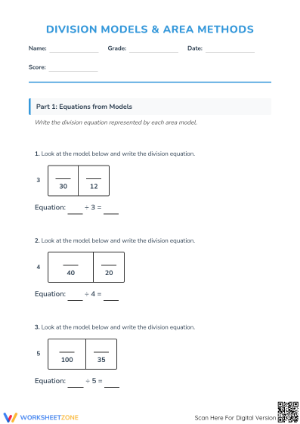
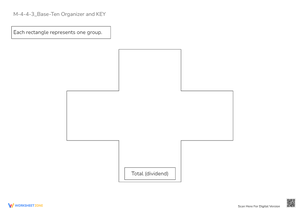
The area model worksheets give students a pre-drawn rectangle outline. The dividend is the area; the divisor is the width; the quotient is what students construct, column by column, by partitioning the dividend into place value sections — hundreds first, then tens, then ones. Each section gets divided separately, and students sum the partial results to find the full quotient. This mirrors the thinking students already do with base-ten blocks, which makes the move from hands-on to written work considerably smoother.
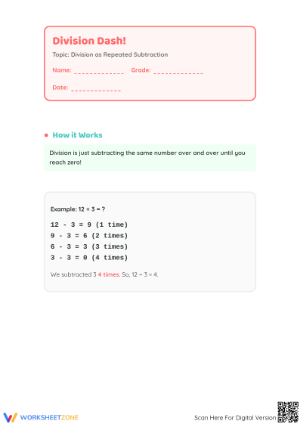
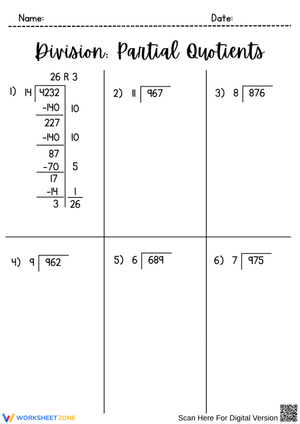
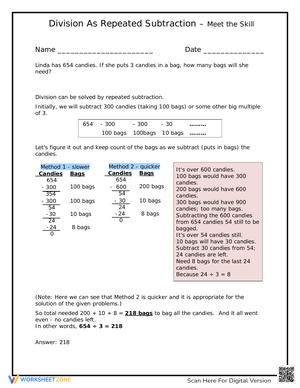
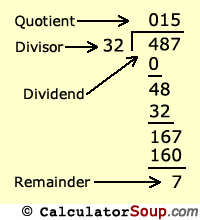
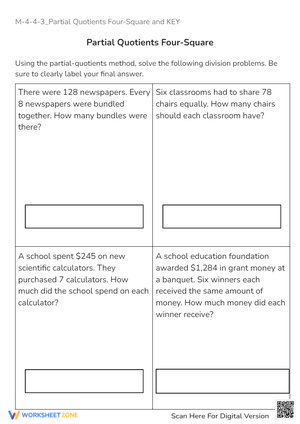
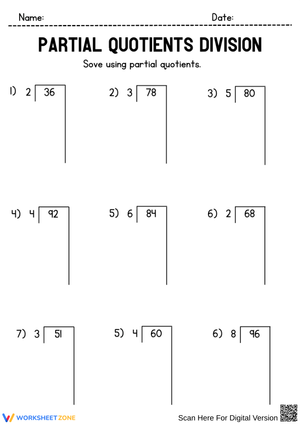
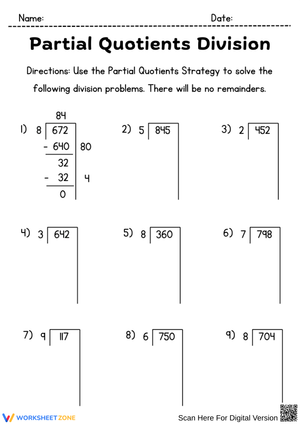
The partial quotients worksheets use the vertical bracket format — sometimes called the "Big 7" for the shape of the division bracket. Students start with the full dividend, subtract a multiple of the divisor in a manageable chunk, record the partial quotient to the right, and keep working down until nothing remains. The format rewards estimation thinking rather than algorithmic memorization. A student who doesn't know that 7 × 60 = 420 can still work the problem by starting with 7 × 50, then 7 × 10 — the method absorbs imprecision without breaking.
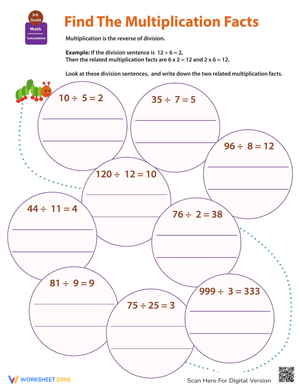
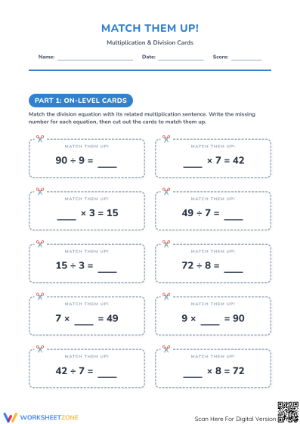
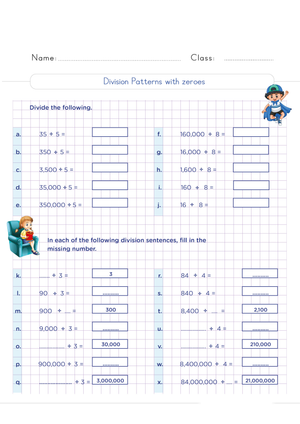
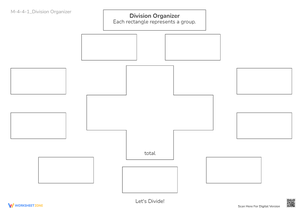
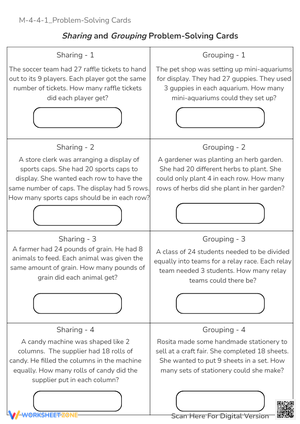
A third group of worksheets addresses the inverse relationship between multiplication and division directly. Students solve missing-factor problems, complete fact families, and write both a multiplication and a division equation to represent a single word problem situation. That last task — two equations for one story — is where many students first notice, concretely, that these operations are two sides of the same structure.
Mistakes Students Make That These Worksheets Help You Catch
The most persistent area model error is place value misalignment. A student dividing 432 by 4 will correctly compute 400 ÷ 4 = 100, then handle 30 ÷ 4 and get 7 remainder 2 — and then forget to carry that remainder into the ones column, arriving at 107 instead of 108. The pre-drawn grid makes this visible: there's an empty cell that should hold the leftover 2, and students who skip it leave an obvious gap. That's genuinely useful formative data, and it's far easier to catch on a structured worksheet than in freehand work.
With partial quotients, the breakdown usually happens in the subtraction, not the division reasoning. Students identify a reasonable multiple of the divisor but make an arithmetic error subtracting it from the running total, and the rest of the problem unravels. The worksheet's vertical layout, which separates each subtraction step into its own line, encourages students to check the subtraction before proceeding — which is the practical correction.
The fact family worksheets surface a different pattern. Students who compute 48 ÷ 6 = 8 without any trouble will still write the last entry in the fact family as 8 ÷ 6 = 48, inverting the dividend and the quotient. This shows up consistently in actual student work and tells you the student is pattern-matching the four-equation structure without understanding what each position represents. Seeing it on paper is a clean opening for a targeted conversation.
Building These Worksheets Into Your Instructional Sequence
The most effective use pattern is to introduce a strategy through direct instruction and manipulatives on Monday, use a guided worksheet Tuesday with teacher support, and assign the independent version Wednesday or Thursday. Friday becomes a comparison session: students solve the same three problems two different ways and write a sentence explaining which they preferred and why. That Friday task generates more useful reasoning conversation than any quiz would, and it takes about fifteen minutes.
These division strategies printable worksheets for 4th grade also fit cleanly into math workshop rotations. One group works with the teacher on a guided area model worksheet; a second group attempts partial quotients independently; a third group reviews multiplication-division relationships with a partner. Because each worksheet addresses one strategy with consistent problem formats, students at independent stations can self-check against their guided examples without needing redirection. The teacher stays free to work with whoever needs targeted support that day.
For warm-up use, projecting a single partial quotients problem and solving it together in the first eight minutes of class gives students a low-stakes chance to practice the subtraction steps before tackling independent work. This is especially useful in the first week of the strategy, when students are still uncertain about how large to make their first estimate.
Standard Alignment
4.NBT.B.6 requires students to find whole-number quotients and remainders with up to four-digit dividends and one-digit divisors, and it specifically names rectangular arrays and area models as methods students should use to explain their calculations. The area model worksheets map onto that visual representation requirement; the partial quotients worksheets address the procedural component; the inverse relationship worksheets connect to the broader expectation in 4.OA.A that students interpret multiplication and division as related operations within multiplicative comparison contexts.
The pacing context matters too. Most district guides place 4.NBT.B.6 in the third quarter of 4th grade, after students have worked through multiplication of multi-digit numbers in 4.NBT.B.5. These worksheets assume students can multiply a single-digit number by a multiple of ten — that background is exactly what makes partial quotients workable rather than overwhelming. If students arrive without that fluency, the area model is the better starting point because it breaks the problem into smaller multiplication facts.
Adapting These Worksheets Across Readiness Levels
For students who are still shaky on multiplication facts, the area model worksheets are the better entry point. The visual partitioning lets students work with smaller facts — 400 ÷ 4, 30 ÷ 4 — rather than needing to estimate large multiples, which is what partial quotients demand. Pairing those worksheets with a multiplication chart removes the retrieval barrier so students can focus on the division structure itself.
These division strategies printable worksheets for 4th grade can also be extended for students who reach mastery quickly. On the area model worksheets, increase the dividends to five digits or remove the pre-drawn rectangle so students construct the model independently. On the partial quotients worksheets, restrict the multiplication chart and require at least three distinct partial quotients per problem — this prevents students from doing the standard algorithm inside the bracket format, which skips the conceptual work the method is meant to build.
Students with strong spatial reasoning sometimes find the area model intuitive and resist partial quotients altogether. It's worth requiring both for a period of time — not because one method is superior, but because seeing the same problem through two representations builds the flexible number sense that supports long division, fraction reasoning, and later algebraic thinking. Students who only ever use one method tend to freeze when a problem doesn't fit their preferred format.
Frequently Asked Questions
Which strategy should be introduced first — area model or partial quotients?
Most curriculum sequences start with the area model because it maintains a direct visual connection to place value work students have already done with multiplication. Partial quotients typically follow once students are comfortable partitioning dividends by place value, since partial quotients extend that same thinking into a more procedural, vertical format. The worksheet you reach for first should reflect the sequence in your unit plan, not the reverse.
Do these worksheets include problems with remainders?
The set includes both remainder and no-remainder problems. For area model practice, starting with clean divisors lets students focus on the partitioning process before dealing with leftovers. Remainders are woven throughout the partial quotients worksheets from the start, because in that format the remainder simply appears as whatever is left after the final subtraction step — students generally find it less confusing there than in the area model.
How do these worksheets connect to state assessment expectations?
State assessments tied to 4.NBT.B.6 frequently ask students to explain or justify their division work, not just produce an answer. The division strategies printable worksheets for 4th grade focused on the area model and the inverse relationship are especially useful preparation, because both formats require students to make their reasoning visible — through the rectangle structure or through the matched equation pair. A student who can work fluently in both formats has essentially been practicing the explanatory thinking those test items assess, rather than drilling toward a single numeric answer.
What should I do when a student insists on using the standard long division algorithm?
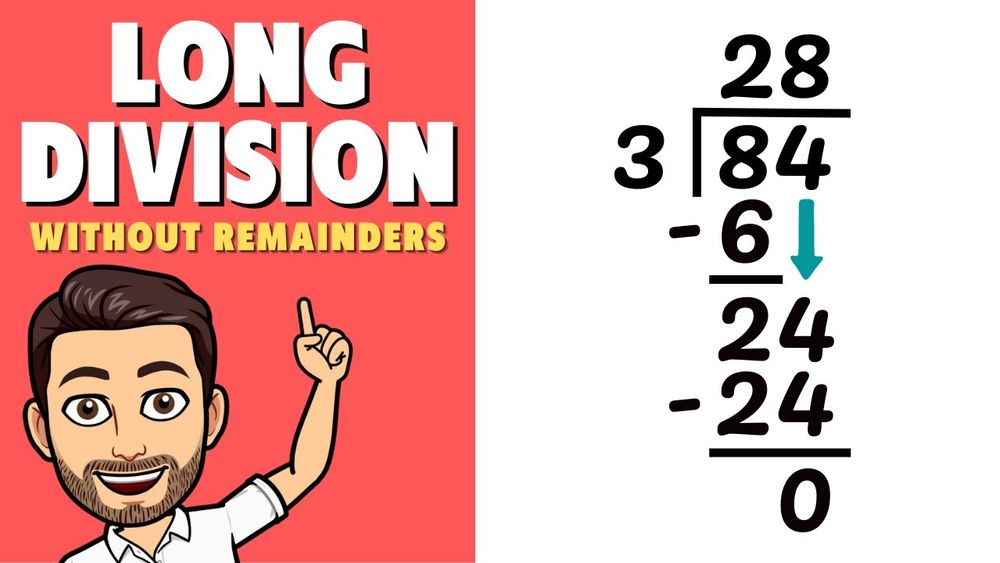
The standard algorithm is not a 4th-grade expectation under Common Core — it appears in 6.NS.B.2. When a student reaches for it, they've usually been taught it at home or in an earlier classroom. The practical response is to acknowledge that the algorithm produces correct answers, then require them to also show the area model or partial quotients version for the same problem. At 4th grade, the explanation is the assessed skill, not just the computation — and that distinction is worth being direct about with both students and families.













 Interactive Worksheet Maker
 Quiz Maker
 Word Search Maker
 Crossword Puzzle Maker
 Word Scramble Generator
 Sentence Scramble Generator
 Handwriting Worksheet Generator
 Name Tracing Generator
 Fill In The Blank Generator