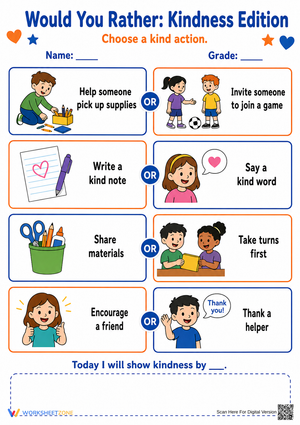
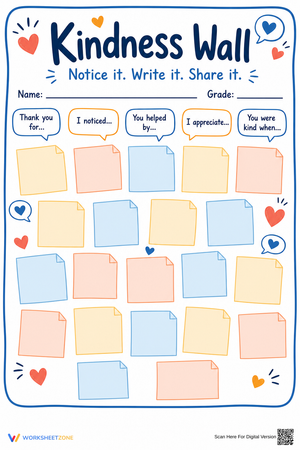
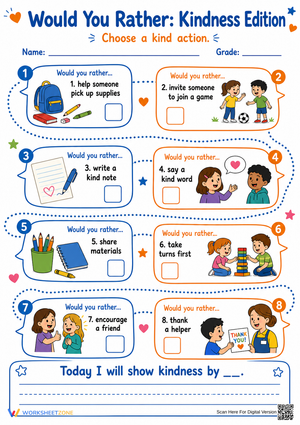
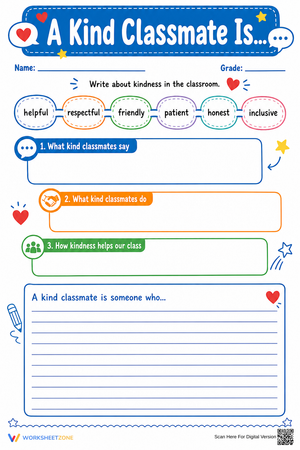
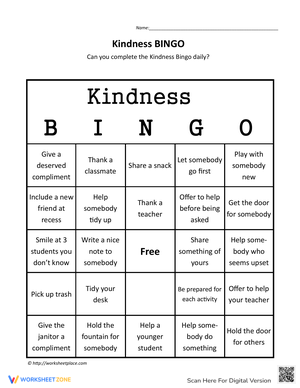
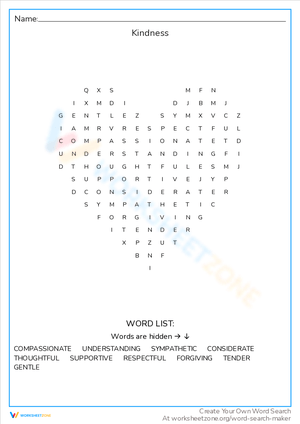
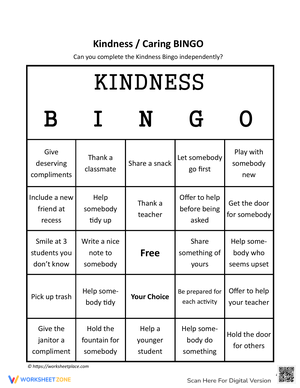
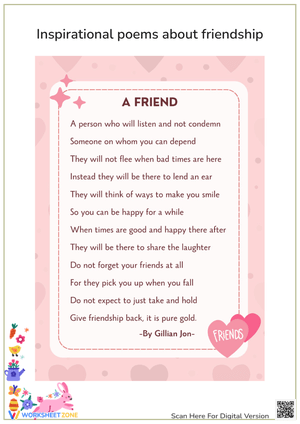
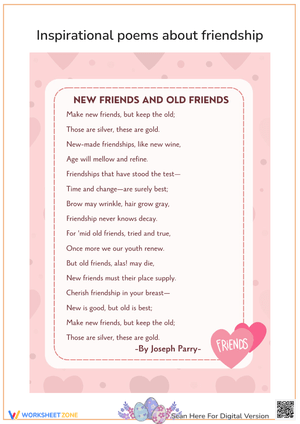
4th grade kindness printable worksheets give teachers structured, ready-to-use materials for one of the most underplanned parts of upper elementary instruction: building genuine social awareness before peer dynamics calcify into patterns that become much harder to shift in fifth and sixth grade.
What These Worksheets Ask Students to Do
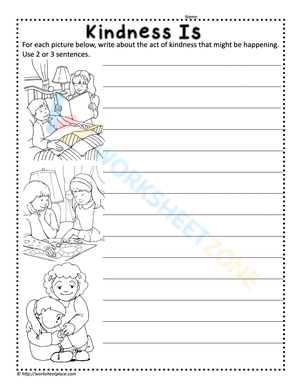
The work falls into three main formats. Scenario-based exercises present realistic school situations — a student eating alone at lunch, a group chat that excludes one classmate, a partner project where one person keeps getting talked over — and ask students to identify the emotions involved, consider multiple perspectives, and write a specific kind response. Students don't just circle an answer; they articulate a reason, which surfaces the thinking behind their choices in a way that's visible and discussable.
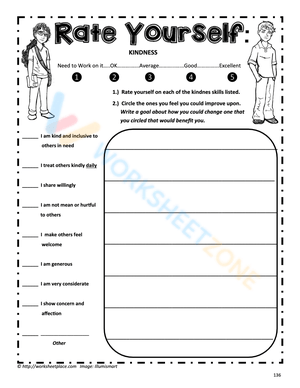
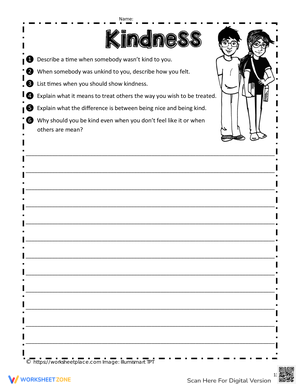
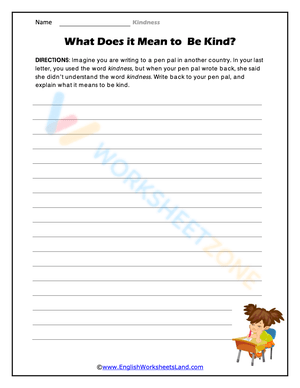
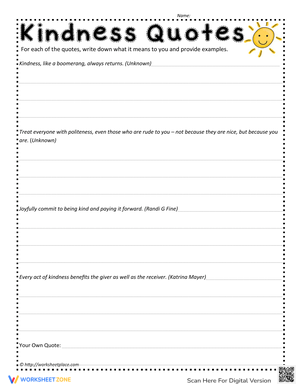
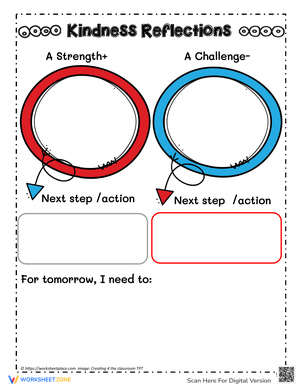
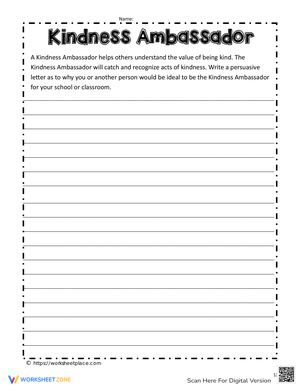
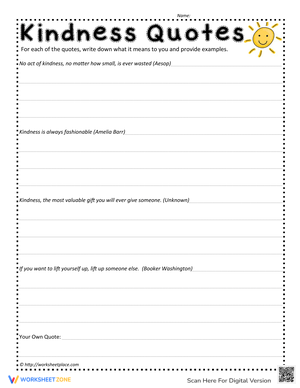
Reflective writing prompts ask students to write about moments of kindness they have witnessed, given, or received. These prompts work best when they push past the obvious. Instead of "describe a time you were kind," a stronger prompt asks "describe a time kindness surprised you" or "write about a moment when being kind cost you something." The specificity of the prompt determines the quality of what students actually write.
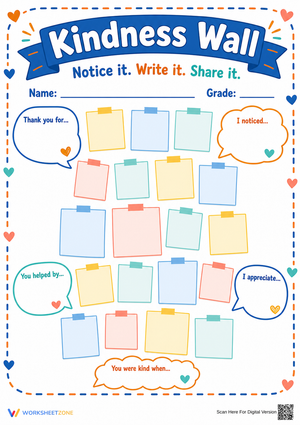
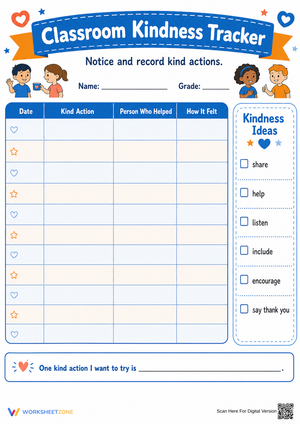
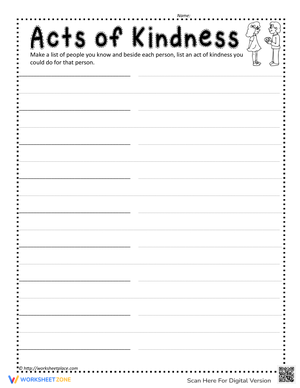
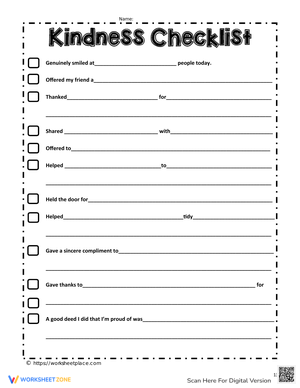
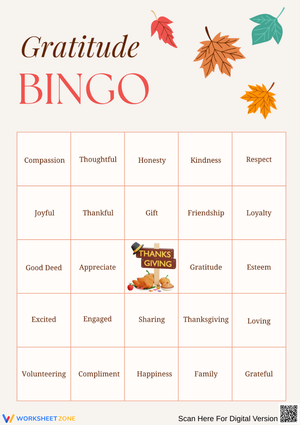
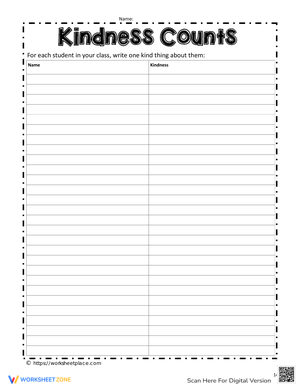
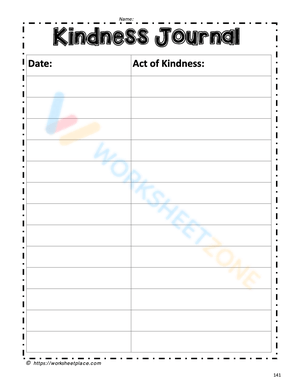
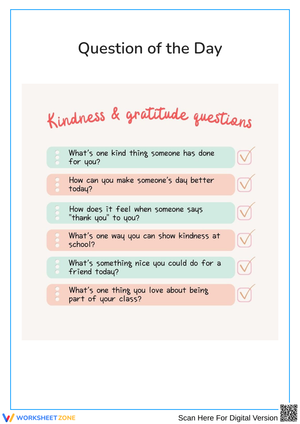
Gratitude and appreciation activities round out the set: thank-you note templates, shout-out cards for classmates, and tracking grids for random acts of kindness completed across a week. These are lower-stakes than the scenario work, but they give students practice naming positive actions in concrete language — which turns out to be something fourth graders need more explicit practice with than teachers usually expect.
The Social Reality of Fourth Grade
Nine- and ten-year-olds sit in a particular social window. They have enough cognitive development to analyze another person's perspective with some accuracy, but they are also newly susceptible to exclusion tactics that weren't on the radar in second or third grade. Leaving someone out starts becoming a deliberate strategy around this age — not an accident of playground logistics but a calculated choice. Explicit, practiced instruction in what kindness looks and sounds like works best when it comes before those patterns become entrenched.
This is also the stage when students can begin to understand kindness as something that costs effort, not just a rule that says "be nice." That shift matters. Once students can articulate why kindness sometimes takes something from you, the concept holds longer in actual behavior — and it transfers more readily to new situations that weren't covered in the worksheet.
Student Responses Worth Watching — and Redirecting
The most consistent pattern in scenario-based work: students write "I would walk away" or "I would just ignore it" and count that as a kind response. They are not wrong that avoiding cruelty matters, but they are conflating non-cruelty with kindness. A useful redirect is to ask them to write two responses — one that avoids making things worse, and one that actively makes things better — and then name the difference. That gap is where real instruction happens.
A second predictable error: when asked to name someone else's feelings in a scenario, students often identify the correct emotion but then write a response centered on their own discomfort. They write "I would feel bad for them, so I would leave" instead of "They probably feel invisible, so I would go sit with them." The distinction between feeling bad about someone and doing something for someone is worth making explicit before students start any of the reflection writing prompts.
Students who freeze on gratitude prompts are usually the ones with the narrowest definition of kindness — they scan their memory for a dramatic gesture and come up empty. A two-minute class discussion about small, ordinary kindness (saying good morning to someone who looks tired, holding a door when your hands are full) before distributing that worksheet helps them find real memories they have been overlooking the whole time.
Building These Worksheets Into Your Weekly Routine
4th grade kindness printable worksheets fit three distinct spots in the school week. Morning meeting is the obvious one — a scenario exercise as a five-minute discussion starter gives the class a shared social reference point before the day starts. But two less-obvious placements often produce stronger work: Friday afternoon reflection, when students are naturally reviewing the week and more receptive to honest self-assessment, and the ten minutes immediately following a visible conflict or difficult group-work session, when the worksheet becomes an application of something that just actually happened instead of an abstract exercise.
One setup worth trying: a small bin or folder near the classroom door with three or four different reflection worksheets students can pull independently during transitions, early-finish periods, or whenever they want one. This shifts the practice from the teacher's schedule to the student's own awareness — which is the actual long-term goal of this kind of instruction.
Adjusting the Work for Different Learners in the Room
The range of social-emotional development in a typical fourth-grade class is wide. 4th grade kindness printable worksheets stay useful across that range with a few targeted adjustments rather than entirely different materials for each group.
For students who struggle with writing demands, the scenario exercises still work — the adjustment is in the response format. Let those students draw or annotate a response instead of writing full sentences, or provide a sentence frame: "I noticed [character] felt _____, so a kind action would be _____." The critical thinking stays intact; only the output format changes.
For students who finish quickly and need more challenge, the reflection prompts are where to push. Ask them to take a scenario response and rewrite it from the bystander's perspective rather than the person acting, or ask them to argue why a kind response in one situation might not be kind in a different context. Fourth graders with strong social-emotional maturity find those ethical tensions genuinely interesting, and it keeps the work from feeling too easy without requiring entirely new materials.
English language learners benefit most from scenario worksheets that include visual context alongside the text. Pre-teaching two or three key vocabulary words — excluded, empathy, bystander — before distributing the worksheet removes the language barrier from the social reasoning task, keeping the focus where it belongs.
Standard Alignment
These worksheets align with CASEL's core competencies of Social Awareness and Relationship Skills. Social Awareness at the fourth-grade level includes perspective-taking and recognizing how one's actions affect others — both of which are the central tasks in the scenario-based exercises. Relationship Skills covers effective communication, cooperation, and peaceful conflict resolution, which the reflection prompts and gratitude activities address directly. Teachers using CASEL as their SEL framework can map each worksheet format to specific competency indicators, making these resources usable as documentation in SEL progress monitoring, not only as routine classroom activities.
Frequently Asked Questions
Do these worksheets work as standalone activities, or do they need to be part of a larger SEL unit?
Each worksheet works on its own as a complete activity — a scenario exercise or a gratitude prompt needs no prior lesson to function. That said, using the same formats repeatedly across several weeks produces stronger results than a concentrated burst followed by nothing. Spaced practice with the same reflective structure builds habit more reliably than a single standalone unit does.
How do I handle it when a student's scenario response seems to describe a real situation, not a fictional one?
It happens more often than teachers expect. Building in a simple signal — a small mark or symbol students can add to the corner of a worksheet if they would prefer you read it privately — gives them a low-stakes way to flag something without having to say it aloud. Treat those worksheets as you would any written disclosure: private follow-up conversation before assuming the content is purely hypothetical.
My students roll their eyes at kindness activities. How do I get actual buy-in?
Skip the decorative borders and morally simple scenarios where the right answer is obvious to everyone in the room. 4th grade kindness printable worksheets that present realistic, morally complex situations — where there is no single clean answer — earn more genuine engagement than activities that feel like reviewing rules students already know. Frame the work as figuring out what is actually happening in a hard social situation rather than practicing being nice, and most fourth graders will engage on the merit of the problem itself. They respond when they feel taken seriously.
Can these count toward ELA instructional time?
Scenario worksheets require reading comprehension, cause-and-effect analysis, and written response — all skills present in fourth-grade ELA standards. Reflection prompts require narrative or expository writing. Teachers who document the specific literacy demands of a given worksheet can make a reasonable case for counting the activity toward both SEL and ELA instructional time, which helps fit it into an already crowded schedule without requiring it to compete with core content blocks.