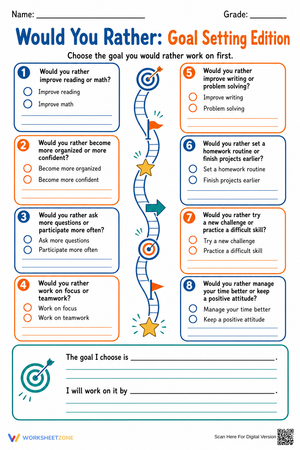
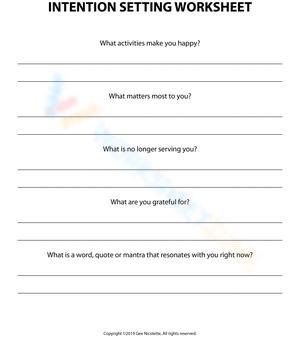
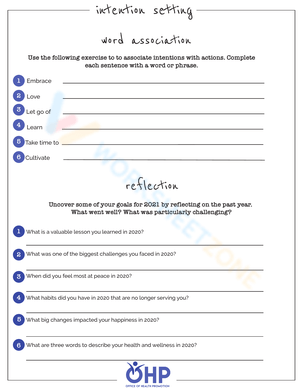
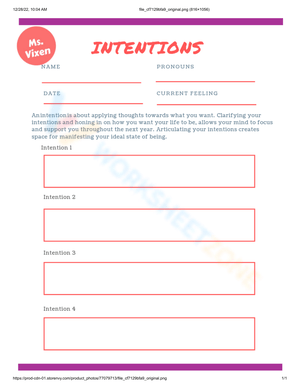
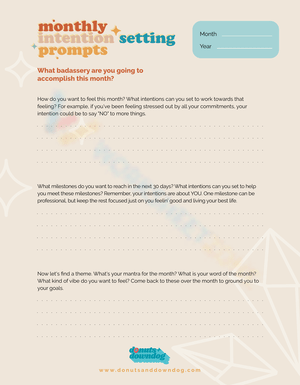
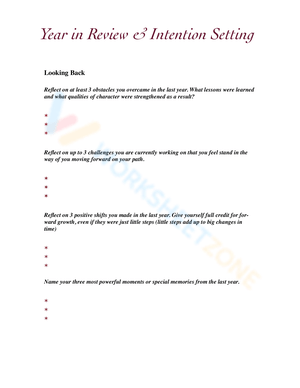
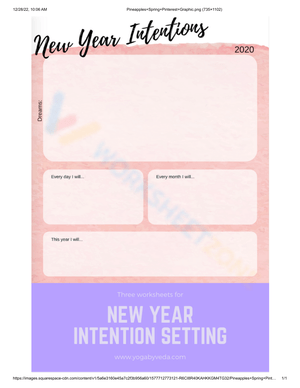
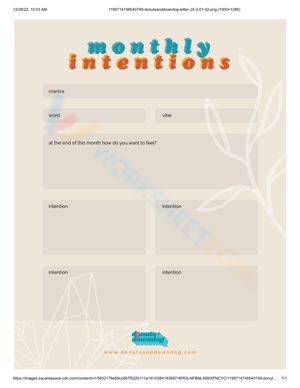
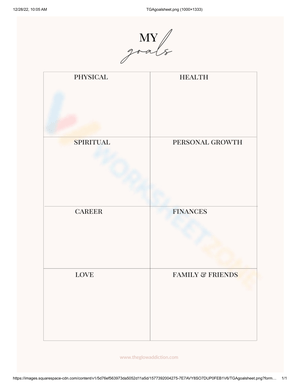
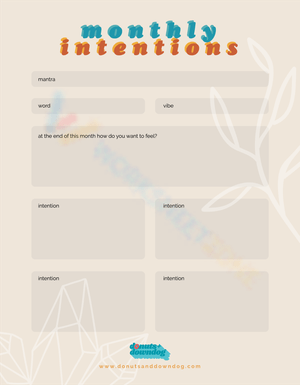
These 4th grade intention setting printable worksheets give teachers a concrete entry point for one of the harder SEL concepts to land at this grade level — the distinction between an outcome a student wants and the internal stance they bring to pursuing it. The set includes morning check-in formats, group work intention frames, and end-of-day reflection prompts, each built around "I will" language that keeps the focus on present behavior rather than future results.
Goals vs. Intentions: What 4th Graders Actually Need to Understand
Most 4th graders arrive at this work already knowing what a goal is. The confusion is predictable: students write things like "I will get a 100 on my spelling test" and call that an intention. That is a goal. An intention for the same situation would be "I will keep trying even when I can't remember a word." The distinction matters because goals create a binary — you hit them or you don't — while intentions remain accessible regardless of how the lesson turns out.
These 4th grade intention setting printable worksheets handle that distinction by pairing each prompt with a short anchor check: "This is something I can do RIGHT NOW, no matter what happens." That one-line frame redirects students who write outcome statements back toward process language. It usually takes two or three sessions before the difference genuinely clicks for most students, but once it does, you start hearing them correct each other during partner share without any teacher prompting at all.
Fitting These Worksheets Into the Shape of a Real Classroom Day
The worksheets sit naturally at two moments in the school day: arrival and transitions. Five minutes at the start of morning meeting — before the daily schedule even hits the board — is enough for students to read a prompt, choose a focus, and write two or three sentences. Teachers who leave the completed worksheet on the desk rather than collecting it right away find that students refer back to it on their own: a quiet moment before an independent reading block, a rough patch during partner math work.
Before a challenging collaborative task, a teacher can gesture toward the worksheet and ask: "Look at what you wrote this morning. Is that showing up right now?" That check-in costs about thirty seconds and tends to reset the room more reliably than a longer redirection conversation. The worksheet carries weight because the student wrote it — it reads as a personal commitment rather than a reminder from an adult.
Misconceptions to Watch For and Address
The most consistent pattern in student work is what amounts to the compliance trap. Students learn quickly that teachers respond warmly to intentions about being kind or listening carefully, so they write those — even when the real struggle they're navigating is frustration, boredom, or anxiety about a hard task. The worksheet prompt "What is one thing that makes it hard for you to keep this intention?" breaks through that surface layer, because most students have never been asked to name the obstacle, only the aspiration.
A second pattern: students conflate "being good" with having a strong intention. A student who writes "I will be respectful" and puts down the pencil has technically answered the prompt but hasn't done the thinking that makes the practice useful. Pressing them — "What does respectful look like for you in math today, specifically?" — moves the intention from abstract virtue language into something they can actually notice and check in with during the lesson.
Standard Alignment
These worksheets address CASEL's Self-Management competency, with particular emphasis on self-regulation, impulse management, and goal-directed behavior. Most state SEL frameworks place these competencies explicitly in the grades 3–5 band. The practice of naming an intention before an academic task also connects to CCSS Speaking and Listening standard SL.4.1b, which asks students to follow agreed-upon discussion rules and carry out their assigned role in collaborative work — the outward expression of the same self-directed awareness that intention setting develops from the inside.
Adjusting the Set for Different Learner Profiles
For students who understand the concept but freeze at the blank space, a word bank of intention stems gives them language to get started without reducing the cognitive work:
- "I will be patient when..."
- "I will ask for help if..."
- "I will try again when..."
- "I will take a breath before..."
The reflection format within the 4th grade intention setting printable worksheets adds a second layer for students ready to go deeper: after writing an intention, they describe a specific moment from the previous day when they succeeded or struggled with something similar. That retrospective grounding tends to make the next day's intention noticeably more precise and less generic.
For multilingual learners and students still developing written expression, the drawing option on the morning check-in worksheets is not decorative — it is a legitimate response mode. A student who draws herself raising her hand next to a frustrated-looking math problem has communicated the same thing as a student who writes "I will ask for help instead of shutting down."
Frequently Asked Questions
What is the difference between a goal and an intention for a 4th grader?
A goal is measurable and points toward a future outcome — finishing a project, earning a score on a quiz. An intention describes how a student wants to act or feel right now, regardless of what happens with the result. "I want to get a 100" is a goal. "I will keep going even when it's hard" is an intention. Students at this age need the distinction stated plainly and then modeled several times before it actually shifts how they write.
How long does intention setting take in a classroom day?
Five minutes is enough for the morning routine. The check-in worksheets move quickly — a student reads the prompt, makes a choice, and writes or draws. The longer reflection format is better suited to a Friday SEL block or the close of a unit, when students have enough accumulated experience to look back meaningfully rather than guess at what a good reflection sounds like.
Should teachers share their own intentions with the class?
Yes, and it matters more than it might seem. When a teacher says "My intention today is to give everyone wait time before I call on anyone," students see that this is a real practice adults use — not a classroom exercise they leave behind in 5th grade. It also models what a genuinely useful intention looks like: specific, present-tense, and connected to something the person actually finds challenging.
Can these worksheets be used for whole-class instruction, or are they better suited to individual work?
Both formats work. Individual use during arrival is the most common approach. Whole-class use — where the teacher reads a prompt aloud and invites a few volunteers to share before everyone writes — builds shared vocabulary faster and gives students who are newer to the concept a chance to hear several examples before committing to their own. The 4th grade intention setting printable worksheets support either format without any modification.












 Interactive Worksheet Maker
 Quiz Maker
 Word Search Maker
 Crossword Puzzle Maker
 Word Scramble Generator
 Sentence Scramble Generator
 Handwriting Worksheet Generator
 Name Tracing Generator
 Fill In The Blank Generator