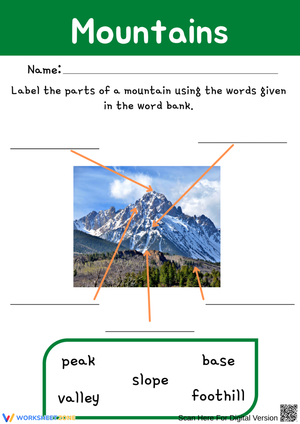
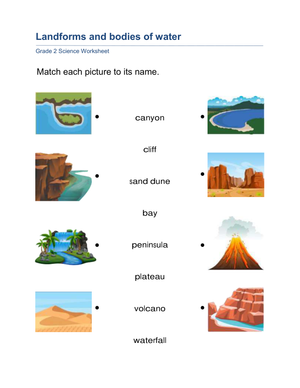
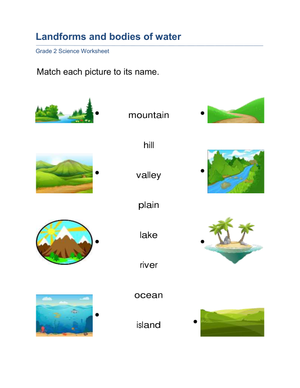
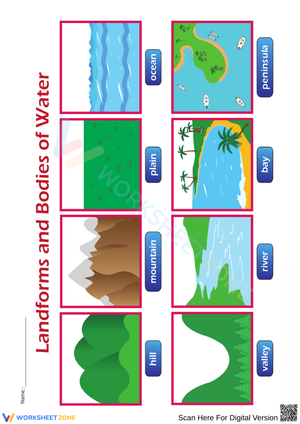
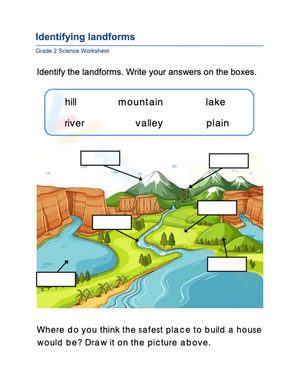
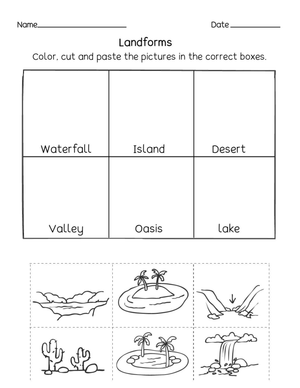
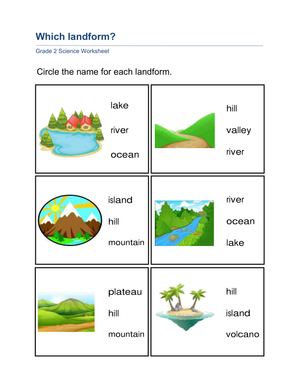
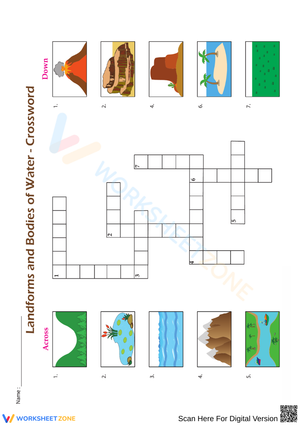
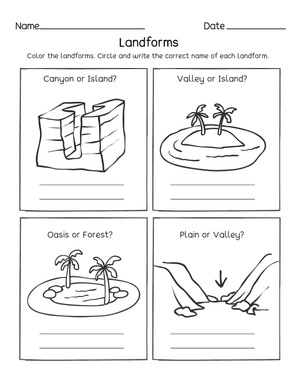
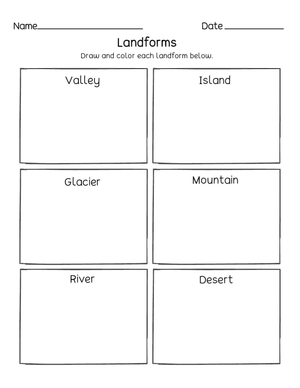
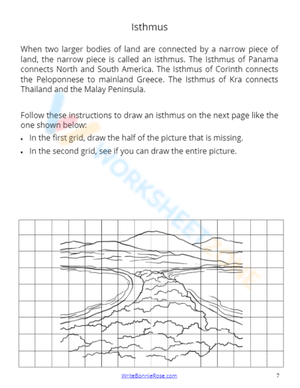
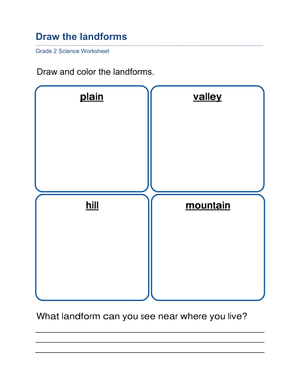
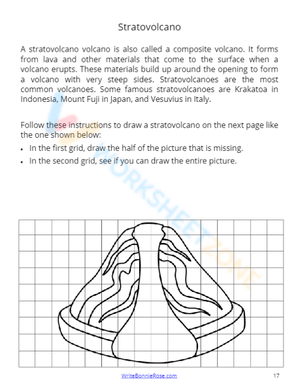
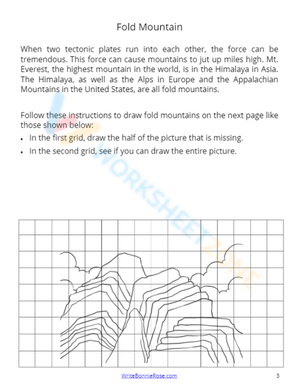
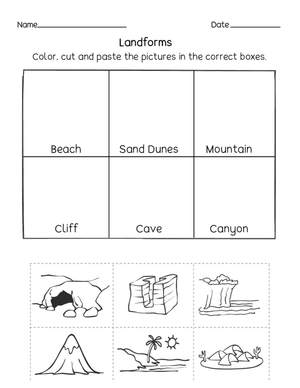
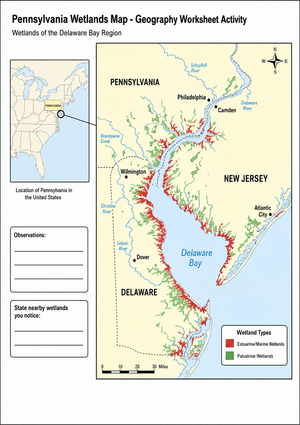
Mountains, valleys, rivers, islands, and plains are not just words in a science book; they are shapes students can picture, compare, and sometimes see in real life. 2nd grade landforms worksheets help young learners begin noticing how Earth’s surface is different from place to place. With simple diagrams, matching tasks, labeling activities, and short descriptions, students can build early earth science vocabulary while learning to identify common landforms in a clear and age-appropriate way.
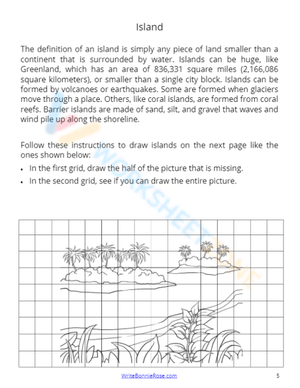
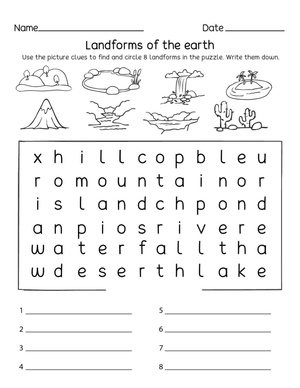
At the second-grade level, landforms are most effective when taught through visuals and real-world connections. A mountain can be described as tall and steep, while a valley is low land between hills or mountains. A river flows through land, an island is surrounded by water, and a plain is wide and flat. Worksheets give students repeated opportunities to connect each word with its meaning, shape, and location. This helps them move beyond memorizing terms and begin explaining what makes each landform unique.
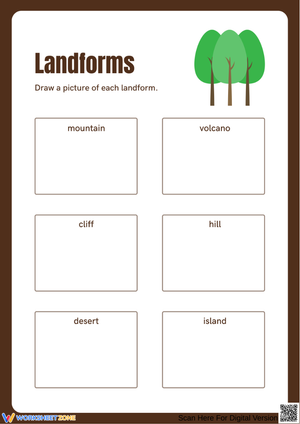
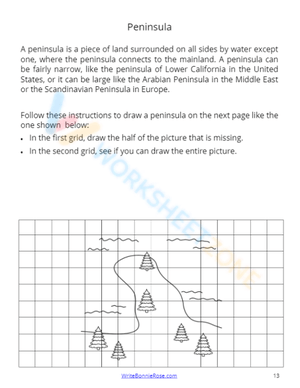
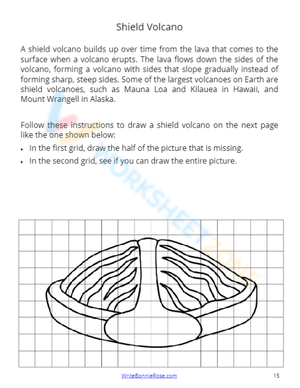
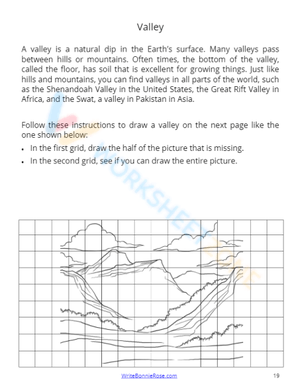
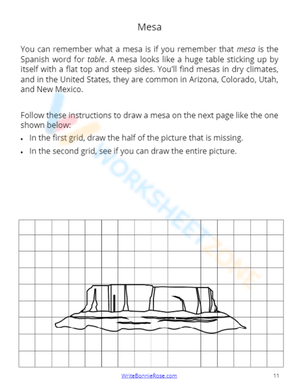
Teachers can make landform lessons more engaging by pairing worksheet practice with observation, drawing, and simple models. Students might build landforms with clay, draw a map with labeled features, or compare pictures of deserts, canyons, lakes, and hills. For more hands-on classroom ideas, this collection of science experiments for kids can help teachers add exploration and discovery to earth science lessons. When students create or observe a landform, the vocabulary becomes much easier to remember.
A strong set of 2nd grade landforms worksheets can also connect to bigger earth science topics. Once students understand surface features, they can begin asking deeper questions: What is under the ground? How do rocks, soil, and layers form? Why do some places look flat while others are steep or rocky? To extend the topic, teachers can use layers of the earth worksheets so students can start connecting landforms with the structure of the planet beneath them.
Whether used in a classroom, homeschool lesson, science center, or review activity, 2nd grade landforms worksheets give students a friendly introduction to Earth’s surface. They support vocabulary, observation, classification, reading comprehension, and early map skills. With the right mix of pictures, labels, and short explanations, students can learn to recognize landforms and describe the world around them with more confidence.
Frequently Asked Questions
Question 1: What landforms should 2nd graders learn about?
Second graders usually learn about common landforms such as mountains, hills, valleys, plains, islands, rivers, lakes, oceans, deserts, canyons, and plateaus. At this age, the goal is not to master complex geology but to recognize basic Earth features and describe them using simple language. Good worksheets should include clear images and short explanations so students can compare shapes, locations, and characteristics.
Question 2: How do 2nd grade landforms worksheets support science learning?
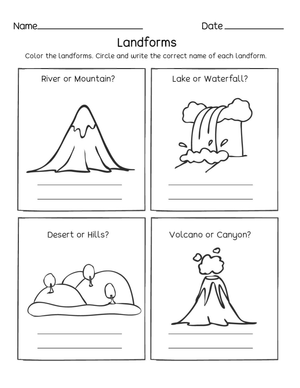
These worksheets help students connect vocabulary with visual examples. Instead of only hearing the word “valley,” students can see a picture, label it, match it to a definition, and compare it with a mountain or plain. This repeated practice supports observation, classification, reading comprehension, and science vocabulary. Worksheets also help teachers check whether students can identify landforms independently after instruction.
Question 3: How can teachers make a landforms lesson more hands-on?
Teachers can make the lesson more hands-on by asking students to build landforms with clay, sand, paper, or blocks. Students can create a simple landform map, label each feature, or compare real photos of different places. After the hands-on activity, worksheets help students organize what they learned, use vocabulary correctly, and explain the differences between landforms in writing or discussion.
Question 4: What makes a good 2nd grade landforms worksheet?
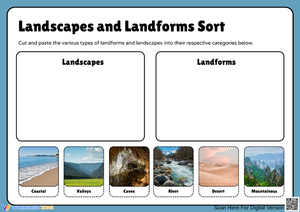
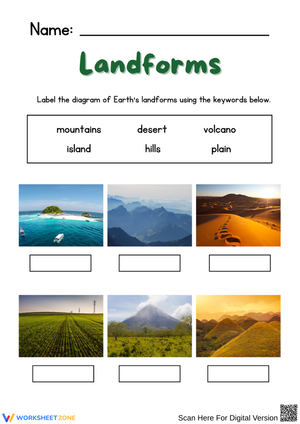
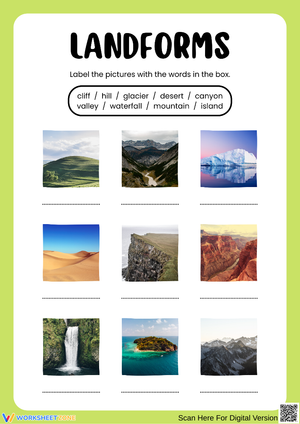
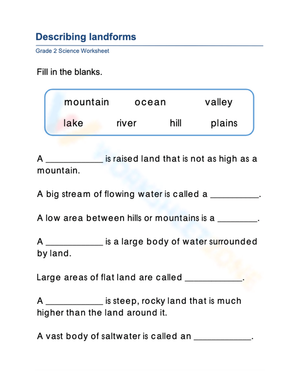
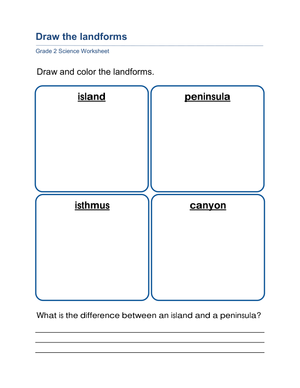
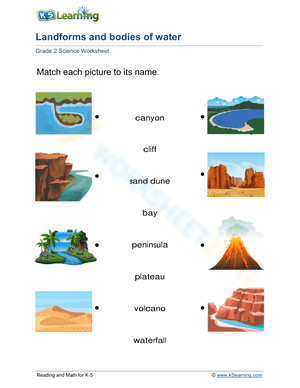
A good 2nd grade landforms worksheet should be visual, simple, and focused on one clear skill at a time. It may ask students to label landforms, match pictures to names, sort landforms and bodies of water, complete short sentences, or answer basic comparison questions. The best worksheets use age-appropriate language and give students enough support to understand each landform without feeling overwhelmed.












 Interactive Worksheet Maker
 Quiz Maker
 Word Search Maker
 Crossword Puzzle Maker
 Word Scramble Generator
 Sentence Scramble Generator
 Handwriting Worksheet Generator
 Name Tracing Generator
 Fill In The Blank Generator