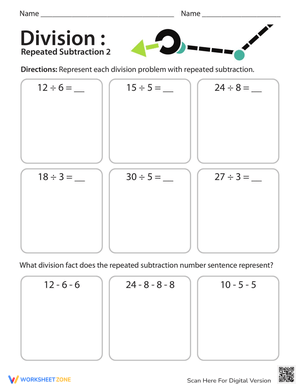
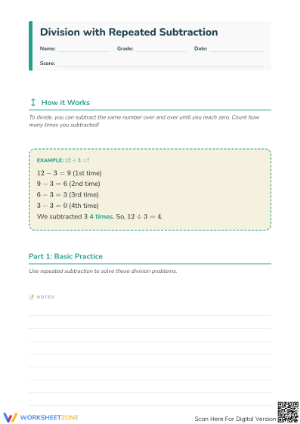
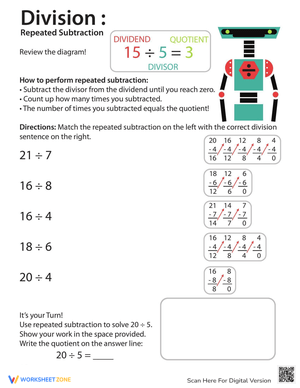
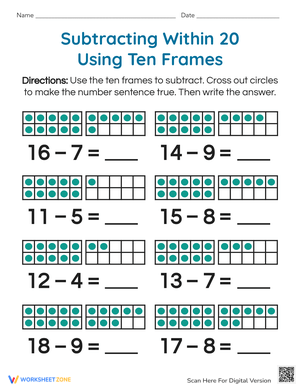
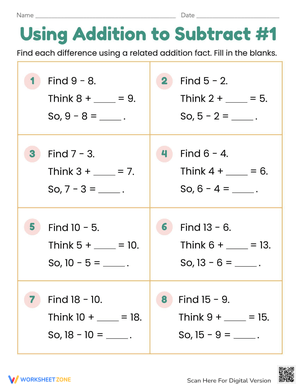
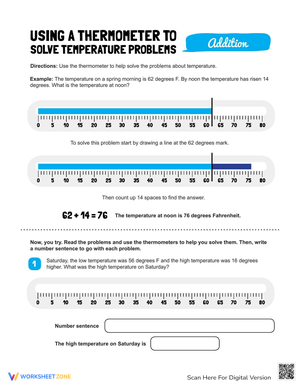
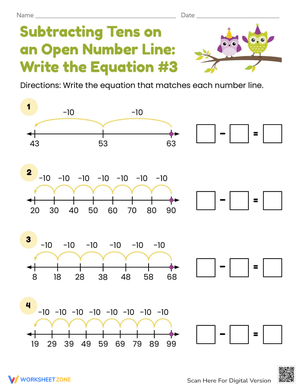
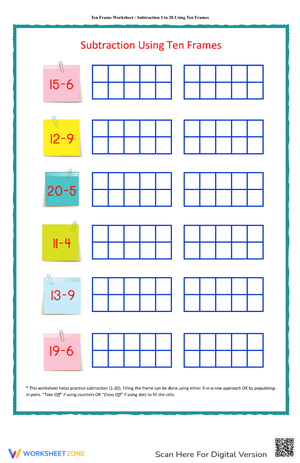
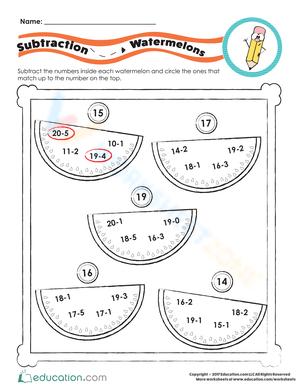
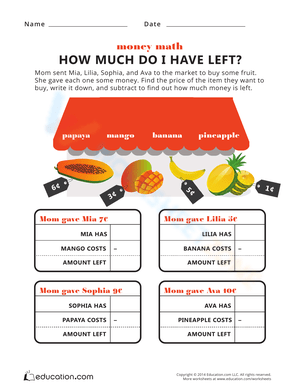
These subtraction strategies pdf worksheets for 2nd grade give teachers a focused practice set covering four core approaches — open number lines, base-ten block drawings, number decomposition, and compensation — all scoped to within-100 problems where second graders are building toward fluency. Each worksheet targets one strategy so students get genuine repetition before you run comparison tasks across methods. The set covers enough material to introduce, practice, and revisit each approach across a full unit.
The Four Strategies the Set Covers
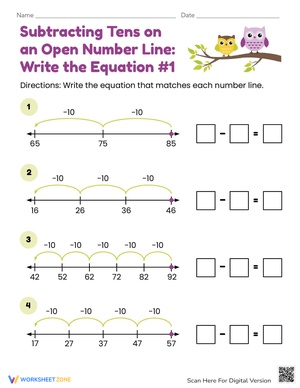
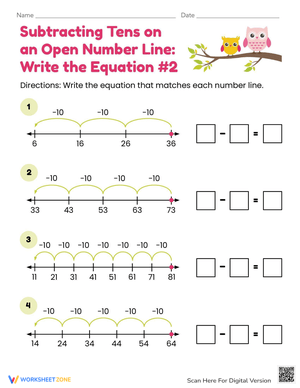
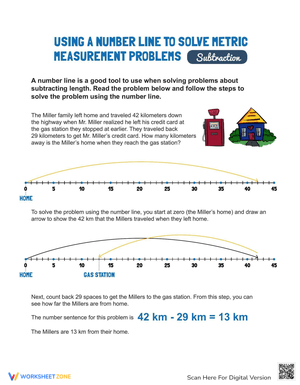
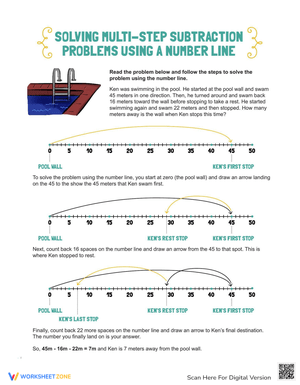
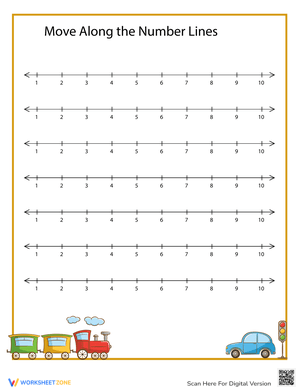
The open number line worksheets ask students to mark a starting value, record jumps, and arrive at a difference. What makes these more demanding than they appear is their flexibility — students choose their own jump sizes, which means holding an intermediate value in memory while deciding on the next move. These worksheets also accommodate a count-up approach: rather than jumping backward from the minuend, students starting at the smaller number can jump forward to find the distance. For a problem like 54 minus 23, a student might start at 23, jump 20 to reach 43, then jump 11 more to arrive at 54 — adding up the jumps rather than tracking backward. Many second graders find this more reliable, and it makes the inverse relationship between addition and subtraction explicit in a way that rote backward-counting does not.
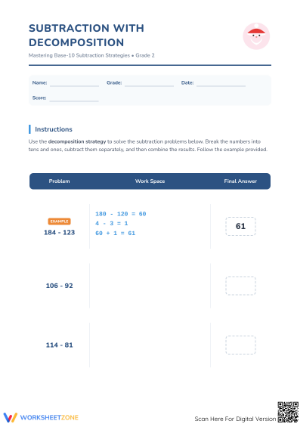
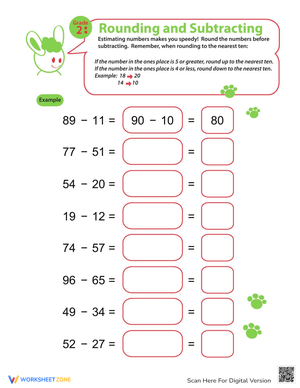
The base-ten worksheets pair a drawing space with each problem so students sketch tens rods and ones cubes before they commit to a numerical answer. This is most effective at the start of a regrouping unit, when students need to see a ten rod physically broken apart into ten ones before the procedural step makes sense. The decomposition worksheets use expanded form: 73 minus 28 becomes (70 + 3) minus (20 + 8), with students working the tens and ones separately before recombining. The compensation worksheets close the set — students round one number to a nearby ten, compute, then undo the adjustment. These last two strategies ask students to track multiple number relationships without a visual anchor, so they sit better after the number line and base-ten work is solid.
Mistakes Students Make That These Worksheets Help You Catch
The most consistent number line error is what teachers sometimes call the fence-post mistake: a student starting at 54 and jumping back 3 lands on 52 instead of 51 because they count the starting number as the first step. It surfaces even in students who have used number lines before, and it is worth naming directly before independent practice begins.
On decomposition problems, the error that shows up most reliably is digit reversal when the ones digit of the subtrahend is larger than the ones digit of the minuend. A student solving 73 minus 28 will compute (70 minus 20) + (8 minus 3) = 55, subtracting whichever ones digit is smaller from whichever is larger, regardless of which number it belongs to. This is not a careless mistake — it is an invented rule that fills the gap left by incomplete understanding of regrouping. The compensation error is different in character: students round correctly, compute correctly, and then simply stop. They solve 56 minus 19 by computing 56 minus 20 = 36 and record 36 as the final answer, forgetting to restore the 1 they subtracted in excess. Walking through one concrete example of this at the start of the lesson — not as a warning, just as a demonstration — reduces how often it reappears in student work.
Building These Worksheets Into Your Math Block
The most effective structure is whole-group demonstration followed by immediate independent work on the first few problems while you circulate. That first attempt gives you formative data while there is still time to redirect — more useful than an exit ticket at the end of the period, when a student may have spent fifteen minutes practicing an incorrect method. The subtraction strategies pdf worksheets for 2nd grade also work well as Monday morning warm-ups, where a single five-minute number line problem pulls the previous week's strategy back to the surface before anything new is introduced. Short re-entry practice like this builds on spaced retrieval — the gap between the original lesson and the warm-up makes recall slightly effortful, which research consistently links to stronger retention than massed practice alone.
Beyond warm-ups, these worksheets fit cleanly into a few other regular slots in the week:
- Exit tickets at the end of a strategy introduction lesson, checking one targeted skill before the next session
- Math center rotations with one strategy type per station, cycling through the full set across a week
- Small-group re-teach time for students who showed a specific gap on the previous week's check-in
Standard Alignment
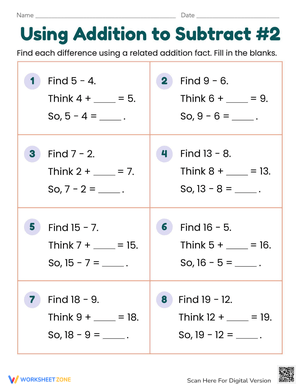
2.NBT.B.5 requires second graders to fluently subtract within 100 using strategies based on place value, properties of operations, and the relationship between addition and subtraction. This is the anchor standard for the full set. Each worksheet builds toward that fluency through a different route: the number line makes place value visible spatially, the base-ten drawings ground it concretely, decomposition moves it into symbolic form, and compensation develops flexibility across all three. Teachers simultaneously addressing 2.OA.B.2 — fluency within 20 — will find that the number line and compensation worksheets reinforce the add-to-find-the-difference relationship that underlies fact fluency at the lower end of the range as well.
Adjusting These Worksheets for Different Levels in the Room
Students who are still unsteady on place value get the most from the base-ten drawing worksheets before anything else. Narrow their range to within 50 and let them work alongside physical base-ten blocks rather than drawing from scratch. That concrete-to-representational move preserves the mathematical goal while reducing the number of things students are managing at once.
For students who have already internalized the standard algorithm, the compensation worksheets push their thinking the most — compensation demands holding the original problem and the adjusted problem in mind simultaneously, which the algorithm never requires. The subtraction strategies pdf worksheets for 2nd grade, taken as a set, also lend themselves to a specific extension task: give advanced students any worksheet and ask them to solve each problem using two different strategies and compare the results. That comparison surfaces the equivalence of the methods and builds number sense more durably than assigning more problems of the same type.
Students who freeze on the open number line often need a partially completed worksheet — start point and one jump already marked — so the task asks for one decision at a time rather than full sequence planning from the beginning.
Frequently Asked Questions
Do students need to master all four strategies, or can they work mainly with the one that clicks for them?
Students should encounter all four, because the goal is flexible number sense, not one memorized path. That said, letting students anchor on a preferred method early in the unit is reasonable — it builds confidence while the other strategies are still unfamiliar. Over time, push them toward the others, especially where their default choice is inefficient. Compensation is cumbersome for something like 80 minus 6; a quick number line or decomposition is faster and cleaner.
What signals that a student is ready to move from one strategy to the next?
Watch for two things: accuracy across several consecutive problems, and the quality of their written recording. A student who gets correct answers but erases and restarts repeatedly on the number line — or who counts tick marks out loud — needs more practice before a new strategy is introduced. Accuracy paired with some fluency in how they record the process is the reliable signal to move forward.
Can these worksheets be sent home for homework?
Any of the subtraction strategies pdf worksheets for 2nd grade can serve as homework after the strategy has been introduced and practiced in class. Include a worked example at the top of the worksheet or send home a brief reference card alongside it. Families who didn't learn math this way will often redirect their child toward the standard algorithm when they see an unfamiliar format — not out of stubbornness, but because they are trying to help. A quick example at the top removes that friction before it starts.













 Interactive Worksheet Maker
 Quiz Maker
 Word Search Maker
 Crossword Puzzle Maker
 Word Scramble Generator
 Sentence Scramble Generator
 Handwriting Worksheet Generator
 Name Tracing Generator
 Fill In The Blank Generator