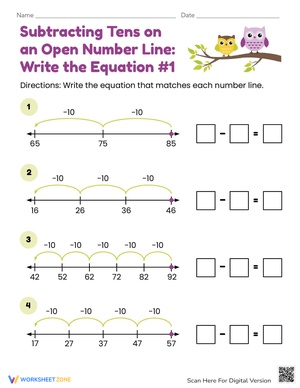
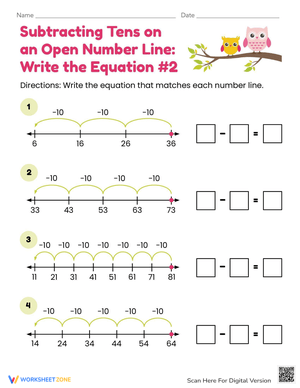
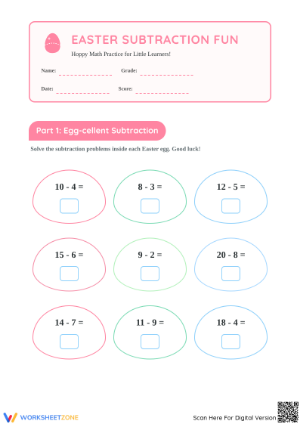
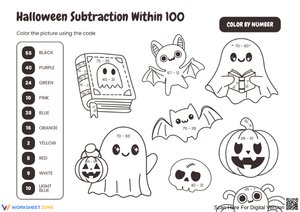
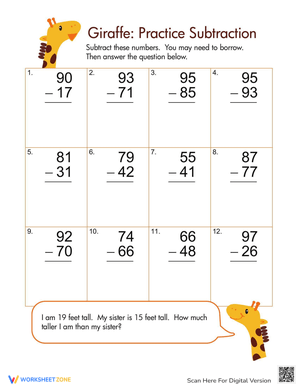
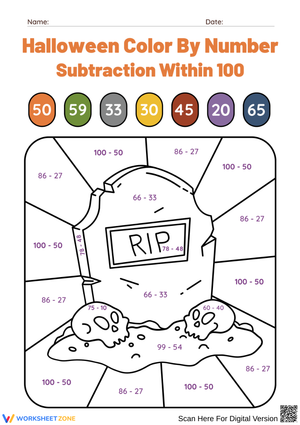
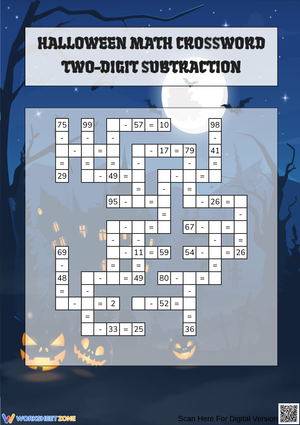
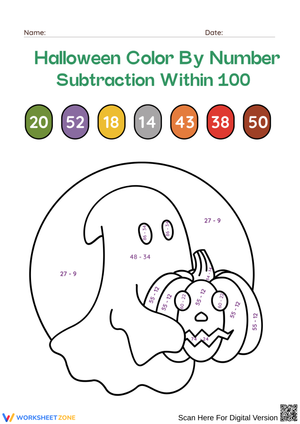
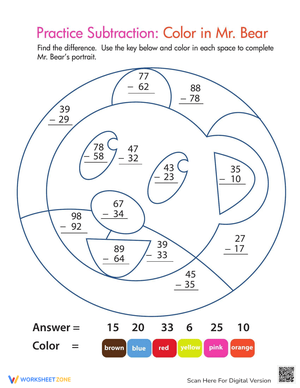
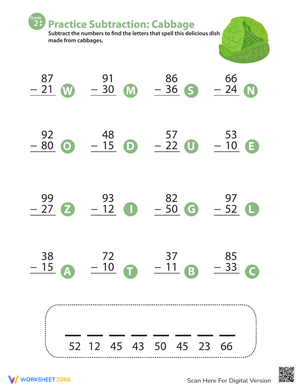
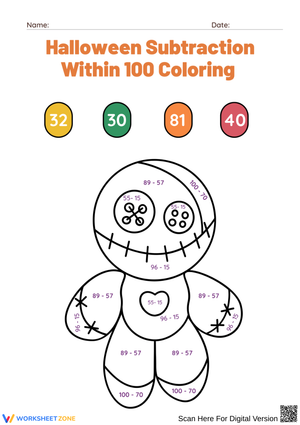
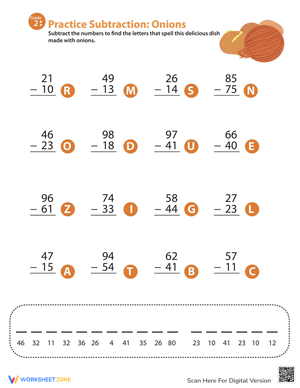
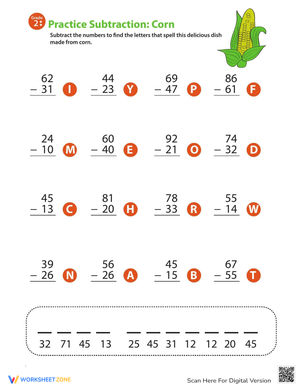
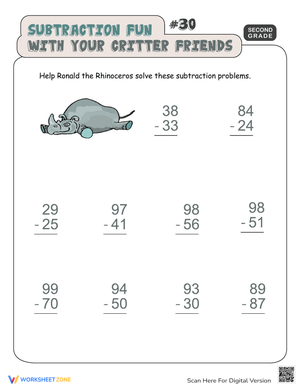
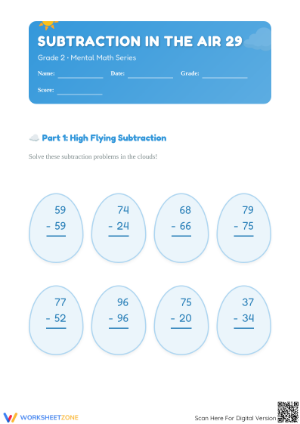
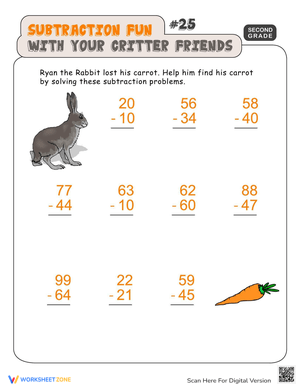
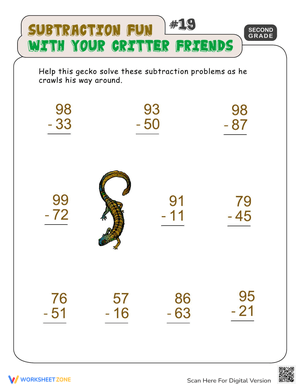
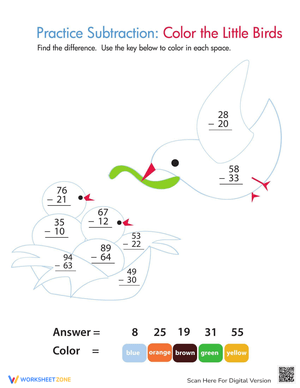
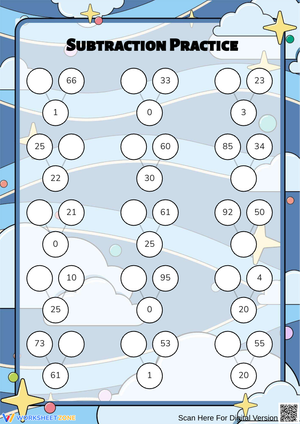
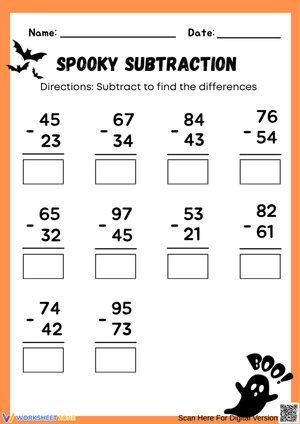
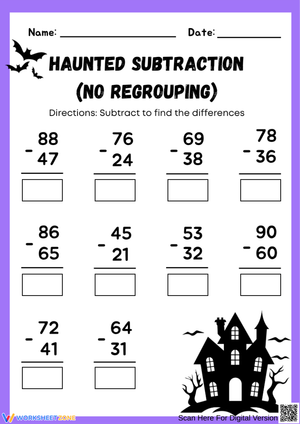
These 2nd grade subtraction within 100 printable worksheets give teachers a focused set of resources for the instructional stretch where students move past counting back on their fingers to actually operating on two-digit numbers. At this stage the work is not purely computational — students are building a mental model of how place value governs regrouping, and that understanding requires repeated, targeted practice to solidify. The set covers the full range of second-grade expectations: no-regrouping problems that establish early fluency, regrouping problems that demand place value reasoning, and word problems that ask students to identify the operation before they calculate.
What Students Practice Across the Set
Each worksheet targets a specific slice of the skill rather than mixing every problem type together. The 2nd grade subtraction within 100 printable worksheets fall into clear categories, which makes it straightforward to match a specific worksheet to the exact moment in your unit:
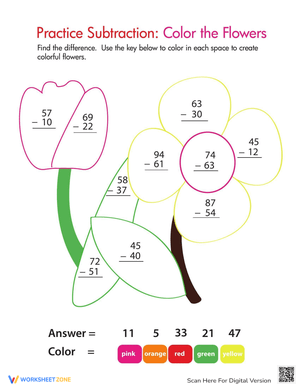
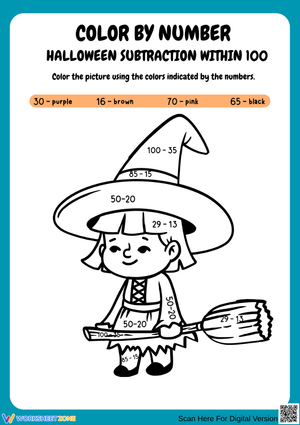
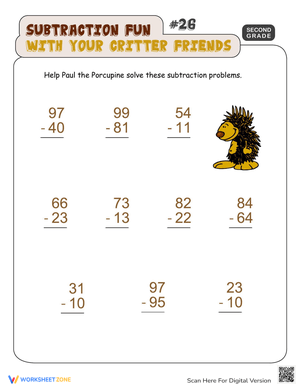
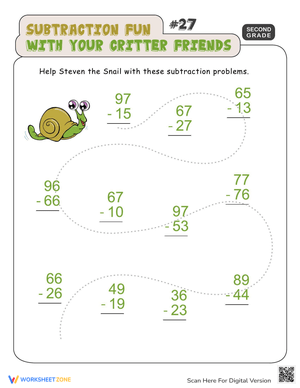
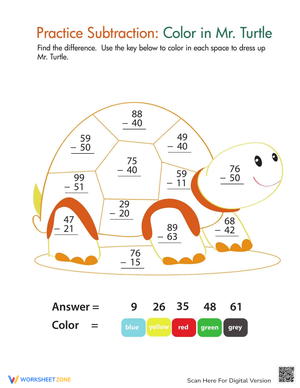
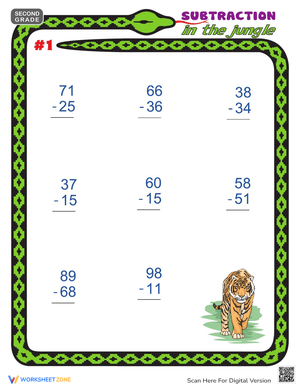
- Subtracting multiples of ten from two-digit numbers (60 − 30, 74 − 40)
- Subtracting one-digit numbers from two-digit numbers without regrouping
- Subtracting two-digit numbers with and without regrouping, represented both algorithmically and with base-ten diagrams
- Subtracting across zero (40 − 17, 70 − 34) — the problem type that trips up students longest
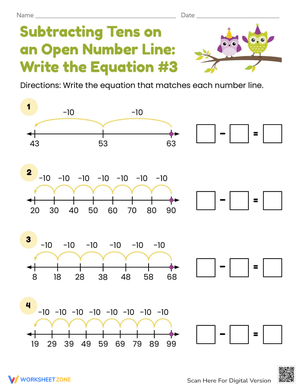
- Open number line problems where students record their jumps and annotate each step
- Error analysis problems where a completed problem contains a deliberate mistake for students to find and correct
The base-ten diagram worksheets deserve a separate note. Rather than printing blank boxes, each worksheet shows partially completed diagrams — students cross out ones or tens and record the trade, mimicking exactly what they do with physical blocks. That direct visual connection between the manipulative and the written record is what makes the algorithm feel like a representation of something real rather than a sequence of steps to memorize.
Errors Students Make That These Worksheets Help You Catch
The most reliable error in this unit is the "smaller-from-larger" mistake: a student solves 63 − 28 by subtracting 3 from 8 in the ones column and writes 45 instead of 35. Students who make this error often do it consistently and confidently, which means it rarely self-corrects — they trust the answer because the procedure felt orderly. The error analysis worksheets address this directly, presenting a worked problem with that exact mistake and asking students to identify what went wrong and recompute correctly.
A second error surfaces specifically after students learn regrouping: they decompose the ten correctly but forget to reduce the tens digit. For 53 − 27, they write 13 ones in the ones column but leave 5 tens untouched, arriving at 56 instead of 26. This one is hard to spot quickly because it looks like the student understands regrouping — the decomposition is there, just incomplete. Scanning for an unreduced tens digit is the fastest check you can run during independent work time.
Subtraction across zero appears later in the unit and needs its own preparation. When students hit 40 − 17, the zero in the ones column causes some to write 7 − 0 = 7 in the ones place. Others stall entirely. The number line worksheets work especially well here because counting up from 17 to 40 sidesteps the regrouping difficulty while still producing the correct difference — and it builds the connection between addition and subtraction that the standard explicitly requires.
Standard Alignment
These worksheets address CCSS 2.NBT.B.5, which requires second graders to fluently add and subtract within 100 using strategies grounded in place value, properties of operations, and the relationship between addition and subtraction. Fluency at this standard means more than accuracy — it means students can select an efficient strategy and execute it without extended labor. Second grade is the year that procedural fluency for subtraction is expected to click, which is why 2.NBT.B.5 carries significant weight in most district pacing guides. The worksheets give teachers a way to assess which strategy each student is actually using, not just whether the final answer is correct — a distinction the standard itself makes explicit.
Working These Worksheets Into Your Weekly Lessons
Teachers get the most from 2nd grade subtraction within 100 printable worksheets when they treat the set as a progression rather than a stack of interchangeable resources. In most second-grade classrooms, the subtraction-within-100 unit runs four to six weeks. Assigning the no-regrouping worksheets during the first week — before regrouping is introduced — builds the fluency that makes the regrouping step feel incremental rather than overwhelming. The error analysis worksheets fit naturally around week three, once students have encountered regrouping enough times to recognize the specific mistakes those problems model.
For daily warm-ups, the number line worksheets work well in the first eight to ten minutes of math block before the formal lesson begins. Students come in, sit down, and start drawing jumps — the strategy activates without requiring teacher setup. For small group pullout, the base-ten diagram worksheets are more useful than purely abstract algorithm worksheets because students at that level still need a visual anchor. Keep a small set of actual base-ten blocks at the table so students can build and then draw, bridging the concrete and the written in the same sitting.
Sending a worksheet home should be deliberate rather than reflexive. The no-regrouping and number line worksheets translate best to homework because families can follow the visual without needing a lesson briefing. Sending regrouping worksheets home early in the unit tends to backfire — when the algorithm looks unfamiliar to parents, students receive a second set of instructions that may not match the classroom method, which creates more confusion than the practice is worth.
Adjusting the Set for a Range of Learners
The 2nd grade subtraction within 100 printable worksheets in this set span a wide enough range that teachers can assign different worksheets to different students during the same independent work period without making the tiering obvious. Students still building confidence with basic subtraction facts work on the no-regrouping worksheets, which strip away place value complexity and let them build speed on the operation itself. Students who have that fluency but are new to regrouping start on the base-ten diagram worksheets, which give a visual structure for the trade without removing all written support.
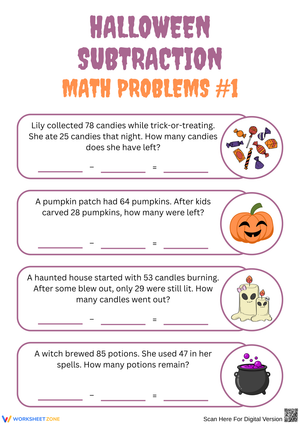
For students moving ahead of the class, the word problem worksheets add a layer of reading comprehension and decision-making that purely computational problems cannot replicate. A student who solves 82 − 47 without hesitation faces a genuinely different challenge when the problem reads: "Mia had 82 stickers. She gave some to a friend and had 47 left. How many did she give away?" — because now they must construct the equation from context rather than read it off the page. Students who finish early can also be handed worksheets from two different strategy types and asked to solve the same problem both ways, then compare their answers. That is a real extension, not busy work.
Frequently Asked Questions
When is a student ready to stop using the base-ten diagram and work with just the algorithm?
When a student completes diagrams quickly and accurately across several problems in a row, that is a reasonable signal. But the better test is verbal: can they explain what is happening — "I traded one ten for ten ones because I needed more ones" — without prompting? Students who pass that check and still reach for the diagram are often just being careful, not confused; a gentle nudge toward the purely written form is usually enough to shift them. Students who cannot explain the trade verbally are not ready for the algorithm, regardless of whether their answers are coming out correct.
How should I handle students who insist on the standard algorithm even when they keep making errors?
Resist letting them stay with the algorithm just because they prefer it. The number line is not a remedial tool — it makes the inverse relationship between addition and subtraction visible in a way the algorithm cannot. When students count up from the subtrahend to the minuend on a number line, they see directly why addition can verify subtraction. Have those students work a problem on the number line first, then check it with the algorithm. When they arrive at the same answer twice using different approaches, the value of both methods becomes concrete rather than theoretical.
How many problems per session is appropriate for second graders?
Eight to twelve problems is a reasonable target for focused independent practice, depending on problem type. Number line problems run slower than algorithm problems because students are drawing and annotating rather than just computing. Regrouping problems with base-ten diagrams also take more time. If a worksheet has eighteen or more problems, use it across two sessions rather than expecting second graders to push straight through — fatigue at the end of a long set produces the careless errors that tell you nothing useful about what a student actually understands.













 Interactive Worksheet Maker
 Quiz Maker
 Word Search Maker
 Crossword Puzzle Maker
 Word Scramble Generator
 Sentence Scramble Generator
 Handwriting Worksheet Generator
 Name Tracing Generator
 Fill In The Blank Generator