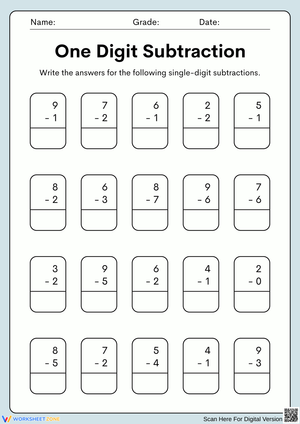
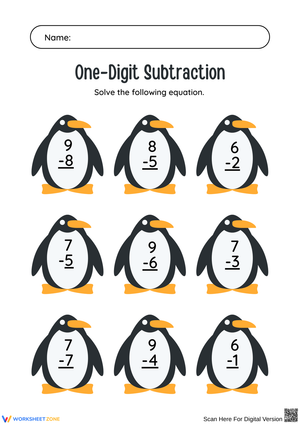
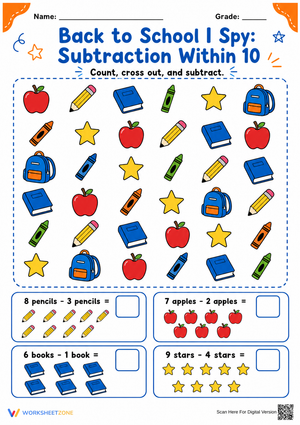
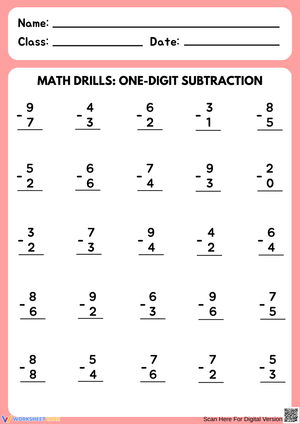
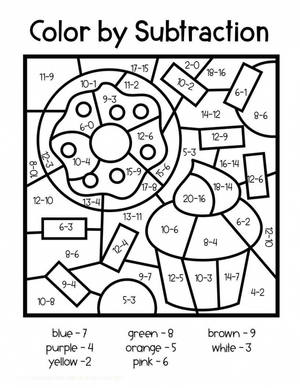
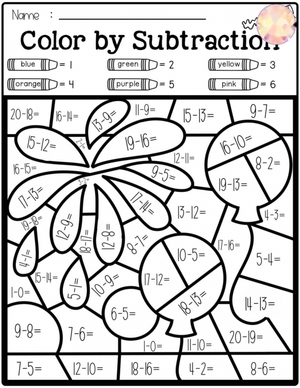
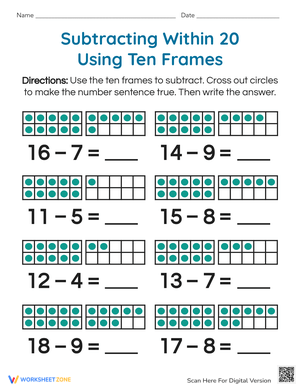
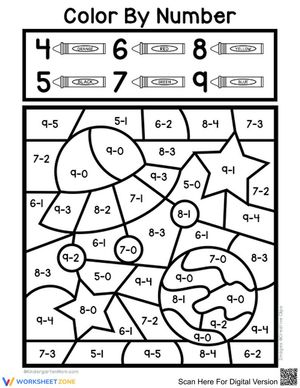
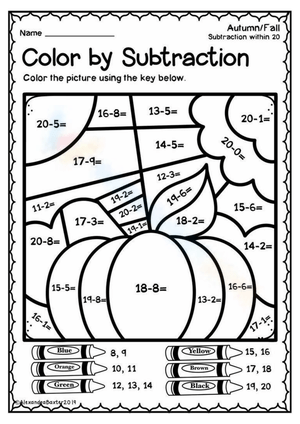
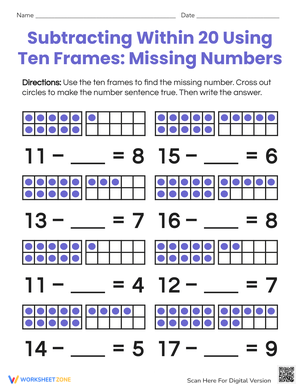
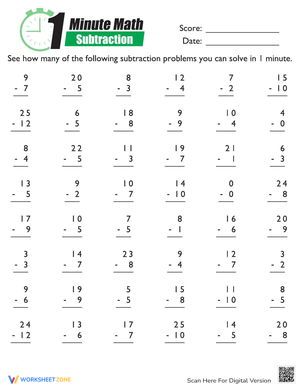
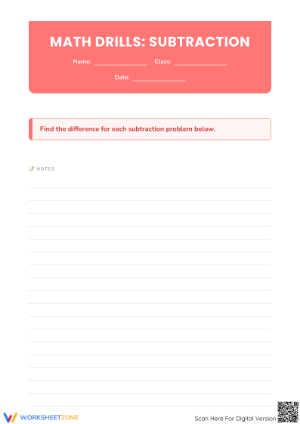
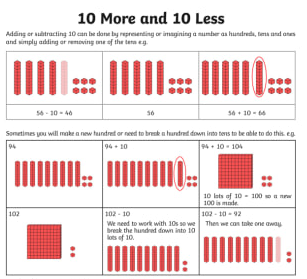
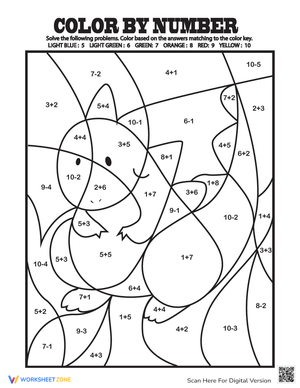
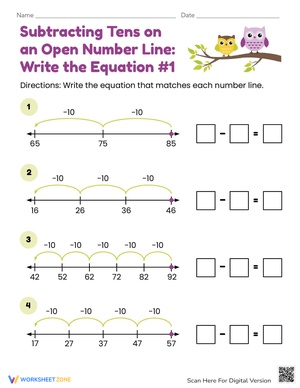
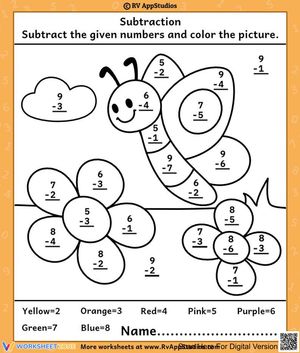
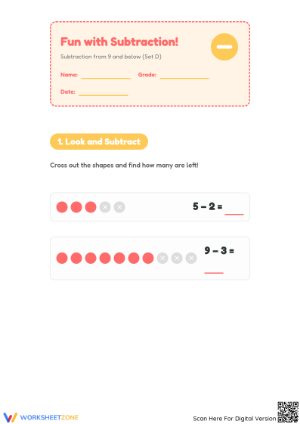
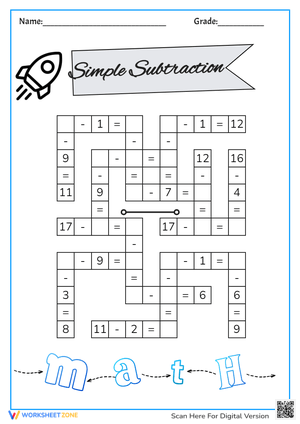
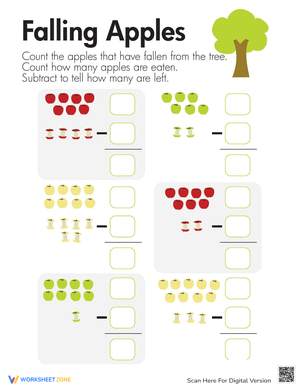
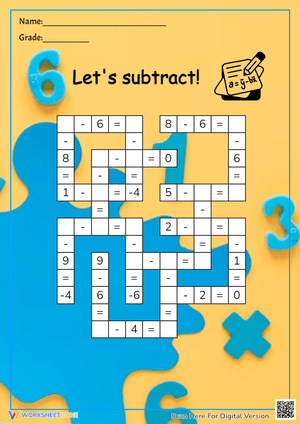
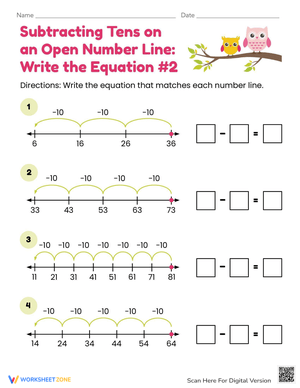
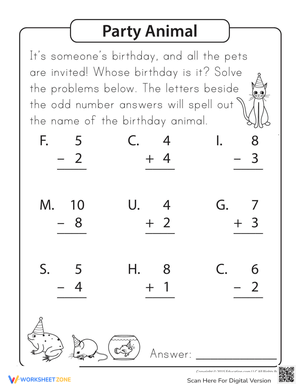
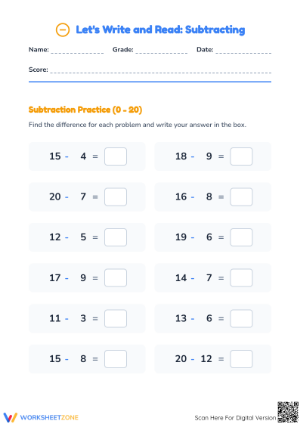
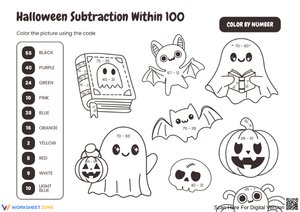
These 2nd grade subtraction facts pdf worksheets give teachers a ready supply of targeted practice that holds up across the full arc of fluency instruction — from early strategy-building in October to rapid-recall checks in April. The set covers all subtraction facts within 20, presented through varied formats: equation drills organized by fact family, number bond completion, missing-number problems, and strategy-prompt rows where students name their method before writing the answer. What teachers get here is a bank of resources flexible enough to drop into morning work, a guided math center, or a Friday review block without modification.
The Specific Skills Targeted
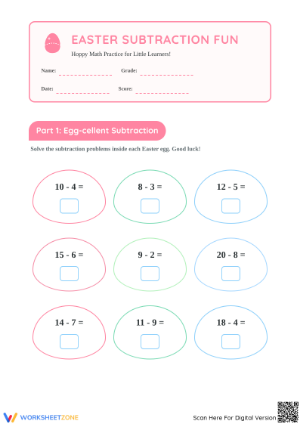
Each worksheet isolates a distinct, teachable slice of the subtraction fact domain. Some focus tightly on a single fact family — all minus-seven facts, or subtracting from 14 — so students build pattern recognition within a family before retrieval is tested across mixed problems. Others pull related families together, which is a genuinely different cognitive demand: retrieving 13 − 6 from memory when the same worksheet also includes 15 − 8 and 11 − 4 requires broader fact access than a single-family drill does. A handful of worksheets move students into strategy articulation — complete the equation, then circle whether you used count-back, make-ten, a doubles anchor, or fact-family reasoning — which makes thinking visible and gives teachers something concrete to address during small-group work.
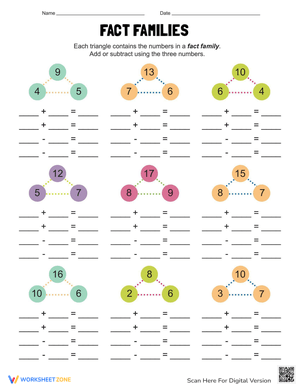
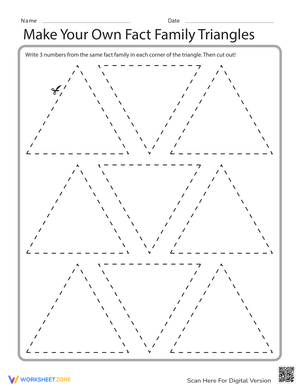
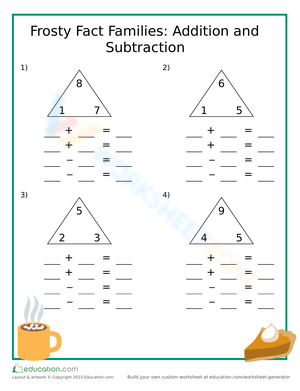
- Fact family triangles, where students write all four equations from one set of three numbers
- Missing-number equations in both positions (? − 6 = 7 and 15 − ? = 8)
- Strategy-labeled rows that ask students to name the method they used
- Number bond diagrams paired with related subtraction equations
- Mixed-fact review strips for end-of-unit or end-of-quarter checks
Mistakes Students Make That These Worksheets Help You Catch
The error that appears most reliably in second-grade subtraction work is the off-by-one mistake on bridging-ten facts. A student who knows 6 + 7 = 13 automatically will still write 13 − 7 = 7 — not 6 — because when counting backward, they treat 13 itself as the first step. Seven counts back from 13 lands them on 7 in their mental sequence. Marking the paper wrong doesn't fix this. Teachers need to watch the student's lips or fingers to see exactly where the count breaks down, then replace the counting strategy with a make-ten bridge: 13 − 7 means drop to 10 first (three steps), then three more down to 6. Once students see that bridge, the fact stabilizes quickly.
A second pattern surfaces on near-doubles subtraction. Students who retrieve doubles automatically — 12 − 6 = 6, no hesitation — will stall badly on 13 − 6 or 11 − 6 because they sense a connection to the anchor fact but haven't built a deliberate bridge from it. The strategy-labeled rows in these worksheets surface that gap during independent practice rather than leaving it invisible until a unit test. A third persistent error appears on missing-number problems in the format ? − 6 = 7: a significant portion of students write 1 in the blank, subtracting 6 from 7 instead of adding. They see subtraction in the equation and subtract — which is developmentally predictable — but they haven't yet internalized that finding a missing minuend requires the inverse operation.
How to Build These Worksheets Into Your Lesson Plans
The most effective placement for daily subtraction fact practice is the five-to-eight minutes of transition time that opens the math block. Students arrive at their seats with a clear task, the cognitive load is low enough to serve as a warm-up rather than compete with new instruction, and the teacher can circulate and spot error patterns before the lesson formally begins. One worksheet each morning — untimed — builds far more cumulative retention across a month than a long Friday drill session does.
During a guided math block, laminate a selection of worksheets and slide them into dry-erase sleeves. Students write with whiteboard markers, self-check with an answer key kept at the station, wipe the surface clean, and rotate. Paper consumption drops and students get immediate feedback without waiting. Reserve actual paper copies for weekly formative work: rather than scoring every problem, scan completed worksheets for the specific facts where errors cluster. If five or six students consistently miss facts involving 8 as the subtrahend, that is a pull-small-group signal — not a reteach-the-whole-class moment.
For homework, these 2nd grade subtraction facts pdf worksheets work best when they're kept to ten or twelve problems and tied directly to the fact family addressed in class that day. A brief note at the top of each worksheet — "We practiced make-ten today; ask your child to walk you through the steps" — gives parents a way to support the practice without needing to know the curriculum themselves.
Standard Alignment
These worksheets address CCSS.MATH.CONTENT.2.OA.B.2: Fluently add and subtract within 20 using mental strategies; by end of Grade 2, know from memory all sums of two one-digit numbers. The corresponding subtraction facts are embedded in that standard — fluency within 20 applies in both directions. Instructionally, 2.OA.B.2 is a year-long standard, not a single unit. Most second-grade teachers introduce the make-ten strategy in the first quarter, work through individual fact families across the second and third quarters, and reserve the final quarter for mixed-fact retrieval checks that measure whether automaticity has genuinely taken hold. The worksheets map onto that progression: early-sequence formats support strategy development, while later-sequence formats test fluency across all families without any prompting or visual support.
Adjusting These Worksheets for Different Student Levels
Students who are still counting on fingers for basic facts within 10 need concrete tools alongside paper practice — a number line taped to the desk or a ten-frame reference card they can consult while working. These students should work through worksheets focused on facts within 10 before moving to bridging-ten problems. That isn't about lowering expectations; it's about matching the practice to where retrieval actually is, so each worksheet produces useful information rather than a string of guesses.
These 2nd grade subtraction facts pdf worksheets include both standard equation formats and strategy-articulation rows, so there is a genuine next step available for students who have moved past basic recall without reaching into third-grade material. Asking a student to write 13 − 7 = 6 is a lower demand than asking them to produce the entire fact family from the number bond {6, 7, 13} and then identify which strategy is most efficient. Both tasks live within the same standard — the complexity comes from the format, not the content.
Students who experience math anxiety respond better to shorter worksheets with fewer problems visible at once. Ten problems on a half-sheet feels manageable; twenty-five problems on a full sheet can trigger avoidance before the pencil touches the paper. Starting those students on the shorter formats and tracking their own previous accuracy — rather than posting a class comparison — keeps the practice productive and their confidence intact.
Frequently Asked Questions
What subtraction facts should a 2nd grader know by the end of the year?
By June, second graders are expected to retrieve all subtraction facts within 20 from memory — not by counting back, drawing tally marks, or using manipulatives, but automatically. That includes facts like 15 − 7, 12 − 4, 18 − 9, and 11 − 3. Some students will hit that benchmark in February; others will reach it in late May. What matters is consistent forward movement throughout the year, not a single pass-or-fail assessment moment.
How do timed and untimed formats each fit into a fluency sequence?
Untimed practice belongs in the early stages of any fact family instruction, when students are still building their strategy and need space to think through the steps. Timed formats make sense once a student solves the facts correctly without support — the timer then measures retrieval speed, not whether the underlying math is understood. A reasonable weekly structure: untimed worksheets Monday through Wednesday when the fact family is relatively new, a brief timed strip on Friday when it's familiar. Both formats appear across these 2nd grade subtraction facts pdf worksheets, so teachers can structure that sequence intentionally rather than defaulting to timed drills from day one.
How often should students practice subtraction facts to build lasting recall?
Short daily practice outperforms longer weekly sessions by a significant margin. Five to ten minutes every day — spaced across the week — moves facts from working memory into long-term storage far more reliably than a thirty-minute block once a week. Morning work, a math center rotation, and brief homework assignments together create that daily repetition without consuming the instructional time reserved for new concepts.













 Interactive Worksheet Maker
 Quiz Maker
 Word Search Maker
 Crossword Puzzle Maker
 Word Scramble Generator
 Sentence Scramble Generator
 Handwriting Worksheet Generator
 Name Tracing Generator
 Fill In The Blank Generator