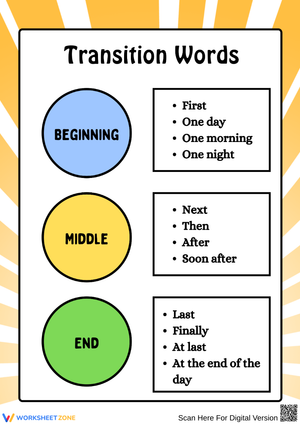
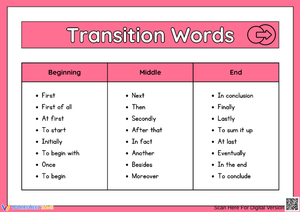
These sequencing worksheets for 2nd grade give teachers a direct path to one of the skills that holds narrative comprehension together — reconstructing the logical order of events and understanding why that order matters. The set covers both story sequencing and procedural sequencing, and the resources work equally well as a short warm-up, a formative check at the end of a read-aloud, or a pre-writing planning tool before students draft their own narratives.
Concepts Each Worksheet Builds
The tasks address sequencing from several angles, moving from simpler to more demanding as the worksheets progress. Students work across these specific skills:
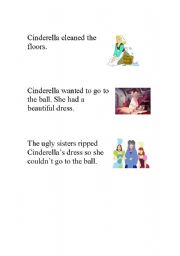
- Ordering events from a short passage — beginning with three-event sequences and increasing to five or six events as students gain confidence
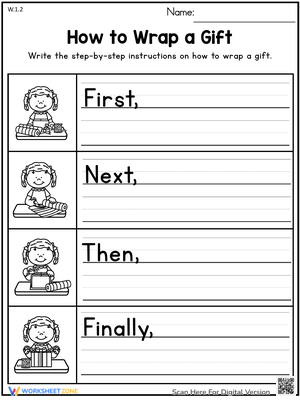
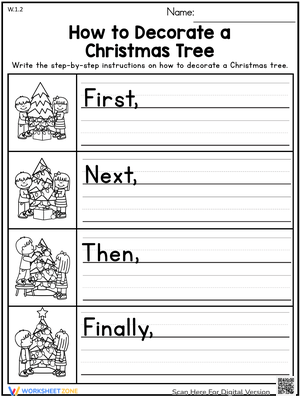
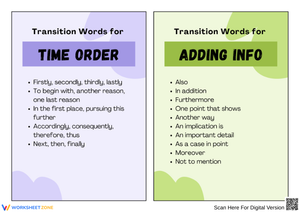
- Completing sentence frames with appropriate transition words: first, next, then, finally, and afterward
- Identifying the turning point of a narrative and using it to anchor the full event order
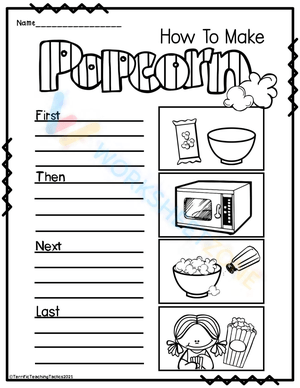
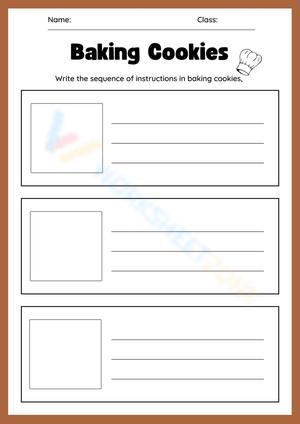
- Sequencing procedural texts — recipes, how-to instructions, science process observations — where the order is non-negotiable and a misplaced step changes the result
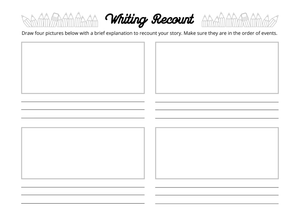
- Filling in a story map to capture beginning, middle events, and ending before starting an independent writing piece
The distinction between narrative and procedural tasks is worth keeping in front of students, and it's one of the reasons sequencing worksheets for 2nd grade that include both text types give teachers more diagnostic information than resources focused on story order alone. A child who reliably sequences the steps for making a sandwich will sometimes stall on a story-order task, because narrative causality depends on understanding character motivation — "she hid the letter because she was scared" — not just process. Including both types in the set helps teachers identify exactly where a student's gap sits.
How Transition Words Function in This Set
The most common transition-word error in second-grade writing is the stacked "first" — a student who has learned that first signals "something in a story is happening" and applies it to every event: "First the dog ran. First they found him. First everyone went home." The word gets used as a story marker, not as a positional signal. Each worksheet that targets transition vocabulary forces students to choose the right word for a specific slot, typically through a cloze sentence or a sentence frame where each transition word can be used only once. That constraint is what teaches the function — not a definition on the board.
The confusion between then and finally deserves its own explicit lesson. Students understand that finally signals the end, but they tend to place it wherever the story feels most important emotionally — at the climax, not the conclusion. Paired sequencing tasks on these worksheets, where students must use each transition word exactly once across a five-event sequence, correct this pattern far more efficiently than a vocabulary chart does.
Student Mistakes Worth Catching Early
First and last positions are rarely where students go wrong. Given a five-event passage, most second graders will correctly anchor the opening and closing events — the problem is the three events in the middle. Students at this age tend to order middle events by emotional weight: whichever felt most exciting or surprising gets placed first, regardless of when it actually occurred in the story. A reliable diagnostic is what might be called the 2-out-of-5 pattern: students who score exactly two correct have almost always identified the first and last events and guessed at the rest. That result tells you the student understood the story but did not track cause-and-effect chains within it.
A separate error surfaces with procedural texts. Some students treat steps as interchangeable — they recognize that all the steps belong in the sequence but do not register that order produces outcome. Asking them to explain why a particular step cannot be moved ("why can't you frost the cake before you bake it?") draws out whether the student is reasoning about consequence or simply matching text to pictures.
Working These Worksheets Into Your Lesson Planning
These sequencing worksheets for 2nd grade fit most naturally into three spots in the week. The first is the Monday morning warm-up, right after morning meeting — a three- or four-event sequence takes about six minutes and reactivates story-structure thinking before the week's reading instruction begins. The second is the pre-writing block: before students draft a personal narrative or a how-to piece, a story map worksheet gives them a place to sequence their own events on paper first. Teachers who use this step consistently see fewer mid-story jumps and less repetition of the same event written two different ways, because students commit to an order before they start composing sentences. The third is the exit ticket at the end of a shared reading or read-aloud — a quick five-event sequence that checks whether students absorbed the text's structure rather than just the plot details that surface during class discussion.
Standard Alignment
CCSS.ELA-LITERACY.RL.2.5 asks students to "describe the overall structure of a story, including describing how the beginning introduces the story and the ending concludes the action." The narrative tasks in this set give students direct, repeated practice with exactly that structure — not just labeling parts but understanding what each part does within the story. CCSS.ELA-LITERACY.RI.2.3 requires students to "describe the connection between a series of historical events, scientific ideas or concepts, or steps in technical procedures in a text." The procedural sequencing worksheets address this standard directly, making the set useful across both the literature and informational reading strands without requiring teachers to locate separate materials for each.
Differentiating These Worksheets Across Student Levels
Students still consolidating decoding can use the picture-supported worksheets in the set, where an image accompanies each event. The pictures function as a comprehension check — the student still processes the sentence, but the visual confirms or corrects their interpretation. For students who receive reading support services, an effective step is oral rehearsal before the worksheet: have the student retell the sequence aloud or arrange picture cards in order, then transfer that order to paper. This reduces the cognitive bottleneck of holding the full narrative in memory while simultaneously producing written responses — a dual demand that stalls this group more consistently than the sequencing concept itself does.
Students working above grade level are ready for passages that include a flashback or a "meanwhile" construction — two events happening in different places at the same time. Most 2nd grade texts are strictly linear, so even one non-linear element pushes advanced readers to reason about time markers rather than simply following the story forward. These students also benefit from using the story map worksheets as genuine planning tools for longer original writing rather than as retelling exercises — the same format, but pointed toward composition instead of comprehension.
Frequently Asked Questions
When in the school year should I introduce these worksheets?
Three-event narrative sequences fit naturally in September, during the first unit on story structure. By October or November, most students are ready for four- and five-event tasks. Procedural sequencing pairs well with any science or social studies unit built around a process — a life cycle, a recipe, the steps in a community helper's routine. Cycling back to sequencing worksheets for 2nd grade in February and again in April, after students have read more complex texts, gives teachers concrete data on whether early gains have held.
How do I use these worksheets with students who have IEP goals in reading comprehension?
Check whether the goal targets retelling with key details or identifying the beginning, middle, and end — both map directly to tasks in this set. The picture-supported worksheets often meet those students' decoding needs without reducing the comprehension demand. For progress monitoring, the event-ordering tasks produce a clean percentage-correct score that is straightforward to track across sessions without building a separate rubric.
What should I do when a student sequences events correctly on the worksheet but cannot retell a story in order when speaking?
This is a transfer gap, not a sequencing gap. The student has learned to use the worksheet's visual props — numbered blanks, sentence strips, event cards — as ordering supports. Without those props, the skill has not moved into working memory. The fix is to reduce those supports gradually over several weeks: start with full sentences, move to sentence starters, then to just the transition word prompts, then to a blank story map with no cues. Each reduction asks the student to hold more of the sequence independently, which is exactly what oral retelling requires.












 Interactive Worksheet Maker
 Quiz Maker
 Word Search Maker
 Crossword Puzzle Maker
 Word Scramble Generator
 Sentence Scramble Generator
 Handwriting Worksheet Generator
 Name Tracing Generator
 Fill In The Blank Generator