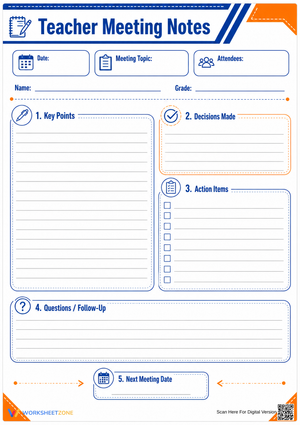
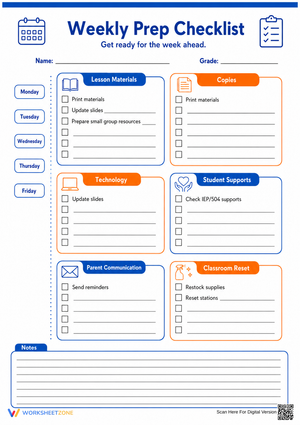
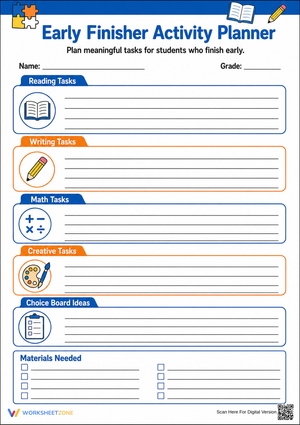
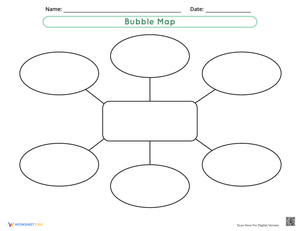
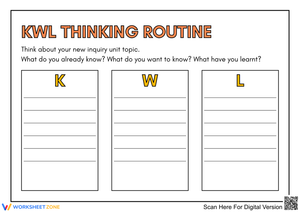
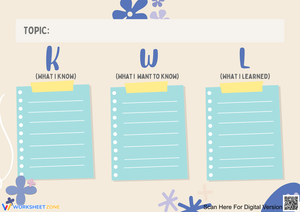
These 2nd grade organization and structure graphic organizer worksheets give teachers a concrete planning tool for the moment in writing workshop when students have ideas but no clear sense of where those ideas go. Second grade is the year when most students can talk through a story or an opinion with confidence, but then stare at a blank page and write one long, breathless sentence with no beginning, no end, and everything jumbled in the middle. These worksheets interrupt that pattern before the drafting even starts.
What's Inside the Set
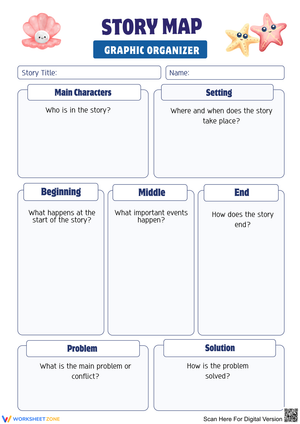
The worksheets cover four major writing structures students encounter in Grade 2: narrative, opinion, informational, and sequence-and-response. Narrative worksheets use beginning-middle-end frames, with space for students to jot words or quick sketches before committing to sentences. Story map versions include labeled boxes for character, setting, problem, and solution — useful once students have worked through the simpler three-part frame and are ready for a bit more complexity.
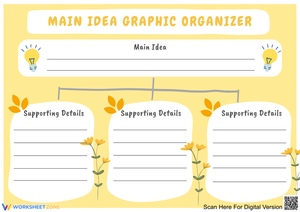
Opinion worksheets follow a three-part structure: the opinion itself, two reasons, and a closing. That constraint is deliberate. When the frame has more reason boxes, second graders tend to fill them with restatements of the same idea rather than distinct support. Two boxes push them to think of a genuinely different reason, which produces more complete writing. Informational worksheets use a topic-and-detail web format — a center box for the main topic surrounded by detail boxes — designed for use after shared reading or content-area lessons when students are sorting facts they already know. Sequencing charts round out the set, supporting text retells and process descriptions with numbered steps and transition-language prompts built into the labels.
Standard Alignment
These worksheets address CCSS W.2.1 (opinion writing with reasons and a closing), W.2.2 (informational writing with facts and a closing), and W.2.3 (narrative writing with a sequence of events). W.2.5 — developing and strengthening writing through planning — is where graphic organizers sit most directly in standards language, and these worksheets are designed to make that planning stage visible and teachable rather than assumed. The sequencing charts also reinforce RI.2.3 and RL.2.5 when used for retell and text-structure response work, connecting writing instruction to reading comprehension goals without requiring a separate resource.
The Thinking Behind This Format at This Grade Level
Second grade sits at a specific developmental hinge point in writing instruction. Students have typically moved past emergent writing and can produce legible, mostly decodable text — but working memory is still a real constraint. Asking a seven- or eight-year-old to simultaneously manage spelling, sentence construction, and organizational logic usually means one of those three collapses. Graphic organizers reduce cognitive load by handling structure before the sentence-level demands begin. When a student fills in a planning frame first, the drafting stage becomes an act of transcription with meaning already sorted — which is exactly where fluency starts to build.
The layouts stay intentionally spare. Each worksheet uses short prompt labels, clearly bounded boxes, and generous white space. When a planning page crowds too much onto a single worksheet, students shift attention to decoding the format rather than generating content. These worksheets keep the format invisible enough that students can focus on what actually belongs in each section.
Common Student Errors Worth Watching For
The most persistent planning error in Grade 2 is the flat middle. On a beginning-middle-end chart, students will write a clear beginning and a clear ending, then fill the middle box with a single vague phrase like "and then stuff happened" or simply draw a picture. The middle is where event sequencing actually lives, and most students need direct oral rehearsal of what goes there before they can write it. A useful move is to ask students to tell you two things that happened in the middle — not one, two — and then write both. That prompting usually surfaces enough detail to make the middle box functional.
On opinion worksheets, the error pattern shifts. Students frequently write their opinion in the reason boxes instead of a supporting reason — "I think dogs are better because dogs are better pets" is a pattern that appears in nearly every class the first time through. The fix is simple: during modeling, point at the reason box and say explicitly, "This is not where you say your opinion again. This is where you tell me why." Catching this during the planning stage, before it goes into a draft, saves the revision conference later.
Building These Worksheets Into Your Lesson Plans
The most effective sequence is model, oral rehearsal, then plan — in that order, with no skipping the middle step. During the mini-lesson, fill out a worksheet in front of the class using a shared topic. Think aloud at each box: "I'm putting this detail here because it happened first, not because it's most important." That distinction matters for second graders, who often confuse importance with sequence.
After modeling, students rehearse their own content orally with a partner before they touch the worksheet. This step is worth the four minutes it takes. Students who skip oral rehearsal and go straight to writing often fill boxes with whatever comes first to mind — not necessarily what fits the structure. Students who talk first arrive at the worksheet with the content already organized in their heads.
One classroom adjustment that transfers structure to drafting: once students have completed a planning worksheet, ask them to draft in the same number of sections — three boxes, three paragraphs or three chunks, with a line break between each. Many teachers skip this step and then wonder why students produce drafts that bear no relationship to their organizers. The one-to-one match between planning sections and drafting sections is the bridge that keeps the organizer from becoming a separate, disconnected task.
For the rest of the week, the same worksheet type belongs in the writing center next to familiar picture prompts or a mentor text. Students who already know the format don't need additional direction — they can move directly into planning, which means the center actually runs independently.
Adjusting the Worksheets for a Range of Learners
For students still developing writing stamina, reduce the expectation within the same frame: label boxes with single words or phrases instead of sentences, and use oral rehearsal as the primary output with the worksheet as a record. The goal is structured thinking, not paragraph production. Students working with an IEP or receiving Tier 2 support often do better when the teacher sits with them through box one before releasing to independent work on boxes two and three.
For English learners, preteach the box labels as vocabulary before the lesson begins. Words like "reason," "detail," and "closing" carry specific meaning in writing contexts that may not be transparent. A brief two-minute word walk through the worksheet — touching each box and explaining its job — prevents the confusion that otherwise surfaces mid-lesson when students stall because they aren't sure what a box is asking for.
Students who work quickly tend to underfill the detail boxes and declare themselves finished. Requiring a teacher or partner check after the organizer is complete — before drafting begins — redirects that rush into elaboration rather than letting it carry into a thin draft. Some teachers require a minimum of two words per box; others ask students to be able to say a full sentence about each box before moving on. Either protocol works.
Frequently Asked Questions
Are these worksheets designed for whole-group lessons, small groups, or independent work?
All three. The format is consistent enough that once students have seen a worksheet type modeled once, they can use it independently or in a center. For small groups, the same worksheet provides a shared planning frame while allowing different content from each student — which makes guided writing conversations easier to manage when five students are working simultaneously.
What's the difference between the story map and the beginning-middle-end chart, and which should I introduce first?
The beginning-middle-end chart is simpler and belongs first. It asks only for sequence, which is the foundational move in narrative planning. The story map adds character, setting, problem, and solution — useful once students understand that the middle is where the problem lives. Introducing the story map before students are secure with basic sequence tends to produce worksheets where the boxes get filled in the wrong order.
Can the same organizers be used across different writing units?
Yes, and that reuse is a feature. A paragraph planner used in an opinion unit in October can carry over to an informational unit in December — the structure stays familiar while the content demands shift. Students who have already internalized the format spend less mental energy on the worksheet and more on the writing itself, which is where you want their attention by the second half of the year.
How do I use these worksheets if students are reluctant to plan before drafting?
The most common source of resistance is students who feel confident they already know what they want to write and see the organizer as an extra step. The practical response: require the completed worksheet before handing out drafting paper. Keep the expectation consistent and matter-of-fact. After two or three sessions, the routine normalizes. Students who initially resist the planning stage are often the same students who end up with the most structurally complete drafts once they commit to it.












 Interactive Worksheet Maker
 Quiz Maker
 Word Search Maker
 Crossword Puzzle Maker
 Word Scramble Generator
 Sentence Scramble Generator
 Handwriting Worksheet Generator
 Name Tracing Generator
 Fill In The Blank Generator