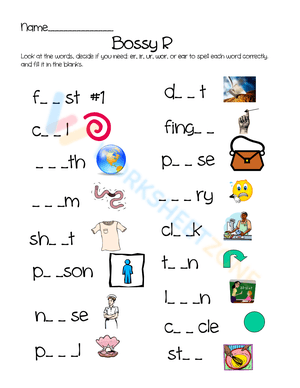
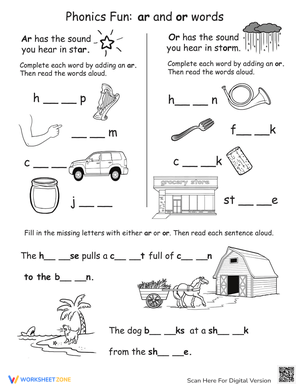
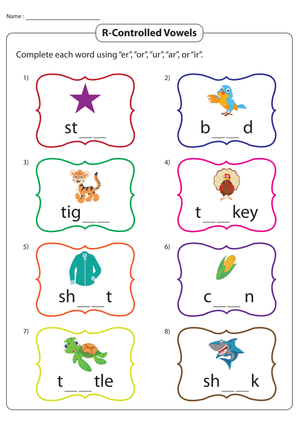
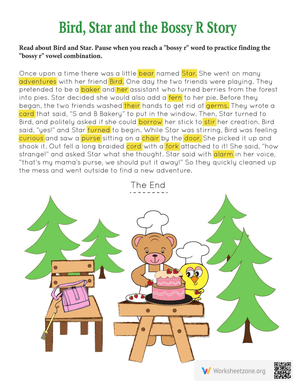
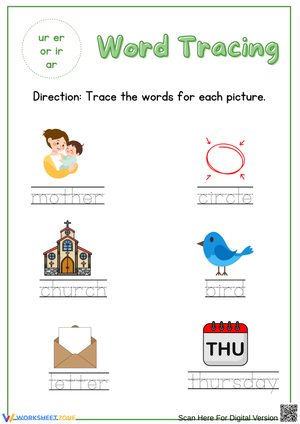
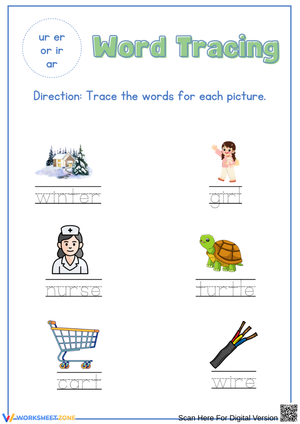
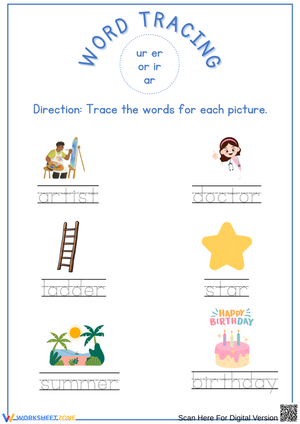
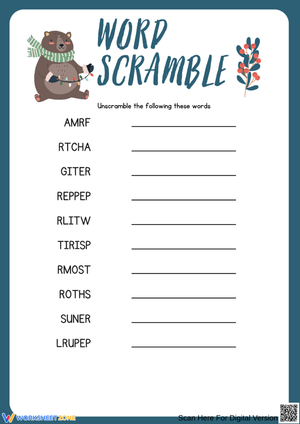
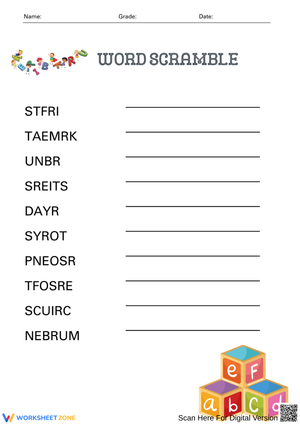
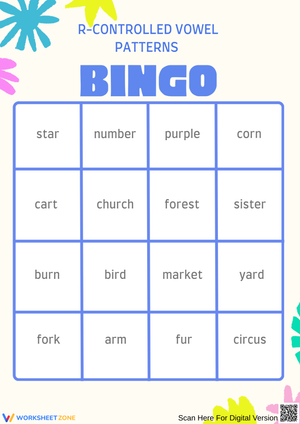
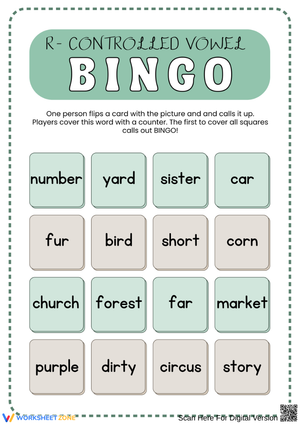
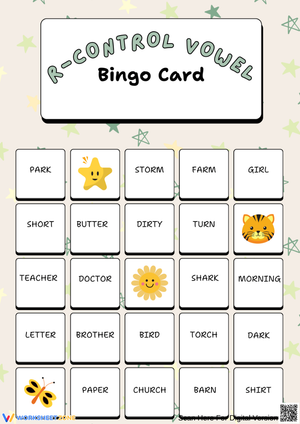
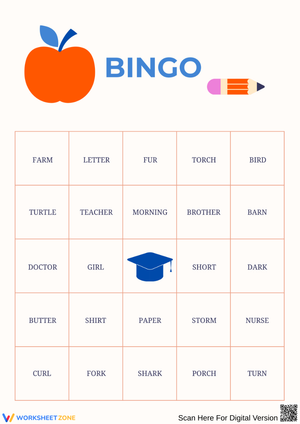
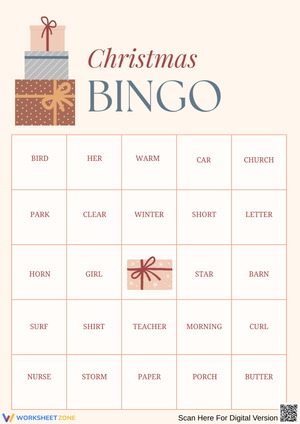
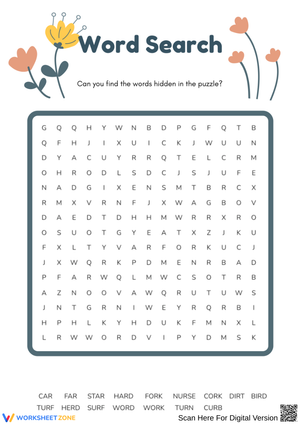
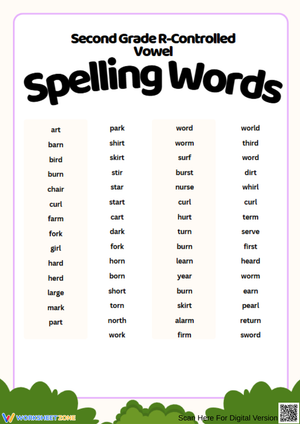
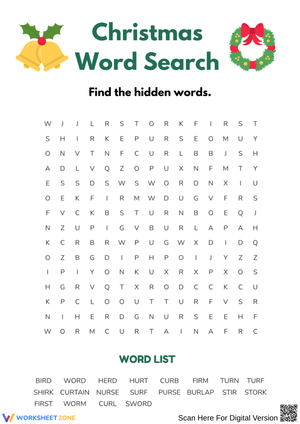
These r controlled vowels printable worksheets for 2nd grade give teachers a targeted set covering all five core patterns — ar, er, ir, or, and ur — right at the stage in second grade when students must move beyond simple CVC words and begin holding multi-pattern words together in their working memory. Each worksheet addresses a specific pattern or cluster, so teachers can sequence instruction deliberately or pull exactly what a small group needs without sorting through a packet.
The Specific Skills Targeted
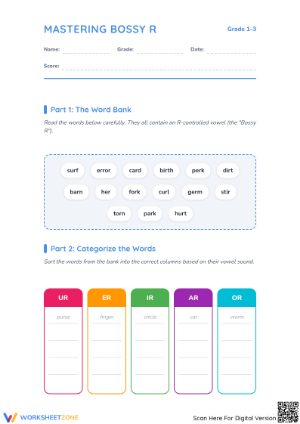
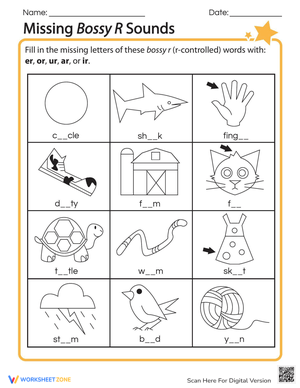
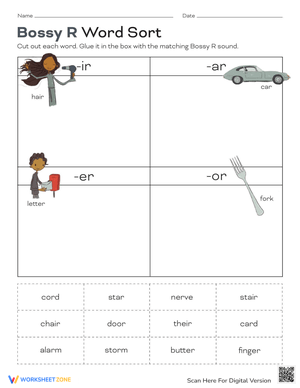
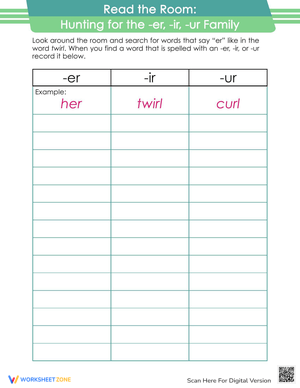
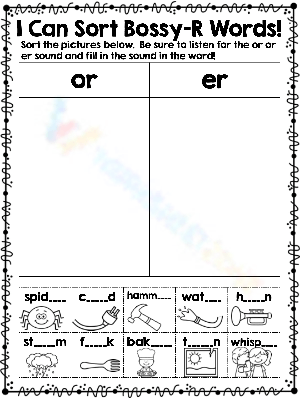
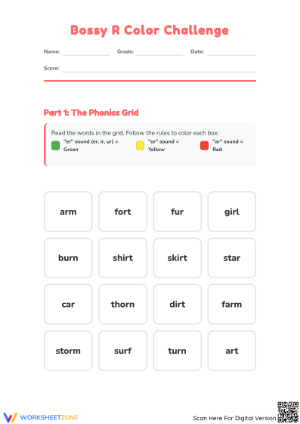
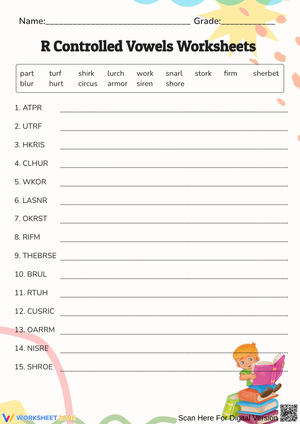
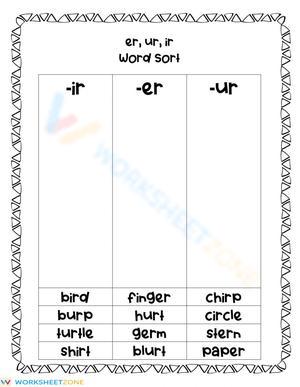
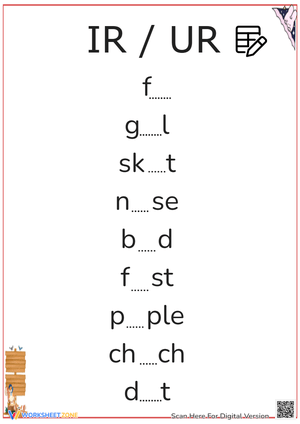
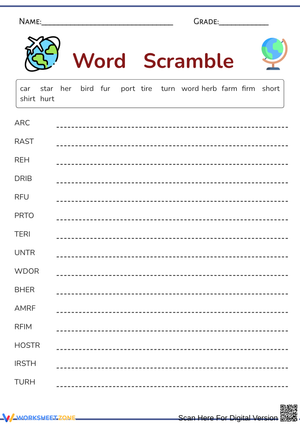
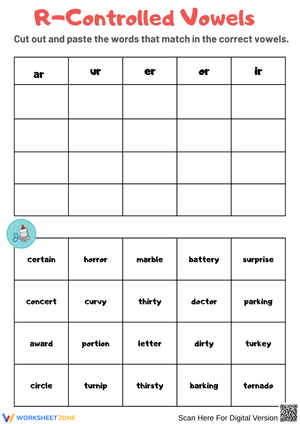
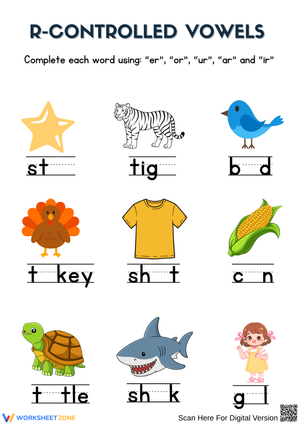
The set covers four distinct skill types: identification, sorting, spelling, and contextual application — and each does different cognitive work. Identification tasks ask students to mark or underline the r-controlled pattern within a word or sentence. Sorting tasks, which are especially effective for the er/ir/ur trio, train visual discrimination because phonemic awareness alone gives no signal when three patterns produce the exact same sound. Spelling tasks require production — writing words from memory or dictation — and context tasks ask students to select or complete sentences using a target word, connecting the phonics form to meaning rather than treating it as an isolated drill.
Several worksheets in the set target multisyllabic words — "surprise," "hamburger," "perfume" — where students underline the r-controlled syllable before attempting to read the full word. That step matters because a second grader who reads "car" correctly in isolation will sometimes miss the same /ar/ pattern buried inside "cardboard."
Mistakes Students Make That These Worksheets Surface
The er/ir/ur problem shows up in student writing constantly. Because all three patterns produce the same sound in standard American English, a student who reads "bird" correctly will still write it as berd or burd on an unguided spelling task. The same students often write skert for "skirt" or firn for "fern." The confusion runs both directions — whichever pattern a student learned most recently tends to intrude on the others. These worksheets address this by putting all three patterns on the same sorting task, forcing direct comparison rather than practicing one pattern in isolation, which fixes the problem temporarily without building lasting discrimination.
A subtler error surfaces with ar: some second graders over-apply the pattern and spell "work" as wark or "world" as warld. The or in those words behaves differently because of the preceding w, but students mid-unit on ar hear a similar vowel quality and reach for the familiar spelling. That error is systematic, not random, and it resolves as students build enough or and word-family exposure to create a competing representation.
How to Build These Worksheets Into Your Literacy Block
The most productive placement is small-group differentiated reading time, not whole-class work. Because second graders arrive in September with very different phonics backgrounds, sending an er/ir/ur sorting worksheet home as uniform homework means some students complete it effortlessly while others have no strategy and guess randomly. Using each worksheet during a 15-to-20-minute small-group rotation lets teachers observe student thinking in real time — which column a student hesitates over before placing a word tells you more than a completed sheet reviewed the next morning.
For teachers running literacy centers, r controlled vowels printable worksheets for 2nd grade work well in a write-and-wipe sleeve: slide the worksheet into a clear plastic pocket, give students a dry-erase marker, and the same resource cycles through multiple groups across the week. The Monday introduction stays whole-class — go through the target pattern at the board, build a few words with letter tiles, get the sound in the room before any student sees the worksheet. The worksheet follows mid-week as structured independent practice, and Friday's small group becomes the check-in where you catch any confusion before it hardens.
Standard Alignment
These worksheets address CCSS.ELA-Literacy.RF.2.3, specifically sub-standard RF.2.3b: know spelling-sound correspondences for additional common vowel teams. R-controlled patterns fit squarely in that category — each pair is a two-grapheme unit that produces a predictable sound outside the short/long vowel system students built in kindergarten and first grade. The standard appears in second grade because the Common Core sequence uses K–1 to establish short and long vowel fluency; by second grade, students have the vowel baseline needed to recognize what the r is doing to the preceding vowel. These worksheets fit the explicit, systematic phonics instruction RF.2.3 expects, and completed sets give teachers documentation of pattern-level mastery to reference at parent conferences or IEP meetings.
Differentiating the Set for a Range of Learners
Students still working on basic short-vowel decoding should start with the ar and or worksheets only. Both patterns have acoustically distinct sounds — /ar/ in "barn" sounds nothing like short a, and students accept the new sound without much friction. The er/ir/ur worksheets assume a student can already read the words correctly; the challenge is spelling and pattern recognition, not decoding. Sending a struggling reader into an er/ir/ur sorting task before they've encountered those words many times in context sets them up for guessing, not learning.
On the other end, second graders who have already internalized all five patterns get the most from multisyllabic application worksheets. Ask these students to complete the worksheet and then write two additional example words of their own in each column — that transfer step reveals whether a student has genuinely internalized a pattern or simply memorized the worksheet words. For this group, r controlled vowels printable worksheets for 2nd grade function less as new instruction than as a vehicle for extending word knowledge into longer, less familiar vocabulary like "circular," "northern," and "purchase."
Frequently Asked Questions
Why do er, ir, and ur cause more problems than ar and or?
Because they sound identical in most American English dialects. A student sounding out "bird" gets the correct pronunciation no matter which spelling they try — berd, burd, and bird all produce the same phoneme string when read aloud. That means phonemic awareness cannot guide spelling here; students need visual memory and word-specific knowledge accumulated through repeated reading and writing. Sorting tasks and frequency-based word walls, organized separately for er, ir, and ur, build the visual anchors that eventually make the distinctions automatic.
Is there a recommended order for introducing these five patterns?
Introduce ar first, then or. Both have sounds students haven't encountered in other vowel patterns, so there's little interference. Then introduce er alone, build a core word bank — her, fern, water, under — before moving to ir and ur. Jumping to all three simultaneously is where most second graders lose the thread. Each pattern needs enough practice words behind it to feel like a real category, not just a spelling option among equals.
How do these worksheets work as formative assessment?
A completed sorting worksheet is a fast diagnostic. If a student consistently places ir words in the er column, the error is pattern-specific and points to a narrow fix. If words land randomly across all three columns, the student hasn't internalized any of the trio and needs direct instruction before more independent practice helps. Keeping a week of completed worksheets for a target student tells a cleaner story than an oral quiz — you can see exactly which pattern the confusion clusters around. The r controlled vowels printable worksheets for 2nd grade in this set make those patterns easy to isolate because each worksheet keeps target items clearly separated rather than buried in undifferentiated mixed practice.