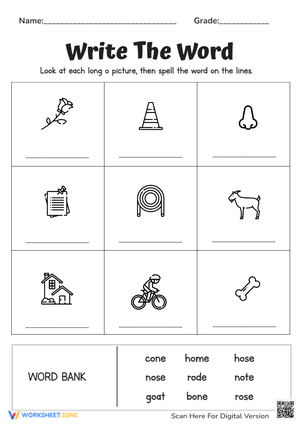
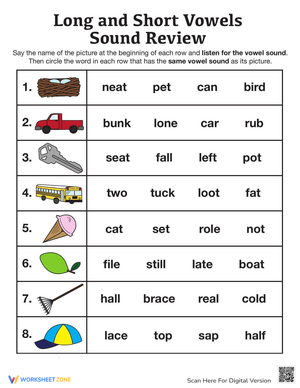
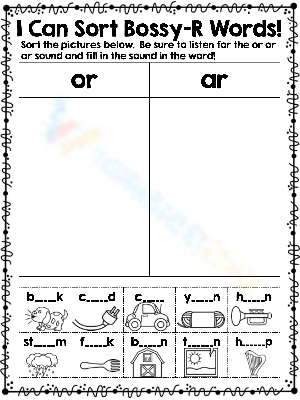
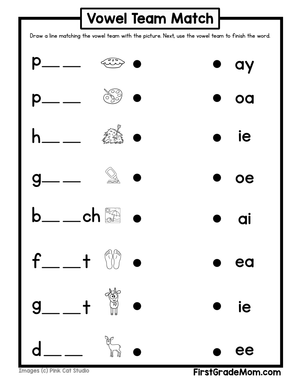
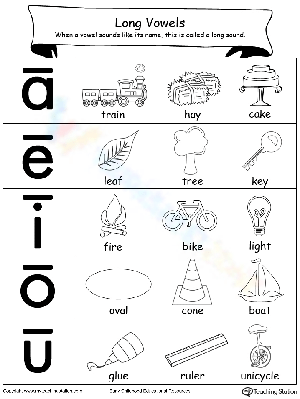
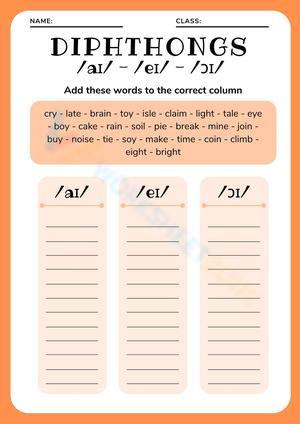
These letter sounds printable worksheets for 2nd grade target the phonics patterns second graders most commonly carry forward from first grade only half-mastered — digraphs, r-controlled vowels, vowel teams, and consonant blends that blur under reading pressure. The set gives teachers focused, low-prep practice tools that fit inside the pockets of a real school week.
Skills These Worksheets Build
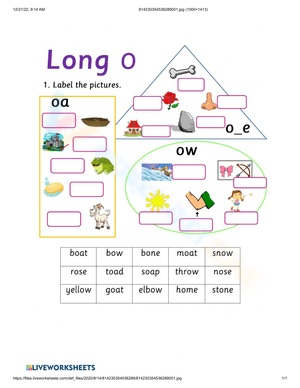
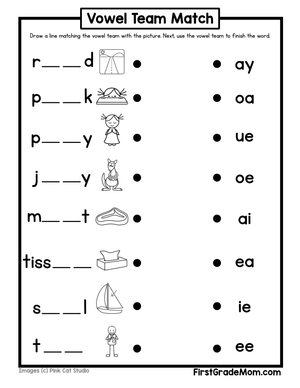
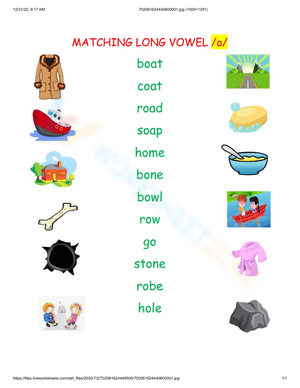
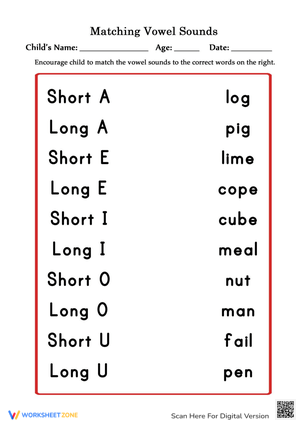
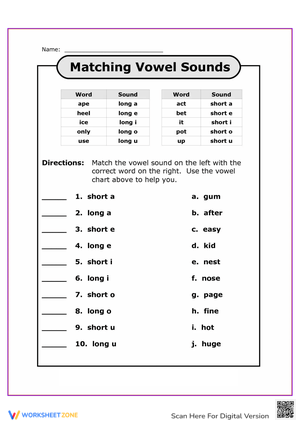
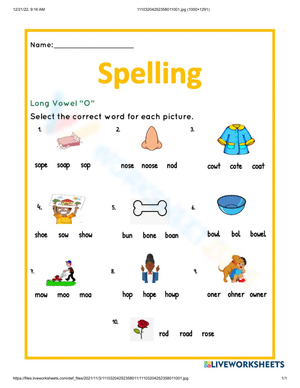
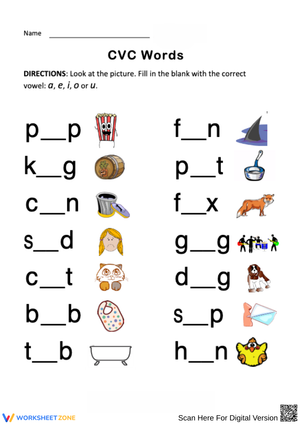
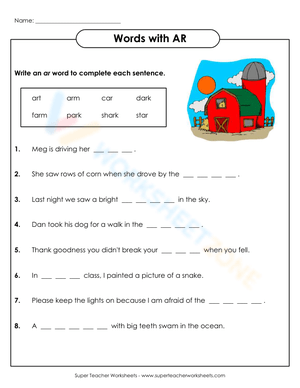
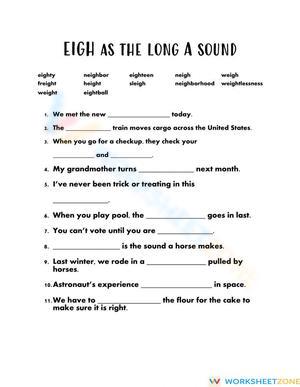
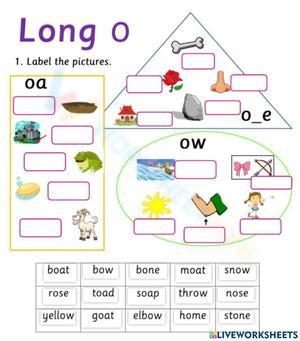
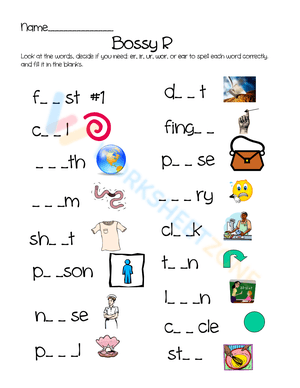
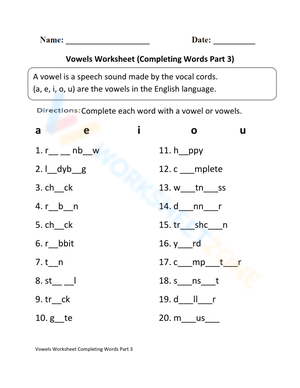
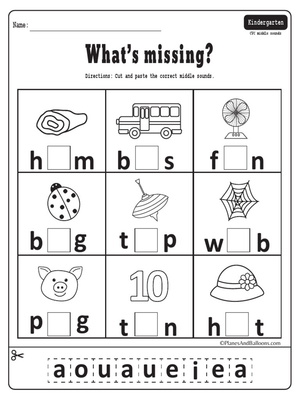
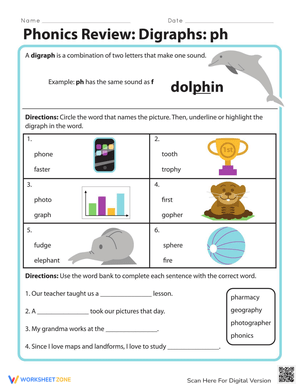
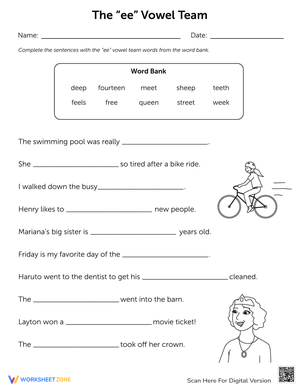
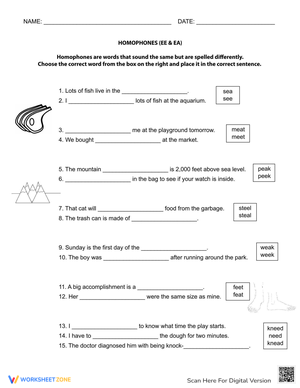
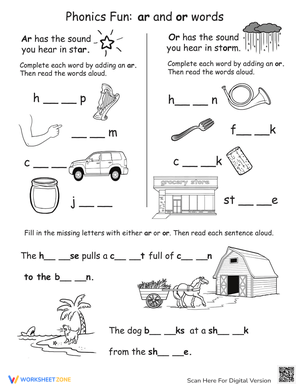
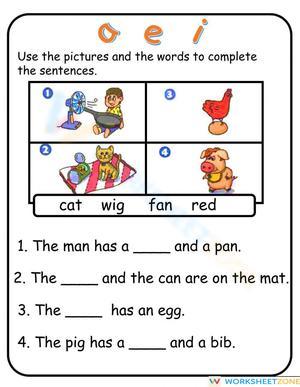
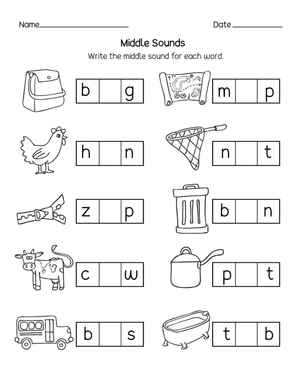
Each worksheet focuses on one phonics pattern at a time. Across the set, students work with short and long vowel contrasts, the five r-controlled vowel patterns (ar, er, ir, or, ur), digraphs (sh, ch, th, wh, ph), common vowel teams (ai, ay, ea, ee, oa, ow), and the most frequent consonant blends. Task formats rotate across individual worksheets: students underline the target pattern inside a word list, sort words into labeled columns by sound, fill in missing letters, match sounds to pictures, and complete sentence frames where they write a full word after its sounds are called out in sequence. Alternating between recognition tasks and production tasks is intentional — students who can pick out "oa" in a printed list will sometimes miss it entirely when trying to spell boat from scratch, and that gap is worth catching early.
Where These Worksheets Fit in an Actual School Week
The most consistent use is the first five to eight minutes of a literacy block — not a long warm-up, just one worksheet as a quick activation before the day's reading. After a weekend, students who seemed solid on vowel teams Friday will show visible hesitation Monday morning; a targeted worksheet reactivates what they knew without pulling time from core reading. The other natural slot is small-group rotation. When one group meets with the teacher for guided reading, a second group works independently on letter sounds printable worksheets for 2nd grade matched to the pattern that group is consolidating. That keeps independent practice purposeful rather than filler.
Whole-class use works best when introducing a new pattern. Running a digraph worksheet together lets the teacher model thinking aloud — "two letters, one sound" — before students work on their own. It also surfaces quick misconceptions that would take two weeks to catch if students only practiced independently.
Mistakes Students Make That These Worksheets Help You Catch
The most persistent error at this grade level is r-controlled vowel confusion. Students who correctly spell car will write berd for bird and werm for worm — they hear the same muddled vowel sound in all three words but don't yet know that ir, er, and ur are distinct spellings for what sounds nearly identical in speech. These worksheets surface that confusion because the sorting tasks force commitment: this word belongs in the "ir" column, not the "er" column. When you look at completed worksheets after small group, the column where students consistently place wrong words tells you exactly which r-controlled spelling hasn't been internalized yet.
Digraph errors follow a different pattern. The ch/sh confusion is common — students write chip for ship — but the trickier slip involves wh. Many second graders spell when as wen because in several regional dialects the /wh/ distinction has collapsed entirely. That's not a decoding failure; it's an orthographic memory gap. The worksheets flag it. The follow-up conversation with a student clarifies what kind of instruction is actually needed.
Standard Alignment
These worksheets align with CCSS.ELA-LITERACY.RF.2.3, which requires second graders to know and apply grade-level phonics and word analysis skills when decoding words. Sub-standards addressed include RF.2.3.a (distinguishing long and short vowels in regularly spelled one-syllable words), RF.2.3.b (knowing spelling-sound correspondences for additional common vowel teams), and RF.2.3.c (decoding regularly spelled two-syllable words with long vowels). In classroom terms, RF.2.3 grounds small-group phonics instruction for most of the year and feeds directly into RF.2.4, the fluency standard — automaticity with letter-sound patterns is what allows reading rate and expression to develop.
Adjusting the Set for a Range of Learners
For students still consolidating CVC patterns, the short-vowel contrast worksheets work well as standalone practice before any vowel team material enters the picture. The sorting format helps these students because the column structure does the organizational work while they focus on the sound itself. Resist giving these students worksheets pulled from a lower-grade set — the second-grade vocabulary in the word lists keeps the content age-appropriate even when the phonics target is foundational.
Students reading comfortably at or above grade level can use letter sounds printable worksheets for 2nd grade as timed fluency sprints — how quickly can they sort the full word list accurately? — or as peer-teaching tools during partner stations. Pairing a confident reader with a student still building automaticity creates a low-stakes review for both. The fluent reader reinforces the pattern through explanation; the emerging reader hears a peer work through the same task out loud. Both students benefit more than either would from silent independent work.
Frequently Asked Questions
These worksheets cover digraphs and vowel teams. Are they appropriate for students who haven't finished CVC work yet?
The short-vowel worksheets in the set work independently from the vowel team and digraph worksheets, so a student still building CVC automaticity starts there. Once short vowels are solid, digraphs are typically the logical next move — a student who can blend /c/ + /a/ + /t/ is ready to treat the two letters in "sh" as a single unit.
How long should one worksheet take to complete?
Most second graders finish in 8 to 12 minutes. If a student is taking noticeably longer on a pattern you expected them to know, treat it as data. Slow completion usually signals the student is applying a rule consciously rather than automatically — which means the pattern needs more distributed practice across several days, not one longer sitting.
Can completed worksheets be used as assessment, or are they only for practice?
Letter sounds printable worksheets for 2nd grade aren't formal scored assessments, but completed work functions as useful informal evidence when reviewed after small group. The sorting and fill-in tasks show exactly which words — and therefore which spelling patterns — tripped each student. That information is often more diagnostic than a brief oral fluency check, because the written record lets you compare across students and across time.
What if a student sorts words correctly on the worksheet but still stumbles on the same pattern in a book?
That transfer gap is the most important follow-up question in phonics instruction. A student who correctly sorts "oa" words but still pauses on boat mid-sentence is showing that isolated practice hasn't reached automatic application yet. That student needs the same pattern practiced in connected text — reading decodable books or passages that contain the target words — not more time on standalone worksheets.












 Interactive Worksheet Maker
 Quiz Maker
 Word Search Maker
 Crossword Puzzle Maker
 Word Scramble Generator
 Sentence Scramble Generator
 Handwriting Worksheet Generator
 Name Tracing Generator
 Fill In The Blank Generator