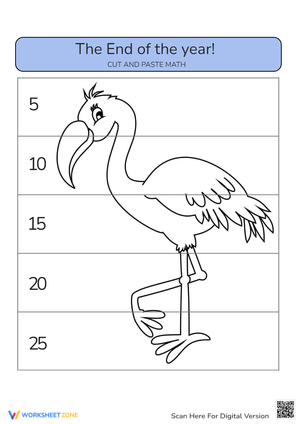
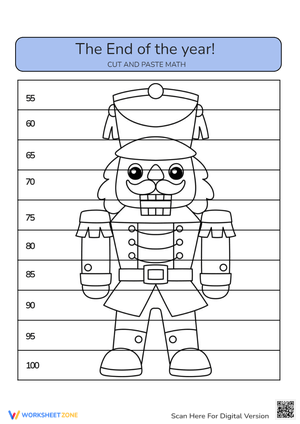
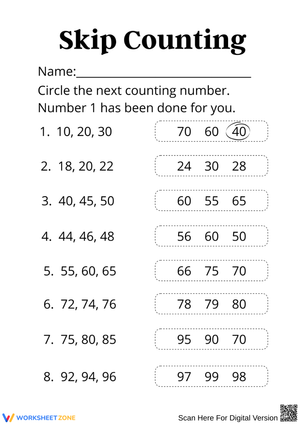
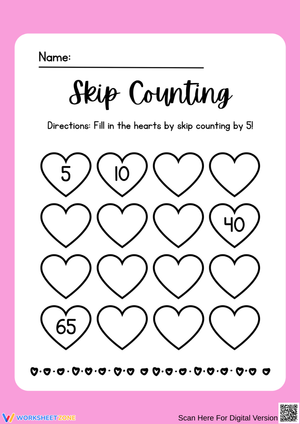
These 1st grade by 5 printable worksheets sets give teachers a focused, low-prep way to build one of Grade 1's most reliable number patterns into daily math time. Each worksheet keeps the task narrow — extend, write, or complete sequences that increase by five — so students get clear practice rather than scattered exposure.
What Each Worksheet Targets
When teachers pull from a 1st grade by 5 printable worksheets collection, the skills stay tightly focused on counting by 5s — but each worksheet approaches that pattern from a different angle. That variety matters because a student who can chant 5, 10, 15, 20 in chorus may still stumble when the sequence appears in writing or starts at a non-zero multiple.
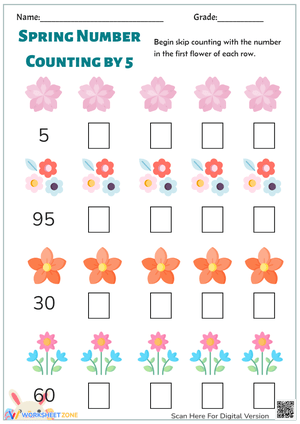
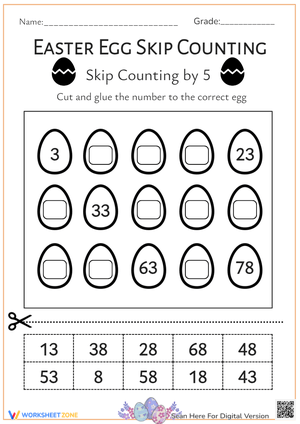
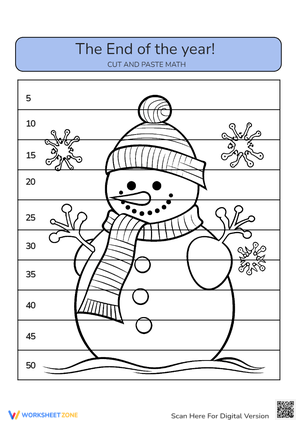
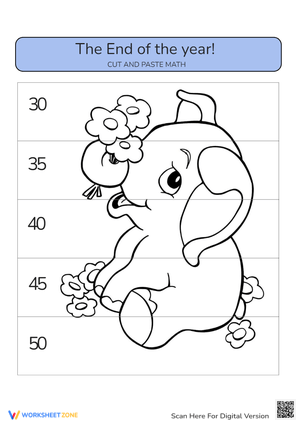
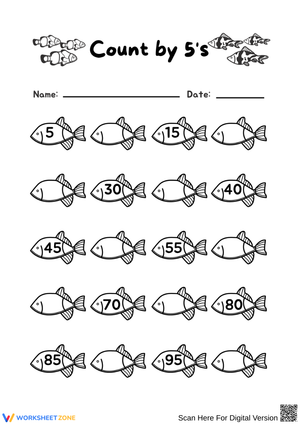
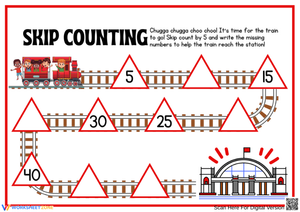
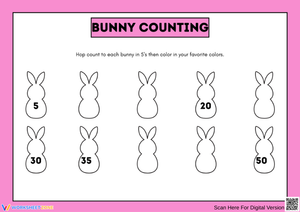
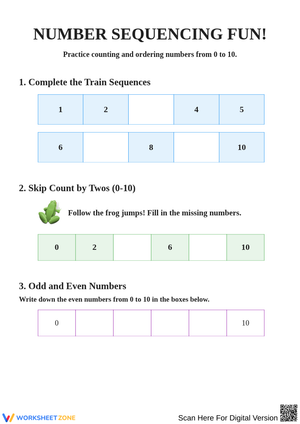
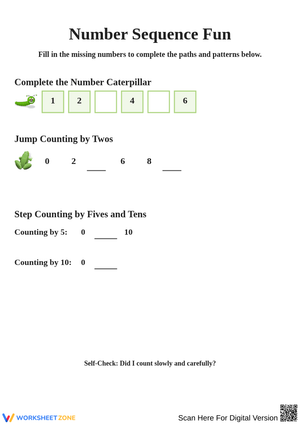
- Fill-in-the-blank sequences: Students complete rows like 5, 10, __, 20, __ to check whether they can extend the count without a full visual model in front of them.
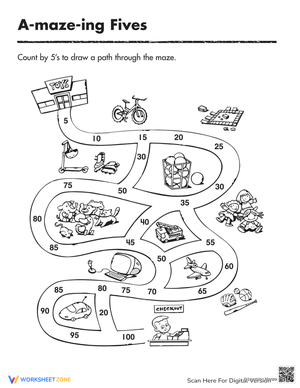
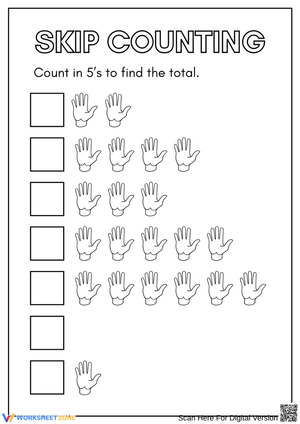
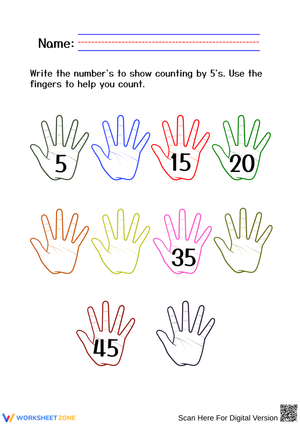
- Grouped object counting: Hands, stars, or sets of five counters connect each jump in the sequence to a concrete quantity students can see.
- Hundred-chart work: Students circle or shade every fifth number, making the repeating pattern visible across the full range at once.
- Trace-and-write rows: Early in the unit, traced numerals reduce motor and recall demands so students can concentrate on the pattern itself.
- Open sequences with non-standard start points: Sequences beginning at 15, 25, or 40 reveal whether students understand the rule or have only memorized a fixed chant that always starts at five.
Why This Skill Arrives in Grade 1
Formal skip counting by 5s sits at Grade 2 in the CCSS (standard 2.NBT.A.2), but Grade 1 teachers introduce it because the pattern is already embedded in a Grade 1 standard: 1.MD.B.3 asks students to read analog clock faces, where each tick mark represents five minutes. A student who cannot count by 5s cannot read a clock. That makes this skill a functional necessity in Grade 1, not an optional preview of 2nd-grade content.
There is also a fluency argument for starting early. Students who internalize by-5 counting before Grade 2 arrive at multiplication benchmarks faster, because they have already worked with the idea that equal groups produce predictable, uniform jumps. A worksheet that asks students to write those jumps — not just recite them — builds that understanding more durably than oral practice alone.
Mistakes Students Make That These Worksheets Help Surface
The most common error is oral-to-written collapse: a student recites the sequence correctly during morning circle, then writes 5, 10, 14, 20 on the worksheet. While putting numbers on paper, they counted forward by ones from 10 instead of adding five — they stopped trusting the chant and fell back on the procedure they know best. Seeing that specific pattern in written work tells you immediately who still needs hands-on work with grouped objects before returning to the page.
A second error shows up when sequences start mid-pattern. Present a row that begins at 15, and many students write 16, 17, 18 — because their oral chant always starts at five, and any other entry point breaks the cue they rely on. A third misconception is subtler: students confuse "numbers that increase by 5" with "numbers that contain the digit 5," producing strings like 5, 15, 25, 50, 51, 55. They correctly identify fives digits but miss the uniform-interval rule entirely. That error is nearly impossible to catch without a worksheet that exposes the full sequence in writing.
Building These Worksheets Into Your Teaching Routine
The most reliable slot is the five to eight minutes directly after morning meeting — students are settled, the skill is brief enough to finish before the reading block begins, and any errors you spot become the teaching point for math time later that morning. Keep a small stack in the morning work folder and rotate formats across the week so no two days look identical.
For math centers, slip each worksheet into a plastic sleeve and set out dry-erase markers. Students attempt the sequence, check it against a posted hundred chart, and erase before the next partner uses the same page. That stretches your print supply and lowers the stakes for students who freeze when writing directly on paper. During small-group instruction, use one worksheet format with an oral rehearsal step: read each number in the sequence together before asking students to write it independently. That brief shared read helps students who carry the pattern in working memory but lose it the moment they switch to writing mode.
Standard Alignment
The direct Grade 1 connection is CCSS 1.MD.B.3, which requires students to tell and write time using analog and digital clocks. Reading an analog clock face demands exactly this skill — counting by 5s across 12 positions. The broader target these worksheets build toward is CCSS 2.NBT.A.2, which formally requires skip counting by 5s, 10s, and 100s within 1,000. Grade 1 instruction on this pattern is explicitly preparatory: students arrive at 2nd grade with the sequence already anchored rather than encountering it as new content.
Tailoring Each Worksheet for a Range of Learners
The most practical adjustment is the visual support level. Students new to the pattern need each number paired with a grouped picture — five hands, five dots, five counters. Students who have heard the chant and can continue it aloud but falter in writing do better with a partial sequence where every other number is provided. Students ready for a greater challenge work with sequences that start at unfamiliar multiples or extend past 100.
For students who need extra support, keep a reference strip showing multiples of 5 from 5 to 100 at their workspace. That strip reduces memory load so students can focus on applying the rule rather than retrieving the sequence from scratch. For students who move quickly through the pattern, asking them to generate their own sequence from any starting multiple they choose turns the worksheet into a generative task rather than a completion task.
One honest tradeoff worth naming: students whose numeral formation is still inconsistent sometimes produce written work that looks like pattern errors but is actually a handwriting problem. A 30-second verbal check — "tell me what number goes here" — separates the two before you make instructional decisions based on written output alone. These 1st grade by 5 printable worksheets pages work best when you pair written work with that kind of brief oral confirmation for students whose written numerals are still unreliable.
Frequently Asked Questions
What should students know before working on these worksheets independently?
Students should count forward fluently from any number within 30 and recognize written numerals up to at least 50. Exposure to physical groups of five — counting fingers on hands, sorting five-counter sets — before the first worksheet helps students connect the written sequence to something they can see and touch.
How do I handle a class split between students who already know the pattern and those who have never seen it?
Run different worksheet formats simultaneously rather than different content. Students who need full visual support use the grouped-object version; students who are ready for open sequences use the fill-in-the-blank or chart version. Everyone practices by-5 counting, and the class can debrief together because the pattern itself is the same. With 1st grade by 5 printable worksheets options at varied support levels on hand, that parallel practice takes very little extra setup.
Can these worksheets function as a formative assessment?
Yes — but only if you track the type of error, not just whether an answer is right or wrong. Note whether a student's mistake appears at the same position in every sequence (a working-memory ceiling), only when sequences start at non-standard multiples (a flexibility gap), or consistently past a specific number (a recall limit). That breakdown points to an instructional next step. A raw score alone does not.
What if counting by 5s is already too easy for some students?
The standard fill-in-the-blank format will be too easy for students who have already internalized the pattern. Move them to sequences that begin at 35 or 70, extend past 100, or run backward from 100 to 5. Any of those structures pushes toward flexibility rather than rote recall and keeps the work genuinely productive.













 Interactive Worksheet Maker
 Quiz Maker
 Word Search Maker
 Crossword Puzzle Maker
 Word Scramble Generator
 Sentence Scramble Generator
 Handwriting Worksheet Generator
 Name Tracing Generator
 Fill In The Blank Generator