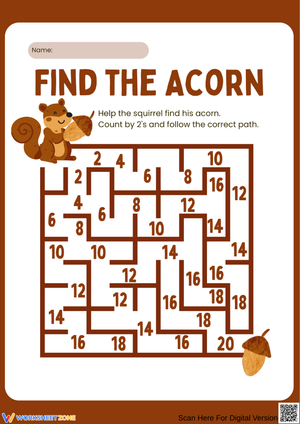
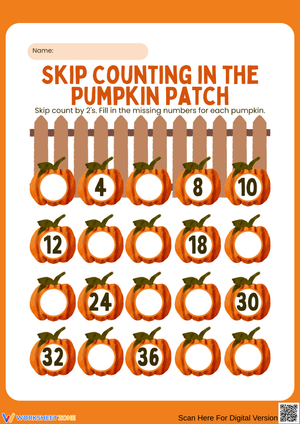
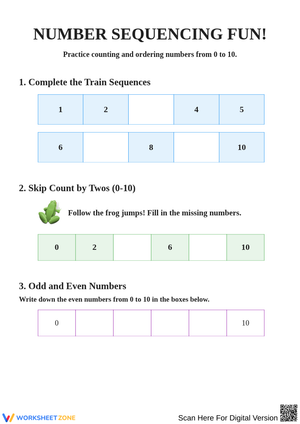
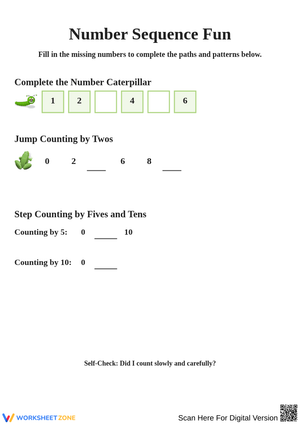
These 1st grade by 2 worksheets resources give teachers a ready-to-use set of structured practice materials built around one of the most important early number skills: counting forward by twos. The set includes multiple worksheet formats — fill-in-the-blank sequences, number-line hops, hundreds-chart color tasks, and connect-the-dot puzzles — so students encounter the same skill through genuinely different activities rather than cycling through one exercise type repeatedly.
The Specific Skills These Worksheets Build
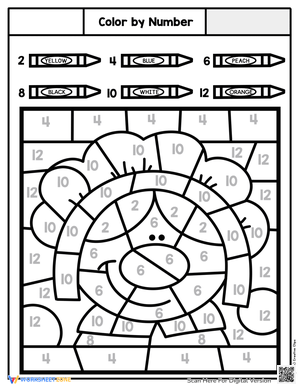
Each worksheet targets skip counting by 2s from a different angle. Across the set, students:
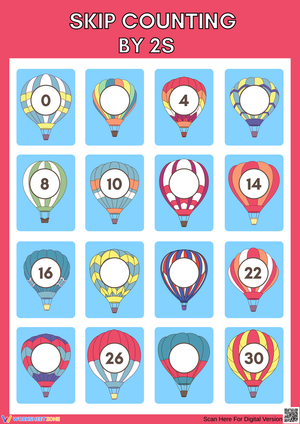
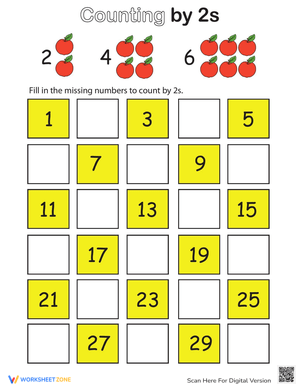
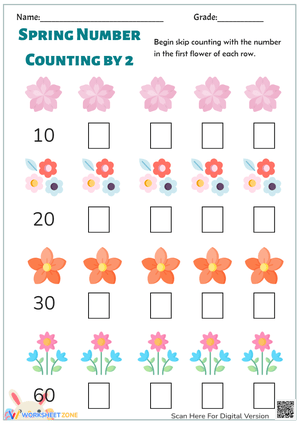
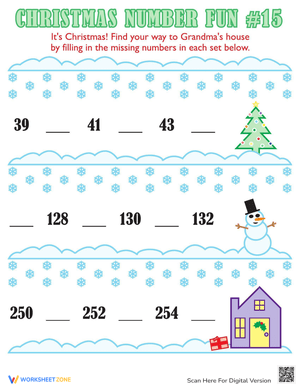
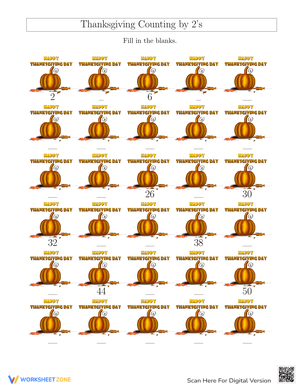
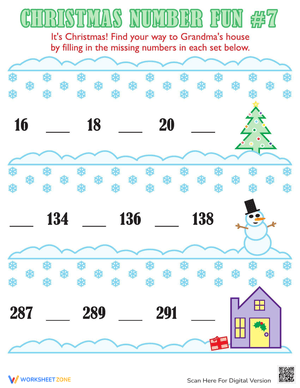
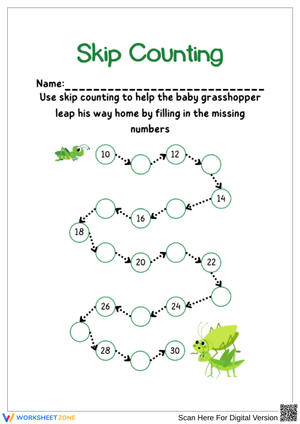
- Complete fill-in-the-blank sequences — supply missing numbers inside partial skip-count chains, with no visual aid. Chain lengths and starting positions vary, so students can't lean on pure memorization of a single fixed list.
- Mark number-line hops — draw jumps of two on a pre-printed number line, connecting the physical gesture of skipping a number to the idea of adding two each time.
- Color hundreds-chart patterns — circle or shade every other number on a full 1–100 grid, revealing the diagonal stripe of even numbers that makes the pattern genuinely memorable.
- Solve connect-the-dot pictures — link numbered dots in skip-counting order to uncover a hidden image. A misplaced number breaks the picture, giving students immediate, self-correcting feedback without teacher involvement.
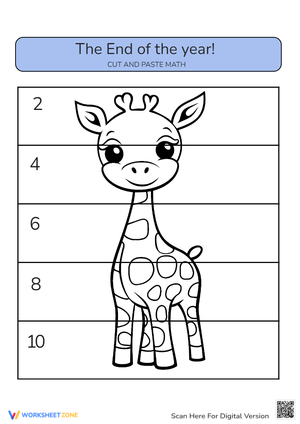
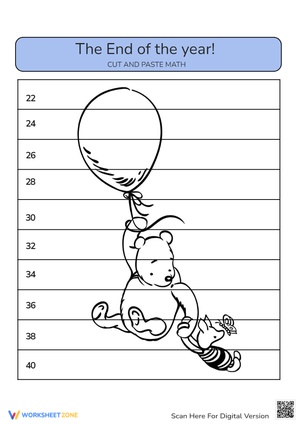
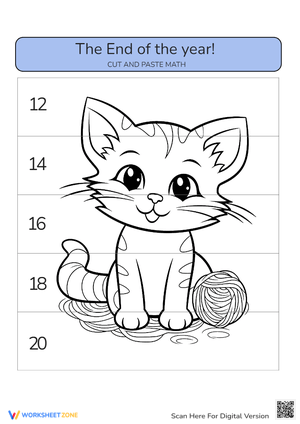
- Arrange cut-and-paste sequences — sort scrambled even numbers into correct order, combining fine motor work with the counting chain.
Why Counting by Twos Belongs in the First-Grade Math Block
First graders sit at a specific cognitive threshold: they've just stabilized counting by ones to at least 100, and the curriculum now asks them to hold a new counting rule — add 2, not 1 — without losing their footing on the number sequence itself. That's a meaningful lift. The variety of formats in this set mirrors the concrete-to-representational-to-abstract progression that early numeracy research supports. Students who group physical objects into pairs before touching any worksheet complete the hundreds-chart tasks faster and with fewer reversals, because the diagonal stripe on the chart matches the pairing they already did at their desks. The visual moment of recognition is real, and it's worth building toward deliberately.
The longer payoff matters too. A first grader who sees that counting by twos always produces the same list — 2, 4, 6, 8, and so on — is encountering repeated addition for the first time, even if no one has used that phrase yet. That intuition reappears in the third-grade multiplication table for 2s, and the students who built it early are the ones who recognize it immediately rather than starting from scratch.
Student Errors Worth Anticipating Before You Teach This
The most persistent mistake isn't where you'd expect it. Students who chant "2, 4, 6, 8, 10" without hesitation will still write "13" inside a fill-in-the-blank sequence the moment they lose their rhythm — they slide back into counting by ones under the light pressure of a pencil-and-paper format. These errors cluster predictably at decade crossings: 10→12 and 18→20 trip up more students than any other transition in the chain, because crossing into a new decade feels like a reset and students second-guess the rule.
A second pattern appears on number-line worksheets. Some students land on the very next tick mark rather than skipping one, reading the hop direction as "move one space forward" instead of "jump two apart." Having students place a finger on the starting number, lift it over one notch, and land — before picking up a pencil — eliminates most of these errors at the source rather than after they've been practiced and reinforced.
Standard Alignment
CCSS.MATH.CONTENT.1.OA.C.5 asks students to relate counting to addition and subtraction, and skip counting by 2s is one of the clearest classroom demonstrations of what that standard looks like in practice. A student who recognizes the sequence 2, 4, 6, 8 as repeated addition of two is doing the algebraic reasoning the standard targets — even if neither student nor teacher names it that way during the lesson. The hundreds-chart tasks also address CCSS.MATH.CONTENT.1.NBT.A.1, which extends the counting sequence well past 20; shading the even numbers on a full 100-grid requires students to read and place numbers in every decade from 10 to 100, not just the familiar low numbers they've already practiced most.
How to Work These Worksheets Into Your Week
A 1st grade by 2 worksheets fits best in short, focused slots rather than extended independent blocks. The fill-in-the-blank sequences are right-sized for the eight minutes before students line up for specials — low prep, quick to correct, and cognitively engaging enough to hold early finishers. The connect-the-dot and cut-and-paste worksheets belong in math centers, where students have time to work through the task at their own pace without needing direct teacher supervision. Reserve the hundreds-chart tasks for whole-group or small-group time on days when you want to pause and explicitly name the even-number pattern — that visual moment lands best when a teacher is present to say, "Look at what just happened to the chart."
On Monday mornings after a weekend gap, a timed fill-in — students write as many correct numbers in the sequence as they can in 90 seconds — does double duty: it reactivates the chain and gives the teacher a fast read on who retained the pattern over the break. That data takes about two minutes to scan and tells you exactly who needs a pull-aside before the week's math block begins.
Adjusting the Worksheets for a Range of Learners
Students who are still consolidating counting by ones need a visual anchor before any sequence work. Pair those students with the hundreds-chart worksheet first and have them touch each skip with a finger before writing anything, so the pattern is seen and felt before it's recorded independently. For students who've already internalized the 2s chain, extend the challenge by having them complete fill-in-the-blank sequences that begin mid-stream — at 34 rather than 2, or running backward from 20 to 0. The worksheet format stays the same; the starting point changes the entire difficulty level. A 1st grade by 2 worksheets set used this way reaches a wider range of learners without requiring the teacher to print separate materials for different groups.
Frequently Asked Questions
What's the difference between skip counting by 2s and identifying even numbers?
They're related but distinct. Skip counting by 2s is a procedural action — reciting or writing a forward sequence by adding two each time. Identifying even numbers is conceptual recognition — understanding that a number ending in 0, 2, 4, 6, or 8 splits cleanly into two equal groups. Skip counting generates the list of even numbers, which is why most teachers pair the two ideas in first grade, but a student can move accurately through the sequence without yet being able to explain why those particular numbers qualify as "even."
How do I know when a student has genuinely mastered this skill rather than just memorized the chant?
Give a fill-in-the-blank chain that starts at 14, not at 2. A student who has internalized the pattern supplies the missing numbers without restarting from the beginning every time. A student who has only memorized the chant restarts each time and often loses count midway. That single diagnostic takes 90 seconds to administer and tells you more than a fully completed worksheet will.
How do these skip-counting worksheets connect to a first-grade addition unit?
A 1st grade by 2 worksheets used in the fall pays clear dividends in the spring addition unit. When students later encounter doubles-plus-one facts — 6 + 7, for example — pointing back to the skip-count chain and saying "you already know that 6 and 8 are two apart" gives students a concrete mental anchor. That familiarity reduces the cognitive load on new addition work and makes doubles facts faster to retrieve, because students recognize the two-apart gap rather than treating each fact as something entirely new.













 Interactive Worksheet Maker
 Quiz Maker
 Word Search Maker
 Crossword Puzzle Maker
 Word Scramble Generator
 Sentence Scramble Generator
 Handwriting Worksheet Generator
 Name Tracing Generator
 Fill In The Blank Generator