


























Views
Downloads
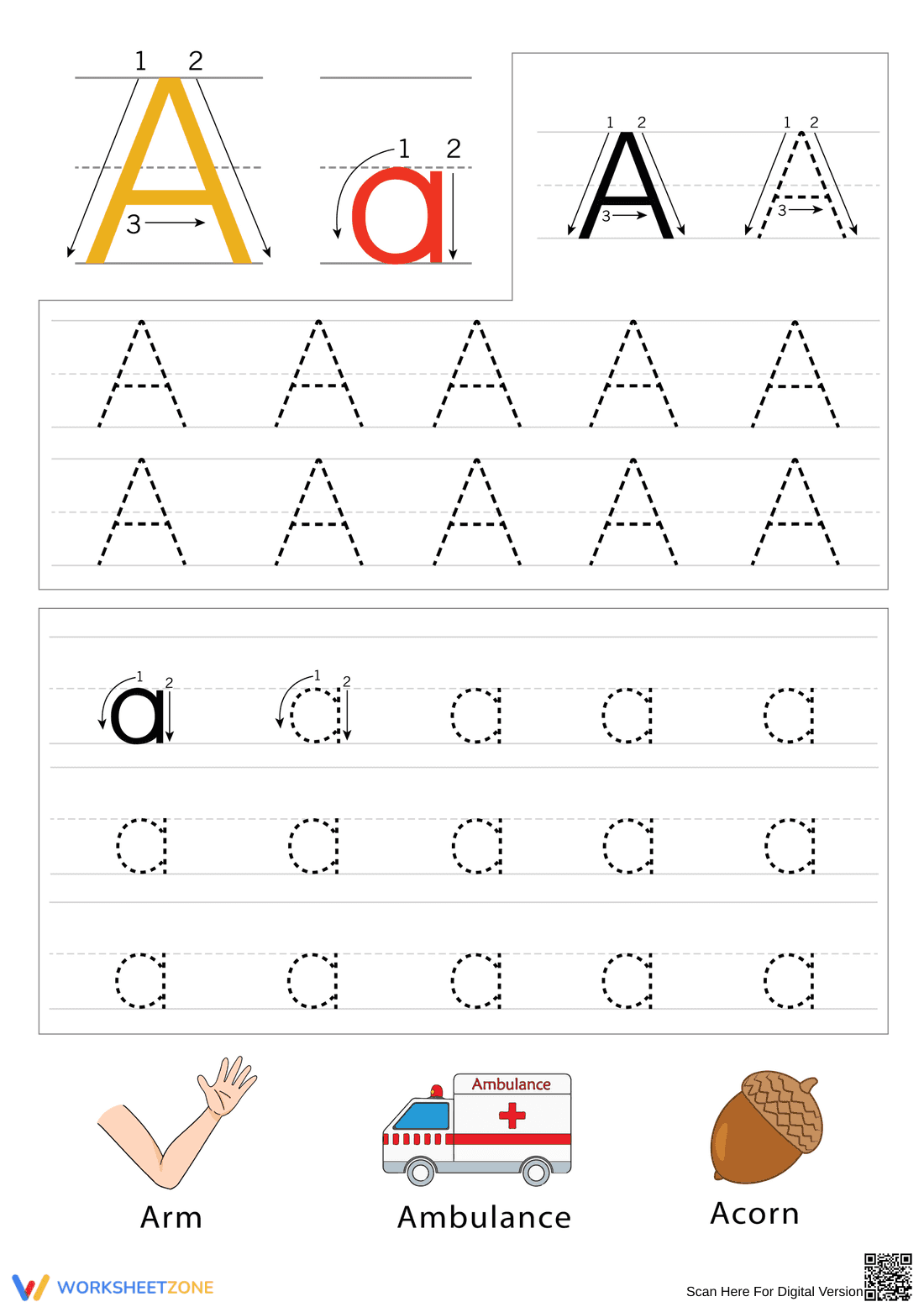

Letter A Tracing Practice | Essential Grade K-1 Worksheet
Paste this activity's link or code into your existing LMS (Google Classroom, Canvas, Teams, Schoology, Moodle, etc.).
Students can open and work on the activity right away, with no student login required.
You'll still be able to track student progress and results from your teacher account.
This Grade K-1 Letter A tracing worksheet provides foundational handwriting practice for early learners. Students master the formation of both uppercase and lowercase letters through guided stroke sequences. By connecting visual cues with motor skills, children build the muscle memory required for fluent writing and letter recognition.
At a Glance
- Grade: K-1 · Subject: English
- Standard:
CCSS.ELA-LITERACY.L.K.1.A— Print many upper- and lowercase letters accurately- Skill Focus: Letter A formation
- Format: 1 page · 25 problems · No-prep · PDF
- Best For: Morning work or literacy centers
- Time: 10–15 minutes
What's Inside
The worksheet features clear, numbered stroke diagrams for both capital 'A' and lowercase 'a'. It includes 10 uppercase tracing opportunities and 15 lowercase tracing tasks. At the bottom, three high-quality illustrations (arm, ambulance, acorn) reinforce phonemic awareness and letter-sound association. The layout is clean and distraction-free for young students.
Zero-Prep Workflow
This resource is designed for immediate classroom implementation. Teachers can print the single-page PDF in under 30 seconds. Distribution takes less than a minute, and because the stroke order is visually numbered, students can begin working independently without extensive verbal instructions. Total teacher preparation time is less than 2 minutes, making it an ideal sub plan addition.
Standards Alignment
This activity aligns with `CCSS.ELA-LITERACY.L.K.1.A`, which requires students to print many upper- and lowercase letters. It also supports phonological awareness by linking the letter shape to specific vocabulary words. Both standard codes can be copied directly into lesson plans, IEP goals, or district curriculum mapping tools.
How to Use It
Use this worksheet during the "You Do" phase of a handwriting lesson. It is ideal for morning work or as a quiet activity during literacy rotations. For a formative assessment, observe the student's grip and stroke directionality as they complete the first row. Completion typically takes 10 to 15 minutes depending on the student's fine motor development.
Who It's For
This resource is perfect for Kindergarten students beginning their alphabet journey and Grade 1 students needing remedial handwriting support. It pairs naturally with an alphabet anchor chart or a tactile sand-tracing activity to reinforce the letter's shape before moving to paper and pencil. It is also suitable for ESL/ELL students learning English orthography.
Research by Fisher & Frey (2014) emphasizes the importance of guided practice in the gradual release of responsibility model, particularly for foundational motor skills like handwriting. This worksheet applies these principles by providing 25 structured tracing tasks that align with CCSS.ELA-LITERACY.L.K.1.A. By integrating visual stroke guides with repetitive practice, the resource helps students transition from letter recognition to accurate production. Studies from the NAEP suggest that early mastery of letter formation is a strong predictor of later writing fluency and academic success. This printable tool offers a high-utility, evidence-based approach to early literacy, ensuring that students develop the precise motor control needed for legible writing. The inclusion of phonemic anchors like acorn and ambulance further strengthens the cognitive link between graphemes and phonemes, supporting comprehensive literacy development in early childhood settings. This resource provides a reliable bridge between initial instruction and independent mastery.


