


























Views
Downloads

Rainbow Fish Story Map: Printable Grade 1 Worksheet
Paste this activity's link or code into your existing LMS (Google Classroom, Canvas, Teams, Schoology, Moodle, etc.).
Students can open and work on the activity right away, with no student login required.
You'll still be able to track student progress and results from your teacher account.
This printable Grade 1 ELA worksheet helps young learners analyze story elements using the classic book, The Rainbow Fish. Students identify the main character, setting, problem, and solution, then write about friendship. This resource builds reading comprehension and narrative writing skills through structured, visual organizers.
At a Glance
- Grade: 1 · Subject: ELA
- Standard:
CCSS.ELA-LITERACY.RL.1.3— Describe characters, settings, and events in a story- Skill Focus: Story elements and writing
- Format: 3 pages · 3 activities · No answer key · PDF
- Best For: Post-reading comprehension check
- Time: 20–30 minutes
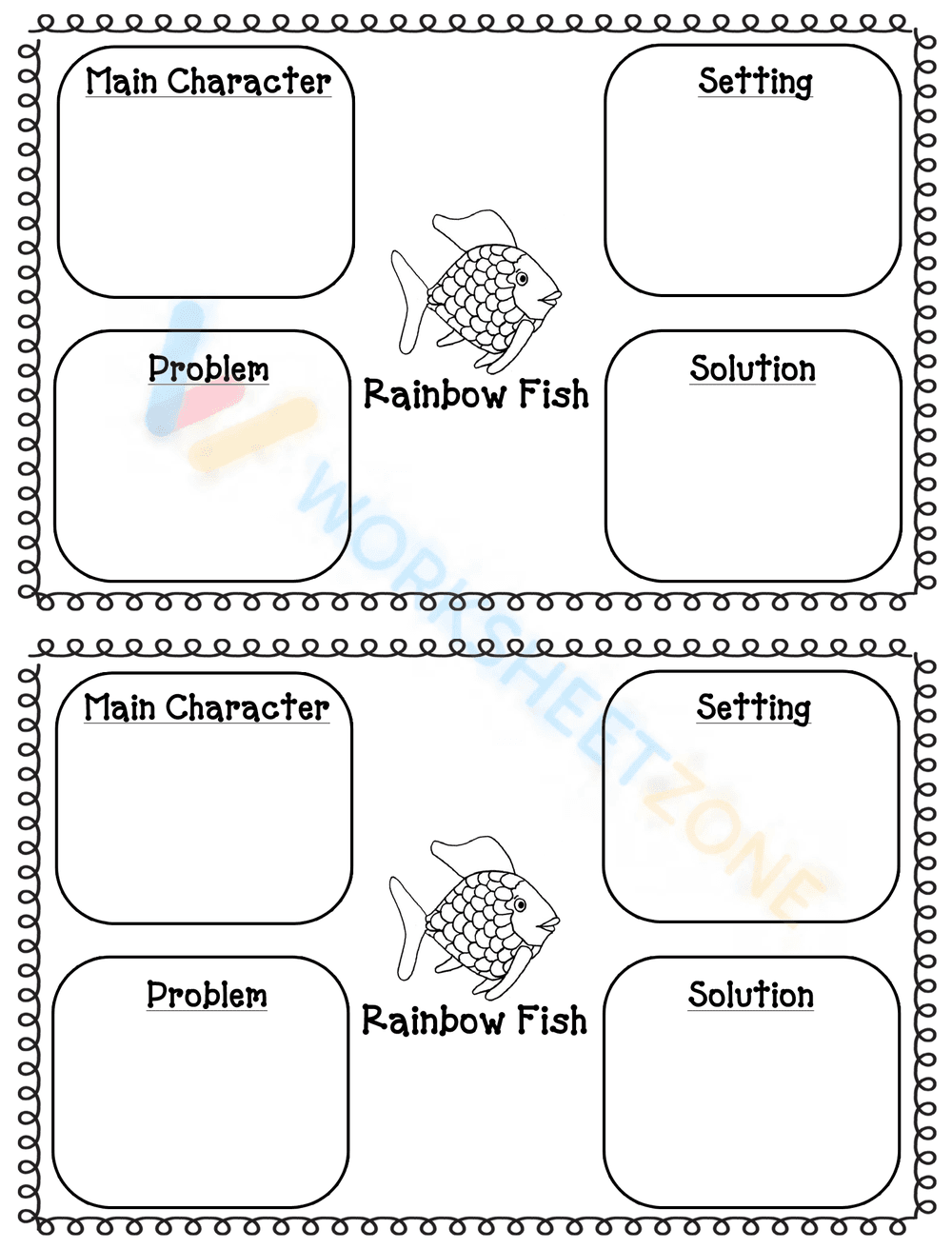
This packet contains three pages designed for early literacy. The first page features two half-sheet story maps for character, setting, problem, and solution. The second page provides two half-sheet writing prompts titled "A good friend" with primary writing lines. The final page is a full-sheet lined writing template featuring a Rainbow Fish illustration.
Zero-Prep Classroom Workflow
This resource requires under 2 minutes of teacher preparation. Follow these steps:
- Print (1 minute): Select the half-sheet story maps or the full-sheet writing page.
- Distribute (30 seconds): Hand out the sheets immediately after reading The Rainbow Fish.
- Review (15 minutes): Have students share their story maps or read their friendship paragraphs aloud.
These self-explanatory pages require zero setup, making them ideal for emergency sub plans or literacy centers.
Standards Alignment
This activity aligns with CCSS.ELA-LITERACY.RL.1.3, requiring students to describe characters, settings, and events. The prompts also support standard CCSS.ELA-LITERACY.W.1.3 by encouraging students to write short narrative responses. Both standard codes can be copied directly into lesson plans, IEP goals, or district curriculum mapping tools.
How to Use It
Use this worksheet immediately after a shared reading of the book. First, guide the class to fill out the story map together. Second, use the "A good friend" prompt as an independent writing task during your writing block. The activities are designed to be completed within 20 to 30 minutes.
Who It's For
This resource is tailored for first-grade students, but works well for kindergarteners needing drawing-based maps or second-graders requiring writing support. Pair this worksheet with a character trait anchor chart to scaffold the writing process for English language learners.
According to research from Fisher & Frey (2014) on the gradual release of responsibility, structured graphic organizers like story maps provide the necessary cognitive scaffolding to help early readers transition from verbal recall to written analysis. By breaking down a narrative into distinct components—character, setting, problem, and solution—students build a schema for story structure that directly improves both reading comprehension and subsequent writing organization. This worksheet aligns with these evidence-based practices by pairing visual story mapping with guided writing prompts, helping first-grade students meet the rigorous demands of the CCSS.ELA-LITERACY.RL.1.3 standard. Utilizing these structured templates ensures that young learners can successfully document key details and express thematic comprehension, making it a valuable addition to any early elementary literacy curriculum.


