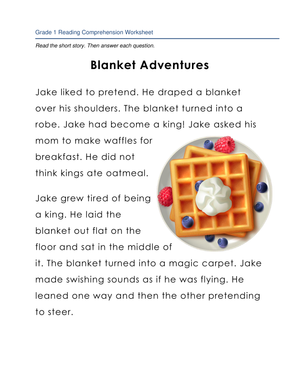
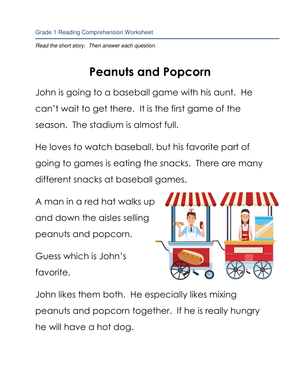
These level i worksheets for 1st grade give teachers targeted follow-up practice that connects directly to guided reading instruction — not before it, not in place of it. Each worksheet stays brief enough for emerging readers to complete with genuine effort, and the printable format lets teachers move from a whole-group lesson into small-group time or a center rotation without hunting for materials mid-block.
The Specific Reading Skills Each Worksheet Addresses
The skills covered run across decoding in connected text, retelling, sequencing, and foundational comprehension at the sentence and short-passage level. Picture support appears throughout — not as decoration, but as a legitimate meaning-making tool that students at this reading stage use to confirm word meaning and self-monitor for accuracy. High-frequency words surface repeatedly inside passages rather than on isolated word lists, which is where automaticity actually builds in early readers.
Tasks stay deliberately short: circling a word, matching a phrase to a picture, ordering two or three events, completing a one-line sentence stem. That brevity is intentional. When writing demands outweigh reading demands on an early-literacy worksheet, teachers lose sight of what students actually understood and start seeing only who can sustain pencil stamina. Short, clear response formats return the data to where it belongs — reading behavior, not writing output.
- Decoding familiar spelling patterns in connected text
- Answering who, what, and where questions about a short passage
- Retelling a simple narrative in sequence
- Matching a word or phrase to the correct picture
- Identifying the main idea of a brief informational piece
- Completing a sentence stem using a high-frequency word from the text
Building These Worksheets Into the Literacy Block
After a guided reading group reads a short text together, a reliable sequence is: one independent reread, one partner reread, and then one response worksheet. That three-step structure gives students two more passes through the text before they write anything. The completed worksheet becomes a record of what those rereads produced — more useful to a teacher than a hasty answer after a single cold read.
For literacy centers, consistent directions are the make-or-break factor. When students follow the same routine on every worksheet — read the passage, locate the picture clue, complete one retell or comprehension task — they reach genuine independence within about a week of practice. When directions shift from worksheet to worksheet, the cognitive load of decoding the format competes with the cognitive load of reading the passage. At Level I, that split reliably slows students down.
- Monday warm-up: a short fluency passage after the weekend resets reading stamina before the lesson begins
- Intervention pull-out: reduce the task to one item with teacher support; revisit the same passage two days in a row to build accuracy before moving on
- Take-home practice: one passage with two comprehension items — familiar enough for a caregiver to support without special training
Errors Teachers Should Watch for and Address
The most persistent error at Level I appears in retell sequencing. Students narrate events in the order they remembered them, not the order those events appear in the text. A student will say "the dog found the ball and then he was lost" even when the worksheet shows three pictures in the correct order. Teaching students to physically point to each picture before writing — rather than recalling from memory — closes this gap faster than reteaching sequence as an abstract concept.
Main-idea tasks produce a predictable second error. Students at this stage tend to select the most exciting detail rather than the most important idea. If a passage about a girl planting seeds includes one sentence mentioning a worm, a noticeable portion of the class will mark the worm as the main idea. This is a developmental pattern, not a reading deficiency — it is the exact moment when guided instruction on central versus peripheral information does its most useful work.
Vocabulary items surface a third pattern. Students who use a word fluently in conversation sometimes fail to recognize it in print. A student who says "before" correctly in speech may read past it in text because the spelling does not match the expected sound pattern. A brief word walk before independent reading — pointing out two or three words students will encounter — consistently reduces errors on the comprehension questions that follow.
Adjusting These Worksheets Across a Range of First Grade Readers
Two students at the same reading level rarely need identical follow-up. One may decode accurately but lose the story's thread; another may understand everything but read with visible effort and slow pacing. The same worksheet can serve both — what changes is the entry point and the extension.
For students who need more support, preteach two or three key words before reading begins, do one read-aloud of the passage together, and limit the written response to a single item. Teachers who use level i worksheets for 1st grade this way — with brief pre-teaching built in — tend to see more accurate responses and far less of the mid-task shutdown that happens when every sentence feels unfamiliar.
For students ready to do more with the same text, extend the response rather than moving to a harder level: ask for one sentence explaining why an event happened, or a labeled drawing showing the beginning and ending. Both prompt deeper processing without abandoning Level I text — which matters when a student is still building fluency and should not be reading above their head just because a worksheet task runs short.
For fluency gaps specifically, the same passage can carry across two short sessions: three to four minutes of reading on day one, a quick partner retell at the start of day two, and written response on day two. Spreading practice across two sittings builds fluency more reliably than one longer sitting at this stage of development.
Standard Alignment
RF.1.4 requires first graders to read with sufficient accuracy and fluency to support comprehension. These worksheets address that standard through passage-and-response pairs rather than isolated word drills. When a student reads a short text, marks a sentence, and then answers one comprehension question, fluency and comprehension reinforce each other inside a single activity instead of running in separate parts of the block.
RL.1.1 and RL.1.2 address asking and answering questions about key details in a text and retelling stories with key details. Both standards appear directly in the worksheet formats: who-what-where questions align with RL.1.1, while retell and sequencing tasks address RL.1.2. At this point in first grade, students are expected to handle narrative text at the passage level, and Level I text sits squarely within that expectation.
Where the set includes informational passages, RI.1.1 and RI.1.2 apply on the same terms. Teachers can use those worksheets as documentation of informational reading practice during small-group or center time — useful when building a reading portfolio that shows work across both text types.
Frequently Asked Questions
What reading level does Level I correspond to in a first grade context?
Level I falls within early first grade reading development across most leveled systems. In Guided Reading terms, it typically describes students who can handle simple sentences with picture support, repeated text patterns, and a reliable bank of high-frequency words. For most students, this level arrives around mid-year, after moving through the earliest levels with considerable teacher support.
How long should a Level I response worksheet take to complete?
Most work best when students finish in eight to twelve minutes, including the reread. If a student consistently takes longer, the passage may be too demanding or the written response too open-ended. If students rush through in under three minutes, the task is likely confirming what they already know rather than pushing their comprehension forward.
Can these be used with students reading below Level I?
With some adjustments, yes. Teachers can read the passage aloud while students follow along, then limit the task to picture-matching or circling only. Using level i worksheets for 1st grade resources this way — with the reading load shared rather than fully independent — keeps students inside the same classroom routine while giving them access to grade-level response formats before they can read the text on their own.
How do these worksheets hold up as a homework tool?
They travel home well when the format is already familiar from classroom practice. Send a passage the student has already read in school — not a cold text — paired with two or three short questions. Parents can listen to the child reread and help with unfamiliar words without any special reading knowledge. Treating level i worksheets for 1st grade materials as review homework rather than new learning keeps home practice from becoming a frustration point for the student or the family.












 Interactive Worksheet Maker
 Quiz Maker
 Word Search Maker
 Crossword Puzzle Maker
 Word Scramble Generator
 Sentence Scramble Generator
 Handwriting Worksheet Generator
 Name Tracing Generator
 Fill In The Blank Generator