


























1 / 6
0
Views
0
Downloads





Save
0 Likes
Share
The Tangled Feet Problem: Logical Problem Solving
0 Views
0 Downloads
Paste this activity's link or code into your existing LMS (Google Classroom, Canvas, Teams, Schoology, Moodle, etc.).
Students can open and work on the activity right away, with no student login required.
You'll still be able to track student progress and results from your teacher account.
Information
Description
What It Is:
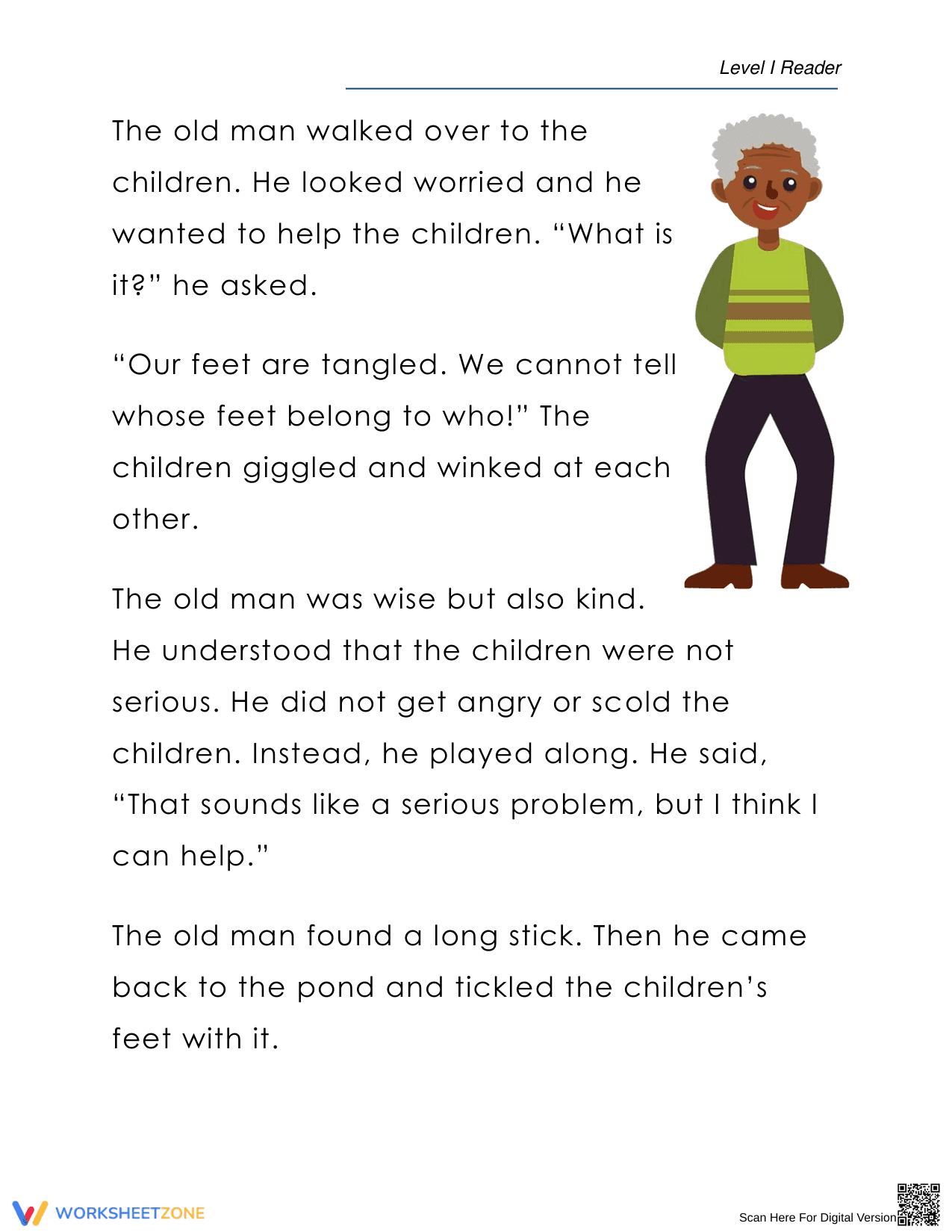
This is a Level I reading comprehension worksheet titled 'The Tangled Feet Problem.' It presents a short story about children playing by a pond who decide to play a trick on an old man. Above the story are vocabulary words: tickled, winked, serious, giggle, scold, and wise. The worksheet includes an illustration of a pond scene with trees and geese.
Grade Level Suitability:
This worksheet is suitable for 1st grade and possibly early 2nd grade. The text is simple and the vocabulary is relatively basic, making it appropriate for beginning readers. The story is short and the concepts are easy to understand.
Why Use It:
This worksheet helps improve reading comprehension skills. It introduces new vocabulary words and provides context for understanding their meaning. The story encourages engagement and helps build reading fluency. It also fosters critical thinking by prompting students to understand the plot and characters' motivations.
How to Use It:
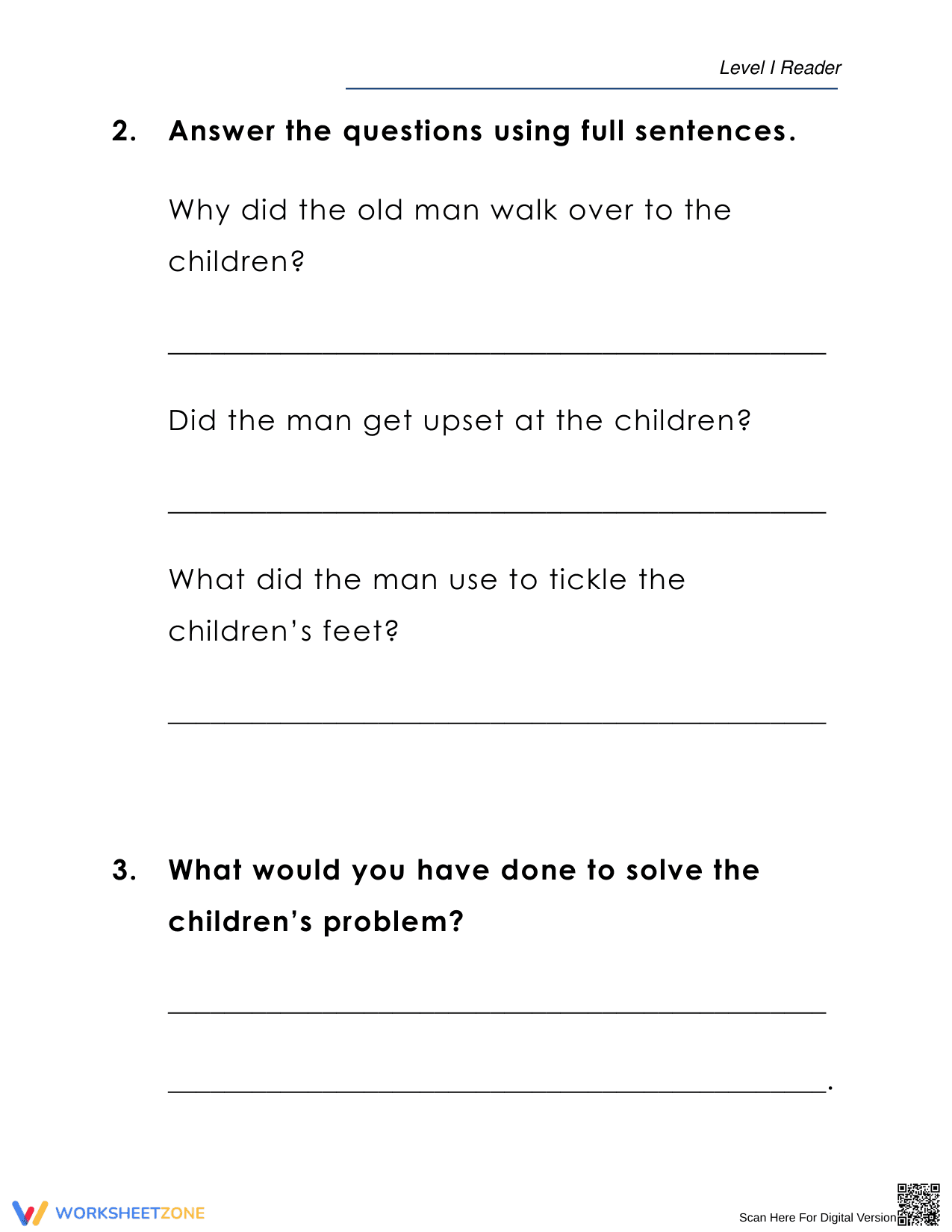
First, review the vocabulary words at the top of the page. Then, have the student read the story aloud or silently. After reading, discuss the plot and characters. The student can then answer comprehension questions (not visible, but implied). The vocabulary words could be used in a sentence writing exercise.
Target Users:
This worksheet is designed for young learners in the early stages of reading, specifically those in 1st or 2nd grade who are working on building their reading comprehension and vocabulary skills. It is also useful for ESL students who are learning English.
This is a Level I reading comprehension worksheet titled 'The Tangled Feet Problem.' It presents a short story about children playing by a pond who decide to play a trick on an old man. Above the story are vocabulary words: tickled, winked, serious, giggle, scold, and wise. The worksheet includes an illustration of a pond scene with trees and geese.
Grade Level Suitability:
This worksheet is suitable for 1st grade and possibly early 2nd grade. The text is simple and the vocabulary is relatively basic, making it appropriate for beginning readers. The story is short and the concepts are easy to understand.
Why Use It:
This worksheet helps improve reading comprehension skills. It introduces new vocabulary words and provides context for understanding their meaning. The story encourages engagement and helps build reading fluency. It also fosters critical thinking by prompting students to understand the plot and characters' motivations.
How to Use It:
First, review the vocabulary words at the top of the page. Then, have the student read the story aloud or silently. After reading, discuss the plot and characters. The student can then answer comprehension questions (not visible, but implied). The vocabulary words could be used in a sentence writing exercise.
Target Users:
This worksheet is designed for young learners in the early stages of reading, specifically those in 1st or 2nd grade who are working on building their reading comprehension and vocabulary skills. It is also useful for ESL students who are learning English.


