Spacing Between Words printable worksheets for 1st Grade
These spacing between words printable worksheets for 1st grade give teachers a repeatable, low-prep tool for one of the most persistent early writing problems: students who run every word together when they are focused on sounding out a sentence. Each worksheet keeps the task narrow and the print large, because at this stage, one clear focus builds the habit faster than a cluttered page.
What Students Practice Across the Set
The worksheets move through a deliberate progression — from recognition to correction to independent production. That sequence matters because spacing errors in first grade rarely signal carelessness. They signal cognitive overload. When a student is holding an entire sentence in working memory while also forming each letter by hand, the space between words is the first thing to drop out. These worksheets give that one habit its own protected practice time, separate from composing and decoding demands.
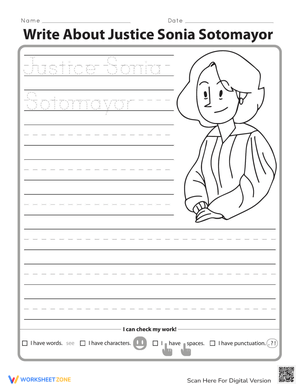
- Tracing modeled sentences: Students trace short sentences with spaces already placed correctly. The goal is building visual-motor memory — students begin to feel what "one word ends, the next begins" looks like on the line.
- Rewriting with spaces: Students read a sentence prompt and copy it with a deliberate space after each word, saying each word aloud before writing it. That brief oral step slows the hand down enough to interrupt the run-together habit.
- Fix-the-sentence tasks: Students receive a run-together sentence — something like thecatranfast — draw marks to separate the words, and then rewrite the sentence with correct spacing.
- Word-card sentence building: Students arrange individual word cards into a sentence on a sentence strip, then copy the result onto the worksheet. The physical act of spacing cards transfers into written spacing on the line.
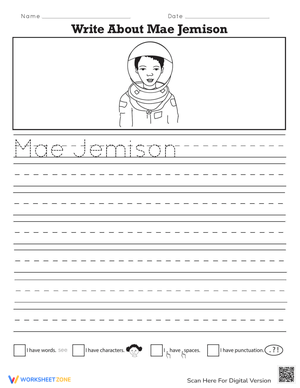
- Picture-prompted writing: Students write one or two sentences about a simple image and apply spacing on their own, without a pre-structured sentence to reference. This is the most demanding format in the set.
Each worksheet targets one format so teachers can match the task to where a student actually is. A student who builds sentences correctly with word cards but forgets spaces during open writing needs picture-prompted practice, not more tracing.
How to Work These Worksheets Into Your Literacy Block
The most efficient placement for these worksheets is in the five to eight minutes immediately after a mini-lesson, while anchor charts are still visible and teacher modeling is still fresh in working memory. Students who complete a spacing worksheet right after the lesson retain the pattern more reliably than students who encounter the same page an hour later during independent center time. That said, these worksheets also work well as Monday morning warm-ups — a fast way to reactivate a habit practiced the previous week — and as a brief Friday exit task when teachers want a quick read on what students are holding onto independently.
In literacy centers, pair the fix-the-sentence or word-card worksheet with a physical spacer tool stored in the same bin as the printable. The proximity matters more than it sounds: when students have to walk across the room to find a craft stick, they skip it. When it is rubber-banded to the worksheet itself, they use it. That small logistics decision improves independent practice accuracy without requiring any additional instruction time. For small-group intervention, choose worksheets with three- to four-word sentences built from high-frequency words only, and provide immediate corrective feedback as students write rather than collecting pages to mark later.
Student Spacing Mistakes That Are Easy to Miss
The most common pattern is the full run-on: every word in a sentence written as one continuous string. This tells you the student is processing the sentence as a unit of sound rather than a sequence of separate words. The fix for this student is not more handwriting practice — it is more oral word-by-word reading, with a finger pointing to each word before the pencil touches the paper. A second, less-discussed pattern is the word split: a student writes be cause or s unny, leaving a gap inside one word because the pencil paused or the student took a breath while writing. These students often score well on spacing checks but still produce writing that is hard to read. Fix-the-sentence worksheets that include both missing spaces between words and false spaces inside words give teachers a cleaner diagnostic picture than worksheets that only address run-togethers.
A third pattern shows up during copy tasks: students reproduce a modeled sentence with reasonable spacing but lose all spacing the moment they compose their own sentence without a model visible. That is a transfer gap, not a comprehension gap. It means spacing is still conscious and effortful rather than automatic. Picture-prompted writing worksheets target that gap directly, and seeing it appear in student work is a clear signal to increase time in that format before moving on.
Standard Alignment
These spacing between words printable worksheets for 1st grade address CCSS.ELA-LITERACY.L.1.2, which covers conventions of standard English in writing. Spacing is not broken out as a separate sub-standard because it functions as a prerequisite to everything else in L.1.2 — a student whose words run together undermines every other convention being assessed. In classroom terms, spacing instruction typically enters the first quarter of first grade and stays in rotation through the year for students who continue to produce run-together sentences. These worksheets also support CCSS.ELA-LITERACY.RF.1.1.A, which asks students to demonstrate understanding of the organization and basic features of print, explicitly including the recognition that words are separated by spaces in written text.
Differentiating These Worksheets for a Range of Learners
Spacing between words printable worksheets for 1st grade work across a wider ability range than most print-concept resources because the task can be tightened or opened depending on where a student is. For students still developing letter formation alongside early phonemic awareness, the tracing worksheets remove all composition demands — the only job is to follow the model and notice the spaces. These students benefit from sentences of three to four words maximum, written in large print, built entirely from high-frequency words they already recognize by sight.
Students who are on grade level move through the rewriting and fix-the-sentence worksheets, which handle five- to six-word sentences and phonetically regular vocabulary beyond the core sight-word list. For students reading above grade level who write with more fluency, the picture-prompted worksheets present the most productive challenge: write two to three sentences, apply spacing throughout, and check your own work. These students often understand spacing rules but rush through composition tasks. Adding a brief peer-review step — swap the worksheet and mark any missing spaces with a pencil dot — builds accountability without changing the skill being practiced.
Frequently Asked Questions
How do these worksheets fit into a classroom that already uses interactive writing?
Interactive writing and these worksheets work together directly. During interactive writing, the teacher and students build a sentence on chart paper, stopping to discuss spaces between words aloud. The worksheets give each student individual practice with the same skill, so every child in the room is doing the physical act of spacing — not just watching or contributing a single word to the shared text. The two approaches reinforce each other when the language the teacher uses during interactive writing matches what appears in the worksheet directions.
What is the right number of worksheets to assign in a week?
For most first graders, two to three short spacing worksheets per week builds the habit without turning the skill into a chore. One after a mini-lesson, one in a center, and one as a formative check near the end of the week gives teachers enough evidence to see whether the skill is holding. Stacking more pages than that rarely accelerates progress — the habit forms through distributed practice over several weeks, not through volume in a single week.
Can these be sent home for homework?
The tracing and rewriting worksheets travel home well because the task is clear enough that a parent or caregiver can support it without background in early literacy instruction. Fix-the-sentence and picture-prompted worksheets are better kept in school, where a teacher is present when confusion surfaces. Sending home spacing between words printable worksheets for 1st grade that require independent composition tends to produce inconsistent results when there is no adult available to model the spacer-tool habit at home — students either get it right without any support or produce the same run-together sentences they would have written in school.
My students use pencil grips but still run words together. Should I switch to a spacer tool?
Pencil grips address letter formation, not word boundaries. A spacer tool — a craft stick, a wide fingertip, or a small laminated card — addresses the space itself. Both can coexist in the same writing routine. Students who struggle with grip and spacing simultaneously often benefit from saying the sentence aloud first, then writing one word at a time and placing the spacer after each word before moving on. The tracing worksheets in this set model that same one-word-at-a-time rhythm visually, which is part of why they work as a starting point for students managing more than one writing challenge at once.
Clear All