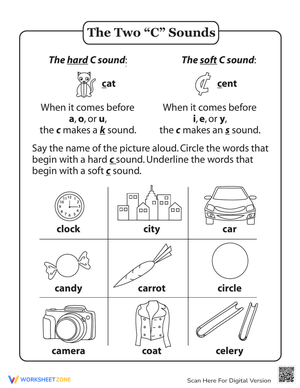
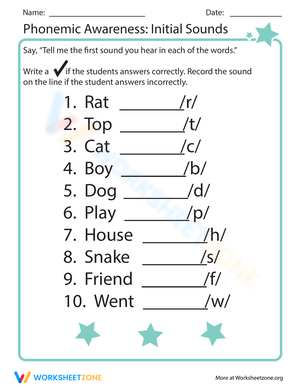
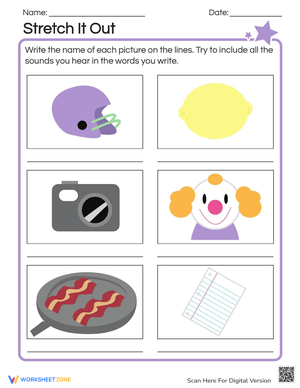
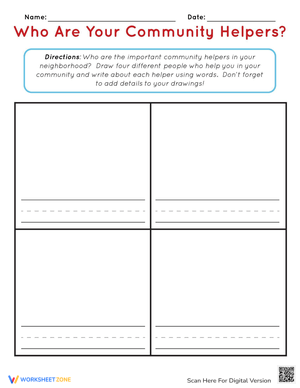
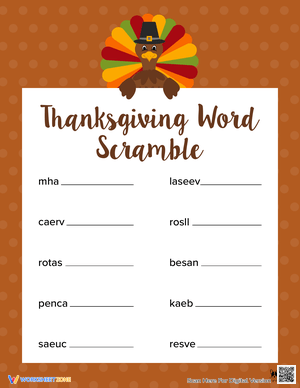
These spelling strategies worksheets resources give teachers a structured set of practice materials built around the actual mechanics of English orthography — phoneme-grapheme correspondence, syllable patterns, morphemic analysis, and memory techniques for the words that refuse to follow any rule. Each worksheet targets a specific strategy rather than a specific word list, so students build transferable skills instead of test-day recall that evaporates by the following week.
What Each Worksheet Targets
The set addresses six core spelling strategies that research in orthographic development consistently identifies as the most transferable. Students work across a range of approaches depending on where a word's complexity actually lives:
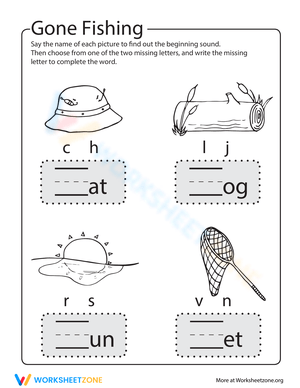
- Phoneme-grapheme mapping — students segment spoken words into individual sounds, then identify the grapheme representing each sound, including multi-letter options like igh, ea, and tch
- Pattern sorting — students sort words by vowel team, consonant blend, or syllable type to surface the rule before they're asked to apply it independently
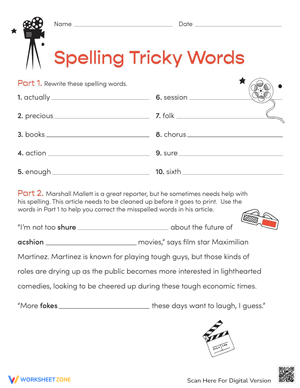
- Morphemic analysis — worksheets isolating prefixes, suffixes, and Latin and Greek roots, with explicit attention to spelling changes when affixes attach (consonant doubling, -e drop, y-to-i)
- Syllable segmentation — students mark syllable boundaries and identify syllable type, because upper-elementary spellers who mis-stress syllables regularly mis-spell the vowel in the unstressed position
- Look-Say-Cover-Write-Check — a structured multisensory cycle built into the template on each worksheet
- Mnemonic construction — guided practice creating and recording personal memory hooks for irregular high-frequency words
How to Build These Worksheets Into Your Lesson Plans
The most consistent classroom use is as a follow-through after a 10-minute word study mini-lesson. A teacher introduces a pattern — say, the -tion versus -sion distinction — demonstrates two or three examples at the board, then sends students to a worksheet that asks them to sort new words, write sentences, and put the rule in their own words. That sequence (direct instruction, immediate application, student explanation) produces stronger retention than either the lesson or the practice does alone.
A second natural slot is morning work during the first 8 to 10 minutes of the day. The Look-Say-Cover-Write-Check worksheets are especially suited here because they don't require the teacher to launch them — students know the routine, pick up the worksheet, and work independently while attendance is taken. Some teachers pull the mnemonic worksheets for Friday's last 15 minutes, when asking students to invent their own memory device doubles as a low-stakes creative task that doesn't require much teacher energy at the end of the week.
Word study stations work too. Because each worksheet addresses one strategy discretely, a teacher can assign different students different worksheets within the same rotation block, and students at different developmental points aren't all doing the same undifferentiated task at the same time.
Mistakes Students Make That These Worksheets Help You Catch
The most revealing error pattern in this work shows up on the morphemic analysis worksheets. Students who correctly write running — doubling the consonant before -ing — will often write hopeing instead of hoping, because the rule for dropping the final -e before a vowel suffix feels separate from the rule for consonant doubling, even though both rules govern the same decision about syllable structure. What looks like carelessness is usually two rules that haven't been connected yet.
On the mnemonic worksheets, students asked to create their own memory devices will sometimes construct a sentence so long it's harder to remember than the word itself. The worksheet asks them to underline only the part of the mnemonic that contains the tricky letter string, which pushes them to keep it short. What students produce here reveals a great deal about how their working memory is handling orthographic load. Some invented mnemonics are genuinely clever; others show a student who is guessing at the spelling while building the mnemonic, not before — which is the real problem to address.
With the Look-Say-Cover-Write-Check structure, the error teachers miss most often is the student who peeks. The cover column physically conceals the word only if the student folds the worksheet — and many don't bother. Spending one minute at the start explicitly demonstrating the fold matters more than it sounds like it should.
Standard Alignment
These worksheets align to the Language strand of the Common Core State Standards, specifically L.2.2d through L.5.2e, which address generalized spelling patterns, word families, and conventional spelling for grade-appropriate words. The morphemic analysis materials also connect to L.4.4b and L.5.4b, which ask students to use known affixes and roots as clues to meaning and spelling. In practical terms, these standards surface most clearly in writing workshop conferences and during the editing stage — exactly where spelling automaticity has the largest payoff, because a student who doesn't have to stop and guess at disappear can keep their attention on what they're actually trying to say.
Differentiating the Worksheets Across Ability Levels
For students still working at a phonetic stage, the pattern-sorting and phoneme-grapheme mapping worksheets do the most immediate work. The morphology and mnemonic worksheets belong later in their sequence — introducing structural analysis before phonetic foundations are solid adds confusion rather than depth, and students end up guessing at the rule rather than reasoning through it.
Students ready for morphological work but needing extra support can complete the prefix and suffix worksheets with a reference card listing the roots they'll encounter. That isn't giving away the answer; it reduces the cognitive demand so students can focus on the spelling-change rule rather than pulling meaning from memory at the same time. Separating those two tasks is the difference between a student who gives up and one who gets it.
Advanced spellers — typically students who are already fluent readers — get the most from the Latin and Greek root worksheets paired with a word-generation extension: after completing the worksheet, they list three to five words they know that share the same root. This moves them from applying a rule to owning it. Because the spelling strategies worksheets format keeps each worksheet focused on a narrow skill, a student who moves through it quickly can extend without waiting for the rest of the class to finish.
Frequently Asked Questions
Do these worksheets replace a spelling program, or do they supplement one?
They work alongside structured word study instruction, not as a stand-alone replacement. The worksheets provide the repetition and application; they don't sequence the instruction. A teacher still needs to decide which strategy gets introduced in which week and in what order. Used inside a word study or writing workshop framework, the set removes the friction of creating practice materials from scratch every time a new strategy is introduced.
How do I figure out which worksheet to assign to which student?
A brief spelling inventory — not a formal test, just asking students to spell 10 to 15 words representing different pattern levels — shows quickly whether a student is operating at a phonetic, transitional, or syllable-and-affix stage. The set maps onto those stages. Students whose errors cluster around short-vowel confusion start with the phoneme-grapheme materials. Students whose errors involve attaching suffixes incorrectly or misspelling unstressed syllables move into the morphology section. One class period for the inventory eliminates weeks of guessing about where to place students.
Which worksheets travel home well, and which should stay in the classroom?
The Look-Say-Cover-Write-Check and pattern-sorting worksheets send home reliably because students can complete them without explanation — the directions are printed on each worksheet and the task structure is consistent. The mnemonic-creation worksheets are less reliable for homework at grades 2 and 3, because a student who gets stuck inventing a memory device has no one to redirect them. Reserve those for class time, where a quick nudge takes 30 seconds. The spelling strategies worksheets format also means parents can reprint a lost copy without contacting the teacher — a small thing that removes a real friction point during a busy homework week.
How do I know whether students are actually using the strategies, not just completing the worksheets?
The clearest evidence comes from writing samples, not from spelling tests. When a student who has worked through the morphemic analysis section starts correctly writing admirable or arguable in a draft without being prompted, the strategy has transferred. Check writing workshop drafts two to three weeks after a strategy has been taught. Students who still misspell the target pattern in their own writing likely need another pass through the relevant worksheet and a brief conversation about where their reasoning broke down — usually it's the underlying rule, not the memory, that's shaky.












 Interactive Worksheet Maker
 Quiz Maker
 Word Search Maker
 Crossword Puzzle Maker
 Word Scramble Generator
 Sentence Scramble Generator
 Handwriting Worksheet Generator
 Name Tracing Generator
 Fill In The Blank Generator