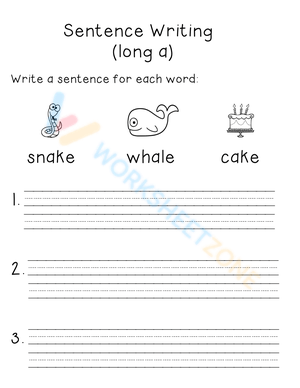
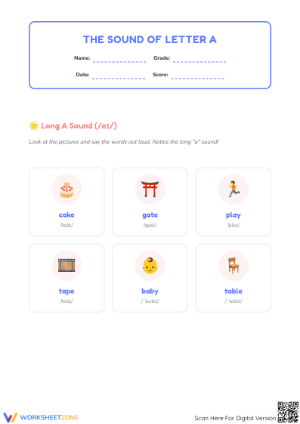
Helping your child learn to read at home should feel like a moment of connection, not a kitchen-table struggle. Many parents feel the quiet pressure of being a teacher after school hours, especially when a child stumbles on tricky vowel sounds. Thoughtfully designed long a worksheets can lift that weight from your shoulders, giving you a calm, structured way to guide practice without guessing what comes next or how to explain a sound your child has never seen written down before.
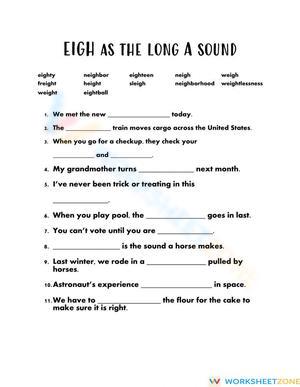
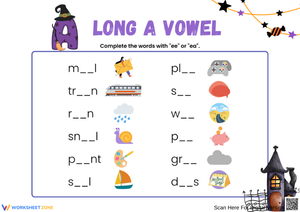
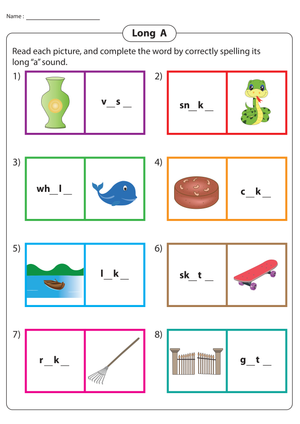
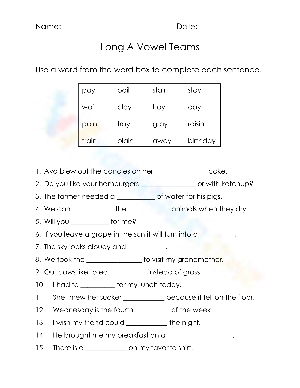
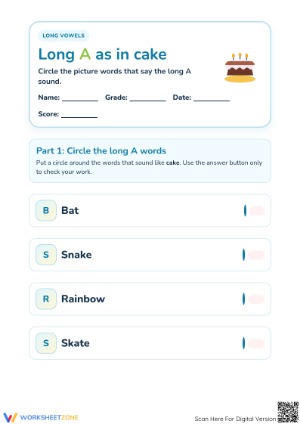
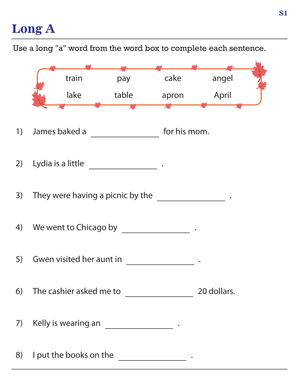
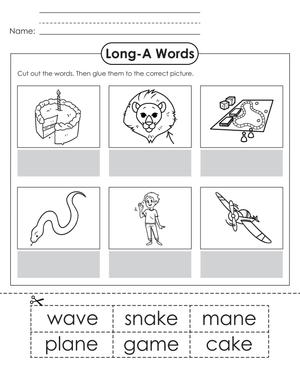
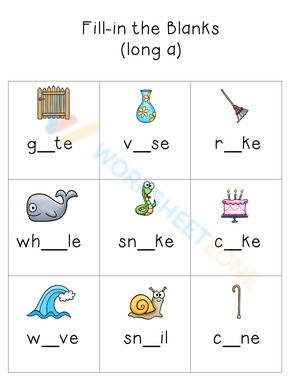
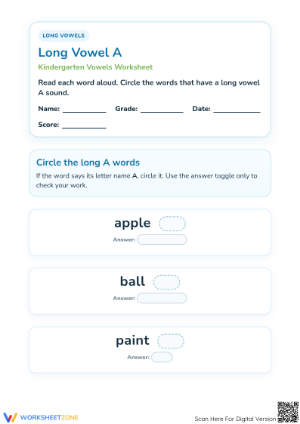
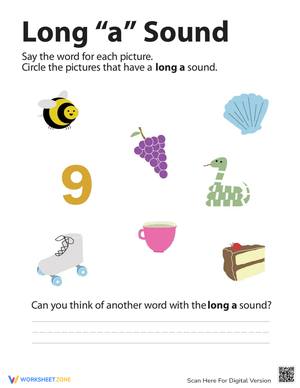
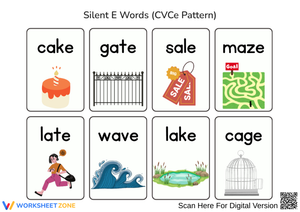
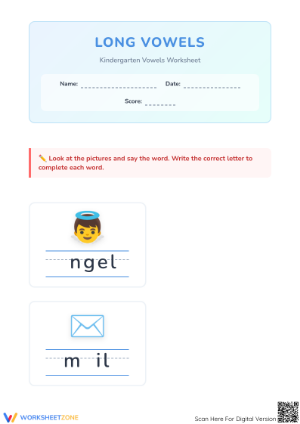
Children gain confidence when each printable activity introduces one small idea at a time. A page might begin with simple picture matching, where your child circles the items whose names contain the long vowel sound, then progresses into reading short words like cake, rain, and sail. This gentle progression mirrors how teachers introduce phonics in the classroom, so your child experiences familiarity rather than frustration. Each completed sheet becomes a small win, and those small wins build into real reading momentum.
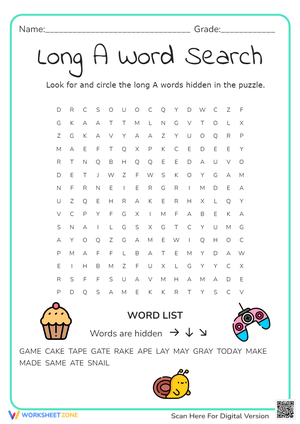
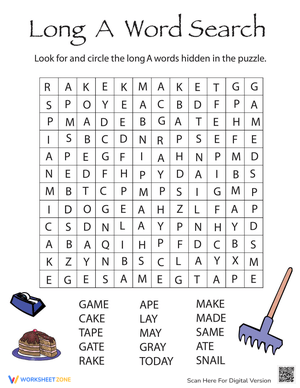
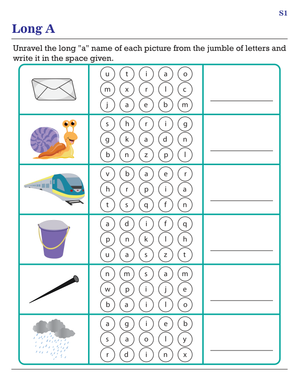
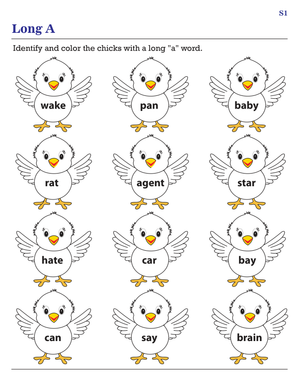
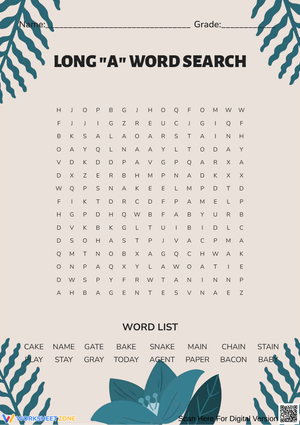
Visual elements turn practice into something that feels closer to play than schoolwork. Bright illustrations, friendly fonts, and hands-on tasks like cut-and-paste sorting keep young learners engaged for longer stretches than flashcards alone ever could. Coloring sections let your child take ownership of the page, and word puzzles invite curiosity about how letters work together. When practice feels playful, children return willingly the next day, and that consistency is what turns scattered effort into lasting skill. For broader phonics ideas, our guide to comparing vowel sounds walks parents through simple at-home activities that pair beautifully with printable practice.
Each completed page also opens a window into the work happening in your child's classroom. When you sit beside your child and watch them sound out a word like brain or trail, you see exactly which patterns are clicking and which still need a little more time. That insight helps you ask better questions at parent-teacher conferences and lets you celebrate growth that might otherwise stay invisible. You become a partner in the learning journey, not just a homework supervisor, and your child notices the difference in your voice and your patience.
Reading practice grows strongest when home and school move in the same direction. Pull up a chair, share a quiet half-hour, and let your child show you what they know. You can browse our printable practice library for fresh pages whenever your child is ready for the next step. With Worksheetzone beside you, the long a worksheets you choose become more than paper, they become quiet bridges between curiosity, confidence, and the joy of finally reading a sentence out loud together.
Frequently Asked Questions
Question 1: At what age should my child start practicing long a sounds?
Most children are ready to explore long a sounds between kindergarten and first grade, usually around ages five to six, once they recognize basic letters and short vowel patterns. However, every child develops at their own pace. If your child is curious about written words, comfortable identifying letter names, and beginning to blend simple sounds, they are likely ready to try beginner-friendly pages. Start with picture-based activities before moving into word reading.
Question 2: How often should we do phonics practice at home?
Short, consistent sessions work better than long, occasional ones. Aim for ten to fifteen minutes, three or four times a week, rather than a single hour-long session on the weekend. This rhythm matches how young brains learn best and prevents the practice from feeling like a chore. Keep your tone warm, take breaks when frustration appears, and end each session on a successful word so your child finishes feeling capable and proud.
Question 3: What if my child confuses long a with short a sounds?
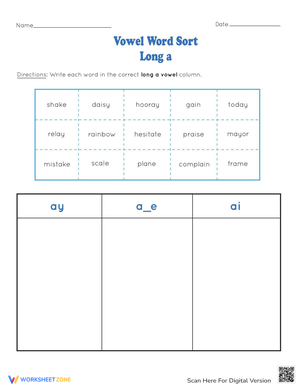
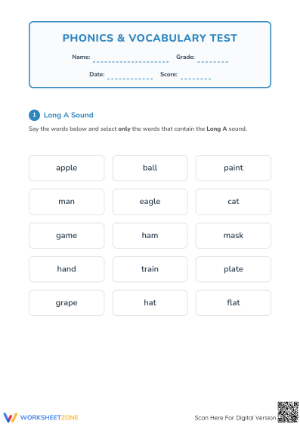
Confusion between these two sounds is completely normal and part of healthy phonics development. Use simple anchor words your child already knows, such as cat for the short sound and cake for the long sound, then say them aloud together. Sorting activities that ask children to place pictures into two columns help build clear mental categories. Over time, repeated exposure across different word families resolves the confusion naturally.
Question 4: How can I make practice more enjoyable for a reluctant learner?
Reluctant learners often respond well to choice and movement. Let your child pick which page to do first, or turn word reading into a hopping game across the living room rug. Add stickers for completed sections, read silly sentences in funny voices, and pair practice with a favorite snack. When children feel a sense of control and playfulness, resistance softens, and the same skills get absorbed without the emotional friction.












 Interactive Worksheet Maker
 Quiz Maker
 Word Search Maker
 Crossword Puzzle Maker
 Word Scramble Generator
 Sentence Scramble Generator
 Handwriting Worksheet Generator
 Name Tracing Generator
 Fill In The Blank Generator