


























Views
Downloads



Grade 1 Long Vowel A — Printable No-Prep Worksheet
Paste this activity's link or code into your existing LMS (Google Classroom, Canvas, Teams, Schoology, Moodle, etc.).
Students can open and work on the activity right away, with no student login required.
You'll still be able to track student progress and results from your teacher account.
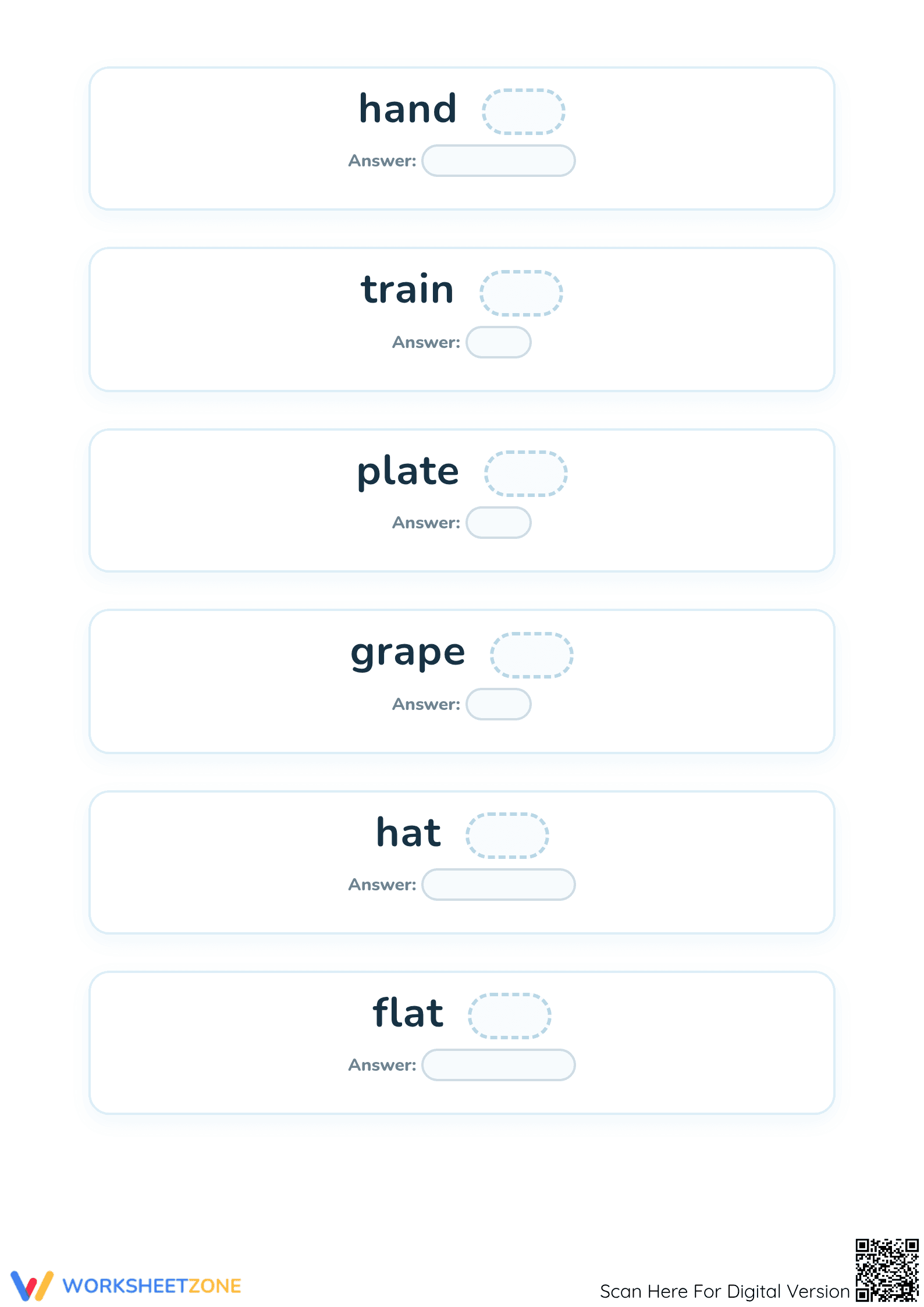
Strengthen early literacy skills with this focused long vowel A phonics worksheet designed for kindergarten and first-grade learners. This resource provides immediate, targeted practice in auditory discrimination, helping students distinguish between long and short vowel sounds through a series of engaging word identification tasks that build reading confidence and phonetic awareness.
At a Glance
At a Glance
- Grade: Kindergarten · Subject: ELA Phonics
- Standard:
CCSS.ELA-LITERACY.RF.K.3.B— Associate the long and short sounds with common spellings for major vowels- Skill Focus: Long Vowel A Identification
- Format: 3 pages · 15 problems · Answer key included · PDF
- Best For: Daily morning work or phonics centers
- Time: 15–20 minutes
What's Inside
This comprehensive three-page collection features 15 individual word-recognition tasks. Each page presents a clean, distraction-free layout where students read words aloud and identify the long vowel A sound. The worksheet utilizes a clear "Circle the Answer" format, accompanied by an answer toggle feature for digital-to-print checking, ensuring students can verify their work independently while mastering phonetic nuances.
Zero-Prep Workflow
This resource is engineered for immediate classroom utility with a total teacher prep time of under 2 minutes. First, simply print the three-page PDF set (30 seconds). Second, distribute the worksheets to your literacy centers or individual student desks (1 minute). Finally, use the provided answer key or the digital toggle to review student responses during whole-group instruction (15 minutes). Its structured layout makes it an ideal choice for emergency sub plans or quick formative assessments.
Standards Alignment
This resource aligns directly with primary standard `CCSS.ELA-LITERACY.RF.K.3.B`, focusing on the student's ability to associate long vowel sounds with their common graphemes. It also supports `CCSS.ELA-LITERACY.RF.1.3.C` by introducing early learners to vowel teams and final -e conventions. Both standard codes can be copied directly into lesson plans, IEP goals, or district curriculum mapping tools to ensure documented instructional compliance.
How to Use It
Integrate this worksheet during the independent practice phase of your phonics lesson, following direct instruction on long vowel sounds. For a powerful formative assessment, observe students as they read the words aloud; note if they hesitate on CVCe patterns like "game" or "plate" versus closed-syllable words like "mask" or "hat." Expected completion time is approximately 15 to 20 minutes depending on the student's reading fluency level.
Who It's For
This resource is specifically designed for preschool, kindergarten, and first-grade students who are transitioning from basic letter-sound correspondence to complex vowel patterns. It provides essential scaffolding for English Language Learners (ELL) and students receiving Tier 2 literacy intervention. It pairs naturally with a long vowel anchor chart or a decodable reading passage focused on the "A" vowel team.
Educational research highlighted by Fisher & Frey (2014) emphasizes that the gradual release of responsibility in phonics instruction is most effective when paired with high-quality, targeted practice materials. This worksheet addresses `CCSS.ELA-LITERACY.RF.K.3.B` by requiring students to actively listen for and identify long vowel A sounds within 15 distinct vocabulary words, ranging from simple CVCe patterns to more complex vowel combinations. By providing a structured environment for auditory discrimination, the resource ensures that students develop the necessary phonemic sensitivity to recognize long vowels across various linguistic contexts. This repetitive, focused practice is a critical component of successful reading acquisition, as it bridges the gap between isolated sound recognition and fluid text decoding. The inclusion of clear instructions and a self-check mechanism aligns with modern pedagogical standards for student agency and independent learning in the early elementary classroom.


