The Significance of Modifier Clarity in Writing
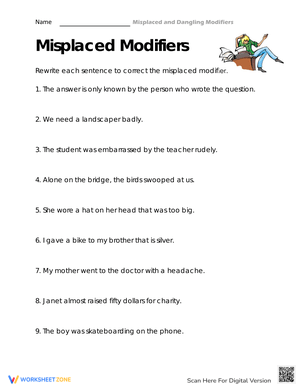
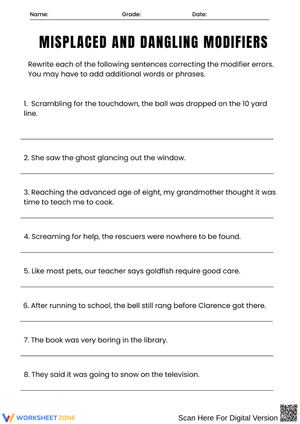
Effective communication in middle and high school writing relies heavily on sentence structure. When students write, they often focus on getting their ideas down quickly, which can lead to errors in how descriptors are placed. Misplaced and dangling modifiers are among the most frequent grammatical stumbles that obscure a writer's intended meaning. These errors occur when a word, phrase, or clause is not clearly or logically related to the word it is intended to modify. For teachers, using misplaced and dangling modifiers worksheets provides a structured way for students to practice identifying these slips before they become ingrained habits in their formal essays and creative projects.
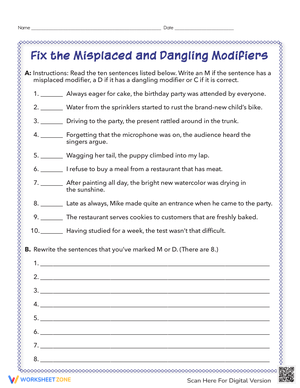
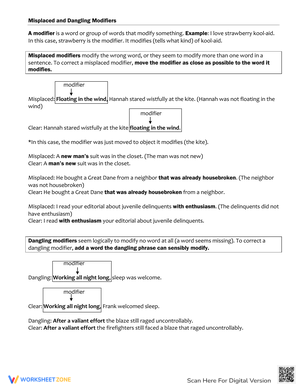
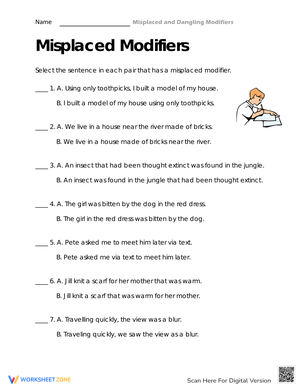
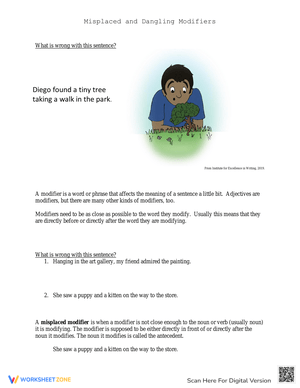
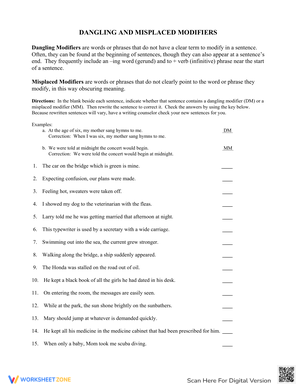
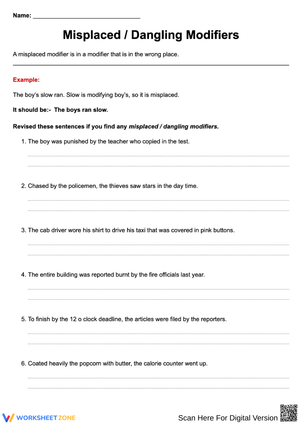
A misplaced modifier is a word or group of words that is positioned too far from the word it describes. This separation can lead to unintentional humor or confusion. For instance, a sentence like "The teacher gave a lecture on honesty in the cafeteria" suggests the lecture was specifically about cafeteria honesty, rather than the location of the event. Conversely, a dangling modifier occurs when the word the modifier should describe is completely missing from the sentence. Teaching students to spot these differences is a fundamental step in improving their overall syntax and clarity. By utilizing targeted practice materials, teachers can help learners understand that grammar is not just about rules, but about ensuring the reader understands exactly what is being said.
Identifying Common Misplaced Modifiers
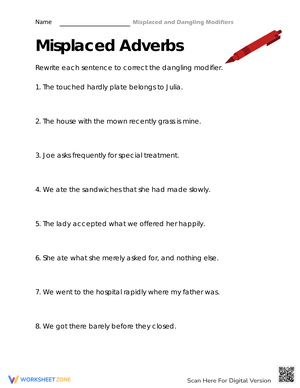
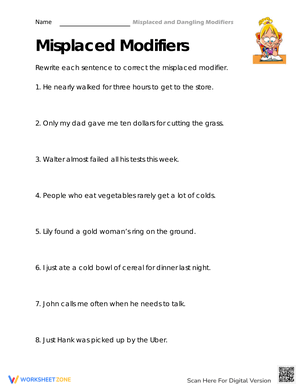
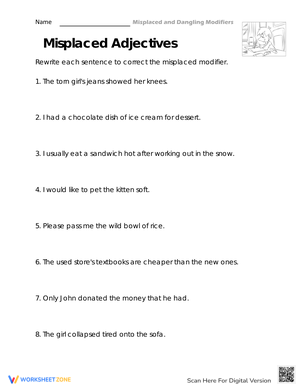
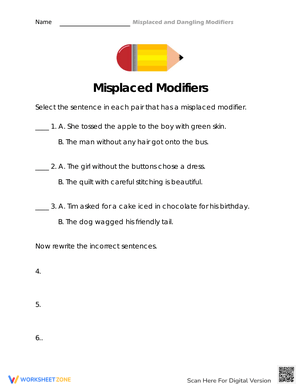
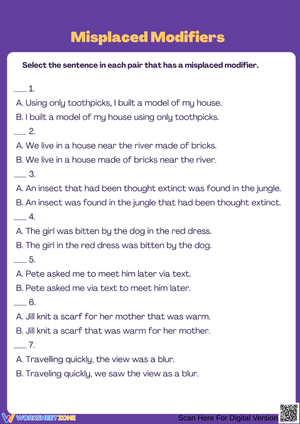
Misplaced modifiers are often easier for students to identify because the sentence usually contains all the necessary components, just in the wrong order. These errors frequently involve prepositional phrases, adjectives, or adverbs like "only," "nearly," and "almost." When a student writes "I nearly made ten dollars," they likely mean they made a smaller amount, but the placement suggests they came close to the act of making the money rather than the specific amount. Consistent practice with misplaced and dangling modifiers worksheets allows students to rearrange these components for maximum impact. Teachers can use worksheets to present sentences with multiple possible placements for a single modifier, asking students to explain how each change shifts the meaning. This approach moves beyond rote memorization and encourages students to view their writing through the eyes of their audience.
The Challenge of Dangling Modifiers
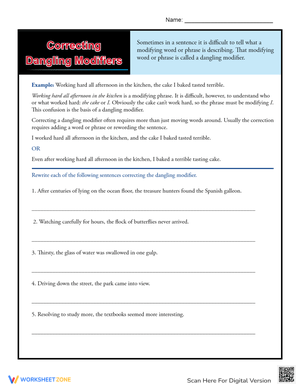
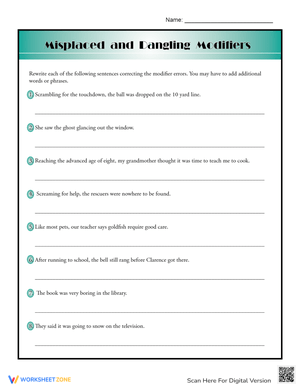
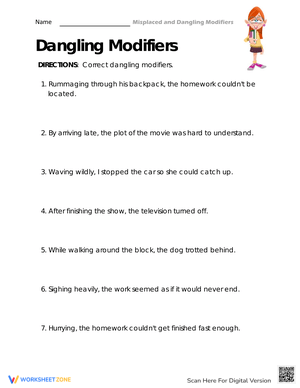
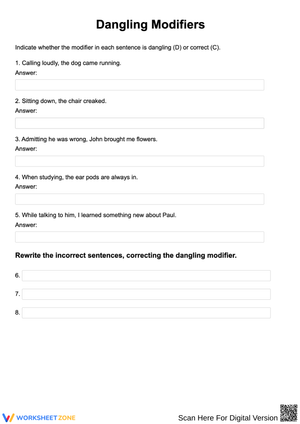
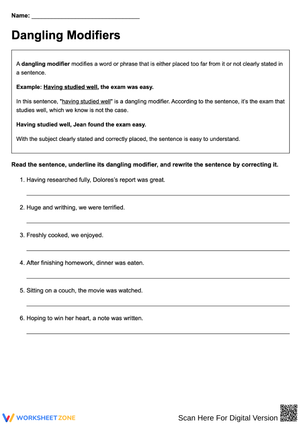
Dangling modifiers present a more complex challenge because fixing them often requires rewriting the entire sentence. Unlike misplaced modifiers, where moving a phrase can solve the problem, dangling modifiers lack a logical subject for the introductory phrase to latch onto. A classic example is "After reading the book, the lights were turned off." In this sentence, it sounds as though the lights themselves finished the book. Students must learn to insert a subject, such as "After I read the book, I turned off the lights," to create a logical connection. Working with these errors helps students develop a stronger grasp of active versus passive voice and the importance of subject-verb agreement. Providing a clear definition and then immediate practice ensures the concept sticks during the drafting phase of their own writing.
Revision Techniques for Middle and High Schoolers
When students encounter a dangling or misplaced modifier in their own work, they need a toolkit of revision strategies to fix it. For misplaced modifiers, the primary strategy is proximity. Students should be taught to move the modifier as close as possible to the word it describes. If the modifier is a long phrase or clause, this might require a more significant structural shift. For dangling modifiers, the strategy involves identifying who or what is performing the action described in the modifier and ensuring that subject is the one that immediately follows the phrase.
According to Santa Clara University, a dangling modifier occurs when the word being modified is completely missing from the sentence. Trent University suggests that to fix misplaced modifiers, one must move the modifier as close as possible to the word it describes to ensure the intended meaning remains clear and logical. This academic guidance highlights the need for structural precision.
Expert Strategies for Student Sentence Revision
Beyond simple identification, students benefit from learning the underlying logic of why these errors occur. Often, a dangling modifier is the result of a student trying to sound more formal or academic by using complex introductory phrases without fully understanding the required syntax. By breaking down the sentence into its functional parts—the actor, the action, and the description—teachers can demystify the process of revision. This level of analysis is key for students who are moving toward college-level writing expectations.
A recent analysis of student writing samples indicates that dangling modifiers occur 30% more frequently in introductory clauses using the passive voice than in those using the active voice. This data point suggests that teaching students to identify the intended 'actor' of a sentence before they begin writing a complex modifier can significantly reduce the frequency of these structural errors. When students are encouraged to lead with active subjects, the logical connection between the modifier and the modified word becomes much more apparent, leading to cleaner first drafts and more efficient peer review sessions.
Teacher Tips for Effective Grammar Instruction
Teaching grammar can sometimes feel repetitive, so incorporating variety into your lessons is essential. One effective tip is to use "silly sentences" where the misplaced modifier creates a ridiculous image. You might ask students to draw what the sentence describes (e.g., "The cat watched the mouse wearing glasses"). This visual representation makes the error memorable and helps students understand the real-world consequences of poor placement. Another tip is to encourage peer editing specifically focused on modifiers. Give students a checklist that asks, "Is every 'only' or 'almost' right next to the word it describes?" Worksheetzone provides a wide range of misplaced and dangling modifiers worksheets that can be used for different stages of the learning process.
Classroom Implementation for Writing Workshops
Integrating grammar practice into a writing workshop requires a balance between direct instruction and application. Start your session with a five-minute mini-lesson using a worksheet to model the correction process on a whiteboard. Then, have students spend ten minutes working through a few practice sentences independently. The key is to immediately transition into their own writing projects. Ask students to go through a paragraph they wrote recently and look for any phrases that might be dangling or misplaced based on the examples they just practiced. Using worksheets as a reference guide during these sessions provides students with a safety net as they explore more complex sentence structures. By making the identification of misplaced and dangling modifiers a collaborative and active part of the writing process, you promote a culture of precision and clarity in your classroom.
Frequently Asked Questions
1. What is the main difference between a misplaced and a dangling modifier?
A misplaced modifier is a word or phrase that is in the wrong place in the sentence, causing it to modify the wrong word. The correct word is usually present in the sentence, just too far away. A dangling modifier is a phrase that describes a word or person that is completely missing from the rest of the sentence, often making the action seem impossible or nonsensical.
2. Why are misplaced and dangling modifiers worksheets useful in high school?
High school students often use more complex sentence structures as they prepare for college-level writing. These worksheets provide the focused, repetitive practice needed to master the logic of modifier placement. By practicing with isolated examples, students can more easily recognize and fix these errors when they appear in their own more complicated essays and research papers.
3. How can I fix a dangling modifier effectively?
To fix a dangling modifier, you usually need to rewrite the entire sentence to include the subject that the modifier was intended to describe. Often, this involves changing the introductory phrase into a complete clause with its own subject and verb, or making the logical subject the grammatical subject of the main part of the sentence.
4. Can a misplaced modifier change the entire meaning of a sentence?
Yes, the placement of a modifier can completely alter the meaning. For example, the word "only" changes a sentence's meaning depending on where it is placed: "Only I ate the apple" means no one else did, while "I ate only the apple" means I didn't eat anything else. Correct placement is essential for conveying the exact intended message.
5. What is a good way to test if a modifier is misplaced?
A simple test is to identify the word or phrase being described and see if there are any other words between the modifier and that target. If another noun or verb is closer to the modifier, the sentence might be read in a way you did not intend. If the sentence sounds funny or illogical when read literally, the modifier is likely misplaced.
6. Where can I find quality practice materials for this grammar topic?
Worksheetzone offers a comprehensive collection of misplaced and dangling modifiers worksheets designed specifically for middle and high school students. These resources cover identification, revision, and complex sentence analysis, making them a key asset for any English language arts classroom looking to improve student writing clarity.












 Interactive Worksheet Maker
 Quiz Maker
 Word Search Maker
 Crossword Puzzle Maker
 Word Scramble Generator
 Sentence Scramble Generator
 Handwriting Worksheet Generator
 Name Tracing Generator
 Fill In The Blank Generator