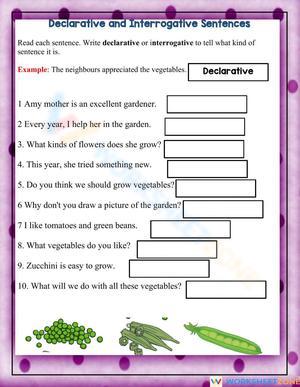
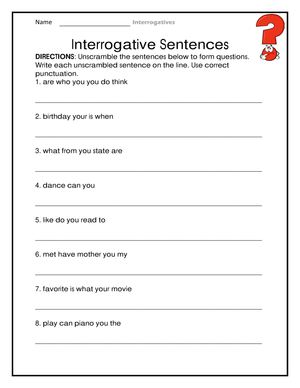
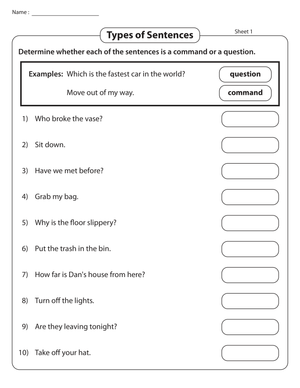
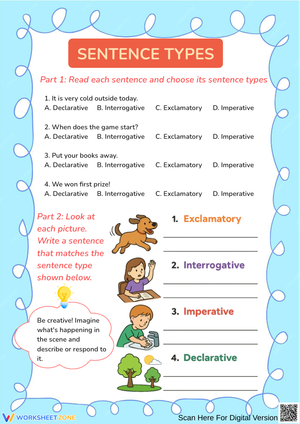
Developing strong writing skills requires more than just correct spelling and punctuation; it demands a deep understanding of syntax. When teachers search for a types of sentences worksheets, they need targeted, printable materials that guide students from basic subject-verb pairings to nuanced, multi-clause thoughts. Effective instruction in sentence variety is the cornerstone of reading comprehension and expressive writing. By breaking down the mechanics of syntax, teachers empower learners to move beyond monotonous prose and begin crafting engaging, dynamic texts. This comprehensive approach ensures that every student builds the foundational skills for advanced language arts assessments.
The Foundation of Strong Writing Mechanics
Before students can write compelling essays, they must understand how individual clauses interact within a sentence. A solid grasp of sentence structure allows young writers to manipulate pacing, emphasize key points, and clarify complex relationships between ideas. Without this knowledge, students often produce writing that feels choppy, relying heavily on brief, repetitive constructions. Introducing a comprehensive types of sentences worksheets into your curriculum provides the structured practice necessary to overcome these early writing hurdles. Through identification and generation exercises, learners internalize the rules of syntax.
Teachers know that grammar instruction can sometimes feel abstract. That is why practical, hands-on application is essential. Worksheets that require students to label subjects, verbs, and conjunctions serve as a visual map of language. When students visually dissect a sentence, they are better equipped to assemble their own, translating directly to reading comprehension across all subjects.
Understanding the Four Basic Sentence Structures
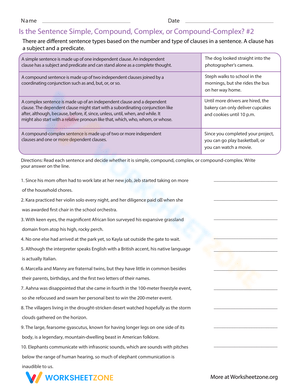
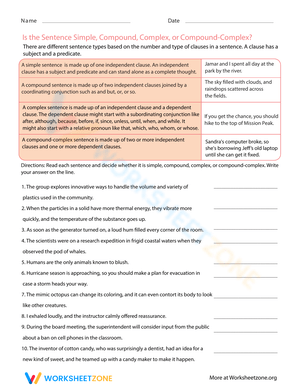
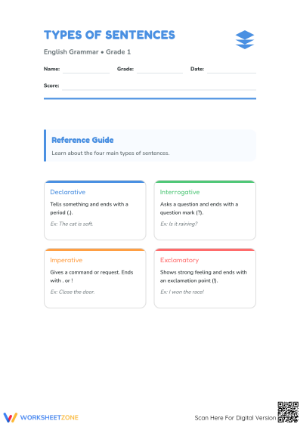
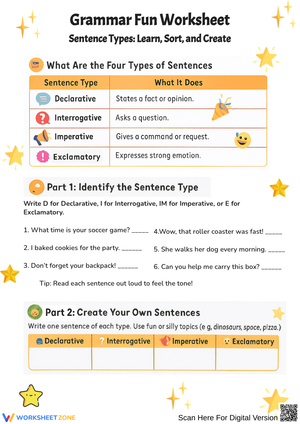
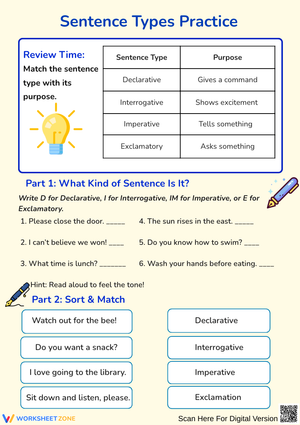
To effectively teach sentence variety, teachers must clearly define the primary categories. A well-designed types of sentences worksheets will cover simple, compound, complex, and compound-complex sentences, ensuring students can both identify and create each type.
First, simple sentences consist of one independent clause, expressing a complete thought without any dependent clauses. While easiest to construct, overusing them leads to a stilted style. Second, compound sentences contain two independent clauses connected by a coordinating conjunction. Teachers often use the acronym FANBOYS to help students remember these conjunctions. This structure links two equally important ideas smoothly.
Third, complex sentences include one independent clause and at least one dependent clause, relying on subordinating conjunctions to establish time, cause, or condition. Finally, compound-complex sentences represent the most advanced structure, containing at least two independent clauses and at least one dependent clause. Mastering this fourth type demonstrates high-level syntactic control.
Transitioning from Simple to Compound Sentences
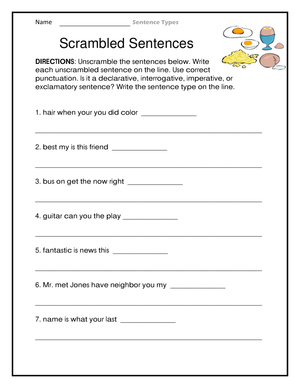
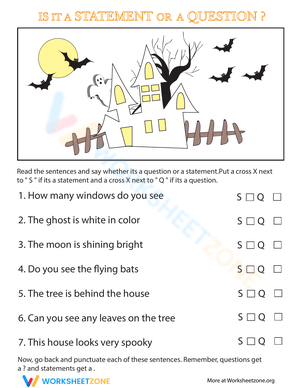
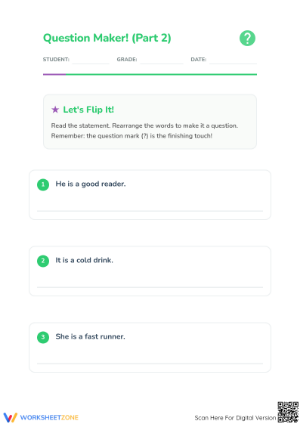
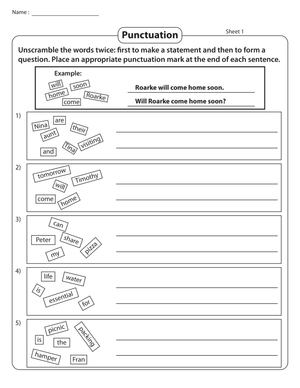
The leap from writing simple clauses to combining them into compound sentences is a major developmental milestone. Students learn that related ideas can be joined to improve flow. A types of sentences worksheets often includes sentence-combining exercises, which are highly effective. By providing two related simple sentences and asking the student to join them using an appropriate coordinating conjunction, teachers facilitate active problem-solving.
It is important to emphasize punctuation during this transition. Students often forget that a comma must precede the coordinating conjunction when linking independent clauses. Worksheets that require students to insert missing punctuation help solidify this mechanical rule, encouraging students to think critically about which conjunction best fits.
Mastering Complex and Compound-Complex Sentences
Once students coordinate equal ideas, instruction must shift toward subordination. Complex sentences require students to understand that not all clauses are created equal. A types of sentences worksheets introduces a variety of subordinating conjunctions and provides practice in placing dependent clauses effectively.
According to grammar practice standards from Education.com, explicitly analyzing the four basic sentence structures increases reading comprehension and writing fluency. Regular classroom practice with targeted sentence structure worksheets yields up to 40 percent fewer run-on errors during independent middle school writing exercises, proving that consistent reinforcement builds confident writers.
Many curriculum leads observe that students often plateau at compound sentences because they rely too heavily on the FANBOYS conjunctions. Shifting instructional focus toward subordinating conjunctions acts as a cognitive bridge, pushing learners to articulate cause-and-effect relationships rather than just linking independent ideas. This transition directly supports higher-order analytical thinking.
Identifying Sentence Fragments and Run-Ons
As students experiment with varied sentence structures, they inevitably encounter fragments and run-ons. A fragment occurs when a clause is punctuated as a sentence but lacks a subject, a verb, or a complete thought. A run-on sentence happens when independent clauses are joined without appropriate conjunctions or punctuation. Both errors disrupt the reading experience.
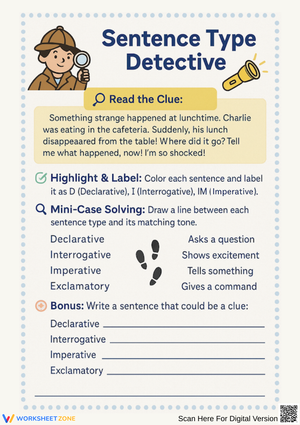
Using a types of sentences worksheets that includes editing tasks is an excellent way to address these mistakes. Rather than just writing new sentences, students review flawed examples and challenge themselves to correct the errors. This active editing trains the student's eye to recognize structural issues.
Teacher Tips
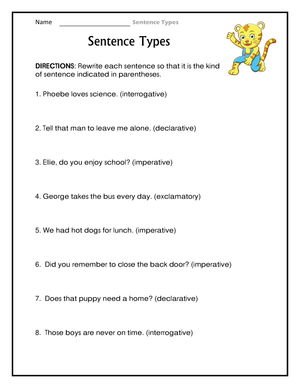
Implementing grammar instruction effectively requires strategic planning. A high-quality types of sentences worksheets is a versatile tool for classroom instruction. One strategy is to use short worksheet exercises as daily bell-ringers. Tackling a few sentences each morning provides consistent, low-stakes practice that builds automaticity over time.
Another excellent method is peer review. Students can complete sentence-combining tasks in pairs. Discussing the best way to join clauses encourages learners to verbalize grammatical rules. Teachers can also take sentences directly from the students' drafts and use them anonymously as examples on the board.
Integrating Sentence Practice Across the Curriculum
While sentence structure is traditionally taught during the English Language Arts block, the ability to write clearly is vital across all academic disciplines. Science and history teachers require their students to explain concepts using varied sentence types. Therefore, the concepts practiced within a types of sentences worksheets should be reinforced throughout the school day.
Teachers can collaborate to ensure consistent grammatical expectations. For example, a science teacher might require students to use a complex sentence when explaining a hypothesis. By applying these structural rules to content-area writing, students realize that syntax is a universal tool for effective communication.
Frequently Asked Questions
1. What are the four basic sentence structures in English?
The four primary structures are simple, compound, complex, and compound-complex. Simple sentences have one independent clause, while compound sentences link two independent clauses. Complex sentences join an independent and a dependent clause, and compound-complex sentences combine multiple independent clauses with at least one dependent clause.
2. How can students easily identify simple versus compound sentences?
Students can differentiate them by looking for subjects, verbs, and coordinating conjunctions. If the sentence has only one subject-verb relationship expressing a complete thought, it is simple. If it has two complete thoughts joined by a FANBOYS conjunction, it is a compound sentence.
3. What role do conjunctions play in determining sentence type?
Conjunctions are the structural glue of sentences. Coordinating conjunctions signal compound sentences by linking equal ideas. Subordinating conjunctions indicate complex sentences by introducing a dependent clause that relies on an independent clause for its full meaning.
4. Why is understanding sentence structure important for writing improvement?
Understanding syntax allows students to vary their sentence length and rhythm, which keeps the reader engaged. It also helps young writers logically organize their thoughts, clarify relationships between ideas, and avoid mechanical errors like run-ons and sentence fragments.
5. What are some creative ways to teach sentence types to middle schoolers?
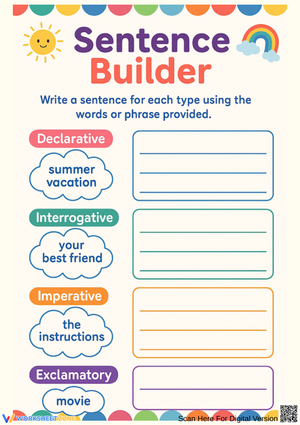
Beyond traditional practice, teachers can use interactive activities such as sentence-building card games, classroom scavenger hunts for different sentence types in published books, and collaborative peer-editing sessions to make syntax instruction engaging and relevant.












 Interactive Worksheet Maker
 Quiz Maker
 Word Search Maker
 Crossword Puzzle Maker
 Word Scramble Generator
 Sentence Scramble Generator
 Handwriting Worksheet Generator
 Name Tracing Generator
 Fill In The Blank Generator